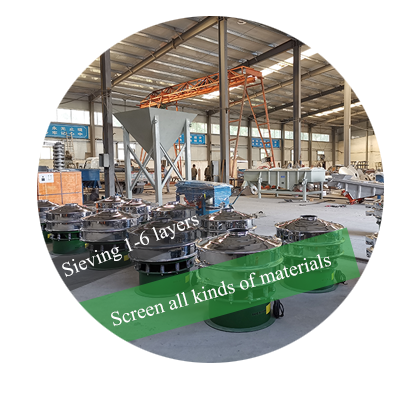
Tumbler Screening Machine
![[field:title/]](/uploads/261019/6-26101915264R20.jpg)
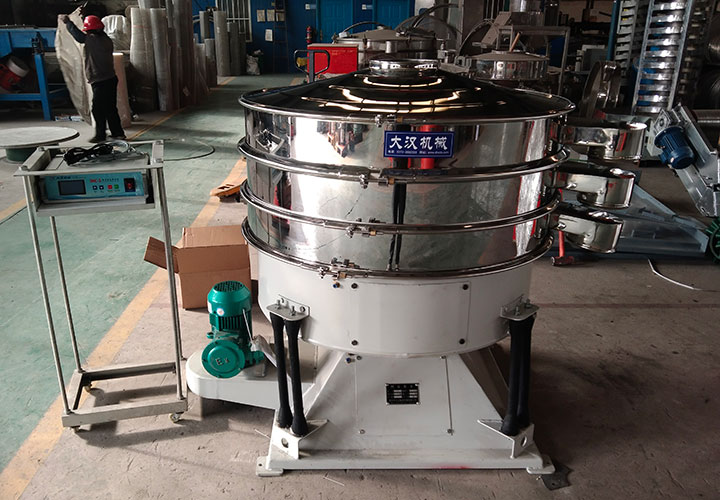
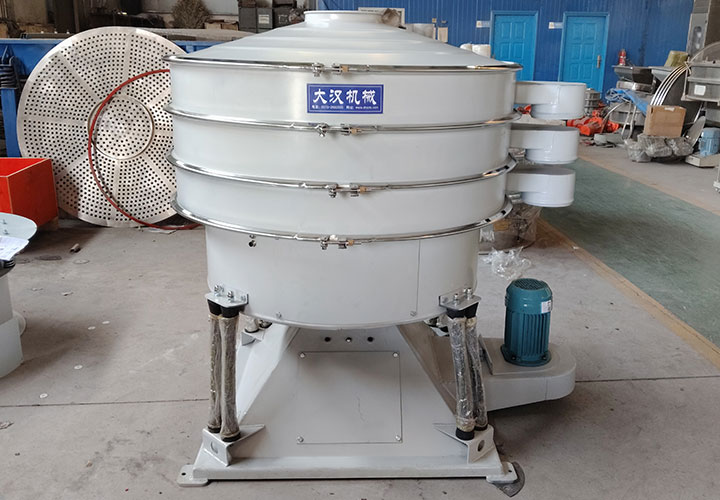
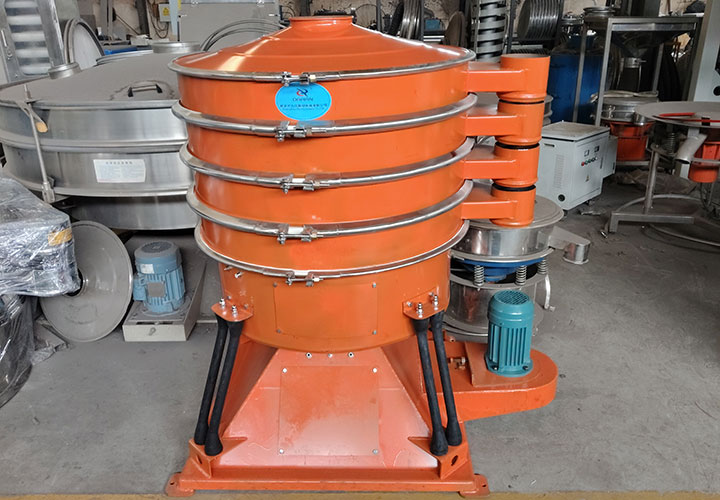
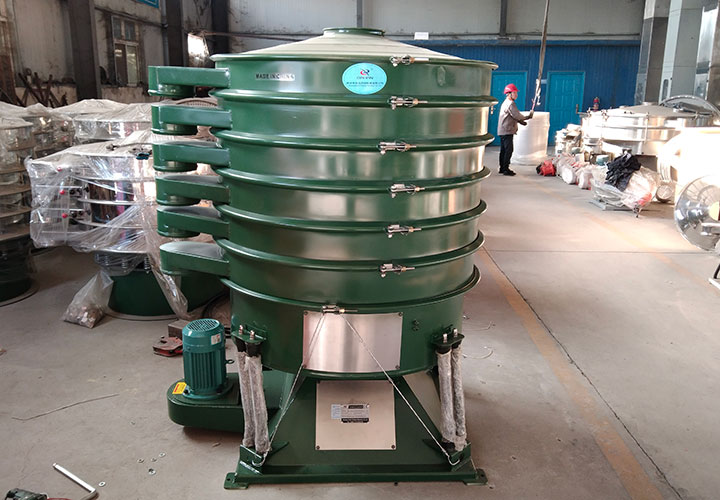
Callback
| Screen Diameter: | 400–2,600 mm |
| Screen Decks: | 1–6 Layers |
| Fine Screening: | Down to 20 μm* |
| Construction: | Mild Steel / SS304 / SS316L |
Three-dimensional elliptical motion for gentle particle separation.
Suitable for fine powders, granules and fragile particles.
Supports multi-size classification in a single operation.
What Is a Tumbler Screening Machine?
A tumbler screening machine uses low-frequency, three-dimensional elliptical motion to separate fine powders and granules by size. Achieves 95–99% accuracy for materials down to 20 microns, with 5–10× the throughput of vibrating screens per unit area. Gentle tumbling action prevents damage to fragile or agglomerated materials.
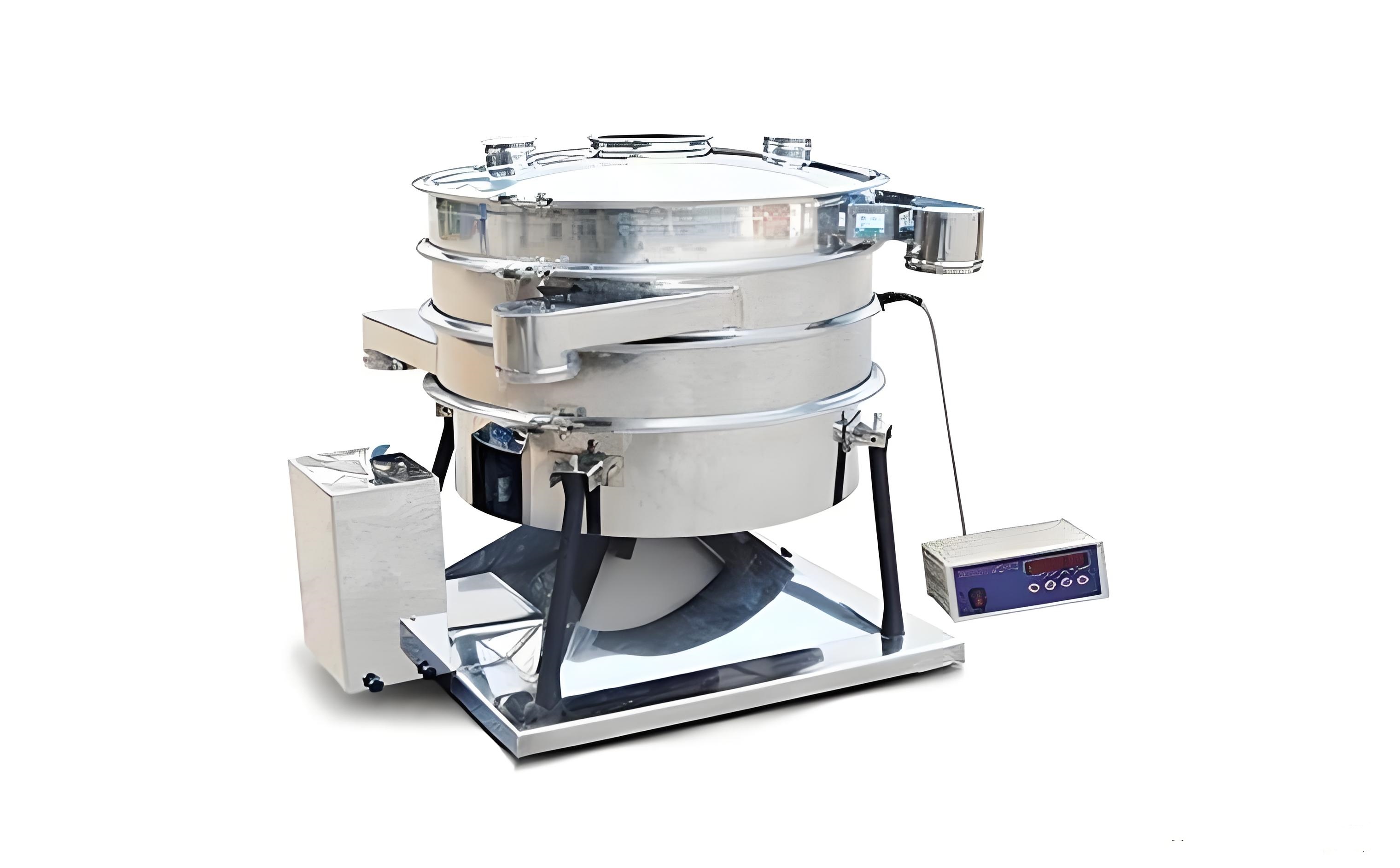
Unlike vibrating screens that bounce particles violently, this equipment keeps material in continuous contact with the screen surface, giving borderline particles maximum pass-through opportunity.
How It Works
Four-step process:Material feed – Fed continuously into the center of the top deck.3D motion – Low-frequency elliptical motion (radial + tangential + eccentric) driven by motor and eccentric weights.Spiral distribution – Material spirals outward; fine particles pass through near the center.Discharge – Coarse particles exit at the edges; borderline particles get extended retention time.The motion mimics hand screening—gentle tumbling, not violent shaking. Movement is adjustable via a patented system.
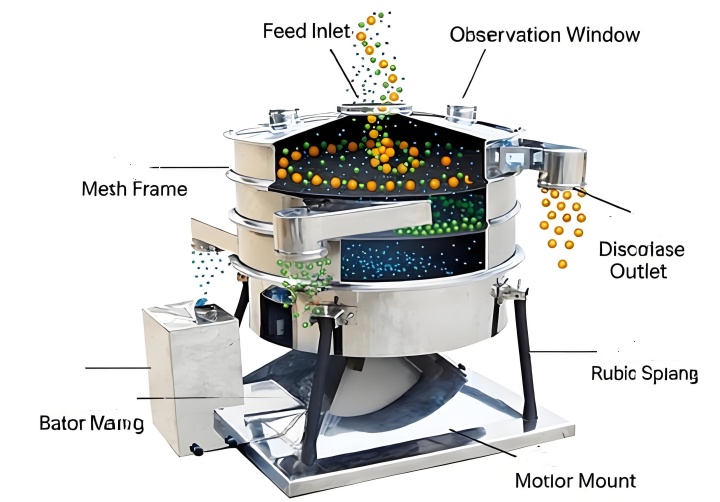
Key Advantages
95–99% efficiency – NJ pharma facility (2025–2026): 98.2% on 325-mesh API over 4,000 hrs; batch rejects down 67%.
5–10× throughput – US Midwest plant replaced 3 vibrating screens with 1 unit (2025); energy -62%, maintenance -70%.
Gentle handling – Lab test (Q4 2025): 98% particle integrity vs. 78–85% for vibrating screens.
5–10× longer screen life – German chemical plant: 11 months vs. 6–8 weeks; 7× improvement.
Anti-blocking – Netherlands food plant: ultrasonic cut cleaning from 4 hrs to weekly (early 2026); uptime +30%.
<75 dB noise – Fully enclosed, dust-proof.
1–6 decks, 400–2600mm – Customizable.
Technical Specifications
| Parameter | Range |
|---|---|
| Diameter | 400 – 2600 mm |
| Decks | 1 – 6 |
| Area per deck | 0.28 – 6.4 m² |
| Feed size | 20 microns – 20 mm |
| Capacity | 1 kg/h – 50 t/h |
| Accuracy | 95 – 99% |
| Speed | 120 – 360 RPM |
| Noise | <75 dB |
| Materials | Mild steel, SS304, SS316L |
Benchmark (100–500 mesh):
| Parameter | Range |
|---|---|
| Diameter | 400 – 2600 mm |
| Decks | 1 – 6 |
| Area per deck | 0.28 – 6.4 m² |
| Feed size | 20 microns – 20 mm |
| Capacity | 1 kg/h – 50 t/h |
| Accuracy | 95 – 99% |
| Speed | 120 – 360 RPM |
| Noise | <75 dB |
| Materials | Mild steel, SS304, SS316L |
Applications
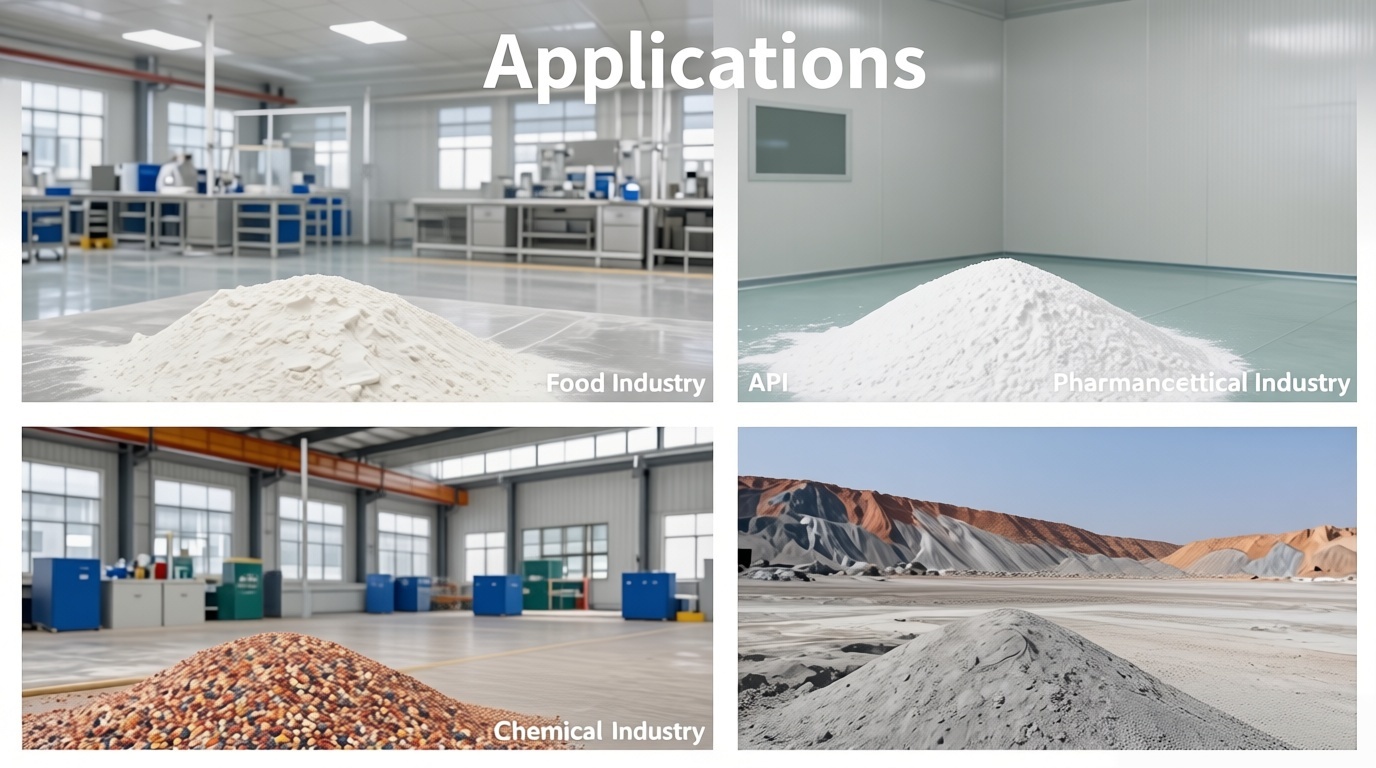
Food – Sugar, flour, starch, spices. US refinery (8 t/h, 120 mesh, 2025): 98.5% efficiency, zero degradation. UK mill (200 mesh, 2025): contamination -40%.
Pharma – APIs, excipients. Ireland (200–500 mesh, Q3 2025): changeover 4 hrs → 45 min; throughput +60%.
Chemical – Resins, pigments. Germany (2025): 11-month screen life; €5,200+ annual savings.
Mining – Minerals, graphite. Canada (early 2025): throughput +45%, energy/ton -55%.
Other – Ceramics, abrasives, recycling. Dry/wet/de-dusting capable.
Comparison: Tumbler vs. Vibrating Screen
| Metric | Tumbler Screening Machine | Vibrating Screen |
|---|---|---|
| Motion | Low-freq elliptical, continuous contact | High-freq vibration, bouncing |
| 200-mesh efficiency | 97-99% | 82-88% |
| 325-mesh API efficiency | 96-98% | 70-80% |
| Energy/ton | 0.8-1.2 kWh | 2.0-3.5 kWh |
| Annual downtime | 20-30 hrs | 80-120 hrs |
Efficiency by material:
| Material | Mesh | Tumbler Machine | Vibrating Screen |
|---|---|---|---|
| Food powders | 80-200 | 97-99% | 85-92% |
| Chemical powders | 100-325 | 95-98% | 78-88% |
| Pharma APIs | 200-500 | 96-99% | 70-82% |
| Minerals | 30-200 | 93-97% | 82-90% |
| Plastic pellets | 4-20 | 98-99% | 95-98% |
Selection Guide
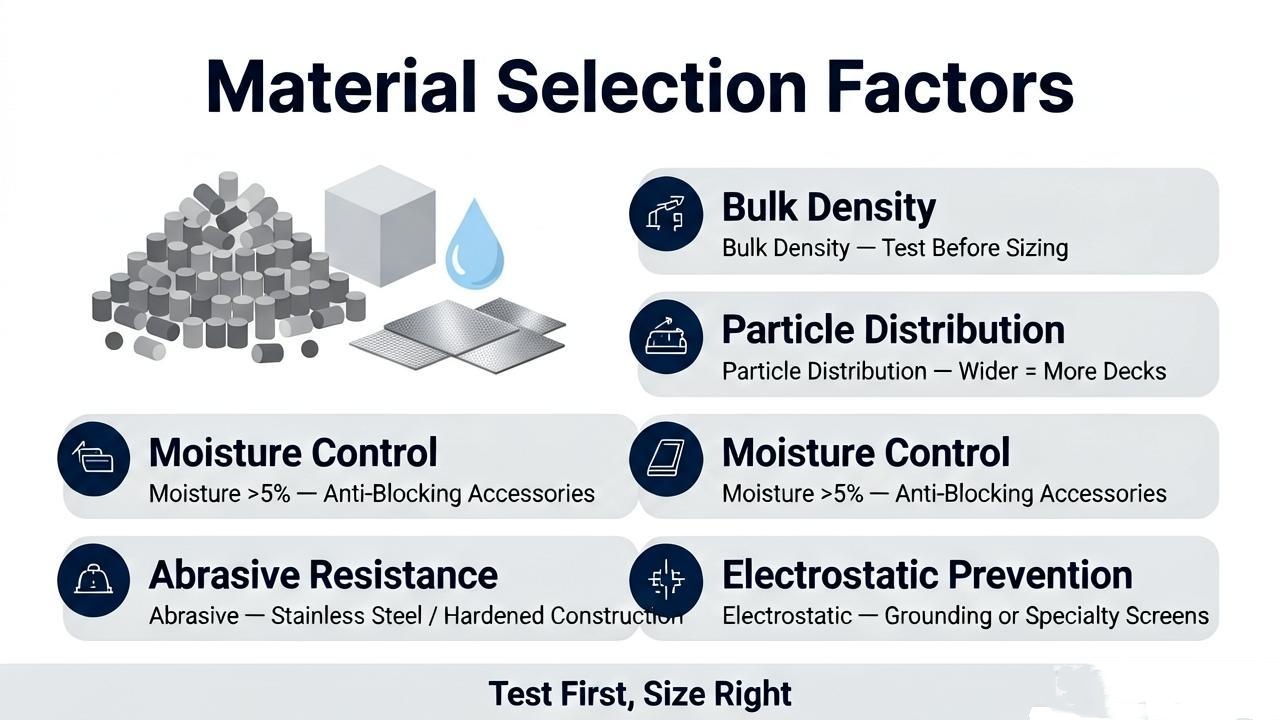
Material factors:Bulk density – Test before sizing; undersizing is common.
Particle distribution – Wider = may need more decks.
Moisture >5% – Consider anti-blinding accessories.
Abrasive – Choose stainless steel or hardened construction.
Electrostatic – May need grounding or specialty screens.
Example: Gulf Coast plant undersized 1.2m unit because density was 40% lower than estimated—needed 1.5m to hit 2 t/h.
Decks:1 deck → 2 fractions (scalping/de-dusting);2–3 decks → 3–4 fractions (intermediate classification);4–6 decks → 5–7 fractions (complex grading);Screen opening: 50–70% of target size for narrow distribution; 80–90% for wide distribution.Capacity: Operate at 70–85% of rated capacity for consistent performance.
Troubleshooting
| Problem | Cause | Solution |
|---|---|---|
| Efficiency drop | Worn mesh, blinding, wrong feed rate | Replace mesh, clean, adjust feeder |
| Noise/vibration | Loose parts, worn bearings, imbalance | Tighten, replace bearings, re-balance |
| Material buildup | Poor spreader, wrong speed | Adjust spreader or eccentric angle |
Standards
ISO 9001, ISO 14159 (hygienic design), CE Marking, ATEX
Food: FDA/EU food contact, 304/316L SS
Pharma: cGMP, crevice-free
Chemical: Corrosion-resistant materials
FAQ
What materials can it process?
Dry powders and granules from 20 microns to 20 mm: food, chemicals, pharma, minerals, plastics. Fragile and electrostatic materials also suitable.
How does it differ from a vibrating screen?
Motion. Low-frequency elliptical tumbling vs. high-frequency bouncing. Better for fine powders and fragile materials above 100 mesh.
What accuracy does it achieve?
95–99%. At 200 mesh+, stays above 95% vs. 80% or below for vibrating screens.
Can it be customized?
Yes: diameter (400–2600mm), decks (1–6), material (mild steel, 304 SS, 316L SS), cleaning systems.
What maintenance is required?
Monthly bearing lube, weekly belt checks, regular mesh inspection. Pneumatic lifting simplifies screen changes.
How long do screens last?
6–12 months (abrasive); 12–24 months (non-abrasive). 5–10× longer than vibrating screens.
Does it handle wet screening?
Yes—with spray bars, slurry feed, and enhanced sealing.
Decision Checklist
Material fully characterized (size, density, moisture, abrasiveness).
Efficiency target set.
Throughput defined.
Number of fractions determined.
Construction material specified.
Cleaning system selected.
Installation space confirmed.
Budget approved.
Regulatory requirements identified.
Conclusion
The tumbler screening machine delivers high precision, gentle handling, high capacity, and long screen life. Dahan equipment provides proven performance for food, pharma, chemical, and mineral processing—the industry standard for fine and ultra-fine screening.


-
Tumbler Screening Machines
Tumbler Screening Machines are used for grading, dust removal, and dehydration, and can control the s ...
-
Tumbler Screening Machine for Glass Frits and Glass Graules
Tumbler screening machine for glass frits and glass granules is a drum screening equipment used to sc ...
-
Swing Vibrating Screen Screening Petroleum Coke Powder
The Swing Vibrating Screen Screening Petroleum Coke Powder is designed to process fine, dusty, and potentially statically and sticky materials like petroleum coke powder...
-
How to Choose Vibrating Screen Mesh Size: 5-Step Guide & Tool
Selecting the correct vibrating screen mesh size directly determines screening efficiency, product quality, and equipment service life...
-
Single-Deck vs Double-Deck Inclined Screens: Differences & Selection Guide
If you're in aggregate, mining, or industrial processing, you've likely faced this question: Single-deck or double-deck inclined vibrating screen?...

Email:
sale@xxdahan.com
WhatsApp:
+86 15236742901
Add:
1000m West of Forest Park,Yanjin County,Xinxiang City,Henan Province,China.