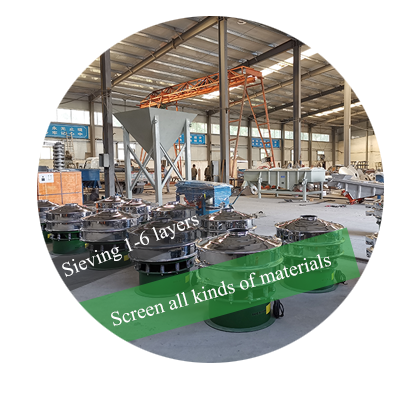
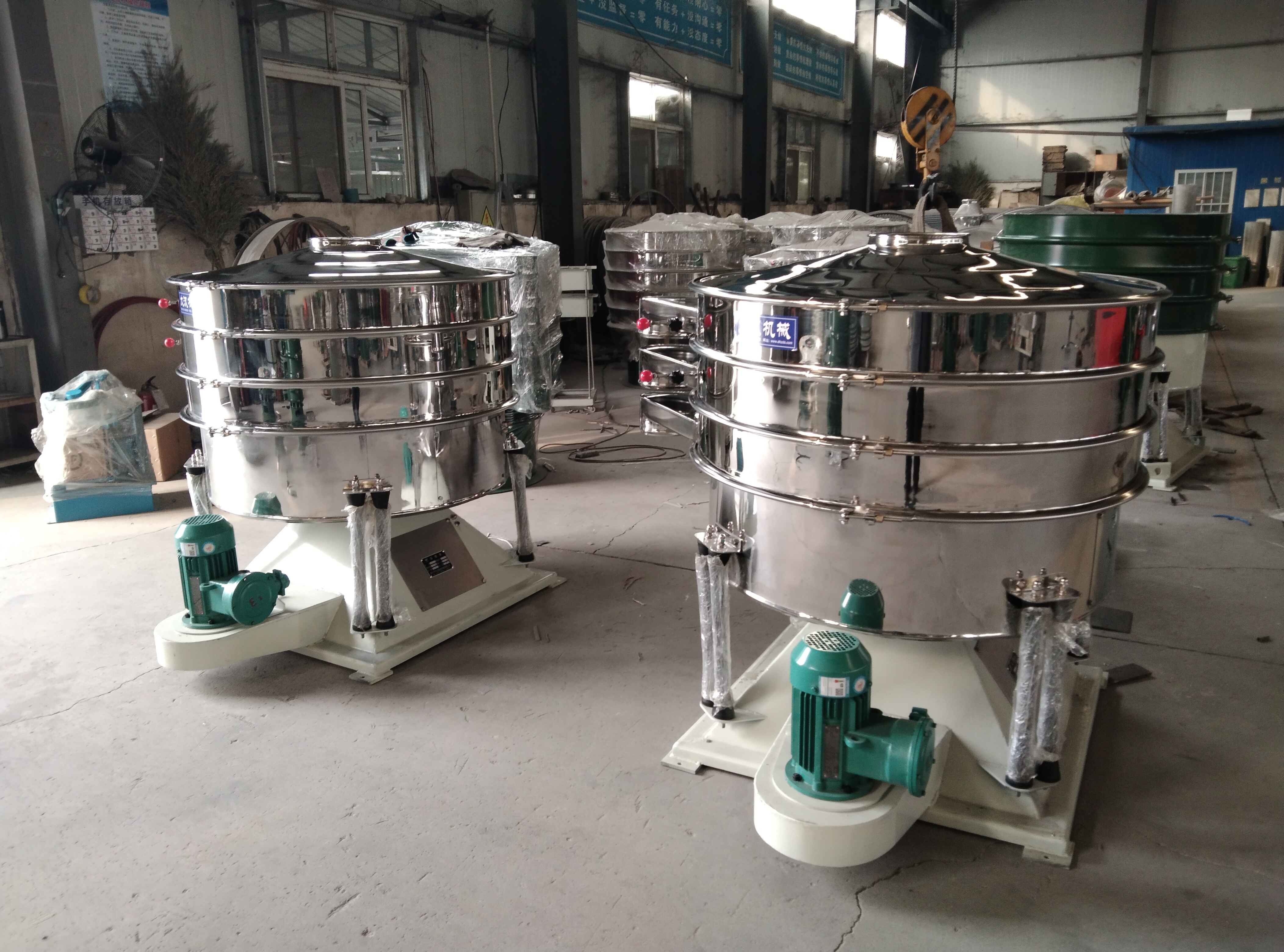
Gyra Shaker Screen
![[field:title/]](/uploads/260807/1-260PG62I6394.jpg)


Callback
| Screen Decks: | Up to 10 Layers |
| Mesh Range: | 2–200 Mesh |
| Capacity: | 100 kg/h–25 t/h* |
| Material: | Carbon Steel / SS304 / SS316L |
Separates materials into multiple size fractions in one operation.
Suitable for quartz sand, fertilizers, chemicals and other bulk materials.
Stainless steel construction available for material-specific requirements.
The Gyra Shaker Screen, also known as a square swing screen or square gyratory screen, is a high-efficiency screening equipment designed to deliver both high precision and large output. It addresses a fundamental challenge in industrial screening: traditional methods often force operators to choose between screening accuracy and production capacity. The Gyra Shaker Screen is engineered specifically to overcome this trade-off.

Unlike conventional vibrating screens that rely on high-frequency vibration, the Gyra Shaker Screen employs a unique swinging or gyratory motion that simulates manual screening. This allows materials to remain on the screen surface longer, significantly improving screening rate. The equipment features a fully enclosed structure with excellent sealing, effectively preventing dust pollution. Its multi-layer design supports up to 10 decks, enabling multiple graded fractions in a single pass.
Working Principle
The Gyra Shaker Screen operates on reciprocating inertial motion. When started, the screen box reciprocates back and forth under inertial force generated by an eccentric wheel rotating around a fixed axis. The screen box drives the screen surface to shake periodically.
During this process:Materials smaller than the screen opening pass through to the lower layer.Materials larger than the screen opening are discharged from the discharge port.
The screen surface is generally horizontal or slightly inclined (0° to 5°). The acceleration of a Gyra Shaker Screen is 4 to 5 times lower than ordinary vibrating screens, resulting in less wear and longer service life.
Key Specifications
| Model | Screening Area (m²) | Power (kW) | Layers | Speed (r/min) | Stroke (mm) |
|---|---|---|---|---|---|
| FYBS1030 | 3.0 | 3.0 | 1‑5 | 180‑260 | 25‑60 |
| FYBS1036 | 3.6 | 3.0 | 1‑5 | 180‑260 | 25‑60 |
| FYBS1230 | 3.6 | 4.0 | 1‑5 | 180‑260 | 25‑60 |
| FYBS1236 | 4.32 | 4.0 | 1‑5 | 180‑260 | 25‑60 |
| FYBS1530 | 4.5 | 5.5 | 1‑5 | 180‑260 | 25‑60 |
| FYBS1536 | 5.4 | 5.5 | 1‑5 | 180‑260 | 25‑60 |
| FYBS1830 | 5.4 | 7.5 | 1‑5 | 180‑260 | 25‑60 |
| FYBS1836 | 6.48 | 7.5 | 1‑5 | 180‑260 | 25‑60 |
| FYBS2030 | 6.0 | 7.5 | 1‑5 | 180‑260 | 25‑60 |
| FYBS2036 | 7.2 | 7.5 | 1‑5 | 180‑260 | 25‑60 |
Key Parameters:Mesh size: 2 – 200 mesh;Max layers: Up to 10;Capacity: 100 kg – 25 tons/hour;Available materials: Carbon steel, stainless steel 304/316L
Applications
The Gyra Shaker Screen is widely used across multiple industries:
| Industry | Typical Materials |
|---|---|
| Chemical | Fertilizer, resin, melamine, soda ash |
| Food | Starch, salt, sugar, milk powder |
| Metallurgy & Mining | Metal powders, mineral powders, ore |
| Building Materials | Quartz sand, silica sand, frac sand, glass sand |
| Abrasives & New Materials | Garnet, mica, carbon, petroleum coke |
| Others | Feed, pharmaceuticals, plastics |
Typical materials: quartz sand, silica sand, frac sand, river sand, mica powder, garnet, carbon, calcium carbonate, petroleum coke, industrial salt, fertilizer, and more.

Field Application Example: In a quartz sand processing operation, the customer was struggling with two issues: screening accuracy fluctuated between 85% and 89% on a conventional vibrating screen, and screen mesh needed replacement every 45-50 days due to rapid wear from the highly abrasive material. After switching to a Gyra Shaker Screen with optimized stroke settings (45mm at 210 rpm), screening accuracy stabilized at 96% consistently across multiple production runs. Mesh life extended to 72 days—a 55% improvement—and manual cleaning frequency dropped from twice per shift to once per week. The customer reported annual operating cost savings of approximately 18% from reduced mesh consumption and labor alone.
Key Advantages
High Precision + Large Output – Breaks the traditional trade-off between accuracy and capacity.Self-Cleaning Effect – Built-in bouncing balls prevent screen clogging.Longer Equipment Life – Acceleration is 4-5 times lower than ordinary vibrating screens.Multi-Layer Grading – Supports up to 10 decks for multiple fractions in one pass.Environmentally Friendly – Fully enclosed, dust-free operation.Low Noise – Smooth gyratory motion.Easy Maintenance – Quick screen replacement reduces downtime.Customizable – Size, layers, material, and mesh can be tailored.

Selection & Optimization Guidelines
To maximize the performance of a Gyra Shaker Screen, the following factors should be carefully considered:

Material Characteristics – Moisture content, particle shape, and bulk density directly affect screening efficiency. For moist or sticky materials, larger stroke settings (50-60mm) with slower speeds (180-200 rpm) typically yield better results by enhancing the self-cleaning effect. For dry, free-flowing materials, higher speeds (230-260 rpm) with shorter strokes (25-35mm) maximize throughput.
Layer Configuration – Multi-layer designs require careful consideration of mesh sequencing. As a general rule, each subsequent layer should have a smaller mesh size than the layer above. For production of multiple product grades, 4-6 layers are most common. The maximum 10-layer configuration is typically reserved for applications requiring very fine classification across many fractions.
Feed Rate Consistency – Uneven feeding is the most common cause of reduced screening performance. Operators should ensure the material distribution plate is correctly adjusted to spread incoming material uniformly across the full width of the top screen. Installing a surge hopper upstream is recommended for operations with variable feed conditions.
A Lesson from the Field: A fertilizer plant contacted us about a persistent bottom-deck blinding issue that was cutting their output by nearly 30%. The equipment—a 4-layer Gyra Shaker Screen—was running at 250 rpm with a 30mm stroke, settings that worked well for dry materials but were causing severe clogging with their current slightly moist fertilizer blend. We recommended reducing speed to 195 rpm and increasing stroke to 55mm. The adjustment took less than an hour to implement and resolved the blinding completely. Production returned to full capacity within the same shift, without replacing any screen panels or bouncing balls.
Another Practical Observation: Over years of working with frac sand producers, one pattern has emerged consistently: operators who run their Gyra Shaker Screen at the higher end of the speed range (240-260 rpm) typically achieve higher initial throughput but experience 20-25% faster screen wear. Those who operate at moderate speeds (210-230 rpm) with slightly longer stroke settings report more consistent product quality and substantially lower maintenance costs over the long term. There is no single "correct" setting—the optimal configuration always depends on the specific balance between production targets and operating budget.
Frequently Asked Questions
Q: What is the difference between a Gyra Shaker Screen and an ordinary vibrating screen?
A: The Gyra Shaker Screen uses a gentler gyratory motion with 4-5 times lower acceleration. This results in higher screening accuracy (typically 92-98%) and significantly longer equipment life compared to high-frequency vibrating screens.
Q: How many screen layers can be installed?
A: Up to 10 layers, allowing multiple grades of material to be produced simultaneously in a single pass.
Q: What mesh size range is available?
A: 2 to 200 mesh, covering both coarse sorting and fine powder classification.
Q: Can the equipment be customized?
A: Yes. Screen dimensions, number of layers, construction materials, and mesh sizes can all be customized to meet specific requirements.
Q: What is the processing capacity?
A: Ranges from 100 kg to 25 tons per hour, depending on material characteristics, mesh size, and equipment model.



-
How to Choose Vibrating Screen Mesh Size: 5-Step Guide & Tool
Selecting the correct vibrating screen mesh size directly determines screening efficiency, product quality, and equipment service life...
-
Single-Deck vs Double-Deck Inclined Screens: Differences & Selection Guide
If you're in aggregate, mining, or industrial processing, you've likely faced this question: Single-deck or double-deck inclined vibrating screen?...
-
Factors Affecting Industrial Vibrating Screen Price: 8 Key Factors
The price of an industrial vibrating screen depends on more than machine size...

Email:
sale@xxdahan.com
WhatsApp:
+86 15236742901
Add:
1000m West of Forest Park,Yanjin County,Xinxiang City,Henan Province,China.