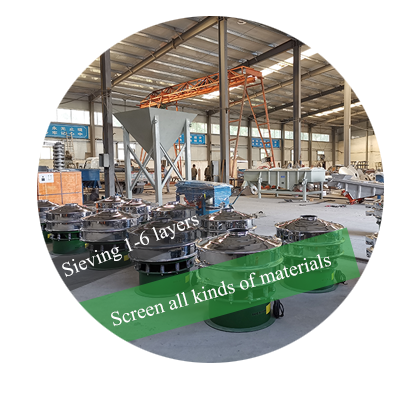
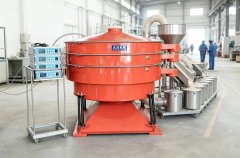
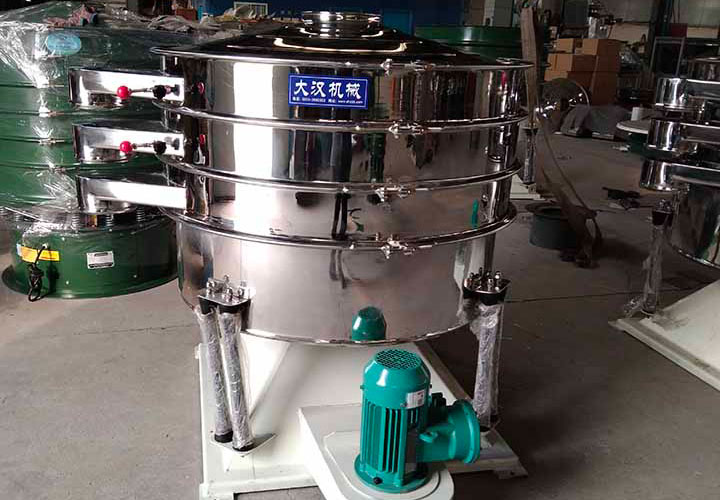
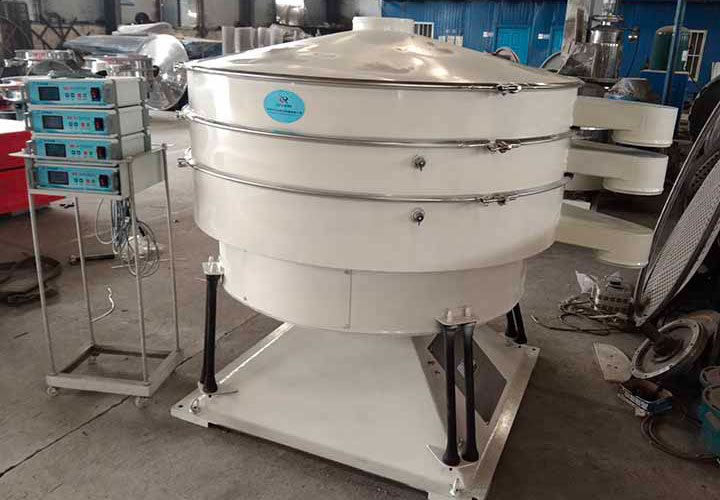
Tumbler Screening Machine for Fine Powder
Callback
| Model: | TSM1000–TSM2600 |
| Capacity: | 50–5,000 kg/h* |
| Mesh Range: | 20–500 Mesh* |
| Screen Decks: | 1–5 Layers |
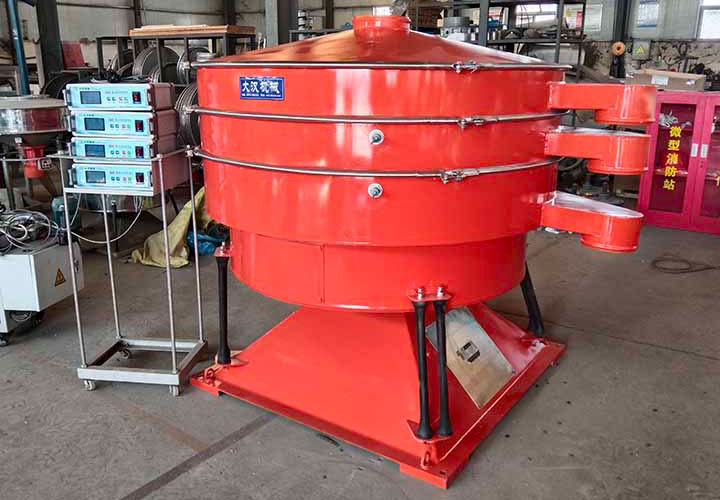
3D tumbling motion for gentle screening of fine and fragile particles.
Optional bouncing balls, brushes or ultrasonic systems help reduce mesh blinding.
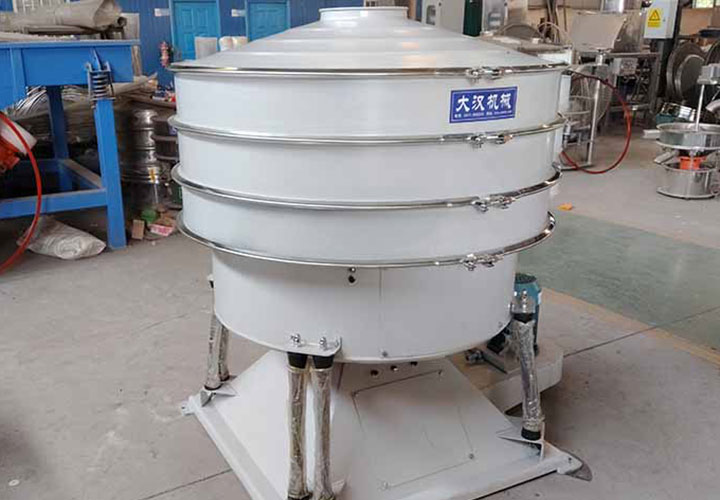
SUS304 / SUS316L stainless steel options for easy cleaning and corrosion resistance.
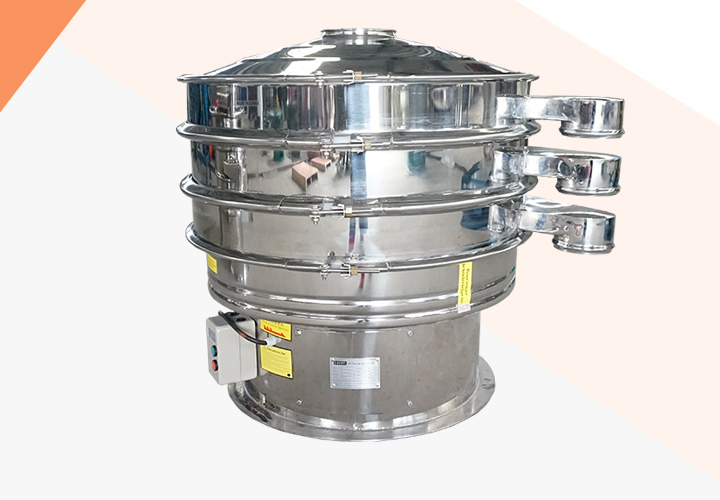
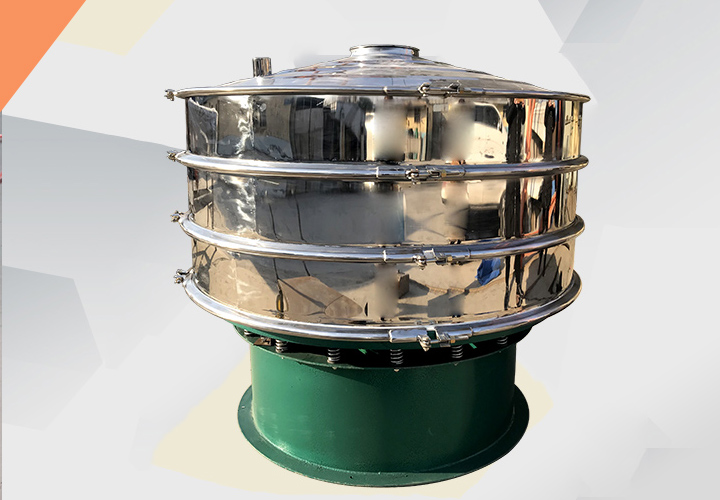
The Tumbler Screening Machine for Fine Powder is designed for the gentle separation and particle-size classification of fine, dry powders. Its three-dimensional tumbling motion helps distribute material across the screen surface, making it suitable for applications that require controlled screening of fine or fragile particles. Screen configurations can be selected according to the target particle size, required capacity, and number of product fractions.
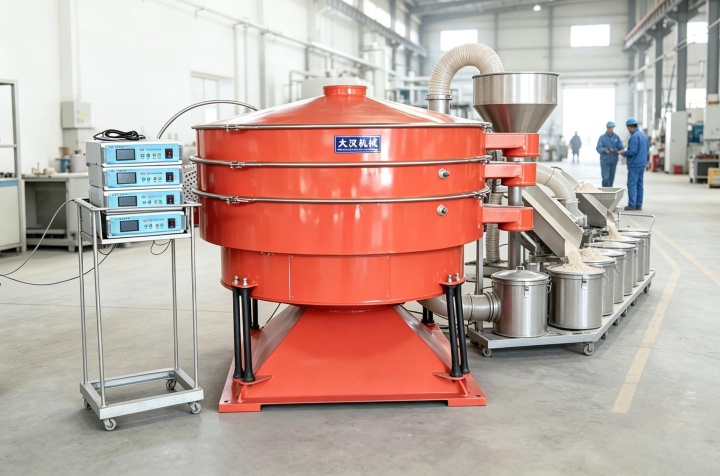
Models from TSM1000 to TSM2600 are available, with capacities ranging from 50 to 5,000 kg/h and configurations of 1 to 5 screen decks. Actual throughput depends on material properties, screen openings, feed rate, and separation requirements.
The machine can be equipped with bouncing balls, rotating brushes, or ultrasonic cleaning systems to help reduce screen blinding. SUS304 and SUS316L stainless steel options are also available for applications requiring corrosion resistance and cleanable product-contact surfaces.
How the Tumbler Screening Machine Separates Fine Powder
The tumbler screening machine uses a controlled three-dimensional tumbling motion to spread fine powder across the screen surface and move it gradually from the center toward the outer edge. Particles smaller than the selected mesh openings pass through the screen, while larger particles continue toward the discharge outlet. The extended screening path gives fine particles more opportunity to contact the mesh and pass through.
The movement can be adjusted according to the material, mesh size, and required capacity. This controlled tumbling action provides gentler handling than more aggressive screening conditions, making the machine suitable for fine and fragile powders, crystals, microspheres, and other materials that require controlled particle separation.
Tumbler Screening Machine Specifications
| Parameter | Specification | Selection Consideration |
| Screen Frame Diameter | 1000–2600 mm | Larger diameters generally provide more screening area for higher-capacity applications. |
| Processing Capacity | 50–5,000 kg/h | Actual capacity depends on bulk density, moisture, particle size, mesh opening, and required separation accuracy. |
| Screen Decks | 1–5 Decks | One deck can separate two fractions; additional decks allow multiple particle-size fractions to be classified. |
| Mesh Range | 20–500 Mesh | Suitable mesh size depends on the target particle size and required separation point. |
| Vibration Frequency | 180–300 rpm | Adjusted according to material characteristics and screening requirements. |
| Inclination Adjustment | Tangential 2°–8°; Radial 0°–5° | Adjustment affects material travel speed and residence time on the screen surface. |
| Contact Material | SUS304 / SUS316L / Carbon Steel | Selected according to material properties, corrosion requirements, and hygiene standards. |
| Mesh Cleaning | Bouncing Balls / Rotating Brush / Ultrasonic | Selected according to powder fineness, stickiness, electrostatic behavior, and mesh blinding risk. |
How to Choose a Tumbler Screening Machine for Fine Powder
The right tumbler screening machine depends on more than the required capacity. Powder particle size, target mesh, material characteristics, number of fractions, and mesh-cleaning requirements all affect the machine configuration. For fine powder screening, the following factors should be considered before selecting the equipment.
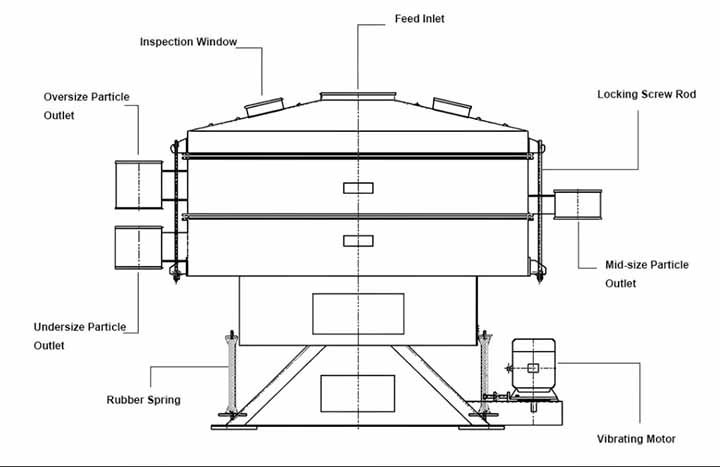
Particle size and target mesh: Identify the feed particle-size range and the required separation point. The machine can be configured with different mesh openings from 20 to 500 mesh according to the screening requirement.
Required capacity: The required throughput determines the suitable screen diameter and deck configuration. Capacity should be evaluated together with bulk density, moisture content, particle-size distribution, and separation accuracy rather than by machine size alone.
Number of fractions: One deck can separate material into two size fractions, while additional decks allow several particle-size ranges to be classified in a single screening process.
Powder characteristics: Fine powders may be dry, sticky, electrostatic, hygroscopic, abrasive, or fragile. These characteristics influence the choice of screen material, screening conditions, and mesh-cleaning system.
Mesh cleaning: Bouncing balls, rotating brushes, and ultrasonic cleaning can be selected according to the powder's tendency to blind or adhere to the screen. For very fine powders, ultrasonic cleaning may be considered when conventional mechanical cleaning is insufficient.
Actual machine configuration and screening capacity should be selected according to the material, target particle size, required throughput, number of fractions, and screening conditions. For difficult-to-screen fine powders, a material test can help determine the appropriate screen diameter, mesh, deck arrangement, and mesh-cleaning system.
How to Prevent Mesh Blinding When Screening Fine Powder
Mesh blinding is a common problem when screening fine powders, especially when particles are very small, sticky, electrostatic, or prone to agglomeration. Blocked screen openings reduce the effective screening area and can lower separation efficiency. The Tumbler Screening Machine for Fine Powder can be configured with different mesh-cleaning systems according to the material and screen mesh.
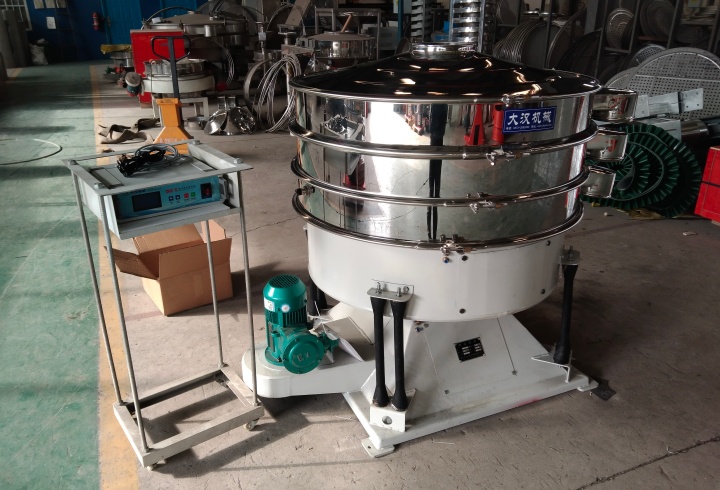
Bouncing balls: Rubber balls placed beneath the screen create repeated impacts as the machine operates, helping remove particles that become lodged in the mesh openings. This option is commonly used for dry powders where mechanical cleaning is sufficient.
Rotating brush: A rotating brush sweeps across the screen surface to help remove material that tends to adhere to the mesh. It can be considered for sticky or slightly oily powders where bouncing balls may not provide sufficient cleaning.
Ultrasonic cleaning: An ultrasonic system introduces high-frequency vibration directly to the screen mesh, helping reduce fine-particle adhesion and blinding. It is particularly useful when very fine mesh openings are required and conventional mechanical cleaning cannot maintain stable screening performance.
Tumbler Screening Machine vs Vibrating Screen for Fine Powder
Both tumbler screening machines and vibrating screens can be used for powder classification, but their movement patterns and screening characteristics are different. A tumbler screening machine is often considered when the application requires a longer screening path, controlled material movement, or gentler handling of fine and fragile powders. A vibrating screen may be preferred when higher-intensity vibration and straightforward separation are more suitable for the material and process.
| Factor | Tumbler Screening Machine | Vibrating Screen |
| Material Movement | Controlled three-dimensional tumbling motion | Vibration-based movement |
| Fine Powder | Suitable for many fine powder classification applications | Suitable when the material and screening conditions match the vibration process |
| Fragile Materials | Gentler material movement can be advantageous | Depends on vibration intensity and material characteristics |
| Screening Path | Longer material travel path across the screen | Depends on screen design and operating conditions |
| Fine-Mesh Cleaning | Bouncing ball, brush, or ultrasonic options | Cleaning method depends on equipment configuration |
| Typical Selection Consideration | Fine classification, controlled movement, and multiple fractions | General screening, scalping, or applications suited to higher-intensity vibration |
The better choice depends on the material, particle-size distribution, target mesh, required capacity, and separation accuracy. For fine powders that are difficult to screen or sensitive to impact, a screening test can help determine whether a tumbler screening machine or vibrating screen is the more suitable solution.
Fine Powder Screening Case Study
A graphite powder processing project required classification at 200 mesh. The original high-frequency vibrating screen experienced severe mesh blinding after approximately 30 minutes of operation, which interrupted continuous screening and affected the stability of the process.
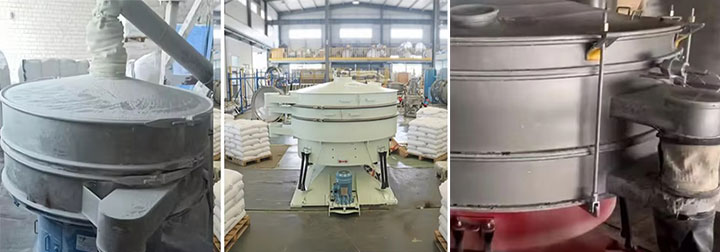
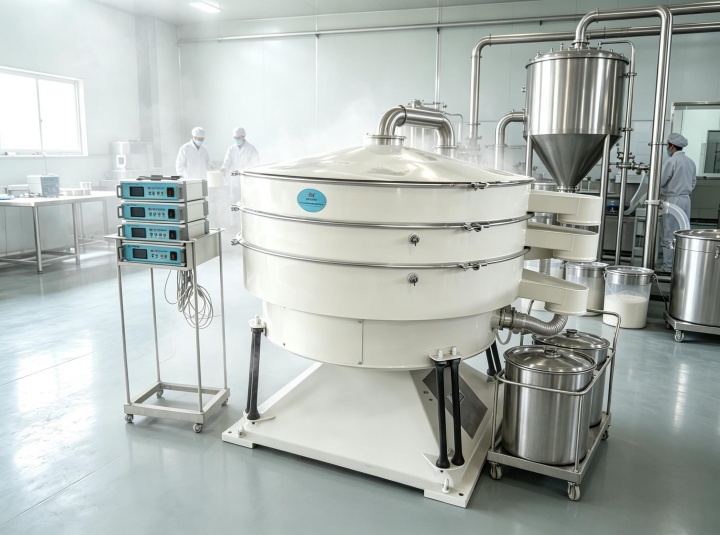
For this application, a 1600 mm diameter Tumbler Screening Machine was configured with an ultrasonic mesh-cleaning system. The extended tumbling movement provided a longer screening path for the graphite powder, while ultrasonic cleaning helped reduce powder accumulation on the fine mesh.
Under the reported test conditions, the system achieved a throughput of approximately 650 kg/h with a passage rate of up to 96%. The final performance can vary according to powder characteristics, feed conditions, mesh specification, and operating parameters, so material testing is recommended before selecting the final machine configuration.
Frequently Asked Questions
Q: What is a tumbler screening machine used for?
A: It is used to classify dry powders and other bulk materials by particle size. Its controlled tumbling motion is particularly suitable for applications requiring gentle handling and an extended screening path.
Q: Is a tumbler screening machine suitable for fine powder?
A: Yes. It can be configured for fine powder screening from 20 to 500 mesh, with suitable mesh-cleaning options selected according to powder fineness, adhesion, and blinding tendency.
Q: How do I choose the right mesh cleaning system for fine powder?
A: Bouncing balls are suitable for mechanical mesh cleaning, rotating brushes can help with sticky powders, and ultrasonic cleaning is often considered for very fine powders and fine meshes prone to blinding.
Packaging and Transportation
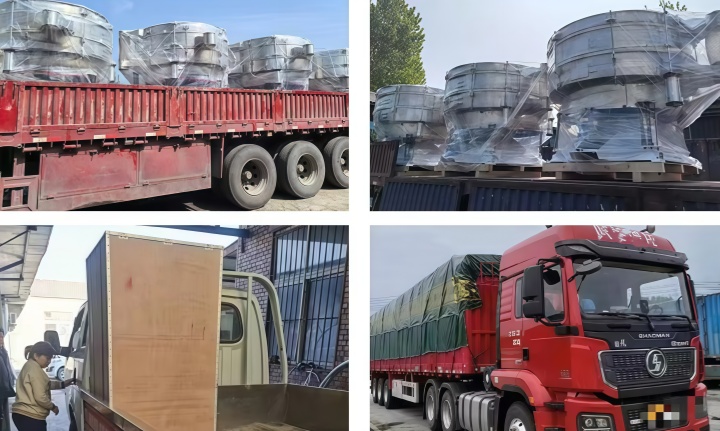
The Tumbler Screening Machine is securely prepared for transportation according to its machine configuration, screen diameter, deck arrangement, and delivery requirements. Main machine components and accessories are properly protected before shipment to help reduce the risk of damage during handling and transportation.
Get a Tumbler Screening Machine for Your Fine Powder
Choosing the right tumbler screening machine requires matching the equipment to the powder characteristics and screening target rather than selecting by machine size alone. We can help evaluate the suitable screen diameter, mesh size, number of decks, material of construction, and mesh-cleaning system for your application.
To receive a suitable configuration and quotation, please provide your material name, required capacity, feed particle size, target mesh or separation size, and required number of fractions. If mesh blinding, electrostatic adhesion, or other screening problems are already occurring, please include these details as well.

-
Why Does Fine Powder Clog the Mesh and How Ultrasonic Technology Solves It?
Fine powder screening can become difficult when particles stick to the mesh, lodge in apertures...
-
How to Prevent Mesh Blinding During Fine Powder Sifting for Higher Yields
In fine powder processing, mesh blinding (also known as screen pegging or clogging) is one of the most persistent operational hurdles...
-
Phosphate rock powder Vibrating Screen
Phosphate rock powder Vibrating Screens are screening devices designed to utilize the characteristics of phosphate rock powder...

Email:
sale@xxdahan.com
WhatsApp:
+86 15236742901
Add:
1000m West of Forest Park,Yanjin County,Xinxiang City,Henan Province,China.