Single-Deck vs Double-Deck Inclined Screens: Differences & Selection Guide
If you're in aggregate, mining, or industrial processing, you've likely faced this question: Single-deck or double-deck inclined vibrating screen?
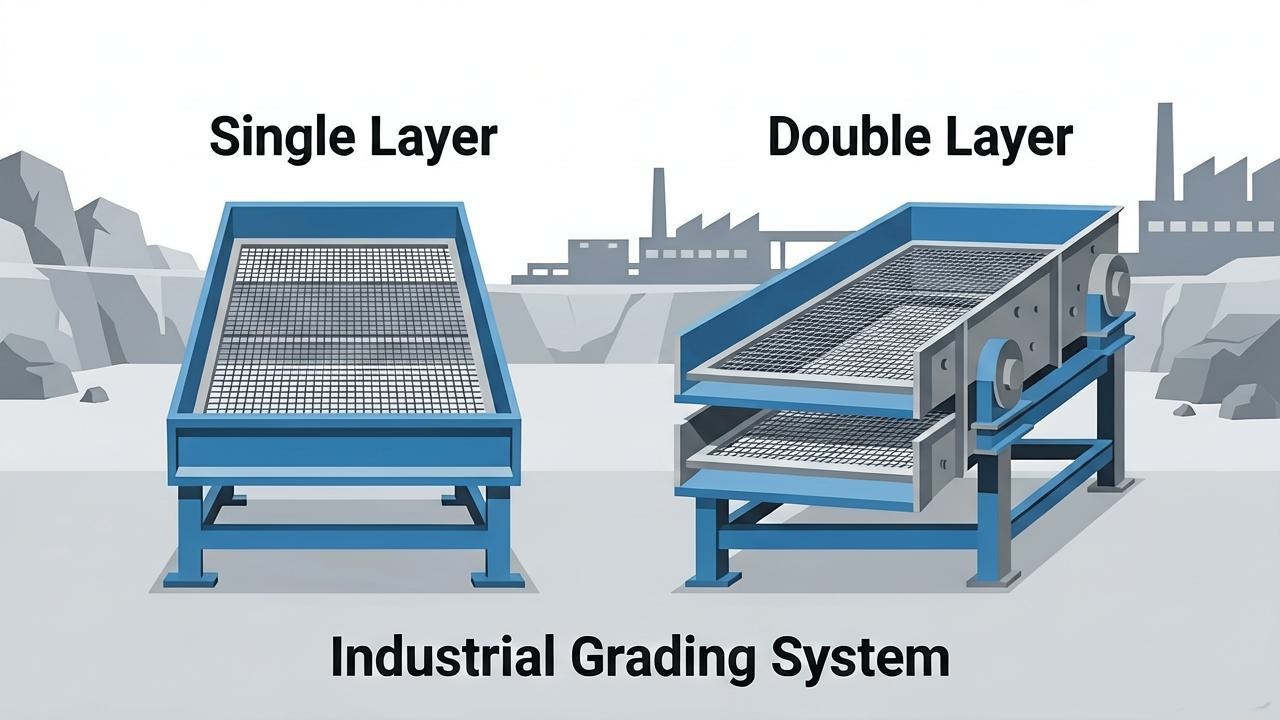
The wrong choice means bottlenecks, higher costs, or off-spec product. The decision comes down to one factor: how many product fractions you need.
What makes this guide different: Most resources simply list specifications. This guide is based on field performance data from actual installations across different material types—limestone, river gravel, and gold ore.
What Is an Inclined Vibrating Screen?
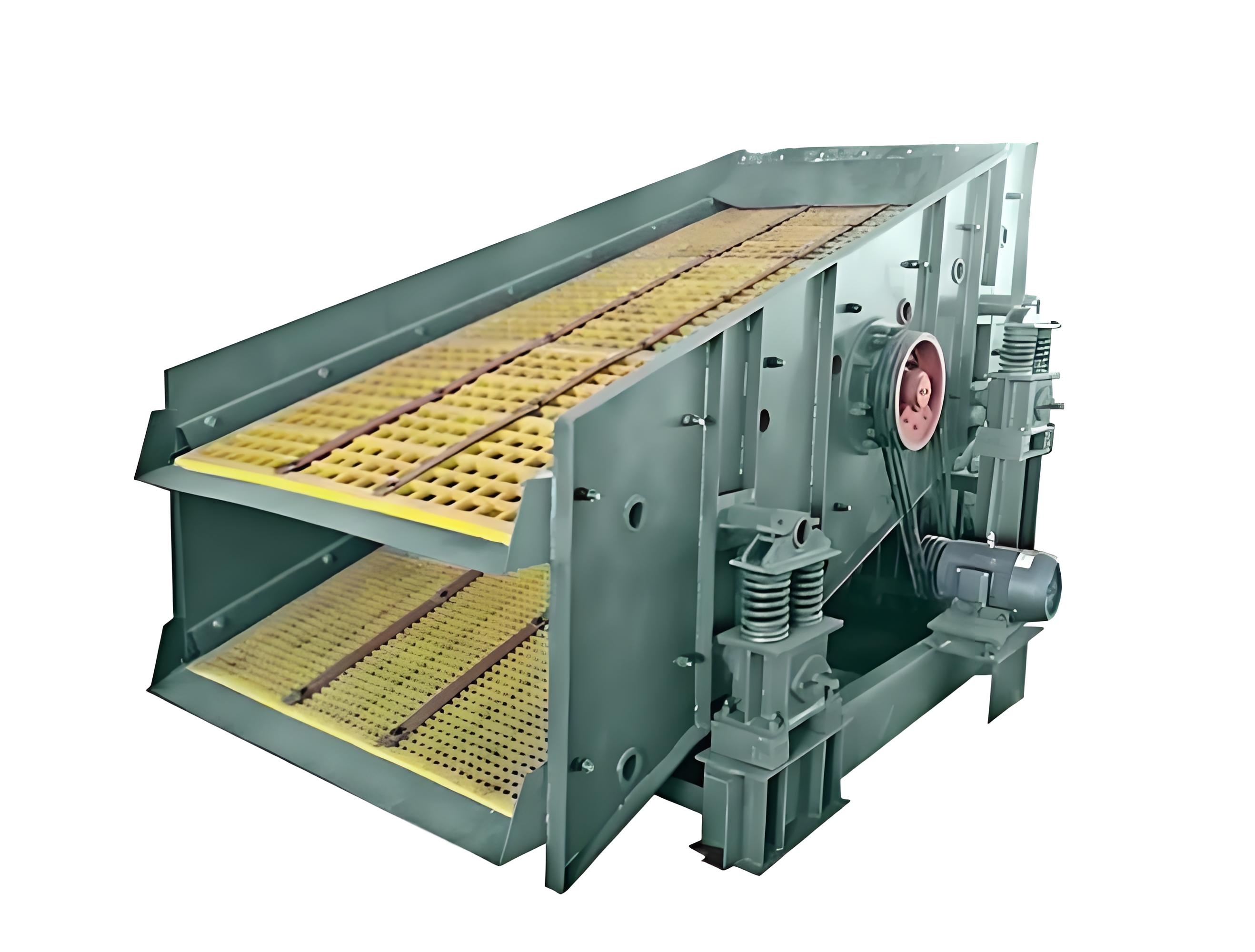
An inclined vibrating screen uses circular motion to:
- Stratify material (fines settle to the screen surface)
- Convey material down the deck (gravity + vibration)
The number of decks determines how many size fractions the machine produces.
Head-to-Head Comparison
| Feature | Single-Deck | Double-Deck |
|---|---|---|
| Decks | 1 | 2 |
| Product Fractions | 2 (oversize + undersize) | 3 (coarse + medium + fine) |
| Screening Area | 1x | ~2x |
| Weight (2400×6000) | 8-10 tons | 13-15 tons |
| Motor Power | 5.5-15 kW | 11-30 kW |
| Initial Cost | Baseline | 40-60% more |
| Screen Change Time | 2-4 hrs | 4-8 hrs |
| Daily Maintenance | 15-30 min | 30-60 min |
| Capacity | 10-800 t/h | 15-1,000+ t/h |
| Best For | Scalping, single-cut | Final sizing, multi-fraction |
Data based on standard industry models (2400×6000mm screen box) and factory test data (2024–2026).
Working Principles
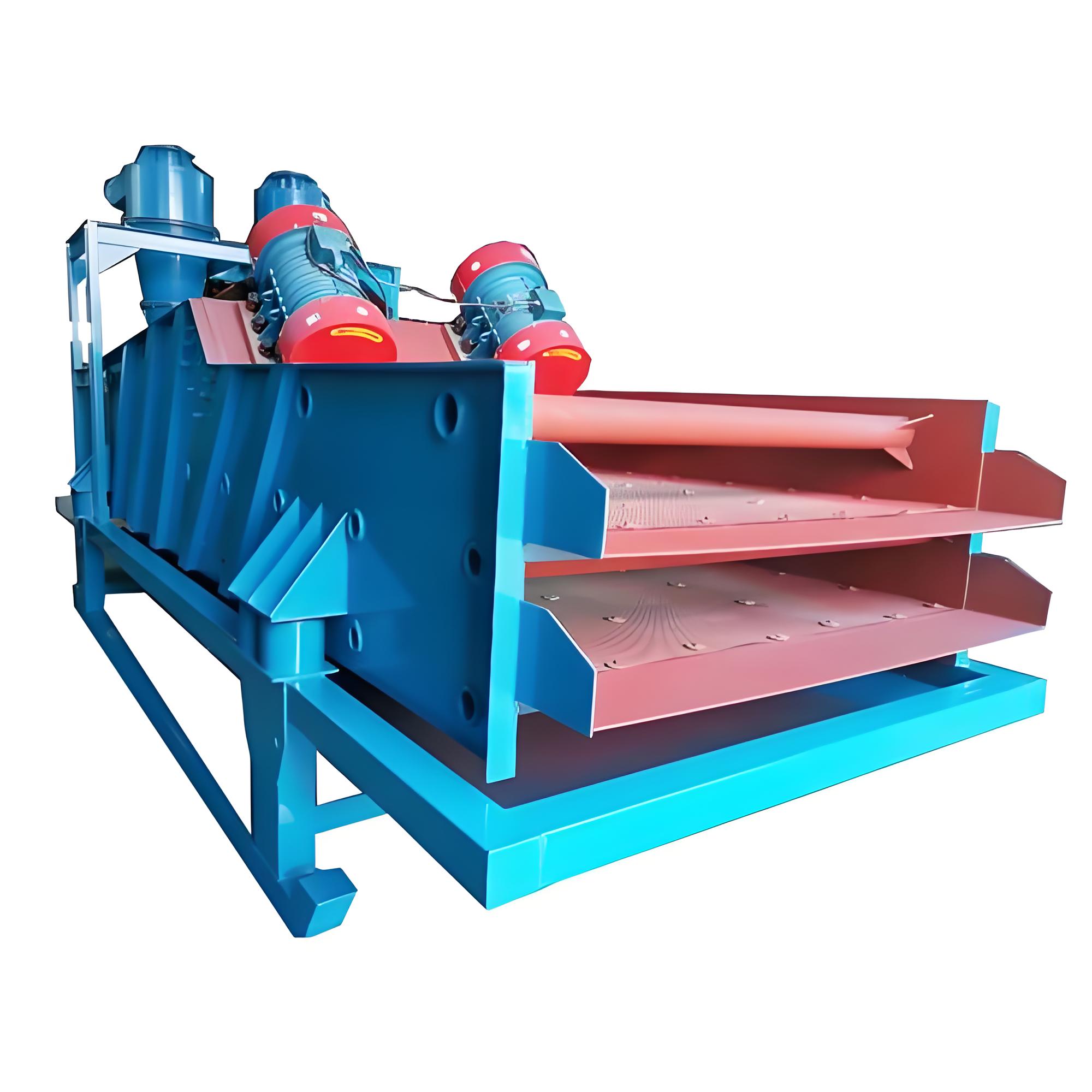
Single-Deck: Feed enters at the feed end and travels down one deck. Particles smaller than the aperture pass through; larger particles discharge as oversize.
Double-Deck: Feed enters the top deck. Coarse oversize discharges first. Material passing through falls to the lower deck, where medium and fine fractions are separated.
The top deck removes coarse material early, allowing the lower deck to achieve finer cuts more efficiently—yielding 10-15% higher efficiency than a single-deck attempting the same cut.
How to Choose?
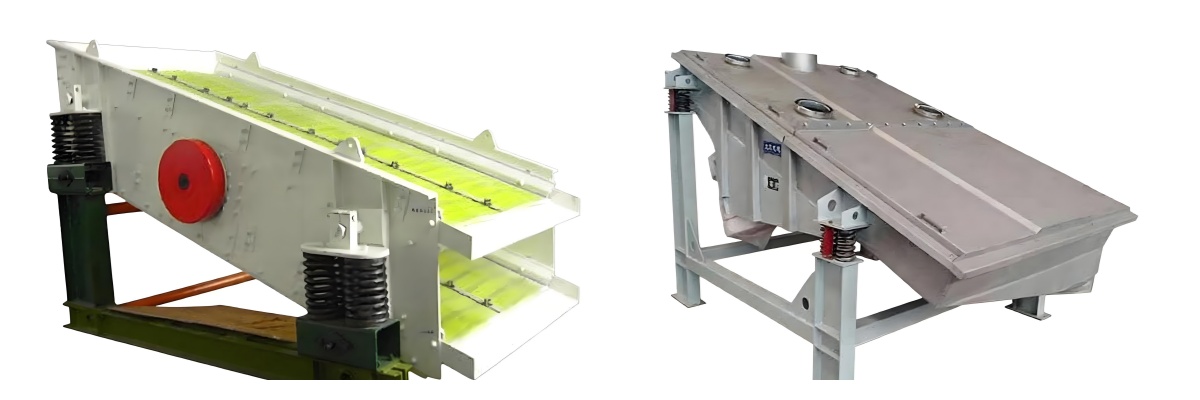
Figure: Quick decision flowchart for screen selection
| Your Requirement | Recommendation |
|---|---|
| Only 2 size fractions | Single-Deck |
| 3 size fractions | Double-Deck |
| Scalping / primary screening | Single-Deck |
| Final product sizing | Double-Deck |
| Limited budget | Single-Deck |
| High throughput (300+ t/h) | Double-Deck |
| Simple maintenance | Single-Deck |
| Maximum efficiency | Double-Deck |
| High-moisture feed (>8%) | Single-Deck (double-deck risks blinding) |
Quick Decision Tree:
Field Performance Data
Installation 1: Limestone Quarry – Double-Deck ROI
| Metric | Two Single-Decks | One Double-Deck | Improvement |
|---|---|---|---|
| Capital Cost | 100% | 85% | 15% savings |
| Floor Space | 100% | 70% | 30% less |
| Annual Maintenance | $16,000 | $8,000 | 50% reduction |
Result: Double-deck delivered all 3 products with 15% lower capital cost and 30% less floor space.
Installation 2: River Gravel – When Single-Deck Won
| Metric | Double-Deck (Before) | Single-Deck (After) | Improvement |
|---|---|---|---|
| Plant Availability | 78% | 94% | +16% |
| Net Throughput | 100% | 122% | +22% |
| Daily Cleaning | 2-3 hrs | 15 min | 90% less |
Result: Single-deck eliminated blinding. For high-moisture materials (>8%), single-deck is the safer choice.
Installation 3: Gold Mine – Efficiency Gain
| Metric | Single-Deck (Before) | Double-Deck (After) | Improvement |
|---|---|---|---|
| Screening Efficiency | 72% | 91% | +19% |
| Additional Recovery | - | $120,000/year | New revenue |
| Payback Period | - | <4 months | Rapid ROI |
Result: Double-deck improved efficiency from 72% to 91%. For fine cuts, double-deck delivers significantly higher efficiency.
Maintenance Comparison
| Aspect | Single-Deck | Double-Deck |
|---|---|---|
| Deck Access | Direct from top | Lower deck requires side access or upper deck removal |
| Replacement Time | 2-4 hrs | 4-8 hrs |
| Panels to Tension | 1 set | 2 sets |
| Wear Pattern | Uniform | Upper: impact; Lower: abrasion |
| Daily Maintenance | 15-30 min | 30-60 min |
Common Selection Mistakes
| Mistake | Why It's a Problem |
|---|---|
| Choosing double-deck for 2 products | Unnecessary cost and complexity |
| Choosing single-deck for 3 products | Requires multiple screens, more floor space |
| Ignoring material moisture | Blinding can reduce efficiency by 50%+ |
| Underestimating foundation | Double-deck's extra weight causes structural issues |
FAQ
Q: Can a double-deck produce 2 fractions?
A: Yes, but you'd underutilize the second deck. A single-deck is more cost-effective (40-60% less).
Q: How much more does a double-deck cost?
A: 40-60% more than a single-deck of similar size. But one double-deck costs ~15% less than two single-decks for 3-fraction output.
Q: Does a double-deck use more power?
A: Yes—roughly double (11-30 kW vs 5.5-15 kW).
Q: Which deck wears faster on a double-deck?
A: The upper deck (impact from feed). Lower deck wears by abrasion, typically slower.
Q: Can a single-deck be converted to double-deck?
A: No. The structure and drive are designed for specific weight and loads.


Email:
sale@xxdahan.com
WhatsApp:
+86 15236742901
Add:
1000m West of Forest Park,Yanjin County,Xinxiang City,Henan Province,China.