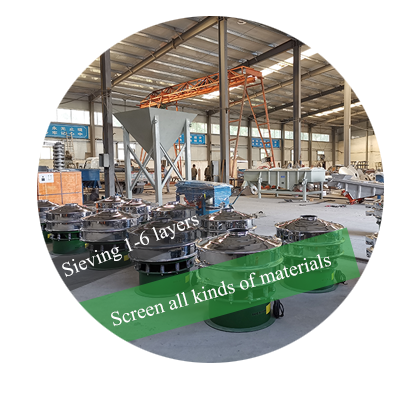
Tumbler Screening Machine for Powder
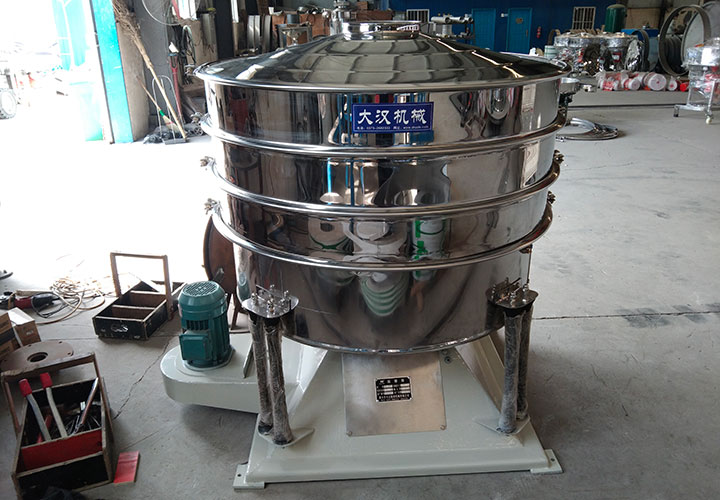
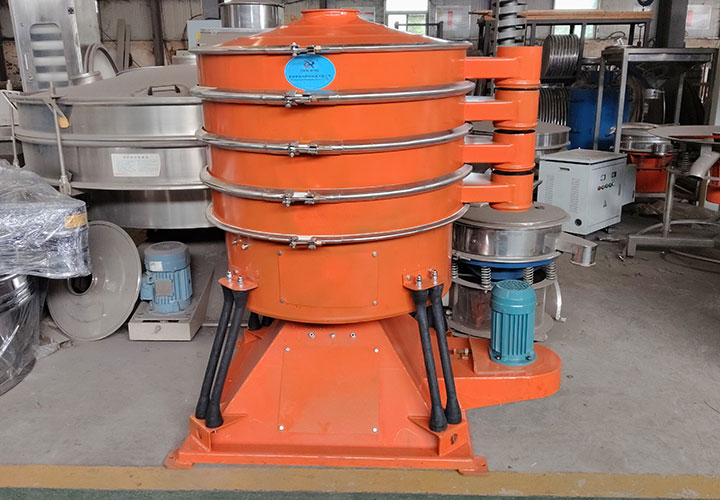
Callback
| Capacity: | 1 kg/h–50 t/h* |
| Screen Diameter: | 600–2600 mm |
| Screen Layers: | 1–5 Layers |
| Mesh Opening: | 20 μm–20 mm |
Fine screening, grading, oversize removal and dedusting.
Cleaning options: Rubber balls, brushes or ultrasonic systems.
Material: Carbon steel, stainless steel or special steel.
What Is a Tumbler Screening Machine?
A tumbler screening machine is a mechanical screening system that uses a controlled tumbling motion to move material across a screen surface. The movement keeps the feed spread over the available screening area while allowing particles to approach the mesh from different directions.
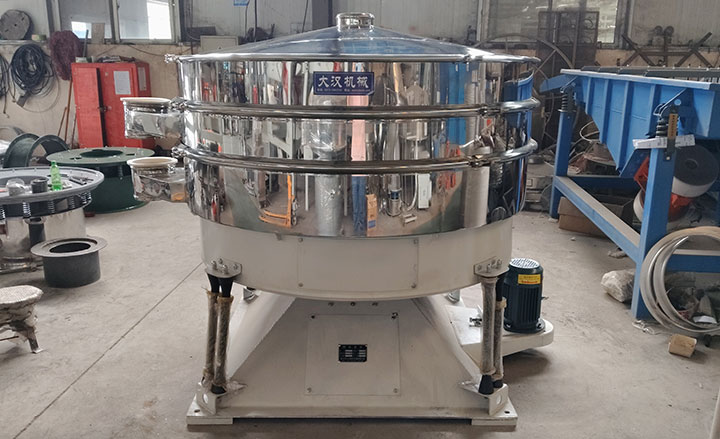
For powder processing, this type of screening is useful when the material needs gentle handling, fine particle separation, or classification into different size ranges. The machine can use one or more screen decks, with each deck fitted with a selected mesh opening for the required separation.
Unlike a screen selected only by its mesh size, a tumbler screener is configured around the material, target particle size, required output, and screening conditions. These factors determine the suitable screen area, deck arrangement, and cleaning method.
How Does the Tumbler Screen Separate Powder?
Powder enters the tumbler screen through the feed inlet and is distributed across the screening surface. As the screen box moves in a controlled tumbling pattern, the material gradually spreads outward and travels across the mesh instead of moving through the screen in a single straight path.
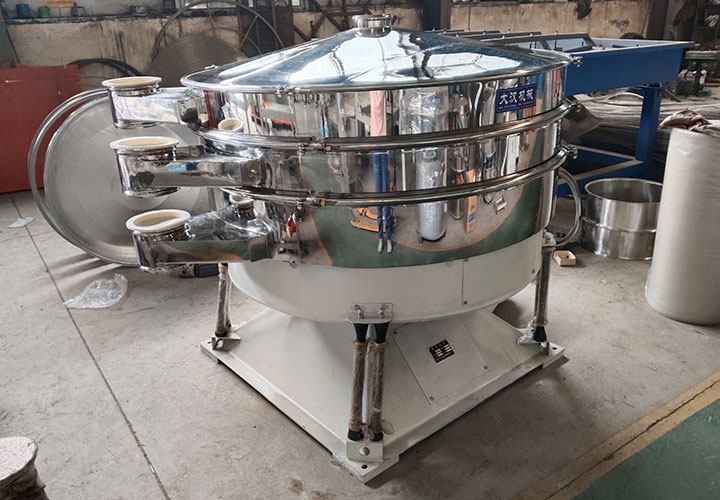
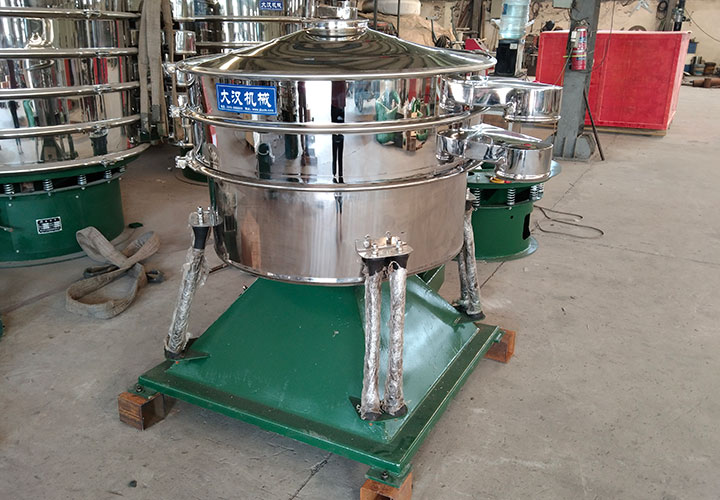
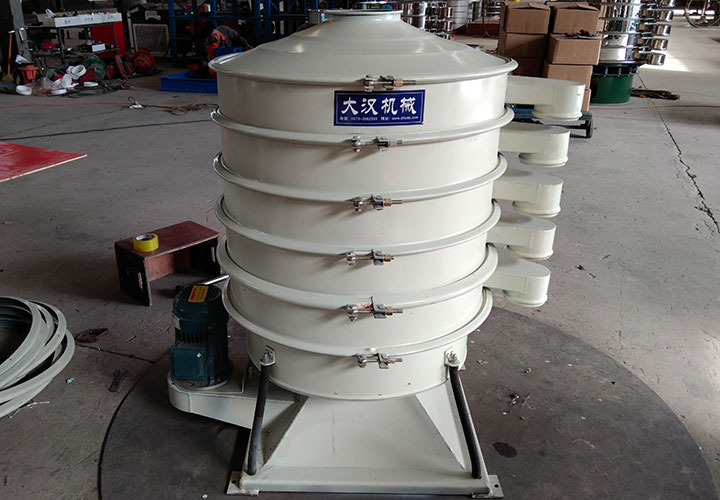
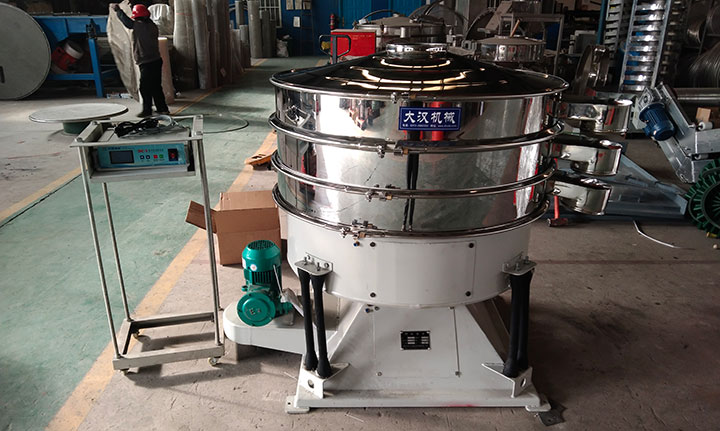
Tumbler Screening Machine for powder screening and particle-size classification.
During this movement, smaller particles find openings in the mesh and pass through, while larger particles remain on the screen surface and continue toward the discharge outlet. With multiple screen decks, each deck uses a different opening to separate the powder into several particle-size fractions.
The actual screening result depends on more than the mesh opening. Feed rate, powder characteristics, screen area, moisture, and the required particle-size range all affect how the material moves and separates.
Which Powders Can Be Screened with a Tumbler Screen?
A tumbler screen can be used for powders with different particle sizes and handling characteristics. The suitable configuration depends on how the powder behaves on the screen rather than simply on the industry it comes from.
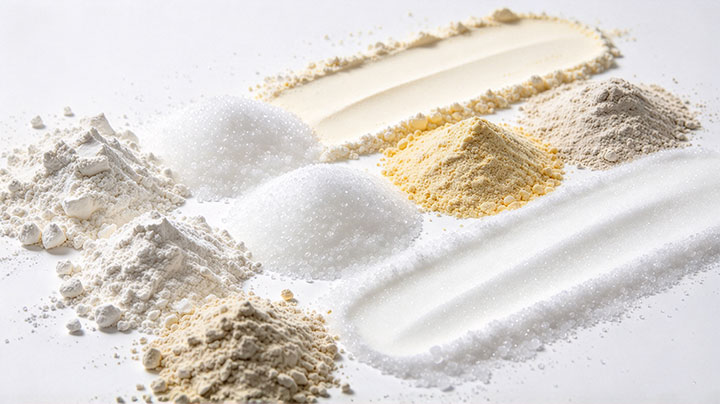
- Fine powders: Flour, starch, milk powder, chemical powders, and other materials requiring controlled fine-particle separation.
- Powders with oversize particles: Materials that need lumps, foreign particles, or coarse particles removed before the next processing stage.
- Free-flowing powders: Dry powders that can spread across the screen and pass through the selected mesh during continuous screening.
- Powders requiring size classification: Materials that need to be separated into two or more particle-size ranges using multiple screen decks.
- Powders prone to screen blockage: Fine materials where the screen surface may require a suitable cleaning arrangement based on the material properties.
Typical materials include starch, flour, sugar, chemical powders, mineral powders, resin powders, and other dry bulk powders. The final screen configuration should be selected according to the material, required particle size, feed rate, and screening purpose.
What Makes a Tumbler Screen Suitable for Fine Powder?
Fine powder can be difficult to screen when particles do not spread evenly across the mesh or when a large amount of material reaches the screen at the same time. The tumbling movement helps distribute the feed over the available screening surface and keeps the material moving through a longer screening path.
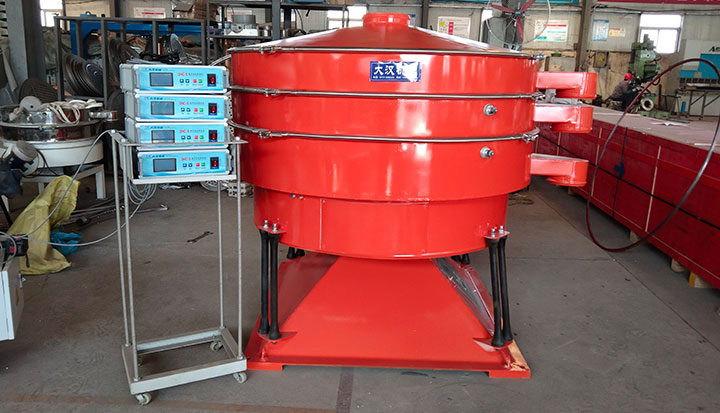
- More controlled material distribution: Powder is spread across the screen instead of concentrating in one area.
- Gentle particle movement: The screening action is suitable for powders that need to be handled without aggressive impact.
- Longer contact with the mesh: Particles have more opportunity to reach an appropriate opening as they travel across the screen.
- Flexible particle separation: Different mesh openings can be arranged on multiple decks for separate size fractions.
- Adaptable screen cleaning: Cleaning arrangements can be selected when fine powder tends to remain on or block the mesh.
These characteristics make a tumbler screen particularly useful when powder requires controlled screening rather than simply rapid movement across the screen. The final configuration still depends on the powder properties, target cut size, feed rate, and required number of fractions.
Tumbler Screen Specifications and Available Sizes
Tumbler screens can be configured in different diameters, screening areas, deck arrangements, and mesh openings to match the material being processed. The following specifications show the available range of the Dahan tumbler screening machine. Actual capacity depends on the powder, particle size, mesh opening, and feed conditions.
| Specification | Available Range |
|---|---|
| Screen Diameter | 600–2600 mm |
| Feed Rate | 1 kg/h–50 t/h |
| Mesh Opening | 20 μm–20 mm |
| Number of Screen Decks | 1–5 layers |
| Material | Carbon steel, stainless steel, or special steel |
| Screen Cleaning | Rubber balls, rotating brushes, or ultrasonic system |
| Screen Movement | Three-dimensional tumbling motion |
| Horizontal Amplitude | 40–80 mm |
| Vertical Amplitude | 5–40 mm |
These specifications are not intended to define one standard machine for every powder. Screen diameter, mesh opening, deck number, and cleaning arrangement should be selected together according to the required separation and production conditions.
How Many Particle Sizes Can One Tumbler Screen Produce?
The number of particle-size fractions depends on how many screening decks are arranged inside the tumbler screen. Each deck uses a selected mesh opening to remove a different size range as the material moves through the machine.
| Screen Decks | Typical Separation Arrangement |
|---|---|
| 1 deck | Separates the feed into fine and oversize fractions |
| 2 decks | Creates three particle-size ranges with two different mesh openings |
| 3 decks | Creates four particle-size ranges for more detailed classification |
| 4–5 decks | Allows several mesh openings to be arranged in one screening unit |
For example, a powder that needs to be divided into fine, medium, and coarse fractions can use two screening decks with different mesh openings. The appropriate deck arrangement should be determined by the target particle sizes rather than simply adding more screen layers.
Dahan tumbler screening machines can be configured with 1–5 screen decks, allowing the screening setup to be matched to the required number of particle-size fractions.
Choosing the Right Screen for Your Powder
Choosing a tumbler screen starts with the powder and the required separation, not simply the mesh number. Particle size, feed rate, material flow, moisture, and the number of fractions all affect how the screening system should be configured.
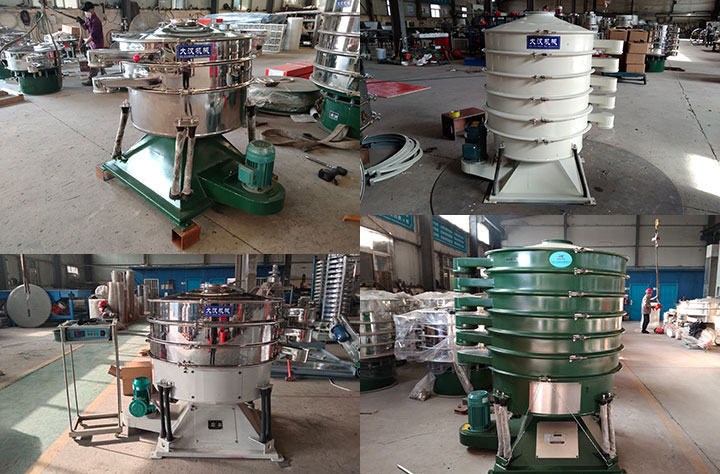
Start with the required cut size. The screen opening should match the particle size that needs to pass through the mesh, while the screen area should provide enough space for the required feed rate. If the powder needs to be separated into several size ranges, additional screen decks can be arranged with different openings.
The behavior of the powder also matters. Fine powders that tend to remain on the mesh may require a suitable screen-cleaning system, such as bouncing balls, brushes, or ultrasonic cleaning. The appropriate option depends on the particle characteristics and the screen opening being used.
Material construction should be considered when the powder is corrosive or when the product-contact surfaces have specific cleanliness requirements. Stainless steel construction can be selected for applications where the contact material needs to meet these conditions.
For powders that are easily damaged, the screening configuration should also take the required handling conditions into account. The aim is to achieve the required separation without introducing unnecessary impact or excessive movement.
When requesting a tumbler screen, provide the powder name, approximate particle-size range, required cut size, feed capacity, number of size fractions, and any known issues such as sticking, static, or screen blockage. These details give a more useful basis for equipment selection than choosing a mesh number alone.
When Is a Tumbler Screen Better Suited Than a Vibratory Screen?
Both tumbler screens and vibratory screens can be used for powder screening, but the way they move material across the mesh is different. A vibratory screen moves material through rapid vibration, while a tumbler screen guides the material along a longer, controlled screening path.
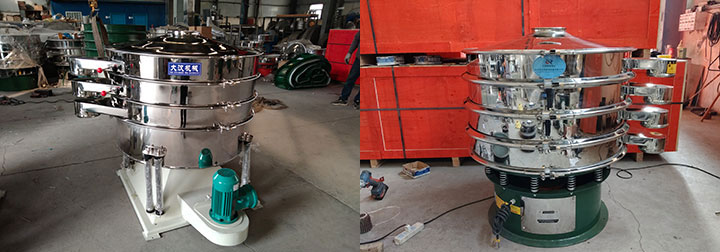
For fine powders, a tumbler screen can be considered when the process requires more time for particles to contact the mesh, gentle material movement, or separation into several size fractions. Its tumbling motion spreads the powder across the screen surface and gives particles repeated opportunities to reach the appropriate openings.
A vibratory screen can be a practical choice when the screening task is relatively straightforward, installation space is limited, or faster material movement is preferred. It is also widely used for general powder classification and screening duties. The suitable machine depends on the material and the required screening result rather than on the machine type alone.
- Choose a tumbler screen when: fine powder needs a longer screening path, gentle handling, or classification into several particle-size ranges.
- Consider a vibratory screen when: the process requires a compact screening unit, faster material movement, or a simple screening step.
- Compare both when: the powder is difficult to screen and the required cut size, capacity, or screen-cleaning method makes machine selection less obvious.
For a suitable selection, provide the powder name, feed particle size, required separation size, capacity, number of fractions, and any known issues such as sticking or screen blockage. These process details provide a more useful basis for choosing between tumbler and vibratory screening.
Powder Screening Applications
A tumbler screening machine can be used at different points in a powder processing line, depending on what needs to be removed or separated. The same machine may be used for size classification in one process and for removing unwanted oversized particles in another.
Powder grading: When a powder needs to be separated into defined particle-size ranges, different screen decks can be arranged in sequence. This allows fine, intermediate, and coarse fractions to be collected separately rather than sending the entire feed through a single screen.
Oversize and lump removal: Powders can form lumps during storage, transportation, or feeding. A tumbler screen can remove these oversized particles before the powder enters mixing, filling, packaging, or another downstream process.
Dedusting and fine-particle separation: Some processes require unwanted fines to be removed from a larger powder or granular product. The selected screen opening can separate the smaller particles while allowing the required product fraction to continue to the next stage.
Final product screening: A screening step can be placed before packaging to check the finished powder for oversized particles or unwanted material. This is useful when consistent particle size is part of the product specification.
Recovery of usable powder: In some production processes, screening is used to separate reusable fine material from oversized or rejected particles. The suitable screen arrangement depends on the desired recovery size and the characteristics of the material.
The appropriate application is determined by the purpose of the screening step, the powder characteristics, required cut size, feed rate, and the number of fractions required. These conditions should be considered together when configuring the tumbler screening machine.
Tumbler Screening Examples for Different Powders
Different powders can require very different screening arrangements even when they use the same type of tumbler screen. The screen opening, number of decks, cleaning method, and contact material should be selected according to how the powder behaves during screening.
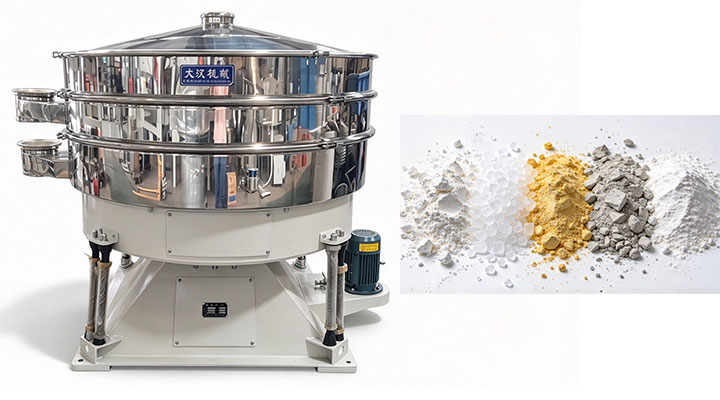
Flour and starch: These powders may require removal of lumps or oversized particles before further processing or packaging. A fine mesh can be selected for the required separation, while the screen-cleaning method can be considered if fine particles tend to remain on the mesh.
Sugar and seasoning powders: Screening may be used to separate fine product from unwanted coarse particles or agglomerates. When several particle sizes are required, multiple decks can be arranged to collect different fractions separately.
Chemical and resin powders: These materials can have different flow and adhesion characteristics. The screen opening should be selected according to the required particle-size range, while the machine construction and cleaning arrangement can be adapted to the material properties.
Mineral and inorganic powders: Screening is often used to classify the material into defined size ranges or remove coarse particles before the next processing stage. A suitable screen diameter and deck arrangement can be selected according to the feed rate and required fractions.
Fine specialty powders: For powders with a narrow target particle-size range, the screening setup needs to focus on the required cut size and stable material distribution across the mesh. Screen cleaning and contact-material selection become more important when the powder is prone to blockage or has strict cleanliness requirements.
These examples illustrate why a tumbler screening machine should be configured around the actual powder rather than selected only by machine diameter or mesh number. For a specific recommendation, provide a sample or material description together with the target particle size, capacity, and required screening result.
Cleaning Options for Fine Powder Screening
Fine powder can gradually cover or block the screen openings during continuous screening, especially when the particles are very small, adhesive, electrostatic, or prone to agglomeration. The screen-cleaning method should therefore be selected according to how the powder interacts with the mesh.
Rubber ball cleaning: Bouncing balls placed beneath the screen can repeatedly contact the mesh during operation and help dislodge particles that remain in the openings. This is a practical option for powders and granular materials with relatively good flowability.
Rotating brush cleaning: Brushes move beneath the screen surface and provide continuous mechanical contact with the mesh. This method can be considered when the material needs a relatively gentle cleaning action or when particles tend to remain on the screen.
Ultrasonic cleaning: An ultrasonic system introduces high-frequency vibration directly to the screen mesh. It is particularly useful for fine powders where small particles can block fine openings or adhere to the mesh surface. Ultrasonic cleaning is commonly used when conventional mechanical cleaning is not sufficient for the required screen opening.
The cleaning system does not need to be selected independently from the rest of the machine. Mesh opening, powder characteristics, feed rate, and the required screening result should all be considered when deciding whether balls, brushes, ultrasonic cleaning, or a combination is appropriate.
If your powder frequently blocks the screen, provide information about its particle size, moisture, flowability, and target mesh opening when requesting a tumbler screening machine. A material test can also help determine the appropriate screen-cleaning arrangement.
Built Around Your Powder and Process
A tumbler screening machine should be configured around the actual screening task rather than selected from a standard model alone. The same screen diameter and mesh opening can produce different results when the powder, feed rate, or required separation changes.
The powder itself is the starting point. Particle size, flowability, moisture, bulk density, adhesion, and the tendency to form lumps can all affect how the material moves across the screen. These characteristics help determine the suitable screen opening, cleaning method, and screening arrangement.
The required result then determines the machine configuration. A simple oversize-removal process may only need one screening deck, while several target particle sizes may require multiple decks with different mesh openings. Feed capacity also needs to be considered when selecting the available screening area.
Construction and discharge details can be adapted to the process as well. Stainless steel can be selected where the material-contact surfaces require specific corrosion resistance or cleanliness conditions, while the inlet and outlet arrangement can be matched to the existing production line.
For a practical equipment recommendation, provide the powder name, feed particle-size range, target particle size, required capacity, number of fractions, moisture or flow characteristics, and any screen-blocking issues. If the application is difficult to define from process data alone, a material test can provide additional information for final configuration.
Frequently Asked Questions
Can a tumbler screening machine separate very fine powder?
Yes. A tumbler screening machine can be configured for fine powder screening with a suitable mesh opening and screen-cleaning system. For very fine powders, particle size, feed rate, material characteristics, and the tendency of the powder to block the mesh should be considered together.
How do I choose the right tumbler screen for my powder?
The selection should be based on the powder, required cut size, processing capacity, number of particle-size fractions, and material behavior. Screen diameter, mesh opening, number of decks, cleaning method, and construction material can then be selected according to these requirements.
What information should I provide when requesting a tumbler screening machine?
Provide the powder name, approximate particle-size range, required separation size, processing capacity, number of fractions, and any known issues such as sticking, agglomeration, or screen blockage. A material sample can also be useful when the screening conditions are difficult to determine from process data alone.
Need a Tumbler Screening Machine for Your Powder?
Send us your powder name, required particle size, processing capacity, and number of size fractions. If the powder is prone to sticking, agglomeration, or screen blockage, please include this information as well. Our team can review your screening requirements and recommend a suitable tumbler screening configuration.
Request a Quote for your powder screening application and discuss the required screen size, mesh opening, deck arrangement, and cleaning method.

How to Calculate Vibro Sifter Capacity and Yield? Formula & Selection Guide
Calculating How to Calculate Vibro Sifter Capacity and Yield? requires more than checking screen diameter or machine specifications...
Preventing Mesh Clogging in High-Moisture Grain Screening: Practical Solutions
Screening grains with elevated moisture levels routinely triggers severe mesh blinding...
How to Choose Between Stainless Steel and Synthetic Mesh for Polymer Screening
In polymer extrusion and compounding, the screen mesh sits between the screw and the die...

Email:
sale@xxdahan.com
WhatsApp:
+86 15236742901
Add:
1000m West of Forest Park,Yanjin County,Xinxiang City,Henan Province,China.