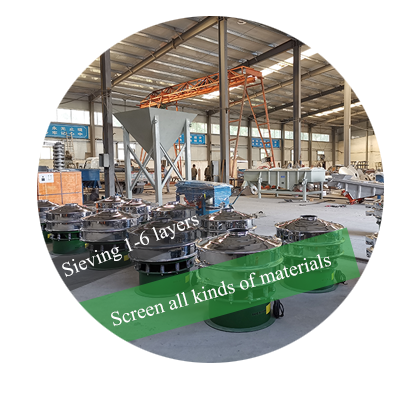
Tumbler Screening Machines
What are Tumbler Screening Machines?
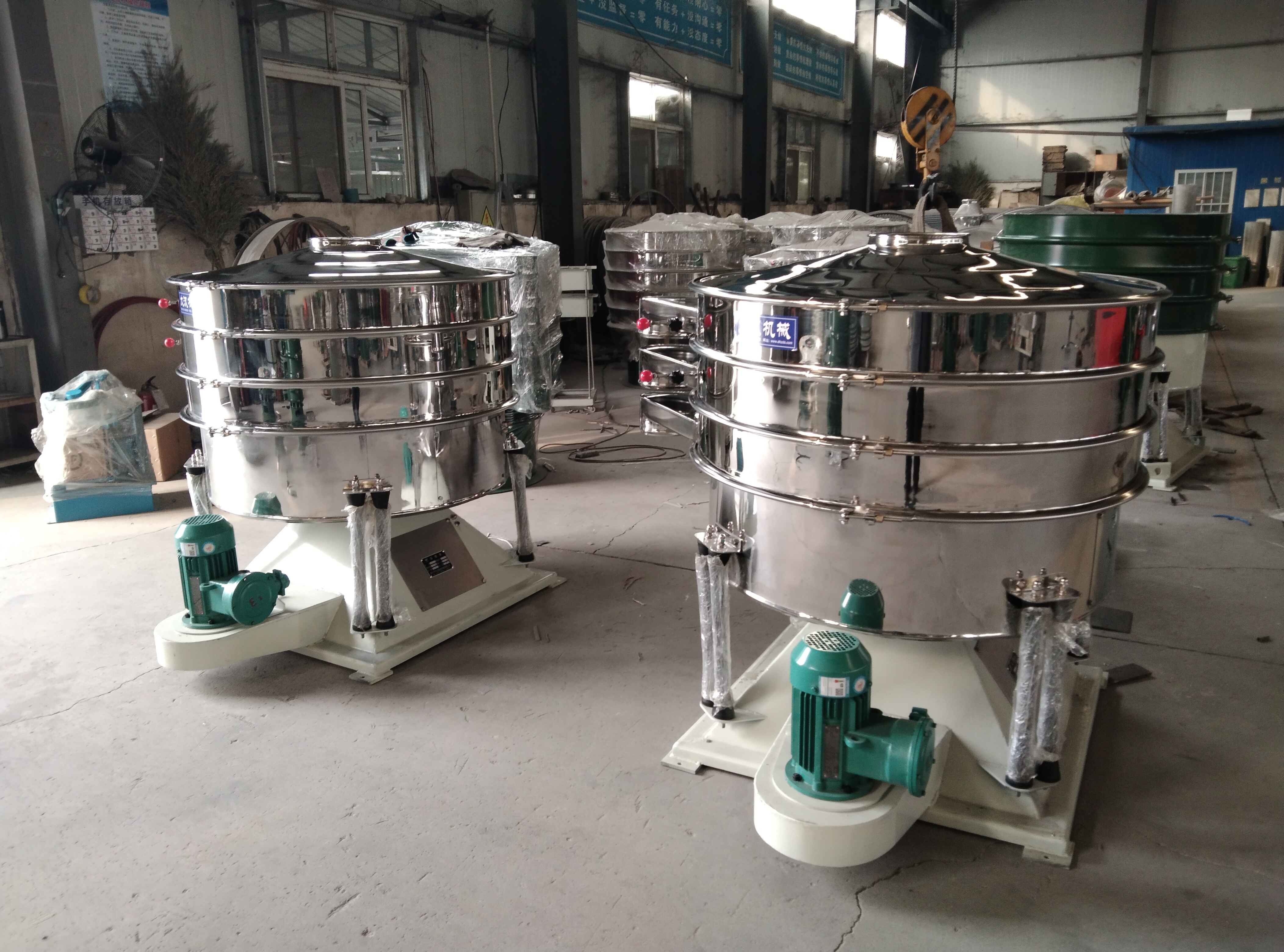
Tumbler Screening Machines are available in carbon steel, stainless steel, and special steel to meet diverse operating requirements, such as corrosion resistance, wear resistance, and anti-static properties. Using a rocking motion, these machines classify, remove impurities, separate solids and liquids, and perform particle size analysis on powders and granular materials.
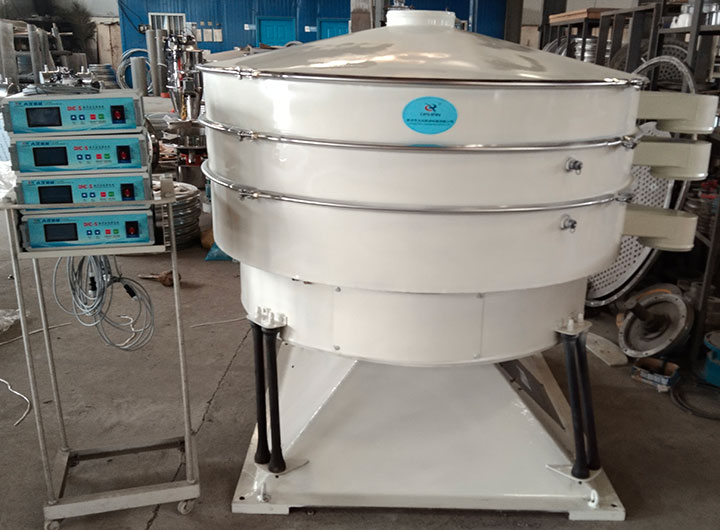
Tumbler Screening Machines excel at handling fine powders and irregular particles that are prone to dusting, require high precision, high density, are prone to adhesion, and carry static electricity, without disrupting the material's shape. With a single machine throughput of 1 kg/h to 50 t/h, they can screen particle sizes ranging from 25 mm to 37 microns (400 mesh) and even finer. These machines are typically configured with one to five screen layers, allowing for simultaneous separation of two to six different product sizes.
Tumbler Screening Machines Video Showcase
Advantages of Using Tumbler Screening Machines
Tumbler Screening Machines effectively separate fine materials, operate quietly and smoothly, and can handle granular, powdery, and even pasty materials. Whether it's chemical raw materials, metal powders, food ingredients, or plastic granules, and whether the material is dry, wet, or oily, it can screen it effectively. It can handle a wide range of particle sizes, from ultrafine powders of 20–200 microns to coarse particles of 10–50 millimeters. With multiple layers of screens, it can separate 2 to 6 different grades in one pass. The operation is similar to manual screening, but the material stays on the screen for a longer time, achieving grading, impurity removal, and solid-liquid separation with a purity of over 95%. The smooth operation prevents clogged screens caused by easily agglomerated, static-charged, or moist materials, making daily cleaning and maintenance convenient. The equipment is mostly constructed of 304 or 316 stainless steel, which is acid and alkali resistant, suitable for food and pharmaceutical applications, and meets explosion-proof requirements. It boasts high output, low power consumption, and is suitable for continuous production. It can also be used safely in processing flammable, explosive, and volatile materials.
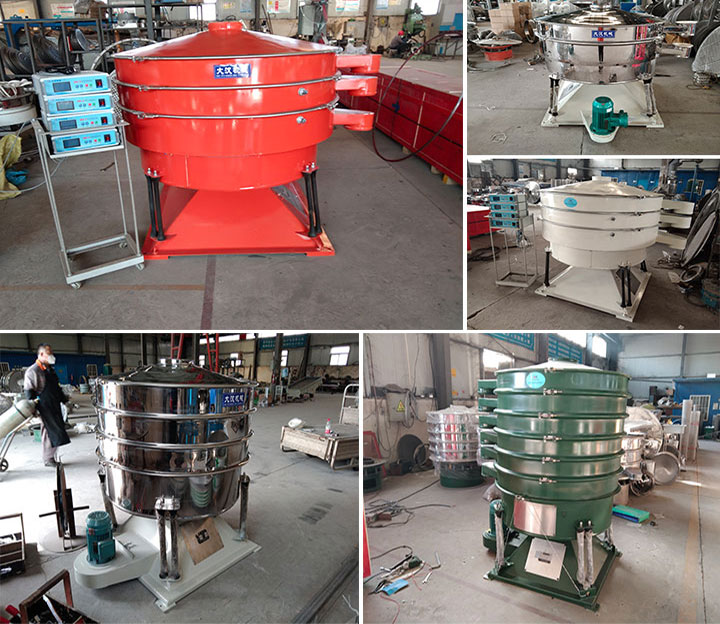
Parameters of Common Tumbler Screening Machines
Tumbler Screening Machines are available in a variety of materials, including stainless steel wire mesh, mild steel wire mesh, polyester mesh, nylon mesh, and specially coated mesh. Screen diameters range widely, from 400mm to over 2000mm, and are customizable. The figure below shows the parameters of common Tumbler Screening Machine models:
| Particle feed size: | 1 micron up to 20 mm | ||||||
| Feed rates: | 1kg/h – 50 ton/h | ||||||
| Bulk densities: | 20 – 10000 grams/liter | ||||||
| Mesh openings: | 20 microns to 20 mm | ||||||
| Screens usable: | 304, 316L, or 430 stainless steels or plastic wire mesh fabric, perforated plates | ||||||
| No. of screen decks: | 1 – 6 per machine | ||||||
| Anti-blinding systems: | – Rubber balls | ||||||
| – Rotating roller brush arms | |||||||
| – Rotating air-jet nozzle arms | |||||||
| – Ultrasonic | |||||||
| – Combinations | |||||||
| Speed range: | 180-280 min-1 | ||||||
| Screen movement: | Three-dimensional, set to product | ||||||
| Amplitude: | 40-80 mm horizontally and 5-40 mm vertically | ||||||
| Acceleration: | 1,3-1,8 g | ||||||
| Model sizes/ca. Ø: | 600 | 1000 | 1200 | 1600 | 2000 | 2400 | 2600 |
| Screening surface (m²): | 0.292 | 0.785 | 1.13 | 1.83 | 2.63 | 4.52 | 5.31 |
| Motor power (kW): | 0.25 | 1.5 | 2.2 | 2.2 | 4 | 5.5 | 5.5/7.5 |
| Materials: | Carbon steel, Stainless and Special steels | ||||||
| Surfaces: | Painted, brushed or ground, mirror or electro polished, and ViwateQ options for Food and Pharmaceutical products with a surface roughness of < 0.4 microns (GMP, FDA compliant). | ||||||
Operating Principle of Tumbler Screening Machines
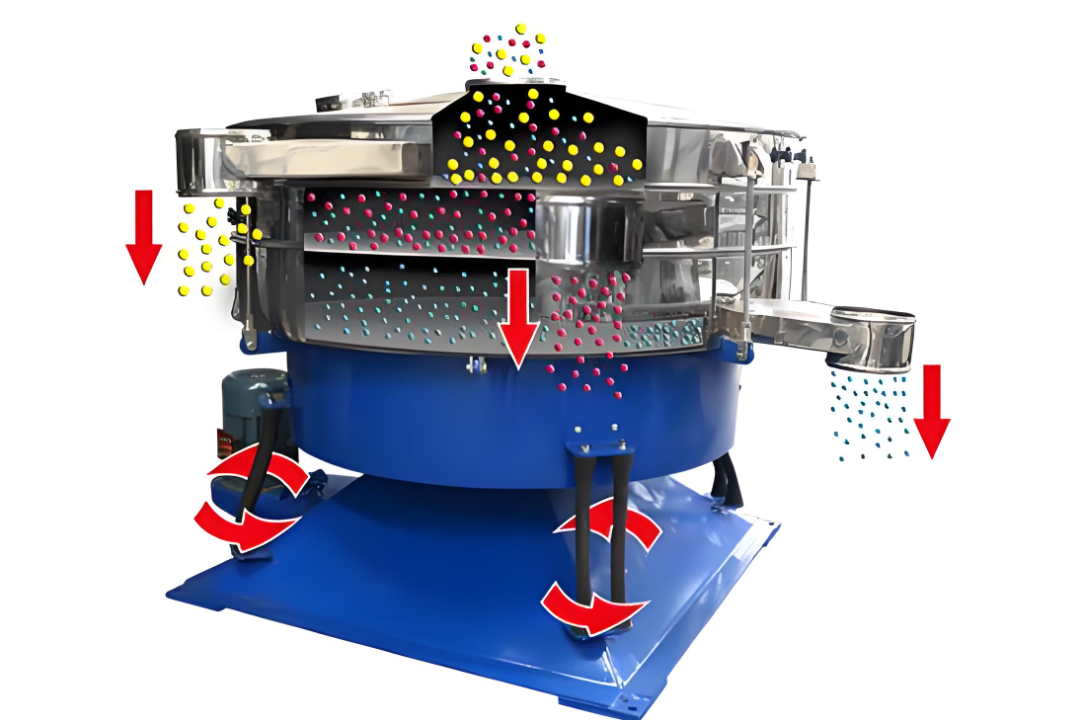
Tumbler Screening Machines during operation, a motor, through a specially designed transmission system, drives the screen in an elliptical oscillating motion, mimicking manual screening. The material on the screen first moves in a horizontal circular motion, gradually spreading outward. Then, a slight vertical tossing motion occurs, causing fine particles to pass quickly through the screen and coarse particles to move toward the discharge end. This motion not only loosens the material, preventing clumping and screen blockage, but also prolongs the material's residence time on the screen, improving screening accuracy and efficiency. Throughout this process, the screen remains tensioned, preventing localized wear and further enhancing screening consistency and stability.
Tumbler Screening Machines Applications
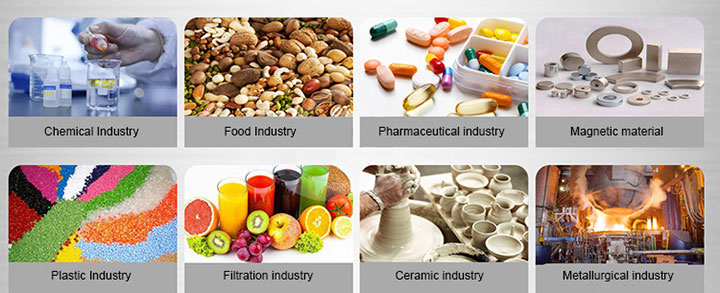
Tumbler Screening Machines offer high screening precision, efficient use of screen mesh, minimal clogging, and reduced dust emission, making them ideal for grading, removing impurities, and filtering dry powders and granular materials. In the food industry, they can screen flour, powdered sugar, starch, yeast, salt, monosodium glutamate, milk powder, soy milk powder, fruit juice powder, pepper powder, chili powder, tea, dehydrated vegetables, and various food additives. In the pharmaceutical and cosmetic fields, they can screen Chinese medicine powders, Western medicine raw materials, pill granules, health product powders, creams, facial mask powders, talcum powder, pearl powder, rouge, eyeshadow, and other raw materials. The chemical and plastics industries commonly use them to screen resins, pigments, dyes, coatings, powder coatings, PVC powder, additives, laundry detergent, pesticides, rubber granules, and plastic masterbatches. In metallurgy and mining, they can screen iron, aluminum, copper, and other metal powders, alloy powders, abrasives, quartz sand, kaolin, mica powder, and ore particles. In the ceramic building materials industry, it is used to screen materials such as glaze, ceramic powder, glass powder, graphite powder, cement additives, refractory materials, and gypsum powder.
Tumbler Screening Machines Application Scenarios Diagram
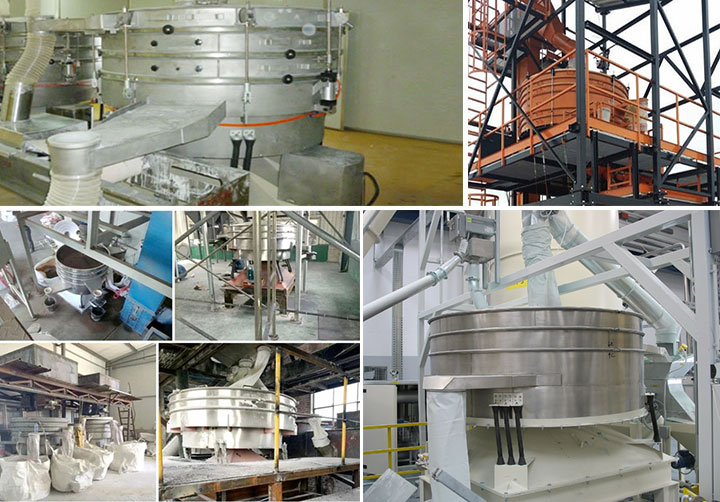
Tumbler screening machines address the pain points of traditional vibrating screens when processing specialized materials, including low efficiency, clogging, high dust generation, and substandard accuracy. Whether you're looking to improve product quality, optimize production processes, or create a cleaner and safer working environment, choosing the right vibrating screen is a worthwhile investment.
-
Swing Vibrating Screen Screening Petroleum Coke Powder
The Swing Vibrating Screen Screening Petroleum Coke Powder is designed to process fine, dusty, and potentially statically and sticky materials like petroleum coke powder...
-
Chinese medicine particle swing screen
Chinese medicine particle swing screen is the main equipment in the production of Chinese medicine preparations, designed for particle classification...
-
Glutinous rice flour food industry vibrating screen
Glutinous rice flour has the characteristics of strong viscosity, easy agglomeration and fine particles...
-
Circular swing screen
Circular swing screen, also known as swing screen or shaking screen, is a low-frequency rotary vibration screening equipment that imitates manual shaking screening...

Email:
sale@xxdahan.com
WhatsApp:
+86 15236742901
Add:
1000m West of Forest Park,Yanjin County,Xinxiang City,Henan Province,China.