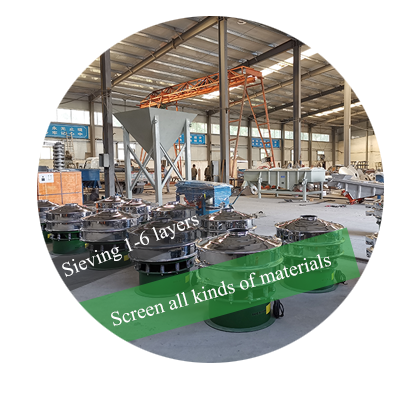
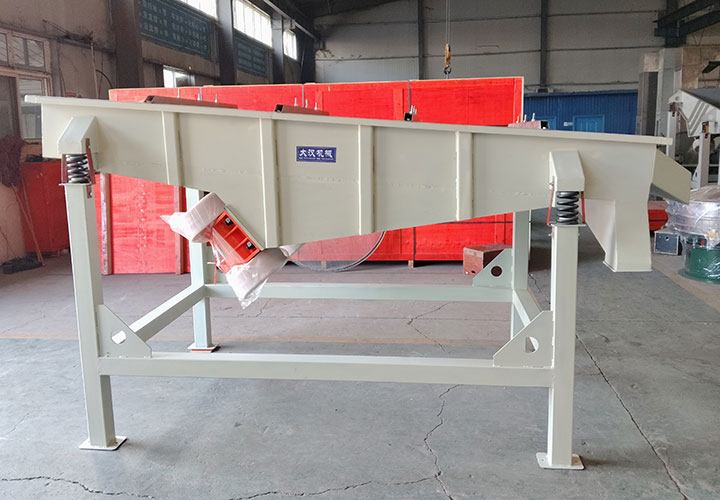
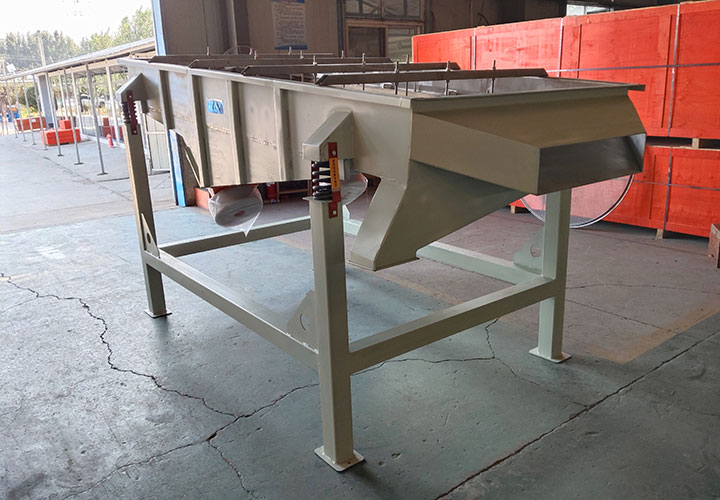
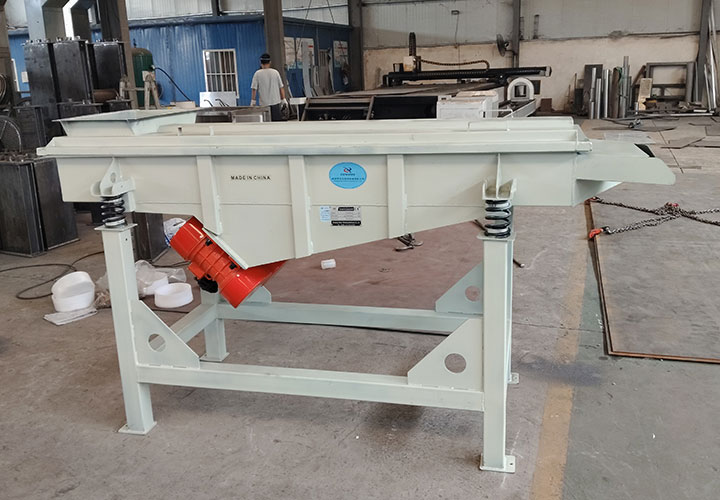
Linear Vibrating Screen
![[field:title/]](/uploads/260813/1-260Q31P041924.png)
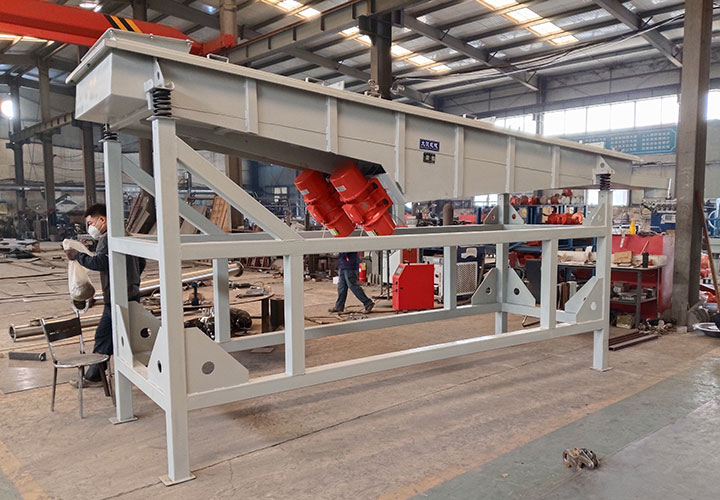
Callback
| Model Range | DZS0412 – ZS2468 (screening area 0.48–16.3 m²) |
| Capacity | 20–400 t/h (depending on material properties) |
| Screening Accuracy | ±0.5 mm (dry material efficiency up to 90–95%) |
| Vibration Parameters | Amplitude 2–7 mm, deck angle 0°–10° (adjustable) |
| Drive | Dual vibration motors (power 0.25–2×16 kW) |
| Screen Mesh | Woven wire (dry) or polyurethane (moisture >8%) |
| Industries | Mining, coal, food, chemical, building materials, plastics, etc. |
Straight-line reciprocating motion ensures stable material travel and reduces plugging.
Energy consumption is only 1/4–1/5 of other screen types.
Easy maintenance (2–3 hours weekly), with lower CAPEX and OPEX than circular screens.
Especially suitable for fine particles (<3 mm), wet/sticky materials, and dewatering applications.
Proven in over 200 material tests across 30 industries – achieving >95% classification accuracy with proper configuration.
Introduction
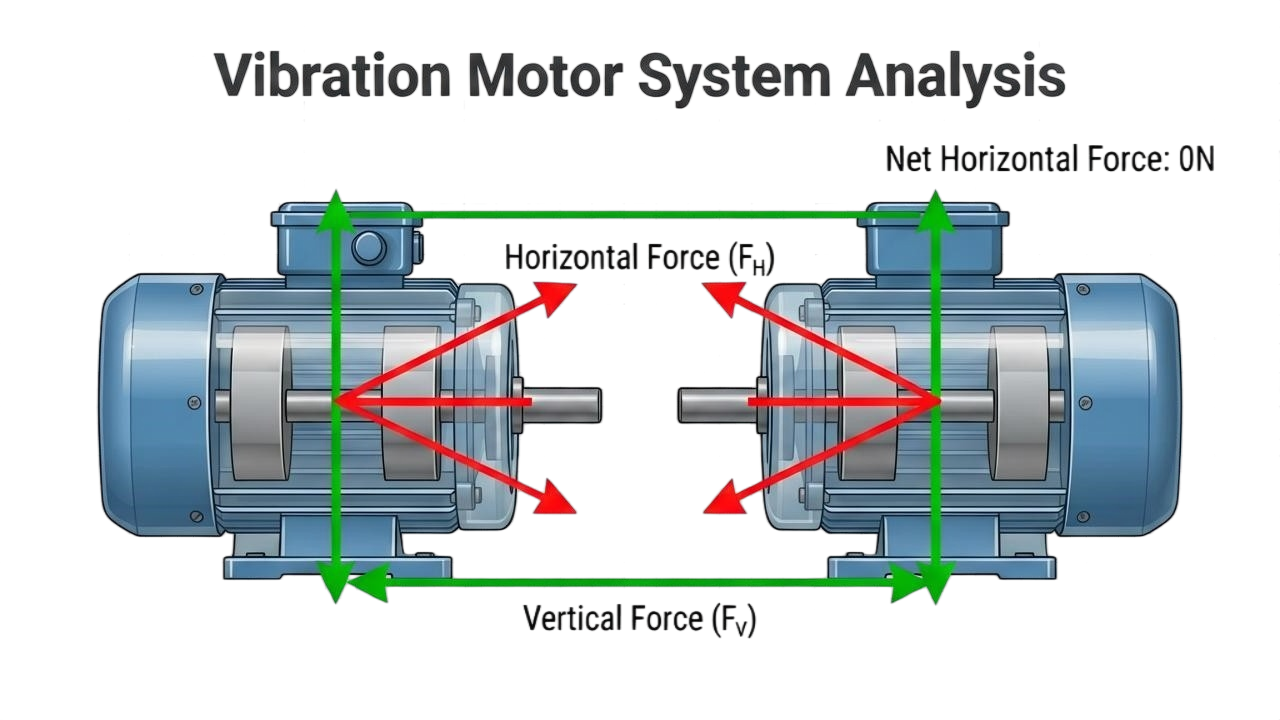
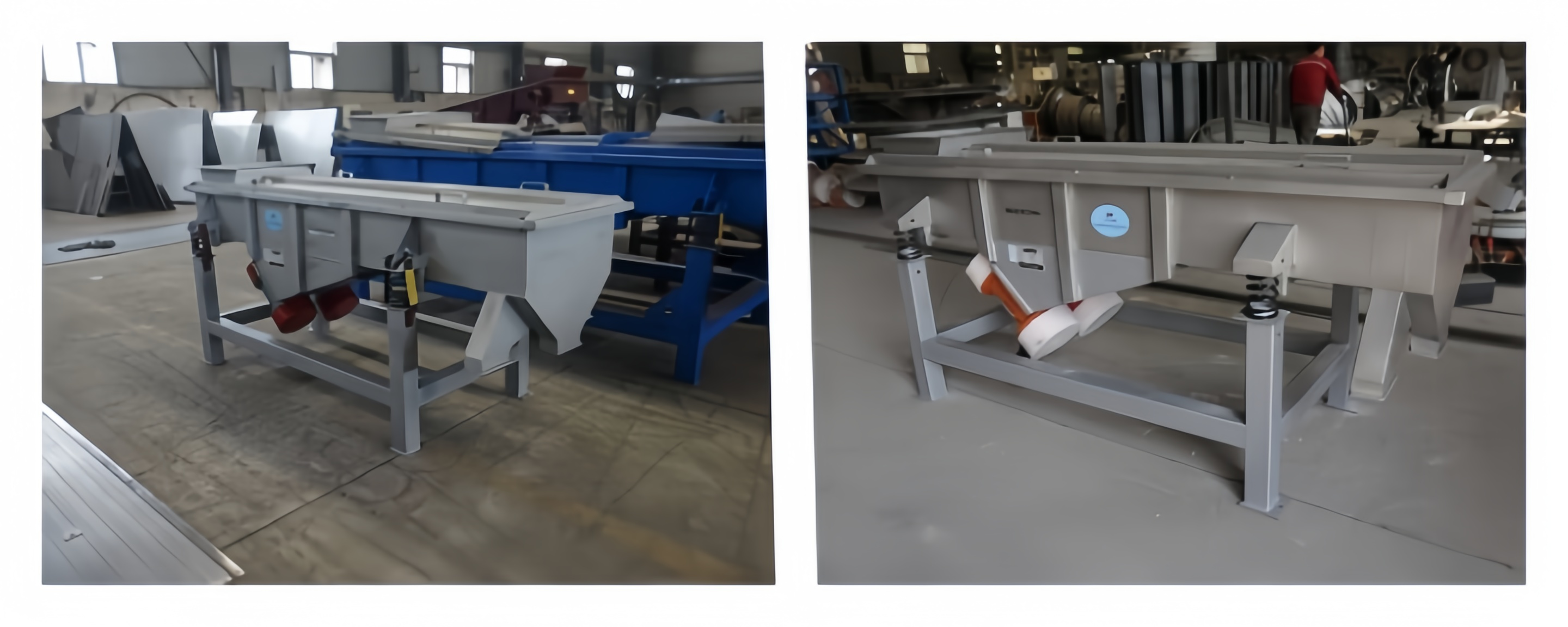
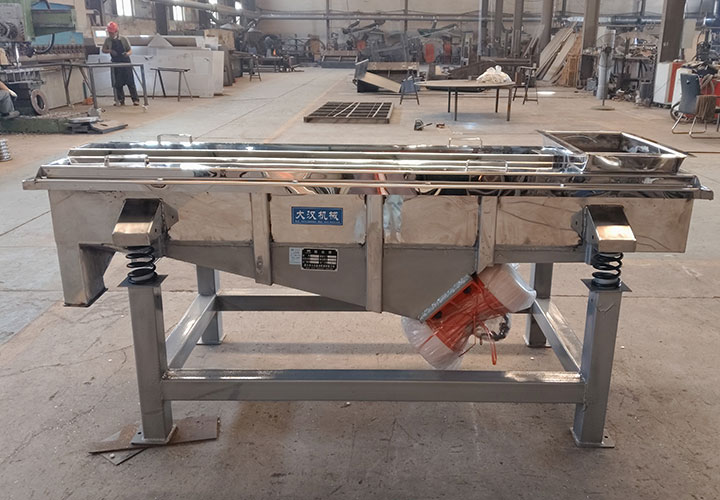
A linear vibrating screen is a screening machine where the screen box moves in a straight-line reciprocating motion. Driven by two vibration motors rotating in opposite directions, it generates a linear excitation force that throws material forward while separating it by particle size. Widely used in mining, coal, food, chemical, and pharmaceutical industries.
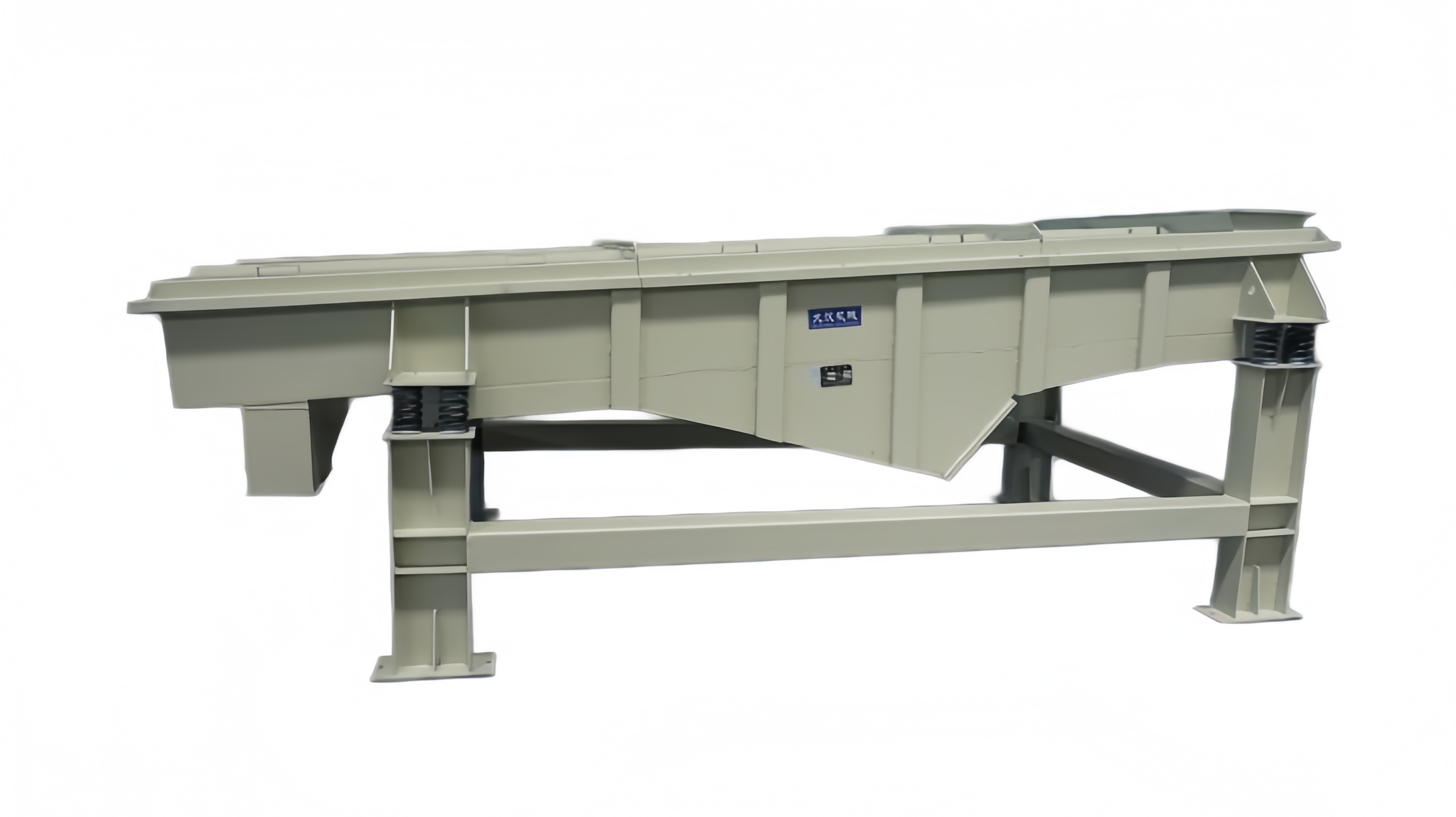
What sets it apart? Unlike circular screens, the linear motion allows material to travel at a steady speed, avoiding random wedging of particles into screen apertures.
From our testing: Over five years, we have conducted screening tests on over 200 material samples across 30 industries. The linear vibrating screen consistently achieves sizing accuracy above 95% when properly configured—the key is matching configuration to material, not simply buying the largest model.
Working Principle
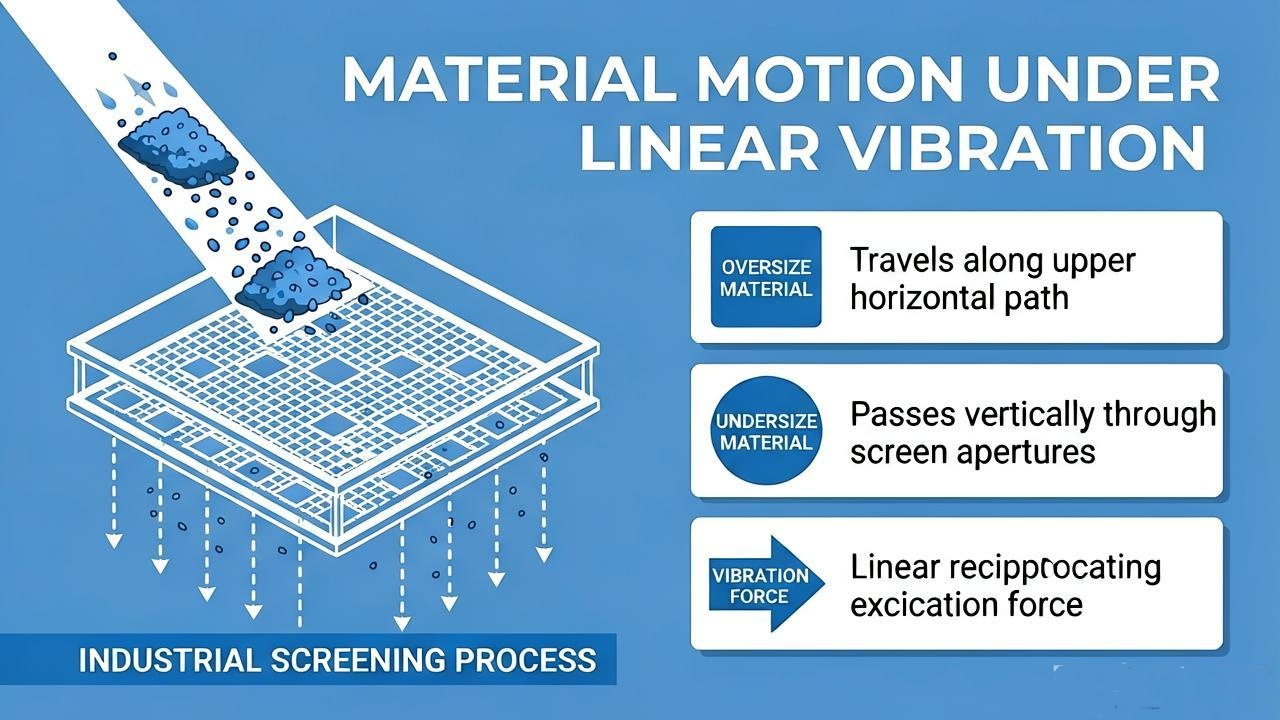
A linear vibrating screen works by using dual vibrating motors to create a straight-line motion. Two motors rotate in opposite directions, cancelling transverse forces and combining longitudinal forces. This drives material forward in a continuous trajectory—smaller particles fall through the mesh while oversize material discharges at the end.
What most guides won't tell you: For materials with bulk density below 0.8 t/m³, the standard 5° deck angle is too steep. Reducing to 3° increases retention time by 40% and improves yield by 15–22%.
Key Features
High Efficiency: Up to 95% for dry materials—holds even at ±20% feed rate fluctuation;
Large Capacity: Handles up to 1,500 m³/h;
Low Energy: Uses only 1/4–1/5 the power of other screen types;
Adjustable Angle: 0° to 10°, with 5° optimal for most moist applications;
Easy Maintenance: 2–3 hours weekly; 70% of unplanned downtime is from neglected spring inspections.
Linear vs. Circular: Key Differences
| Feature | Linear Screen | Circular Screen |
|---|---|---|
| Motion | Straight-line forward | Circular/elliptical |
| Drive | Dual motors (two shafts) | Single shaft with inertial motor |
| Screen shape | Rectangular | Circular/square |
| Best for | Fine particles (<3mm), dewatering | Coarse particles (>10mm), scalping |
| Efficiency | 90–95% (dry) | 85–92% |
| Accuracy | ±0.5mm | ±1.0mm |
Choose linear for: fine particles, wet/sticky materials, dewatering, and operations requiring high precision.
Choose circular for: coarse particles, high-capacity primary scalping.
Real case: A coal preparation plant switched from three circular screens to a single linear screen with three decks. Result: floor space reduced 65%, energy cut 42%, maintenance dropped from 12 to 4 hours per week.
Applications
| Industry | Applications |
|---|---|
| Mining | Ore classification, coal dewatering, aggregate grading |
| Food | Flour, starch, sugar powder screening |
| Chemical | Fertilizer, resin, powder classification |
| Building Materials | Sand, cement screening |
| Plastics | Granule grading, PET flake cleaning |
Experience-based insight: For materials with moisture above 8%, polyurethane mesh reduces blinding by 70% vs. woven wire. In a quartz sand plant processing 45 t/h, this boosted efficiency from 81% to 94%.
Technical Specifications
| Model | Area (m²) | Decks | Amplitude (mm) | Motor (kW) | Capacity (t/h) |
|---|---|---|---|---|---|
| DZS0412 | 0.48 | 1–2 | 2–4 | 0.25 | 20–50 |
| DZS1020 | 2.0 | 1–3 | 3–5 | 2×1.1 | 50–150 |
| DZS1530 | 4.5 | 2–4 | 4–6 | 2×1.5 | 100–250 |
| ZS2052 | 10.4 | 5 | 5–7 | 2×7 | 240 |
| ZS2468 | 16.3 | 6 | 5–7 | 2×16 | 400 |
Values vary with material properties; listed capacities are maximums.
Selection Guide
Step 1: Analyze material
Particle size <3mm → linear screen recommended
Moisture >8% → polyurethane mesh; <5% → woven wire
Bulk density <0.8 t/m³ → reduce deck angle to 3°
Exclusive insight: Our 200+ material tests show angular particles (crushed stone) require 15–20% more screen area than rounded particles (river sand) for the same throughput.
Step 2: Size for capacity
Formula: Screen area (m²) = Throughput (t/h) ÷ (Mesh opening in mm × 4)
Example: 60 t/h at 3mm → 60 ÷ (3 × 4) = 5 m².
Step 3: Compare total cost
CAPEX: 10–15% less than circular screens
OPEX: 15–20% lower (avg. 11.2 kWh/ton)
FAQ
Q: How does a linear vibrating screen work?
A: Dual vibration motors rotating in opposite directions create straight-line motion, throwing material forward while smaller particles pass through the mesh.
Q: Linear vs. circular—which to choose?
A: Linear for fine particles (<3mm), wet materials, and dewatering. Circular for coarse particles (>10mm) and high-capacity scalping.
Q: Why won't material move forward?
A: Most common: both motors rotating in the same direction due to incorrect wiring. Check wiring immediately.
Q: Why does material run to one side?
A: Uneven ground, no feed distributor, or inconsistent motor counterweight angles. Level the base and ensure both counterweights are set to the same angle.
Q: What causes abnormal noise?
A: Loose bolts, broken support springs, or damaged bearings. Stop immediately, tighten bolts, inspect springs—replace every 8,000–10,000 operating hours.
Procurement Info
| Parameter | Range |
|---|---|
| MOQ | 1 set |
| Price | $1,000 – $20,000+ |
| Delivery | 1–15 days after deposit |
| Warranty | 12–24 months |
Conclusion
The linear vibrating screen is a versatile, energy-efficient solution for classification, dewatering, and impurity removal across mining, food, and chemical industries. Its simple construction, low operating cost, and high accuracy make it essential in modern processing.For a free material screening analysis and customized recommendation, contact our engineering team.


-
How to Choose Between a Rotary Vibrating Sieve and a Linear Screen?
Compare rotary vibrating sieves and linear vibrating screens by specifications, working principles, a ...
-
Linear vibrating screen quartz sand
Linear vibrating screen quartz sand uses a vibrating motor as a vibration source to remove impurities ...
-
Linear Vibrating Screen For Plastic Particles
Linear Vibrating Screen For Plastic Particles reduces friction and breakage while separating dust fro ...
-
Square Linear Vibrating Screen for Mica Powder
Square mica powder linear vibrating screen uses a multi-layer screen to achieve accurate particle siz ...
-
How to Choose Vibrating Screen Mesh Size: 5-Step Guide & Tool
Selecting the correct vibrating screen mesh size directly determines screening efficiency, product quality, and equipment service life...
-
Single-Deck vs Double-Deck Inclined Screens: Differences & Selection Guide
If you're in aggregate, mining, or industrial processing, you've likely faced this question: Single-deck or double-deck inclined vibrating screen?...
-
Factors Affecting Industrial Vibrating Screen Price: 8 Key Factors
The price of an industrial vibrating screen depends on more than machine size...

Email:
sale@xxdahan.com
WhatsApp:
+86 15236742901
Add:
1000m West of Forest Park,Yanjin County,Xinxiang City,Henan Province,China.