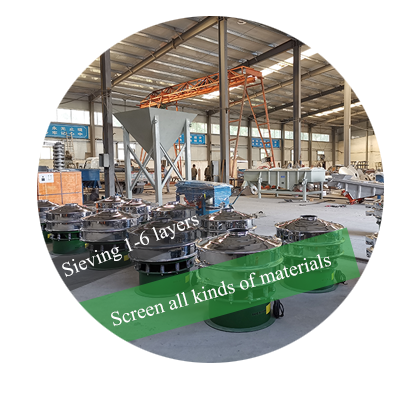
Vibratory Sifter Price
Vibratory Sifter Prices typically range from $500 to $6,000 USD, varying based on diameter, type, and application. Some models with special structures are more expensive. The difference isn't determined by a single factor, but rather by a combination of variations in screening accuracy, throughput capacity, and structural configuration. For example, a 600mm diameter vibratory sifter will have completely different internal designs for handling fine powders and granular materials, resulting in significant cost differences.
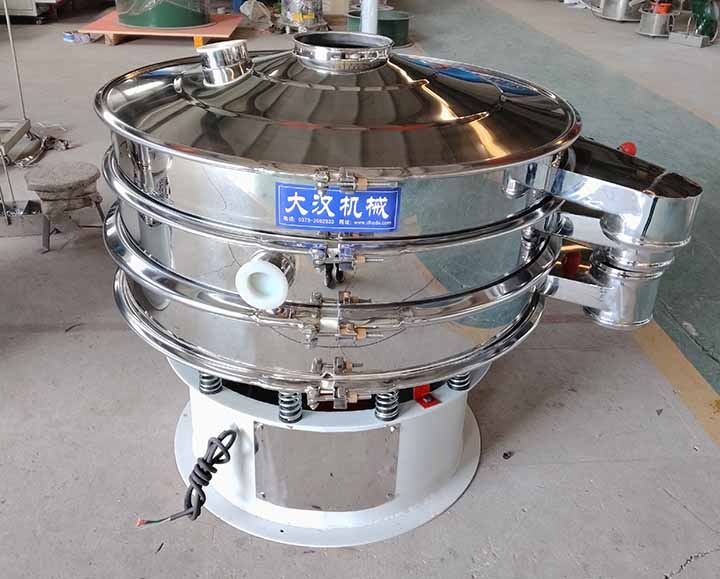
How Much Does a Vibratory Sifter Cost?
Type-based vibratory sifter price differences depend on the structure and application requirements. For instance, standard models are suitable for most materials, while ultrasonic models are needed for screening finer particles, increasing the price. Laboratory models have higher requirements for classification accuracy and standardization, resulting in different prices.
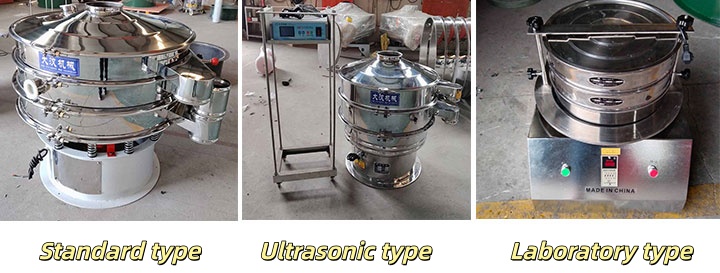
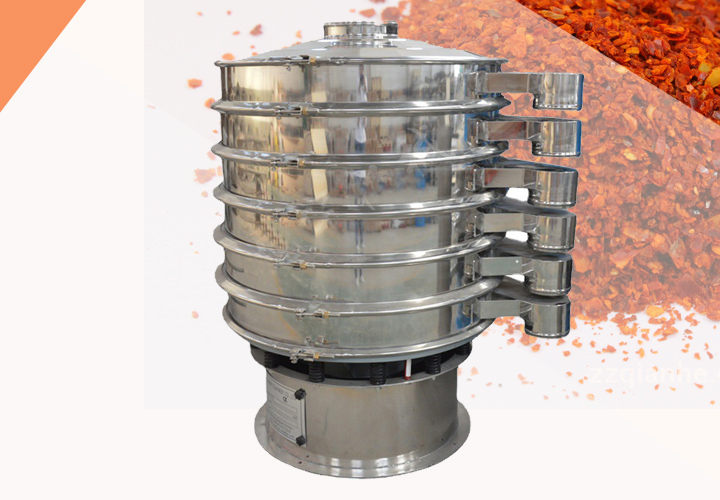
Standard vibratory sifters generally cost between $800 and $2,500 USD and are commonly used for the initial screening of powder raw materials, such as plastic granules, chemical powders, and mineral powders before they enter the next processing stage. Because there are no complex additional systems, maintenance is concentrated on screen tension and bearing lubrication, resulting in lower overall costs.
Ultrasonic vibrating screens typically cost between $2,000 and $6,000+ USD. Their applications are more geared towards situations where fine powders easily clog the screen, such as the classification of silica powder, titanium dioxide, and metal powders. The addition of an ultrasonic system, electrical control module, and matching power supply significantly increases the overall cost compared to the standard model.
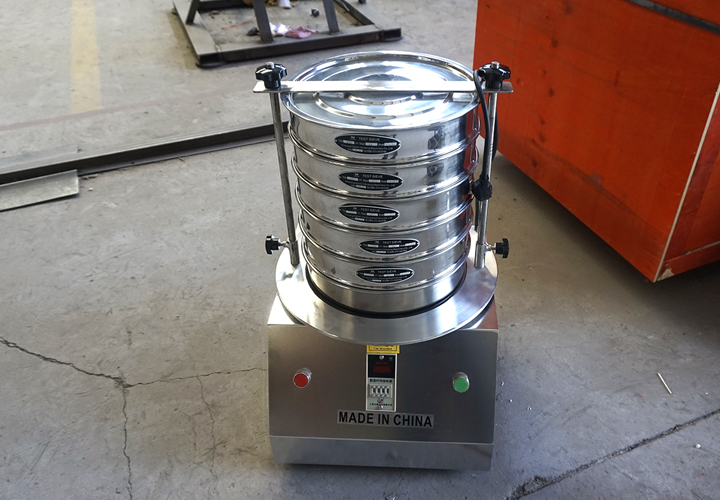
Laboratory vibrating screens generally cost between $500 and $2,000 USD. They are mostly used for small-batch testing in the R&D stage, such as classification experiments of powders with different particle sizes or comparative sieving of new materials. Due to lower production requirements and lower motor power, the overall weight is usually manageable by a single person, resulting in a relatively lower price range.
Vibratory Sifter Price Parameter Table
| Equipment Type | Typical Diameter | Price Estimate (USD) | Core Value |
| Standard Vibratory Sifter | 400mm – 1200mm | $800 – $2,500 | General powder sieving, e.g., plastic pellets, mineral powder |
| Ultrasonic Vibratory Sifter | 600mm – 1500mm | $2,000 – $6,000+ | Fine powder anti-clogging sieving, e.g., titanium dioxide, ultrafine powder |
| Laboratory Vibratory Sifter | 200mm – 300mm | $500 – $2,000 | Sample testing and particle size analysis |
Factors Affecting the Price of a Vibratory Sifter
Factors affecting the price of a vibrating screen often stem from subtle changes in the internal structure of the equipment. Regarding the material of the machine body, 304 stainless steel and carbon steel differ significantly in their processing methods. Stainless steel requires stretching and forming from a single sheet and then polishing the weld seams to prevent powder accumulation and residue at the edges. Carbon steel structures are mostly used in applications where corrosion resistance requirements are not high, and their cost is relatively lower.
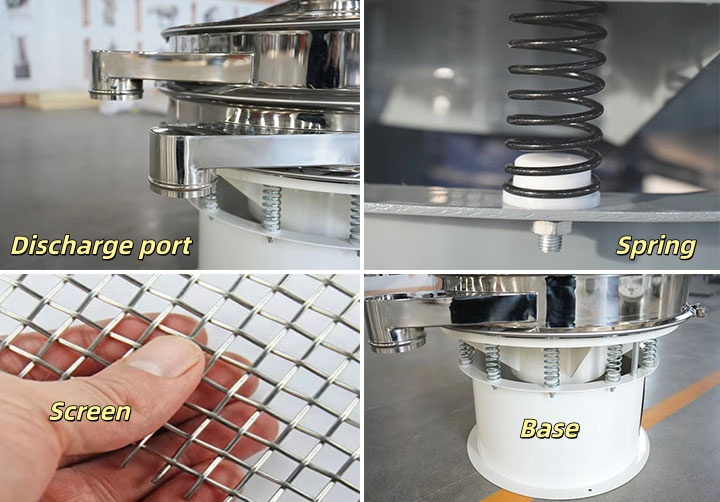
The number of screening layers is also a direct factor. Single-layer equipment is used for single-stage grading, while multi-layer structures can complete particle size segmentation during the same operation. For example, a three-layer vibrating screen can simultaneously separate coarse, medium, and fine materials. Stacked screen frames require a stronger support structure and a more stable vibration balance design.
Differences in motor configuration affect operating conditions. Some operating conditions require long-term continuous operation, such as in plastic recycling production lines. In these cases, the motor needs a superior heat dissipation design and an eccentric block adjustment structure to change the amplitude range.
Customization increases costs. For example, the feed inlet may need to be directly connected to the screw conveyor, or the discharge end may need to be designed as a closed pipeline to prevent dust diffusion. In plastic recycling, wet powder can easily clog the screen, often requiring a reduced feed speed or the addition of an ultrasonic system. These factors all affect configuration and price.
The Impact of Regional Vibratory Sifter Price
Regional differences are also significant in vibratory screen pricing. Factors such as export packaging standards, motor brand selection, and voltage affect the price.
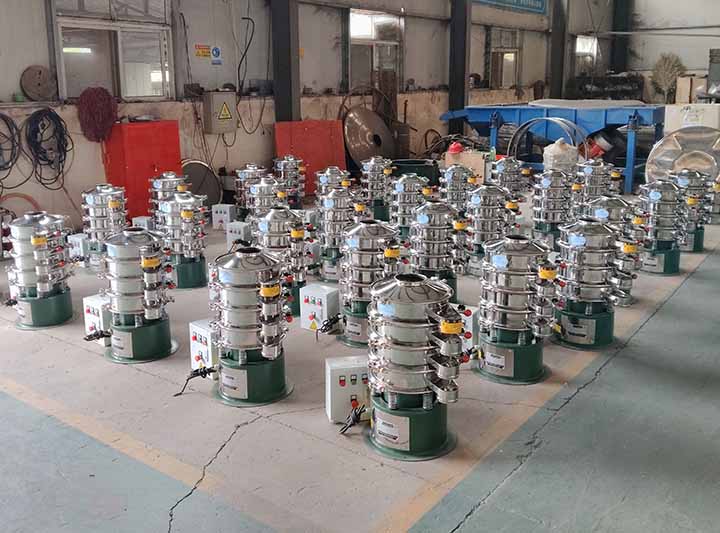
Equipment manufactured in China typically has lower costs in material procurement and processing. Many factories are concentrated in supporting industrial chains such as vibratory motors, screen frame stamping, and welding assembly. Therefore, prices for equipment of the same specifications tend to be concentrated in the lower range.
Equipment prices in the Indian market are tiered. Some come from local assembly plants, using imported key components for local assembly, while others are imported as complete machines. Therefore, there can be significant price differences for the same model of equipment. Transportation time also affects the final cost.
Vibratory screen prices in the US market are generally higher, related to local manufacturing costs, labor costs, and certification processes. Some equipment requires electrical standards and structural safety verification before entering the factory, and these additional processes are reflected in the total equipment price.
How to Choose the Right Equipment?
When selecting equipment, the vibratory sifter price is usually evaluated along with material availability, production capacity requirements, and installation limitations. An inappropriate selection may increase the total cost.
When selecting a suitable vibrating screen, the actual operating scenario is more important than the specifications. If processing powders with poor flowability, such as slightly agglomerated plastic powder, it's necessary to consider whether the screen surface is prone to clogging. In this case, the screen structure and vibration trajectory will affect the operating performance.
Processing capacity is usually measured in hourly output. A small pilot line might only handle tens of kilograms, while a continuous production line could reach several tons per hour. It's necessary to confirm in advance whether the feeding method is manual or a screw conveyor.
The screen mesh size determines the grading particle size. For example, 80 mesh is used for coarse sieving, and 200 mesh for fine powder separation. Different mesh sizes will affect the balance between sieving time and output.
Whether a customized structure is needed also depends on the site layout. For example, does it need to match the height of the existing conveyor belt, or does it need side discharge to accommodate the packaging line.
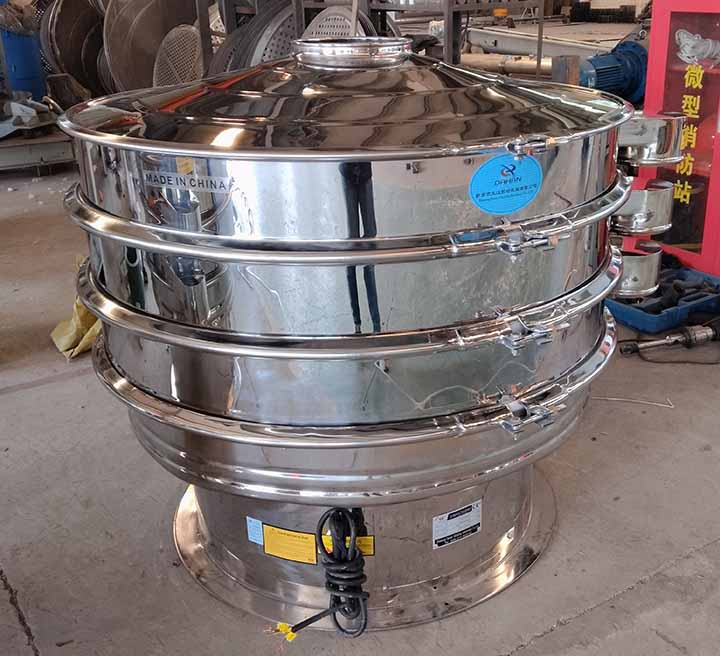
Vibrating screen prices range from several hundred to several thousand US dollars, corresponding to different structural combinations and usage scenarios. Equipment selection is more like matching a set of conditions than simply comparing prices. The performance differences of the same equipment in different production environments sometimes have a greater impact on long-term operating costs than the price itself.
-
Pharmaceutical excipient powder vibrating screen
Pharmaceutical excipient powder vibrating screen is a screening device designed to meet the special physical and chemical properties of...
-
TPU Polymer Powder Sieving Machine
TPU polymer powder sieving machine is a mechanical equipment specially used for particle size classification, impurity removal or particle...
-
Tea seed grading linear vibrating screen
The tea seed grading linear vibrating screen is a key equipment used in the tea processing field for screening and grading tea seeds. Its core function is to achieve...
-
Vibratory Sifter Medicine Powder Sieving
Vibratory Sifter Medicine Powder Sieving is a device used in the pharmaceutical industry for fine sieving of pharmaceutical powders...

Email:
sale@xxdahan.com
WhatsApp:
+86 15236742901
Add:
1000m West of Forest Park,Yanjin County,Xinxiang City,Henan Province,China.