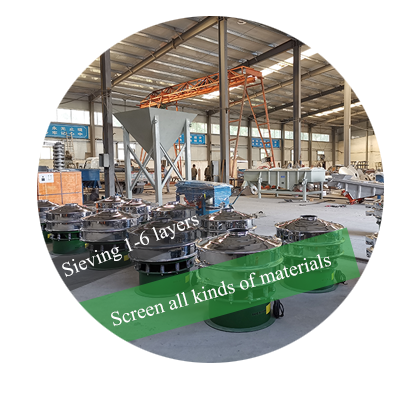
Pharmaceutical excipient powder vibrating screen
What is Pharmaceutical Excipient Powder Vibrating Screen?
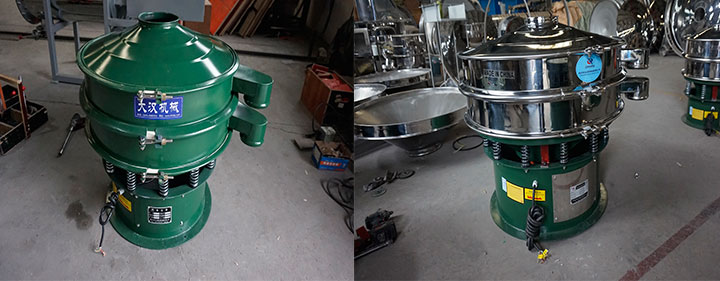
In the sieving process of pharmaceutical excipient powders, the mesh size of vibrating screens typically ranges from 80 mesh to 500 mesh. Sieving output is influenced by multiple factors, including material characteristics, screen area, equipment model, and operating parameters, ranging from 5 kg per hour in the laboratory to 5 tons per hour on an industrial production line. For sieving such fine powders, circular vibrating screens, with their high-frequency vibration, are suitable for high-precision sieving; gyratory screens, with their gentle, human-like swaying motion, are adept at handling easily dusty or adhesive materials; and test sieves are used for small-batch quality inspection or process development stages.
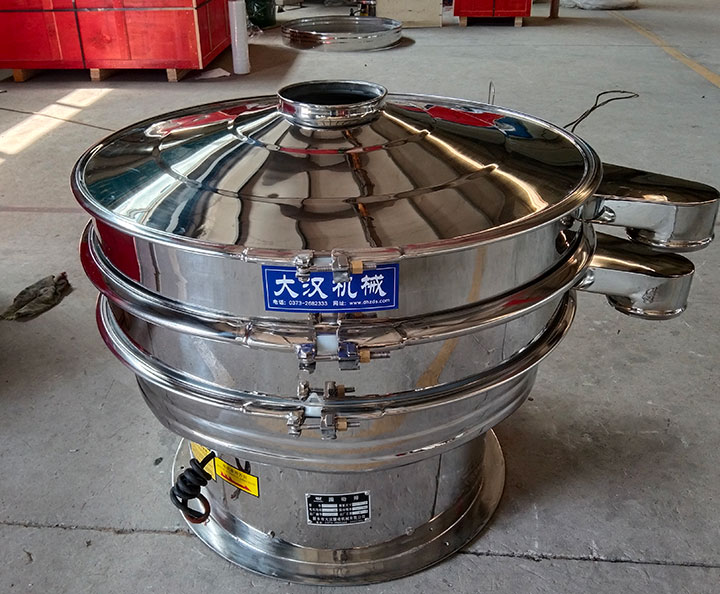
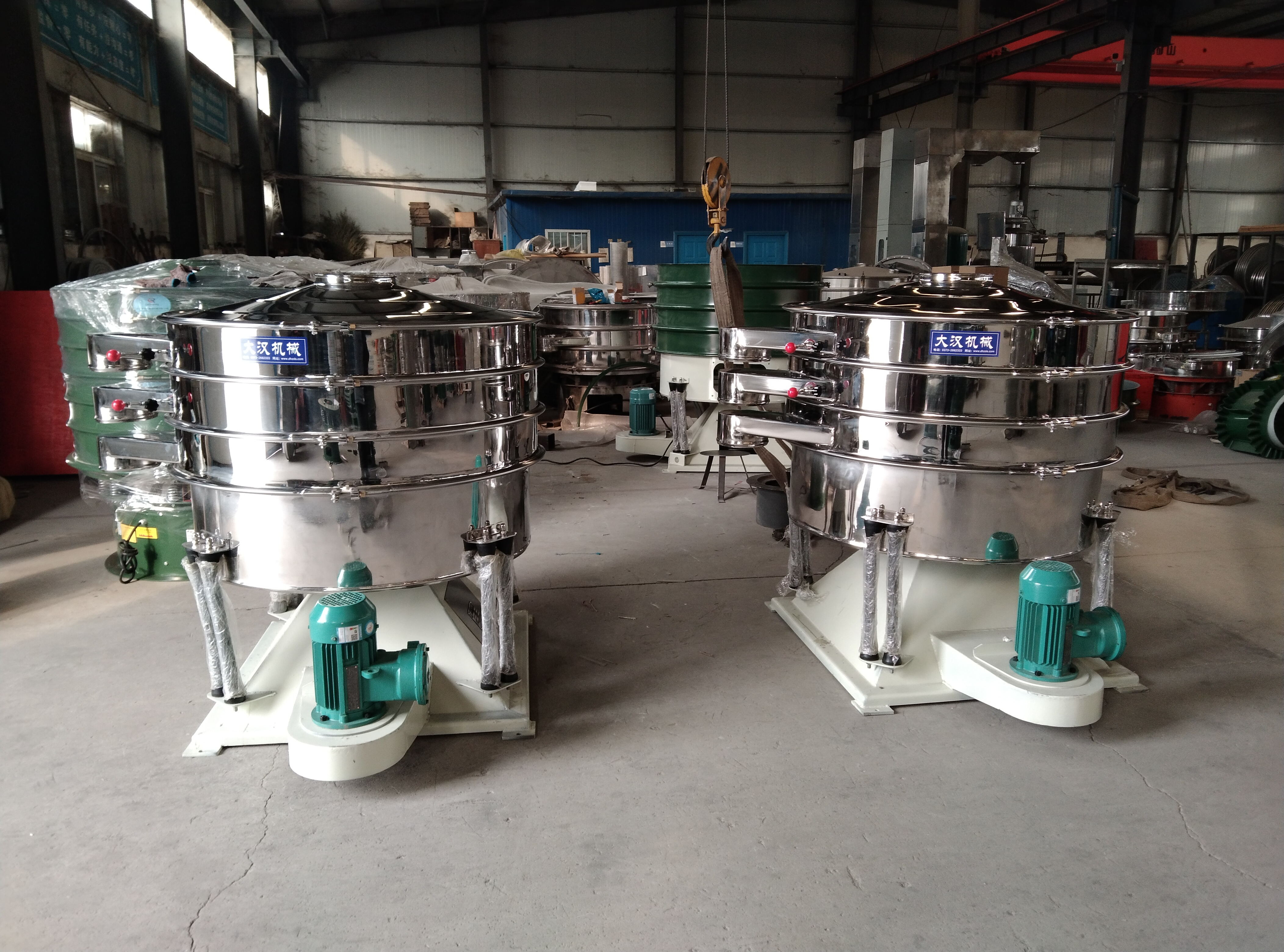
Pharmaceutical excipient powder vibrating screen is a screening device designed to meet the special physical and chemical properties of pharmaceutical excipient powder (particle size 10-500μm, mesh size 20-500 mesh), strict mesh size (particle size) classification requirements and pharmaceutical production requirements. Its core function is to achieve particle size separation and classification, impurity removal and quality control of pharmaceutical excipient powder through mechanical vibration to ensure uniform particle size of excipients. The equipment is optimized and designed based on the characteristics of pharmaceutical excipients in terms of particle size distribution, fluidity, hygroscopicity, etc., and has the characteristics of high precision, high cleanliness and good sealing.
Pharmaceutical excipient powder vibrating screen product category
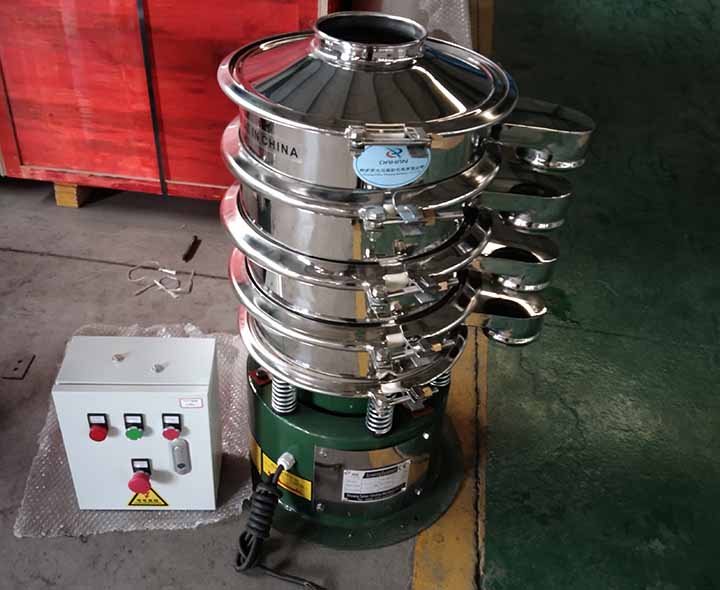
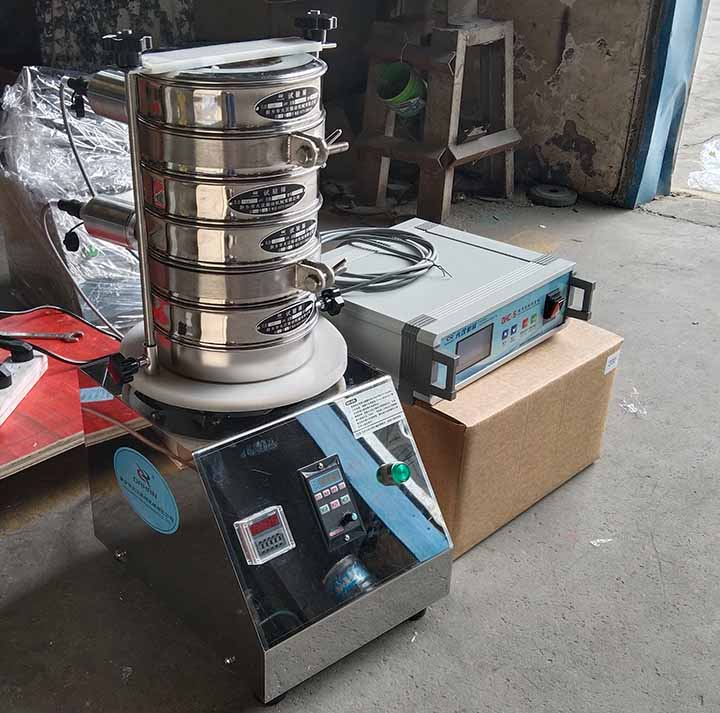
In the sieving production of pharmaceutical excipient powder, equipment can be divided into the following three categories according to the processing capacity: vibrating screen with medium sieving capacity, swing screen with higher sieving capacity than vibrating screen, and test sieve for testing small batches of pharmaceutical excipient powder.
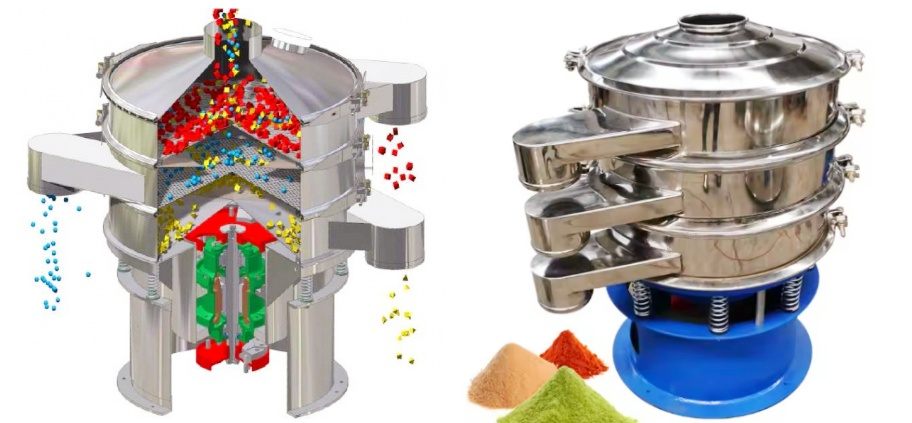
Circular vibrating screens are ideal for low- to medium-volume applications, typically ranging from 50 kg to 1.5 tons per hour. Through a three-dimensional composite motion of vertical, horizontal, and inclined movements, they can effectively screen and remove impurities from various powders. Their compact structure and convenient material changing and cleaning make them ideal for batch-to-batch cleaning requirements.
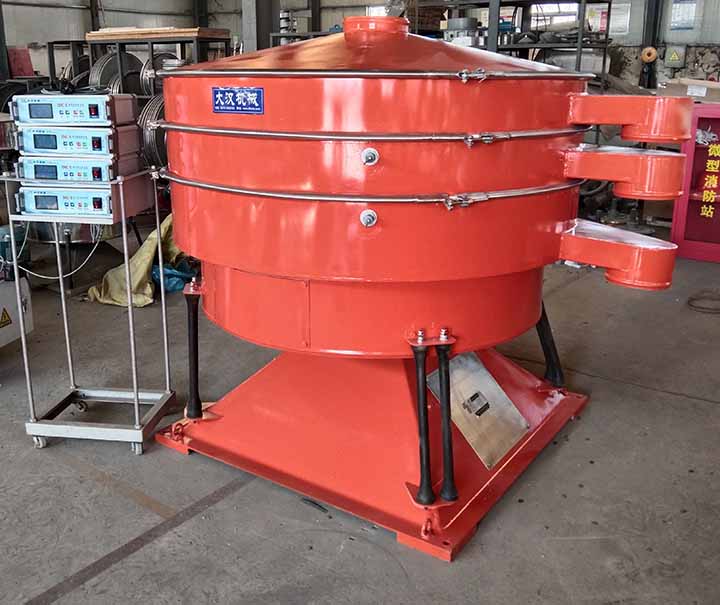
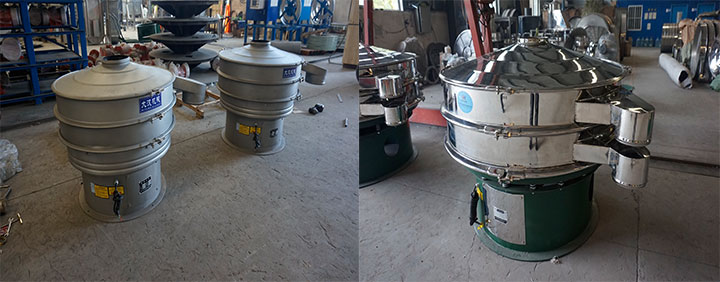
For large-scale, high-precision production needs, gyratory screens are recommended. They mimic the oscillating principle of manual sieving, offering significantly higher output than vibrating screens, with processing capacities reaching 1 to 5 tons per hour or even higher. This gentle oscillating motion is particularly suitable for fine auxiliary powders that are prone to dust generation and agglomeration, effectively extending screen life and achieving precise particle size separation while ensuring high throughput.
Test sieves are used in new product development, formula debugging, or small-batch production stages. These devices have a very small processing capacity, typically 100 grams to 5 kg per batch, and are mainly used for particle size analysis, quality testing, and process feasibility studies in the laboratory, providing accurate data support and process basis for production screening.
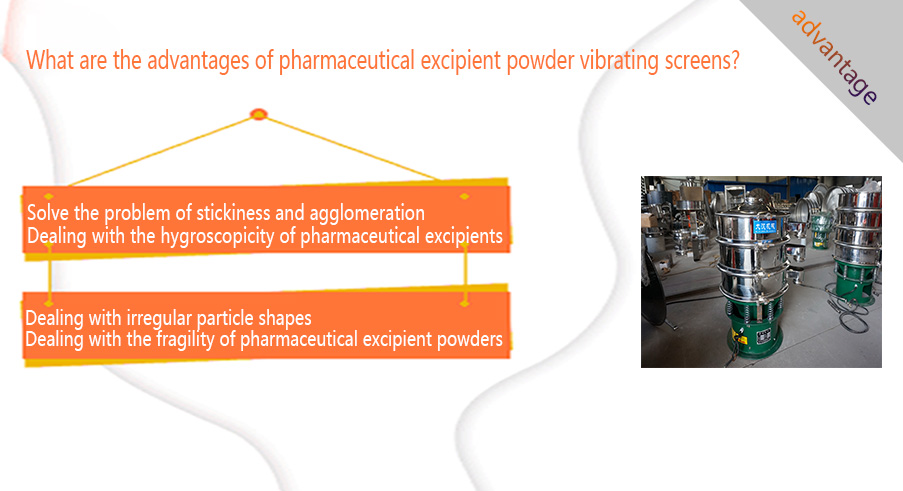
What are the advantages of pharmaceutical excipient powder vibrating screens?
Pharmaceutical excipient powder vibrating screens prevent powder agglomeration, reduce dust emissions, and maintain a clean and hygienic production environment. They gently handle fragile pharmaceutical raw materials, separate particles of different sizes, and minimize the impact of humidity on the materials. Many fine pharmaceutical powders tend to clump together, affecting sieving; high-frequency vibration keeps the powder loose and prevents clogging. Some pharmaceutical excipients clump together when exposed to moisture in the air; the equipment's enclosed structure and smooth surface prevent moisture absorption, reducing the risk of moisture damage. Irregularly shaped particles easily get stuck in the screen; adjusting the vibration intensity and feed angle allows for smooth material flow. For brittle excipients, controlling the vibration intensity reduces particle breakage, resulting in more stable sieved pharmaceutical materials.
How does the pharmaceutical excipient powder vibrating screen work?
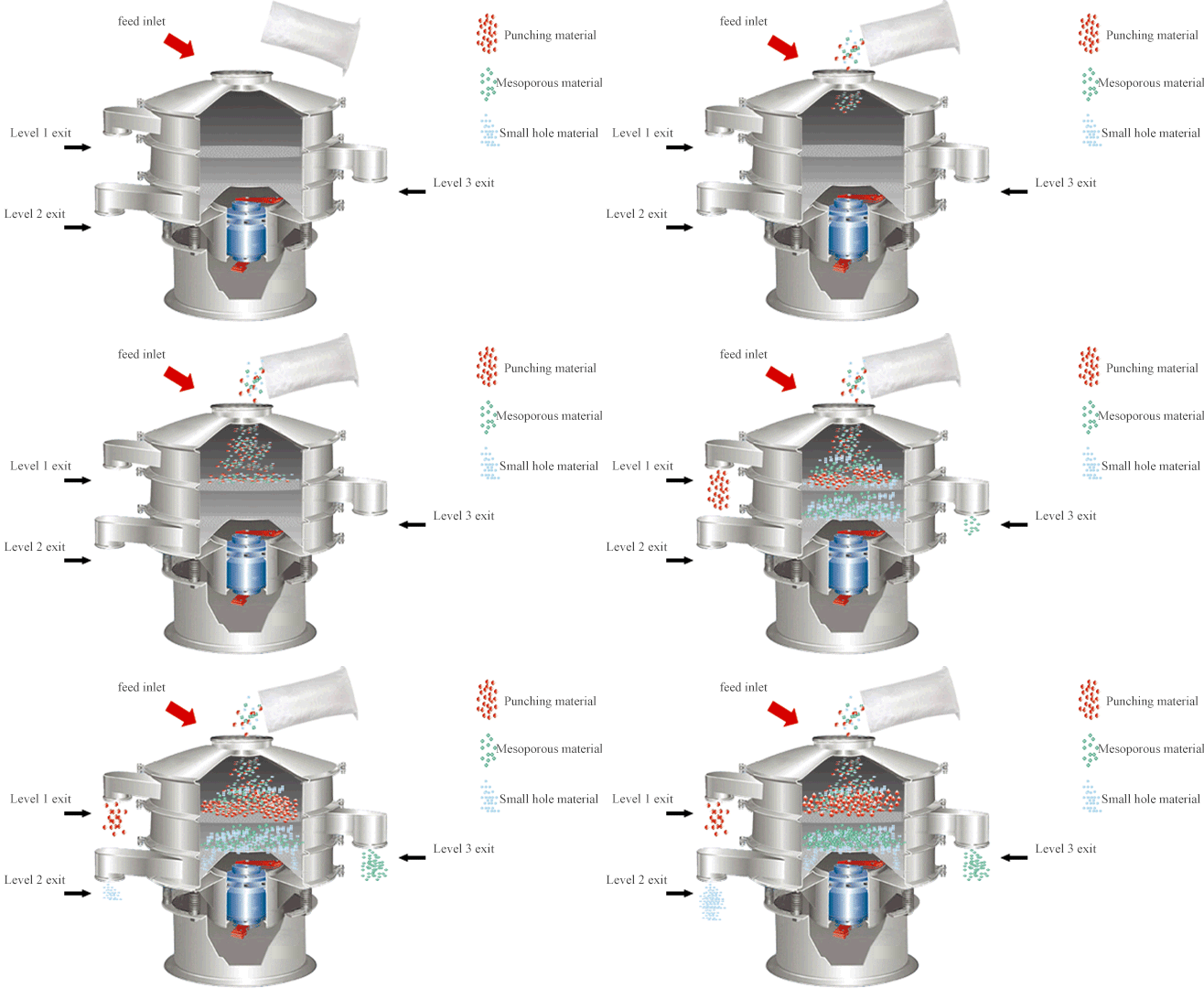
The pharmaceutical excipient powder vibrating screen primarily relies on the excitation force of a motor to drive the screen body to generate high-frequency vibrations. After the pharmaceutical excipient powder enters the screen surface through the feed inlet, it is subjected to the vibration force and exhibits a tossing and forward-jumping motion, thereby achieving uniform dispersion and stratification of the material on the screen. Fine particles fall through the sieve holes and are collected in the lower layer, while larger particles are gradually discharged along the sieve surface. Vibrating screens typically utilize a multi-layer structure, enabling multi-stage screening to meet the separation requirements of different particle sizes. Because the vibration process is continuous and the energy transfer is uniform, it effectively prevents powder agglomeration and clogging of the sieve holes, thereby improving screening accuracy and efficiency.
Pharmaceutical excipient powder vibrating screen parameters
| Model |
Diameter (mm) |
Feeding Size (mm) |
Frequency (RPM) |
Layers |
Power (kw) |
Capacity (kg/h) |
| DH-400 | 400 | <10 | <1500 | 1-5 | 0.18 | 100 |
| DH-600 | 600 | 0.25 | 200 | |||
| DH-800 | 800 | 0.55 | 500 | |||
| DH-1000 | 1000 | 0.75 | 800 | |||
| DH-1200 | 1200 | 1.1 | 1200 | |||
| DH-1500 | 1500 | 1.5 | 1800 | |||
| DH-1800 | 1800 | 2.2 | 2000 |
What is the main function of the pharmaceutical excipient powder vibrating screen?
Pharmaceutical excipient powder vibrating screens remove large particles, clumps, foreign impurities, and fibers from excipients, keeping raw materials clean and minimizing impact on drug quality and production processes. Using screens of different sizes, it separates pharmaceutical powders into particles of similar size, resulting in more uniform material properties and greater stability in subsequent mixing, tableting, filling, and granulation stages. The sieved pharmaceutical powder flows more smoothly, with smaller particle size variations, making it easier to disperse evenly during mixing and reducing formulation deviations. When used before tableting, it also reduces mold clogging, inconsistent tablet weights, and abnormal disintegration, ensuring a smoother tableting process.
Recommended mesh number of pharmaceutical excipient powder vibrating screen
The recommended mesh number of pharmaceutical excipient powder vibrating screens should be selected according to the physical properties of different excipients, usage scenarios (such as tableting, capsule filling, coating, etc.) and specific requirements for particle size distribution.
|
Name of pharmaceutical excipients |
Recommended mesh size |
Description |
|
Lactose |
60-200 mesh |
Commonly used for tablet/capsule filling, to remove agglomerates or coarse particles |
|
Microcrystalline cellulose |
60-120 mesh |
Controls fluidity and tableting performance, removes fiber agglomerates |
|
Corn starch |
80-200 mesh |
Commonly used as excipient, binder or disintegrant, requires uniform particle size |
|
Talc |
200-325 mesh |
Extra fine powder, commonly used for coating, requires high fineness and cleanliness |
|
Sodium carboxymethyl starch |
100-200 mesh |
Used for disintegrant, uniform fineness Helps tablet dispersibility |
|
Hydroxypropyl methylcellulose |
80~200 mesh |
Used as tablet sustained-release and controlled-release coating, particle size affects dissolution rate |
|
Silicon dioxide |
200~400 mesh |
Used in very small amounts but requires high fineness, ultrasonic vibrating screen is recommended for ultrafine screening |
Applicable materials for pharmaceutical excipient powder vibrating screen
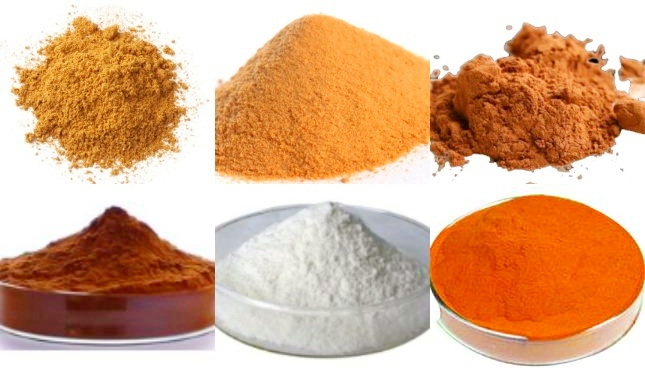
Pharmaceutical excipients usually include lactose, starch, microcrystalline cellulose, talc, silicon dioxide, etc., and their particle size range is mostly between 40 mesh (about 425μm) and 400 mesh (about 38μm). Different application scenarios (such as tablets, granules, capsule filling, etc.) correspond to different screen meshes. Pharmaceutical excipient powder vibrating screens need to be able to adapt to a variety of needs from coarse screens (such as 60 mesh) to ultrafine screens (above 300 mesh).
Application of pharmaceutical excipient powder vibrating screen
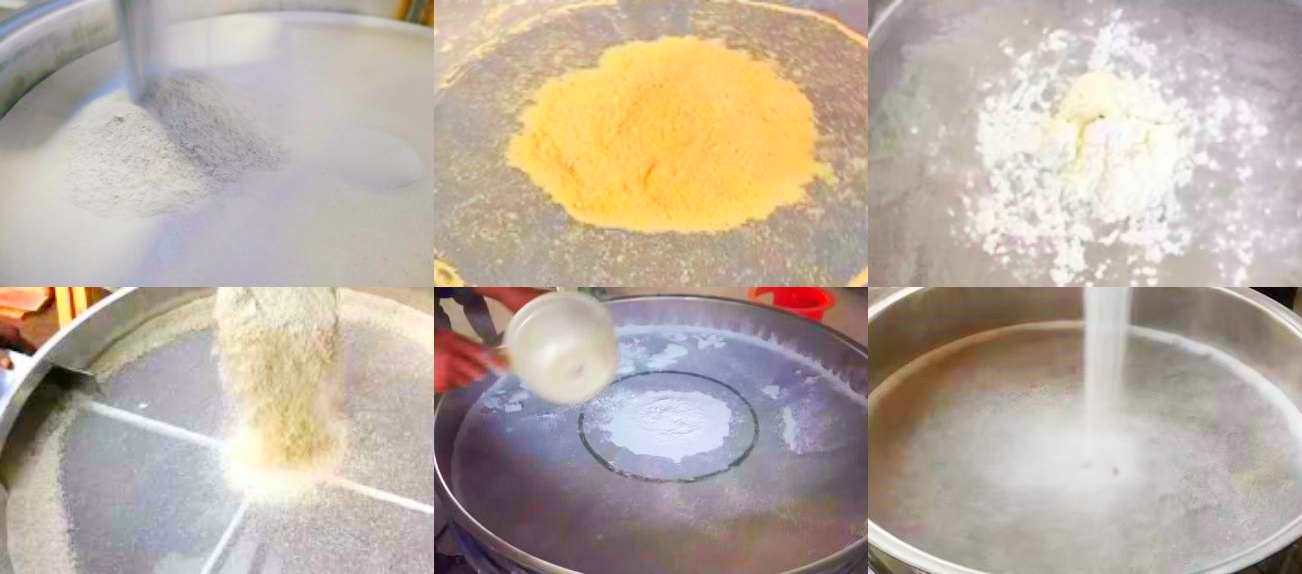
In the production of pharmaceutical excipient powders such as tablets, capsules, and granules, the excipient powder is graded for particle size and impurities removed, participating in quality control throughout the production process. This ensures that the excipient powder has uniform and clean particle size, meeting the physical requirements of different dosage forms. In tablet production, it adjusts the particle size of excipients, improving material flowability and compressibility, sieving out coarse particles and foreign matter, and standardizing the particle size of various excipients before mixing to reduce stratification and ensure more uniform mixing of drug components and excipients. In capsule production, it improves the flowability of fillers, ensuring stable capsule filling and consistent dosage, sieving out coarse particles and foreign matter that easily clog, and adapting to the particle size treatment of excipients such as lactose and silica. In the granulation process, excipients are first sieved to ensure uniform mixing. After wet granulation, the granules are sieved to form granules of similar size. After drying, they are sieved again to remove excessively fine powder and coarse particles, resulting in more uniform granule shape in the final product.
Solution for pharmaceutical excipient powder vibrating screen
Pharmaceutical excipient powder vibrating screens can be customized according to material characteristics. Moisture-absorbing excipients are paired with fully sealed dehumidifying screens to reduce moisture absorption and clumping; materials requiring grading use multi-layer screens to control particle size; materials prone to static electricity are paired with anti-static screens and proper grounding; and pharmaceutical powders with poor flowability have optimized vibration methods and screen structures. Lactose powder particles are fine and prone to clumping, and traditional screens are easily clogged. Ultrasonic vibrating screens reduce clogging through high-frequency vibration, ensuring uniform particle size distribution of lactose powder. Microcrystalline cellulose is lightweight and prone to dust generation; fully sealed vibrating screens can achieve grading and impurity removal while preventing dust leakage. Starch is used in large quantities and has relatively coarse particles; linear vibrating screens offer fast processing speeds and provide pharmaceutical raw materials with stable particle sizes for subsequent processes.
Pharmaceutical excipient powder vibrating screen suppliers
Our pharmaceutical excipient powder vibrating screens utilize advanced ultrasonic or rotary vibrating sieving technology to effectively address issues such as screen clogging and adhesion caused by fine powders. They achieve screening accuracies exceeding 95%, significantly improving production efficiency. Furthermore, our factory offers robust custom design capabilities, allowing us to adjust the number of screening layers, apertures, and sealing structures to meet customer needs, ensuring dust protection and cross-contamination control. Our company also features an intelligent control system that allows for adjustable amplitude and frequency to accommodate varying powder characteristics. With over 20 years of industry experience, our factory has established itself as a trusted supplier to pharmaceutical companies worldwide, renowned for its consistent quality and efficient after-sales service.
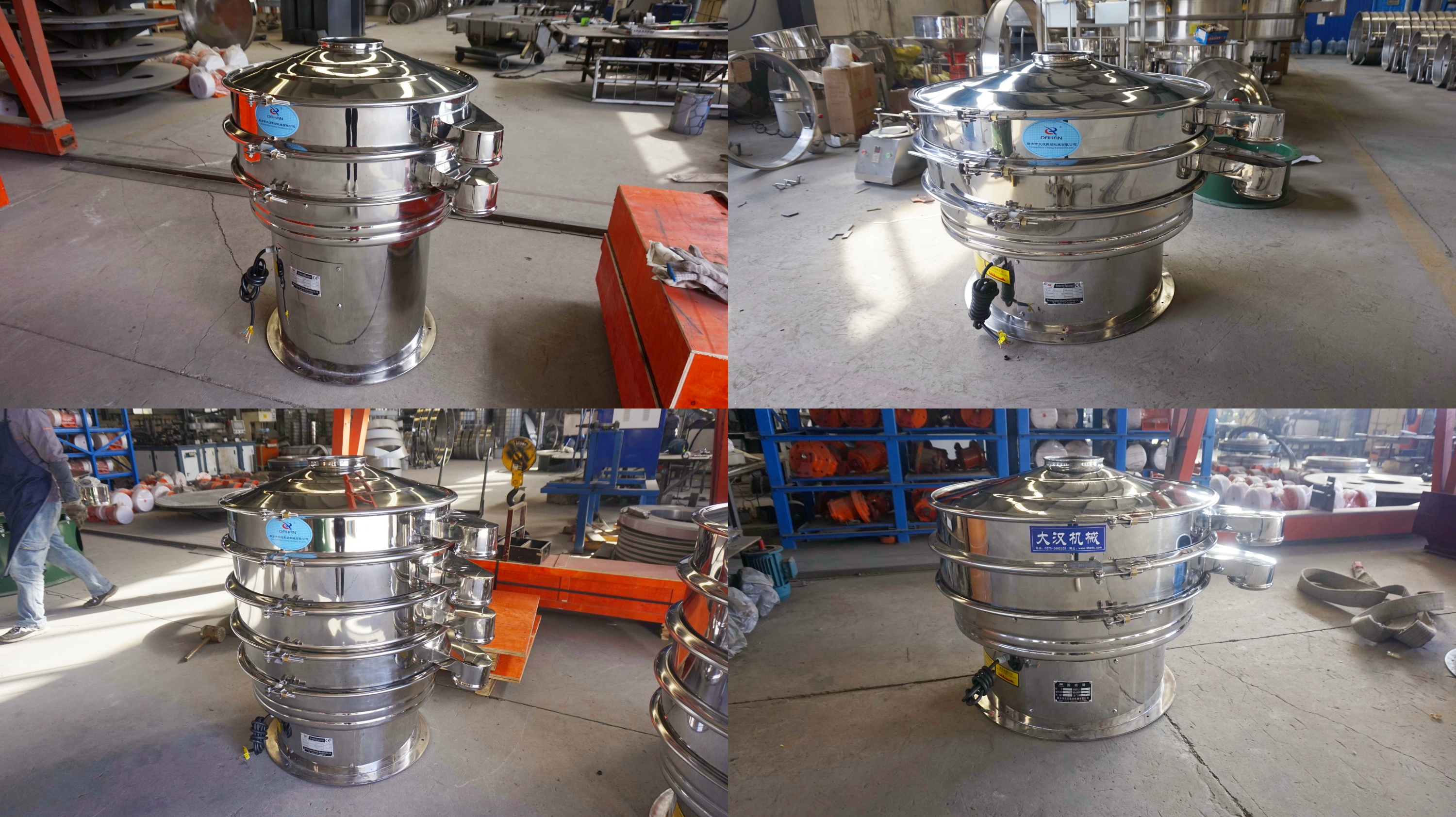
Pharmaceutical excipient powder vibrating screen is a key equipment in the pharmaceutical process. Its design must take into account particle size control accuracy, hygiene standards and operational flexibility. Through high-frequency vibration, multi-layer screens and anti-static technology, the particle size consistency and quality stability of the excipient powder are ensured.
-
Vibro Sifter Baking Soda
Vibro Sifter Baking Soda is a process or equipment that uses a vibrating screen to sieve, grade, or filter baking soda...
-
Centrifugal screening machine
Centrifugal screening machine is designed and produced for screening problems such as light materials, easy agglomeration ...
-
Sweet potato powder screening machine
The Sweet potato powder screening machine effectively screens, filters and removes sweet potato starch to ensure the quality ...
-
Sea salt sieve field application
In the working process of sea salt sieve, the material is transferred to the screen surface, making the material expand and involute on the screen surface...

Email:
sale@xxdahan.com
WhatsApp:
+86 15236742901
Add:
1000m West of Forest Park,Yanjin County,Xinxiang City,Henan Province,China.