Test Sieve Shaker
Callback
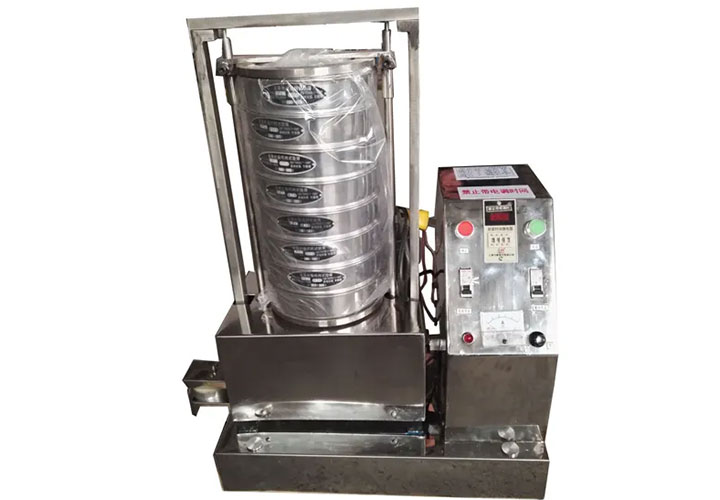
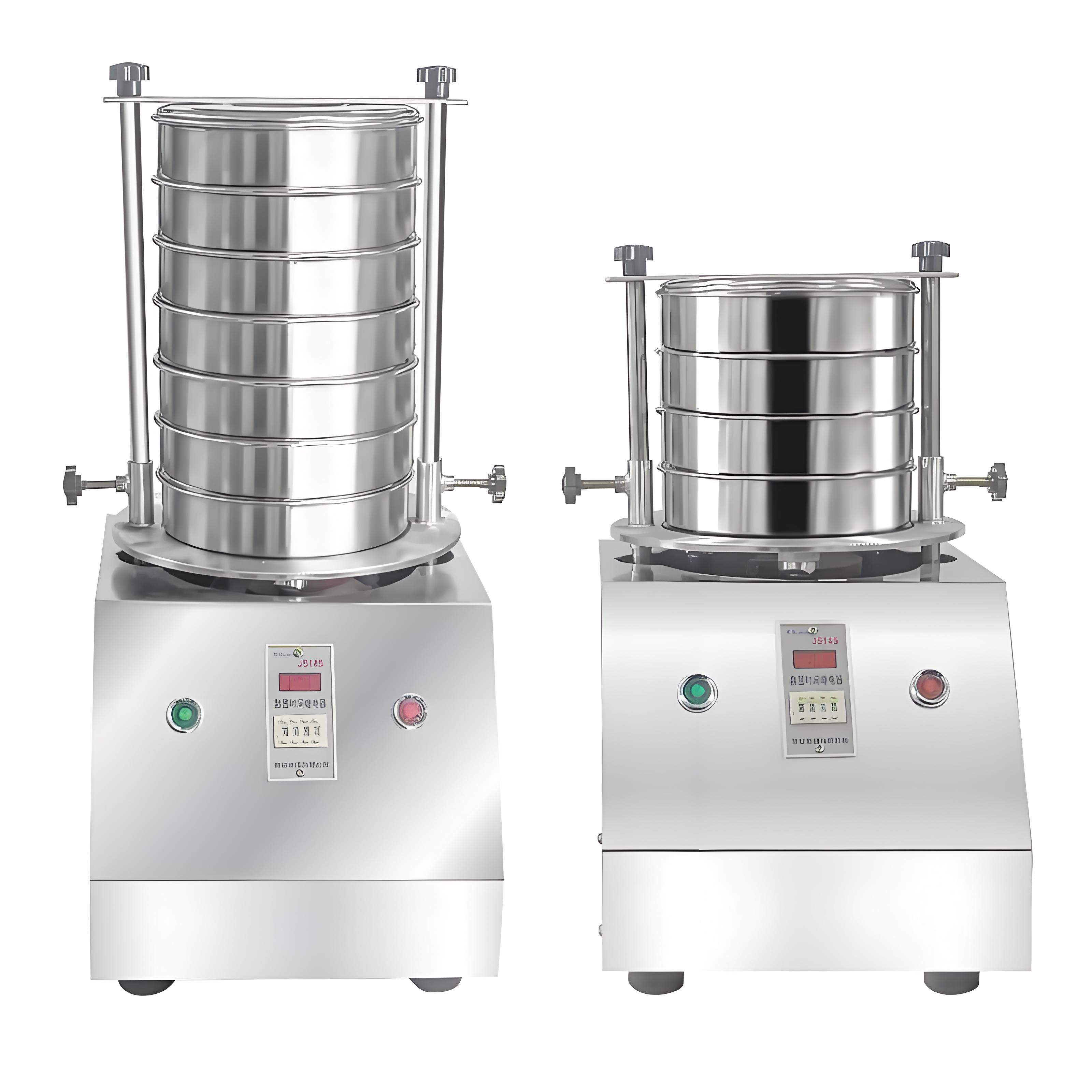
For laboratory particle size analysis and material grading.
| Sieve Diameter: | 75, 100, 200, 300 mm |
| Sieve Layers: | 1–8 Layers |
| Mesh Aperture: | Selected to suit testing needs |
For powder and granule particle size testing.
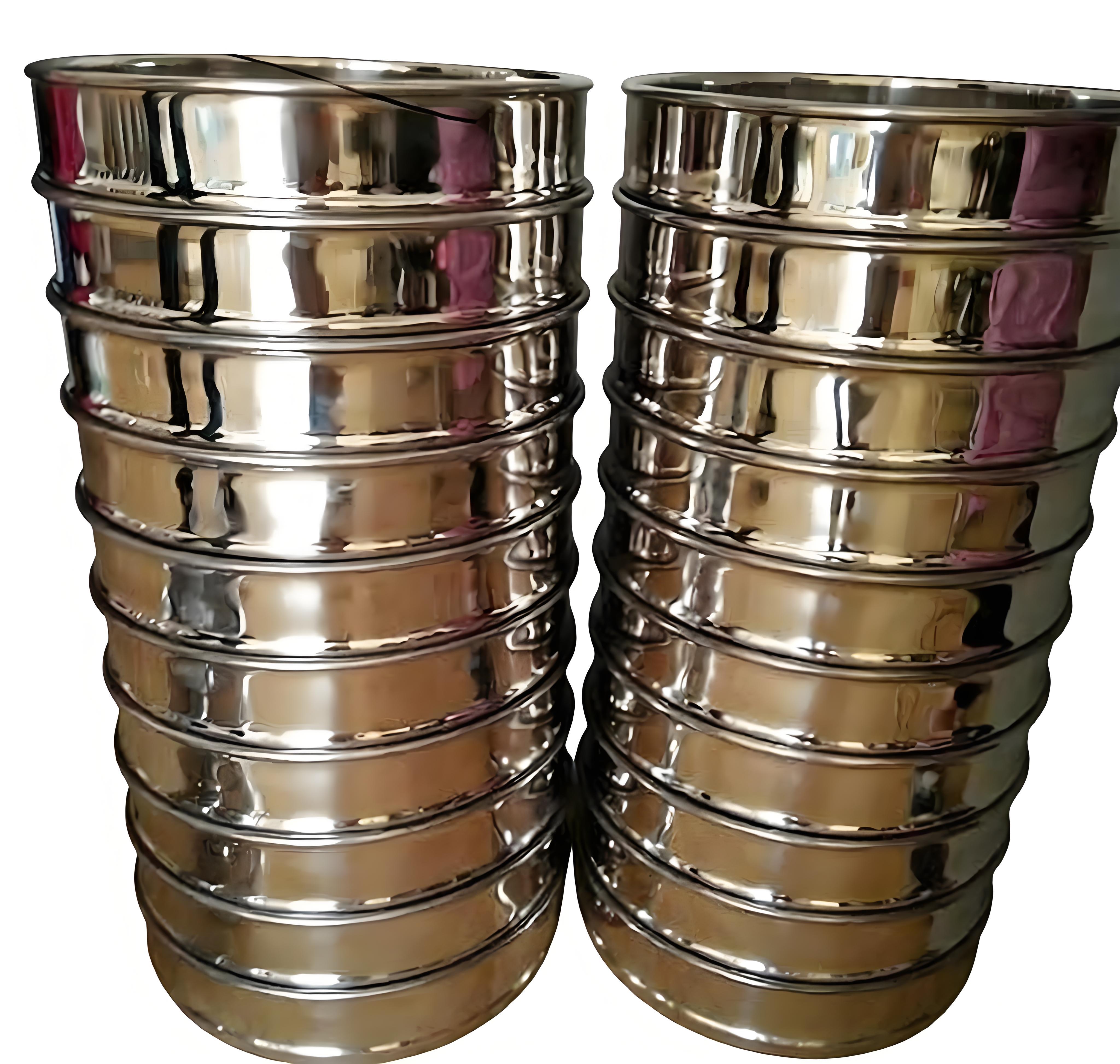
Stainless steel sieves; customized materials available.
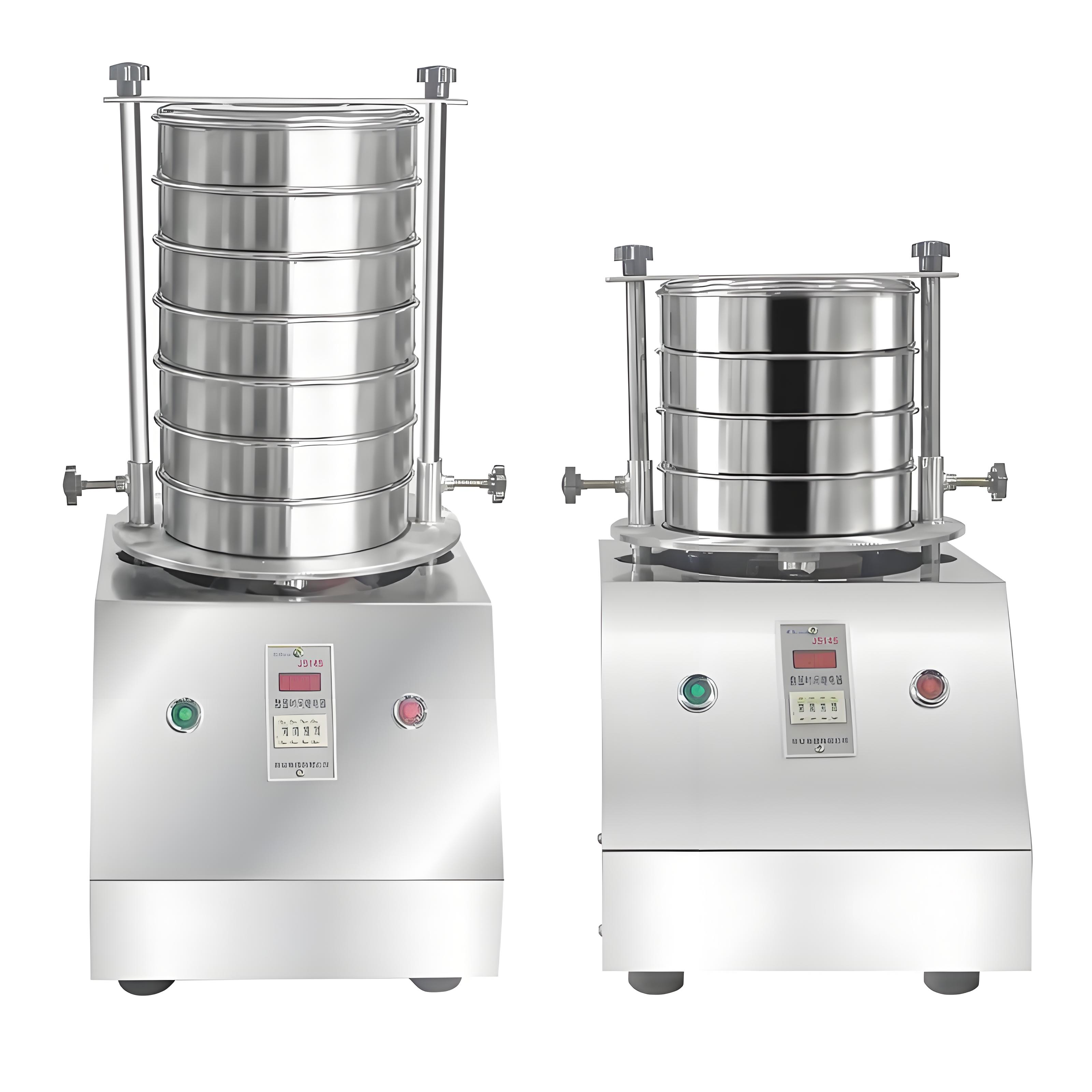
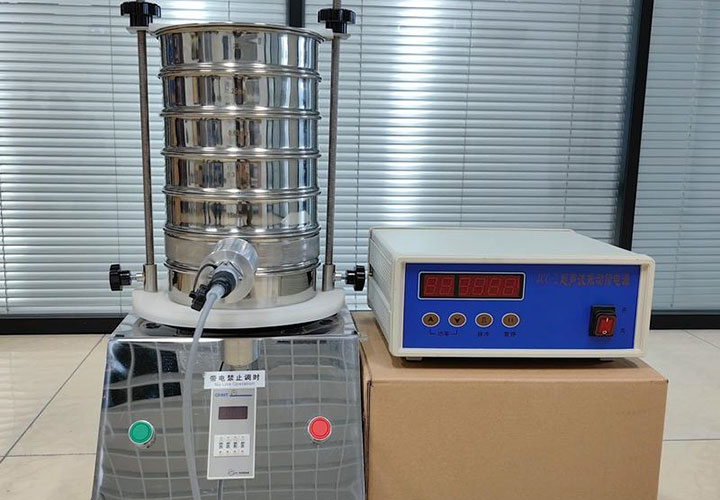
A Test Sieve Shaker is a laboratory screening machine used for particle size analysis, material classification, and quality control. It separates powders, granules, and other particulate materials through controlled mechanical vibration of a stack of test sieves.
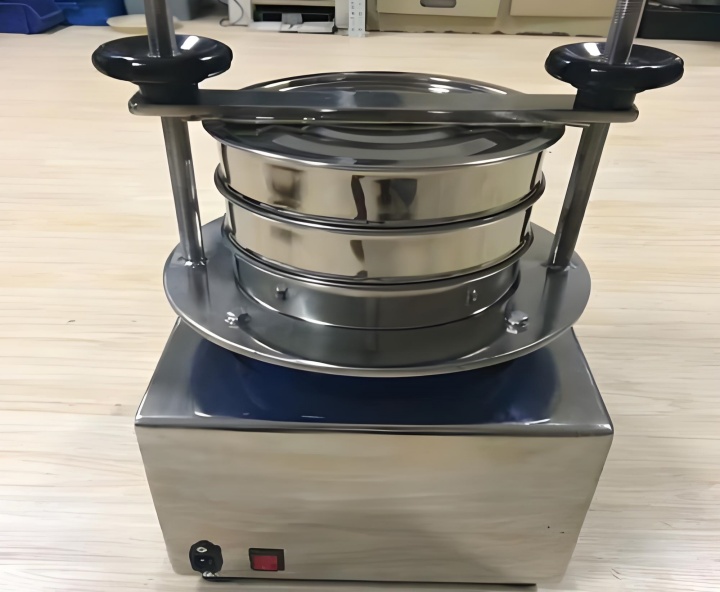
Different sieve diameters, mesh sizes, and numbers of sieve layers can be selected according to the material and testing requirements. It is suitable for laboratory testing, research, quality control, and routine particle size evaluation.
Test Sieve Shaker for Particle Size Analysis
A Test Sieve Shaker provides a controlled method for determining particle size distribution. A series of test sieves with progressively smaller apertures is arranged from coarse to fine, and the sample is placed on the upper sieve.
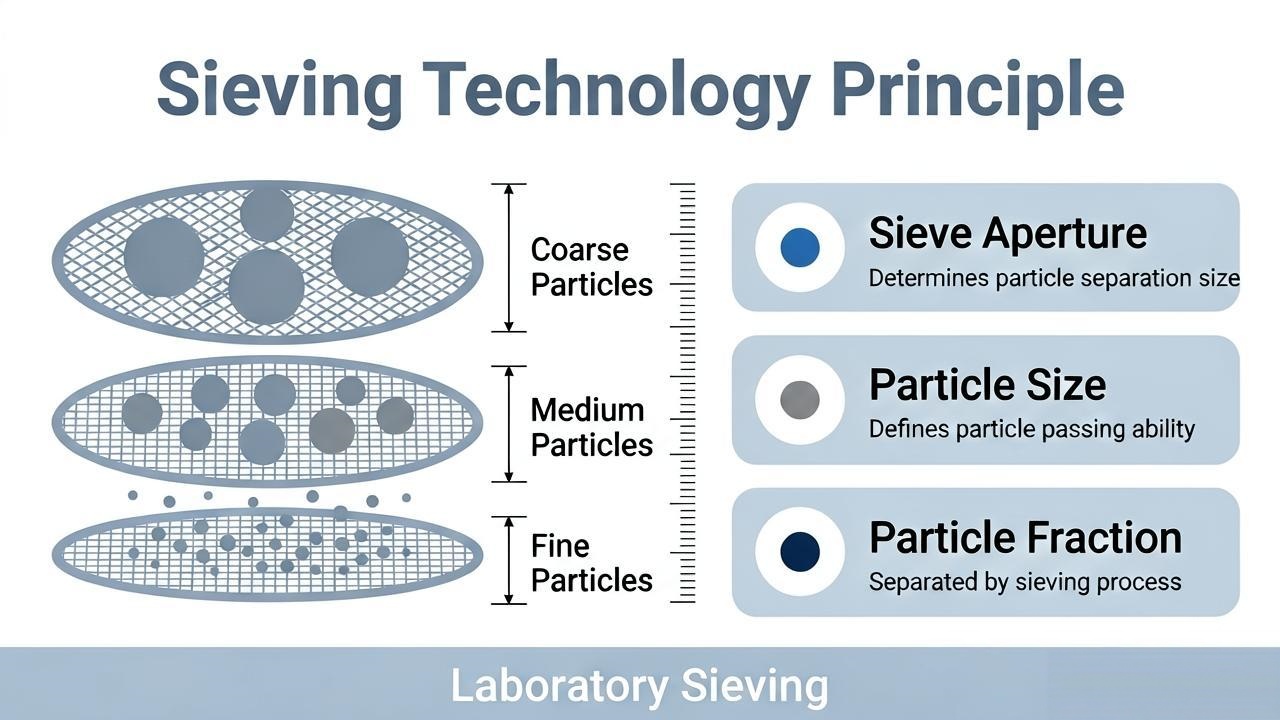
During operation, vibration moves the material across the sieve surfaces. Smaller particles pass through the corresponding apertures, while larger particles remain on the upper sieves. The material retained on each sieve can then be collected and weighed to determine different particle size fractions.
This makes the equipment suitable for raw material inspection, finished product testing, batch comparison, and laboratory quality control.
Test Sieve Shaker Specifications
Actual frequency, amplitude, power, dimensions, and sample capacity depend on the selected configuration. The final specification should be matched to the intended testing procedure.
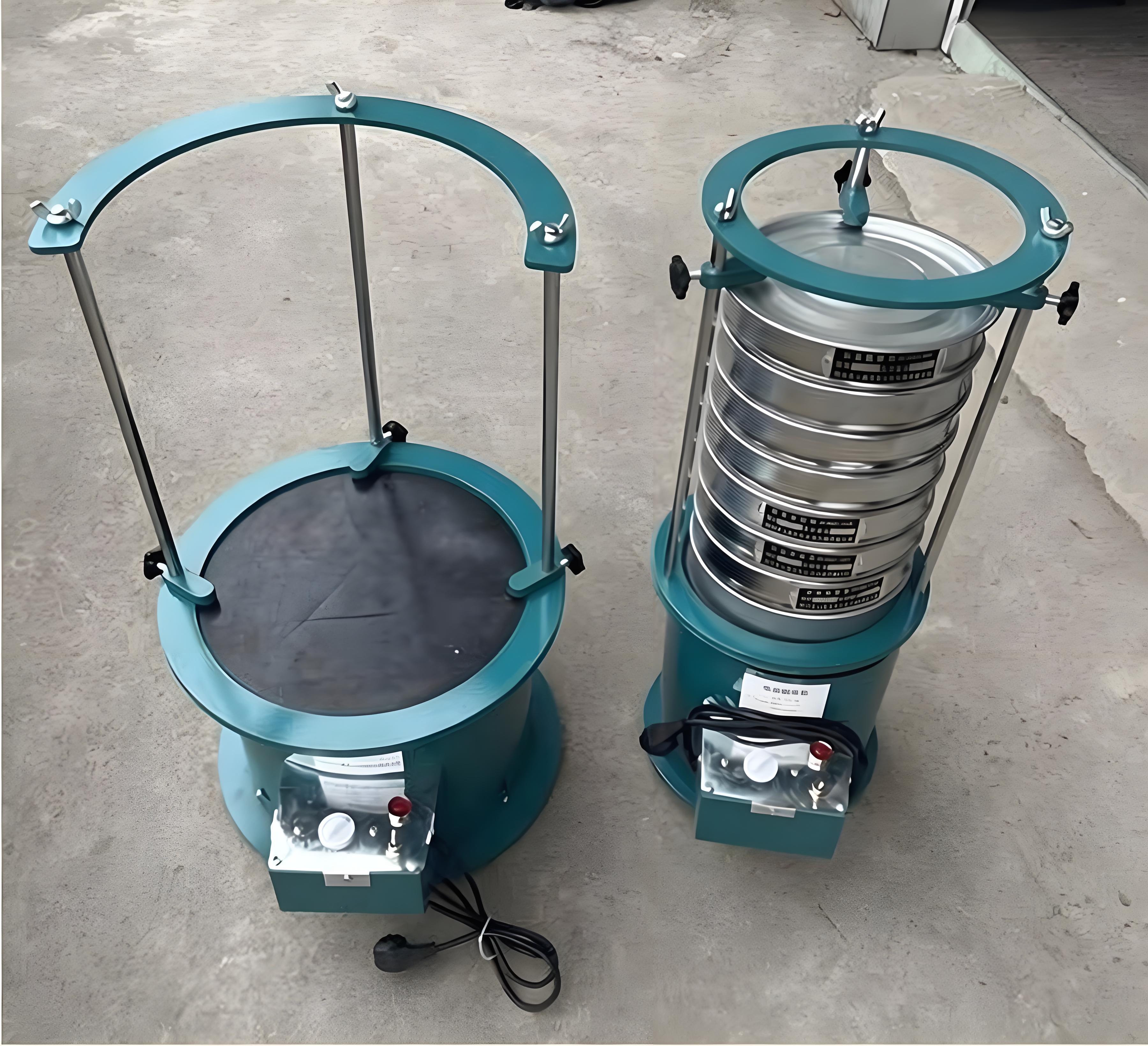
The configuration should be selected according to sieve diameter, required particle size range, sample quantity, and testing method.
| Parameter | Typical Configuration |
|---|---|
| Sieve Diameter | 75, 100, 200, 300 mm and other options |
| Sieve Layers | 1–8 layers |
| Mesh Size | Selected according to required aperture |
| Sieve Material | Stainless steel or customized material |
| Vibration Frequency | According to selected configuration |
| Amplitude | According to selected configuration |
| Timer | Adjustable |
| Power Supply | According to selected configuration |
| Main Application | Particle size analysis and laboratory screening |
Compatible Test Sieves and Accessories
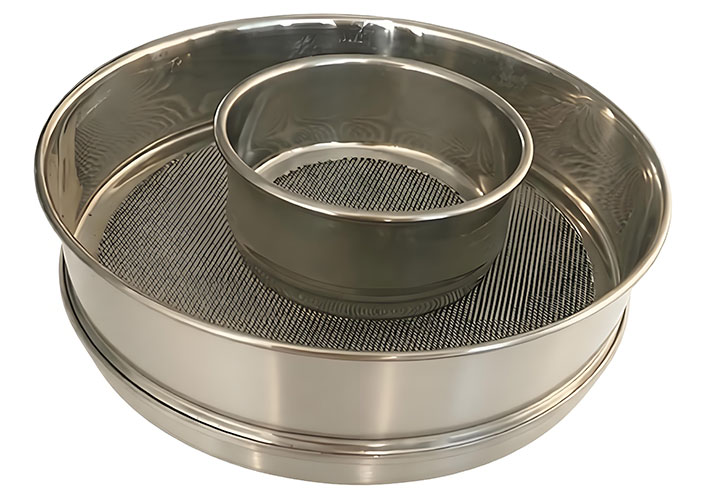
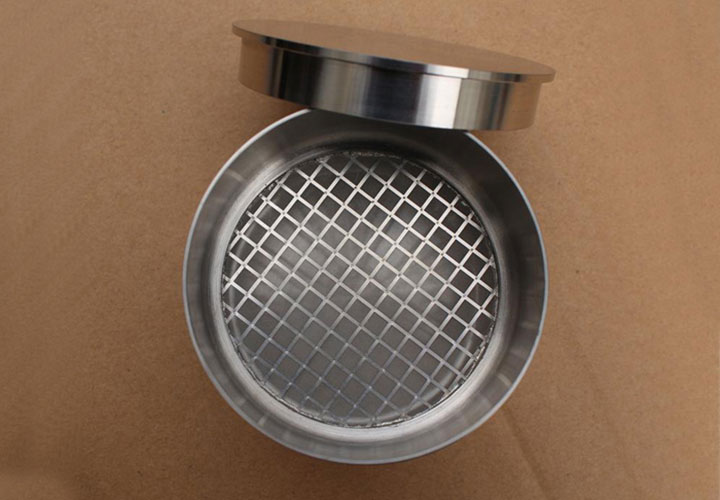
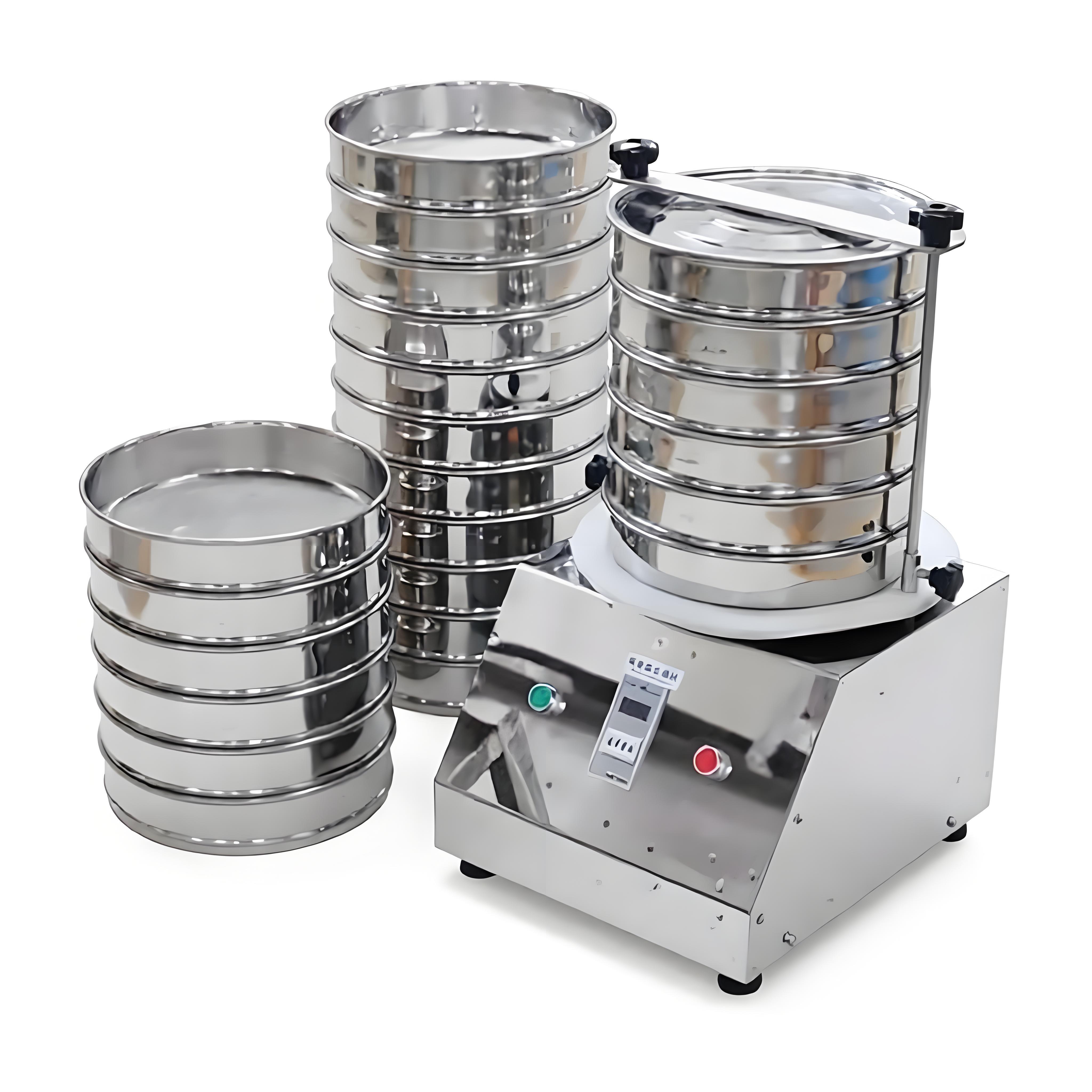
The shaker can be configured with compatible test sieves, covers, receiving pans, and related components.
Sieve diameter, aperture, mesh material, and number of layers can be selected according to the required particle size range. A typical sieve stack consists of several test sieves, a cover, and a receiving pan.
Sieve Diameter, Mesh and Layer Options
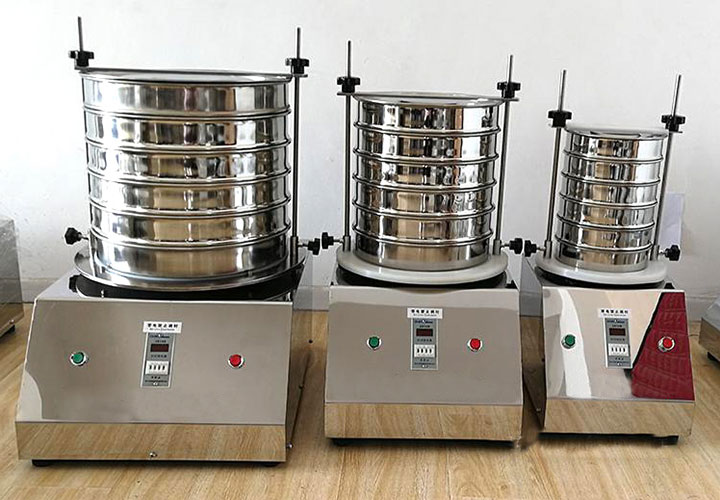
Sieve diameter affects the available screening surface and suitable sample quantity. Common laboratory options include 75, 100, 200, and 300 mm.Sieve layers determine how many particle size fractions can be separated during one test. Configurations from 1 to 8 layers can be selected according to the testing requirement.
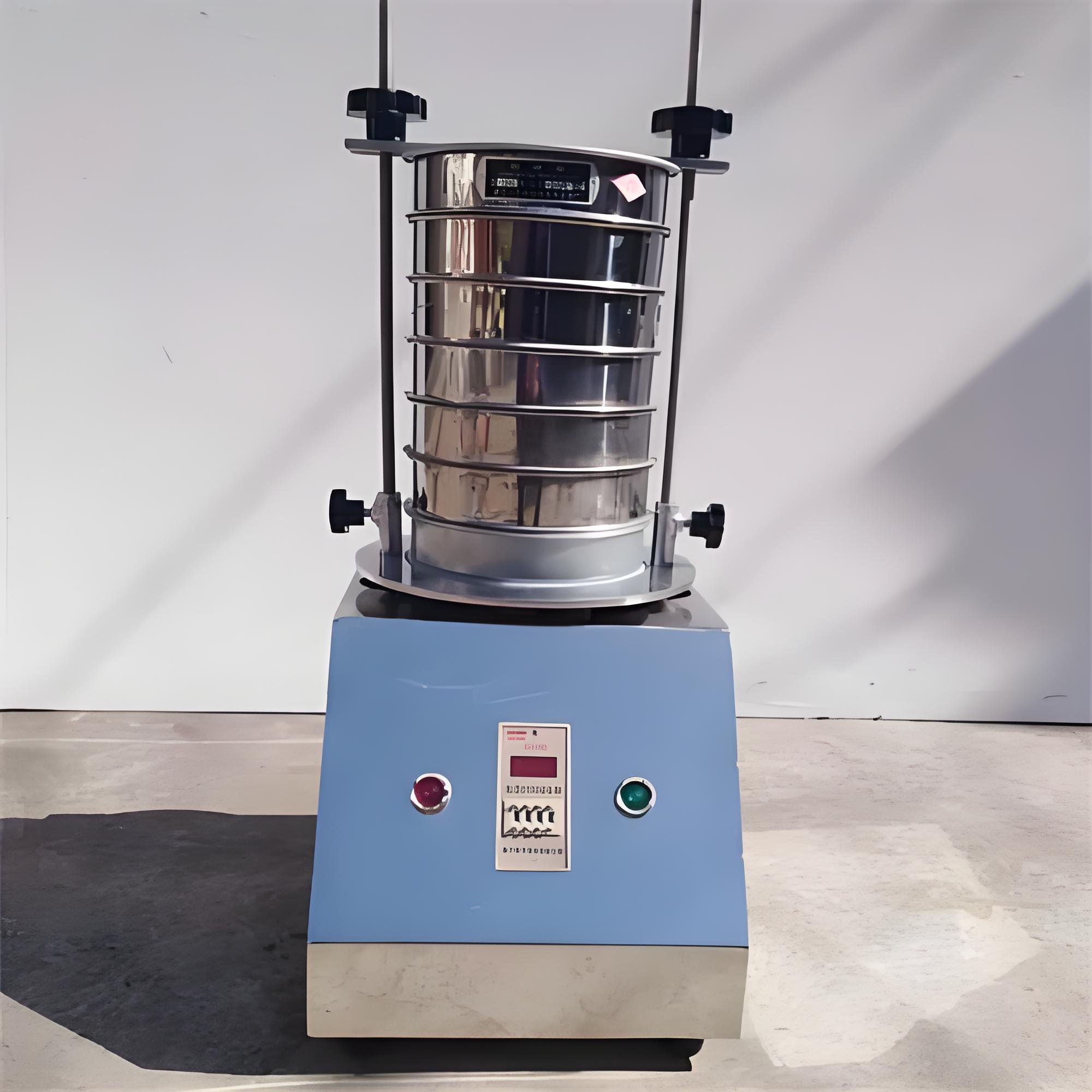
Mesh and aperture determine the particle size that can pass through each sieve. Select the mesh according to the target particle size and required aperture.
| Mesh | Approx. Aperture |
|---|---|
| 20 Mesh | 0.90 mm |
| 40 Mesh | 0.45 mm |
| 60 Mesh | 0.30 mm |
| 80 Mesh | 0.18 mm |
| 100 Mesh | 0.15 mm |
| 200 Mesh | 0.075 mm |
| 325 Mesh | 0.045 mm |
| 500 Mesh | 0.030 mm |
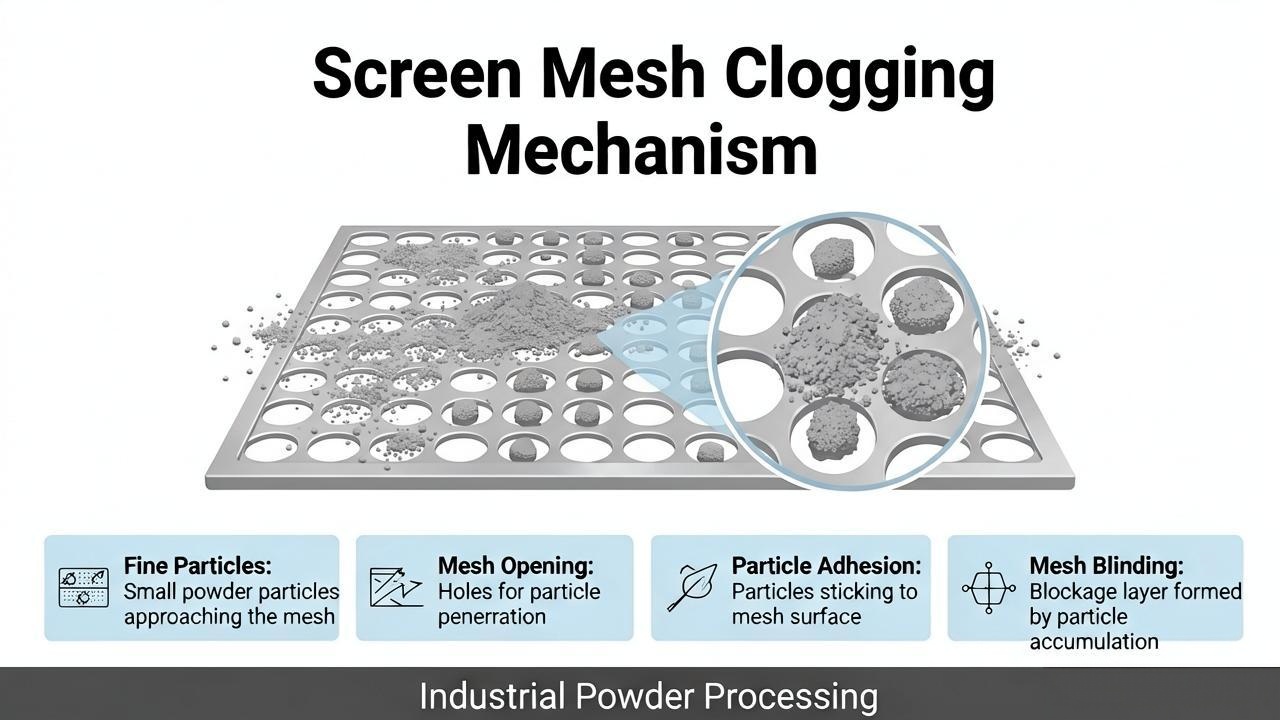
For applications requiring a specific aperture or test sieve standard, the sieve configuration should be matched to the required testing range.
How Does a Test Sieve Shaker Work?
The sample is placed into the upper sieve of a secured sieve stack. Controlled mechanical vibration distributes the material across the sieve surfaces and promotes separation according to particle size.Particles smaller than the sieve aperture pass through to the lower sieves, while larger particles remain above it. After the selected screening period, the retained material can be collected for weighing and analysis.

Consistent sieve specifications, sample quantity, screening time, and operating conditions help improve the comparability of test results.
Test Sieve Shaker Testing Process
A typical laboratory screening test follows six basic steps.
Select the test sieves. Choose the sieve diameter and aperture range according to the required particle size analysis.
Arrange the sieve stack. Place the sieves from coarse to fine above the receiving pan.
Load the sample. Use a representative sample suitable for the selected sieve configuration.
Secure and set the shaker. Fix the sieve stack and select the required screening time.
Start the test. Controlled vibration separates the material according to particle size.
Collect and analyze the fractions. Weigh the material retained on each sieve and calculate the particle size distribution.
The exact procedure should follow the applicable laboratory standard or internal quality control method.
Particle Size Analysis Results
Sieve testing provides the mass retained on each sieve, percentage retained, particle size fractions, and overall particle size distribution.
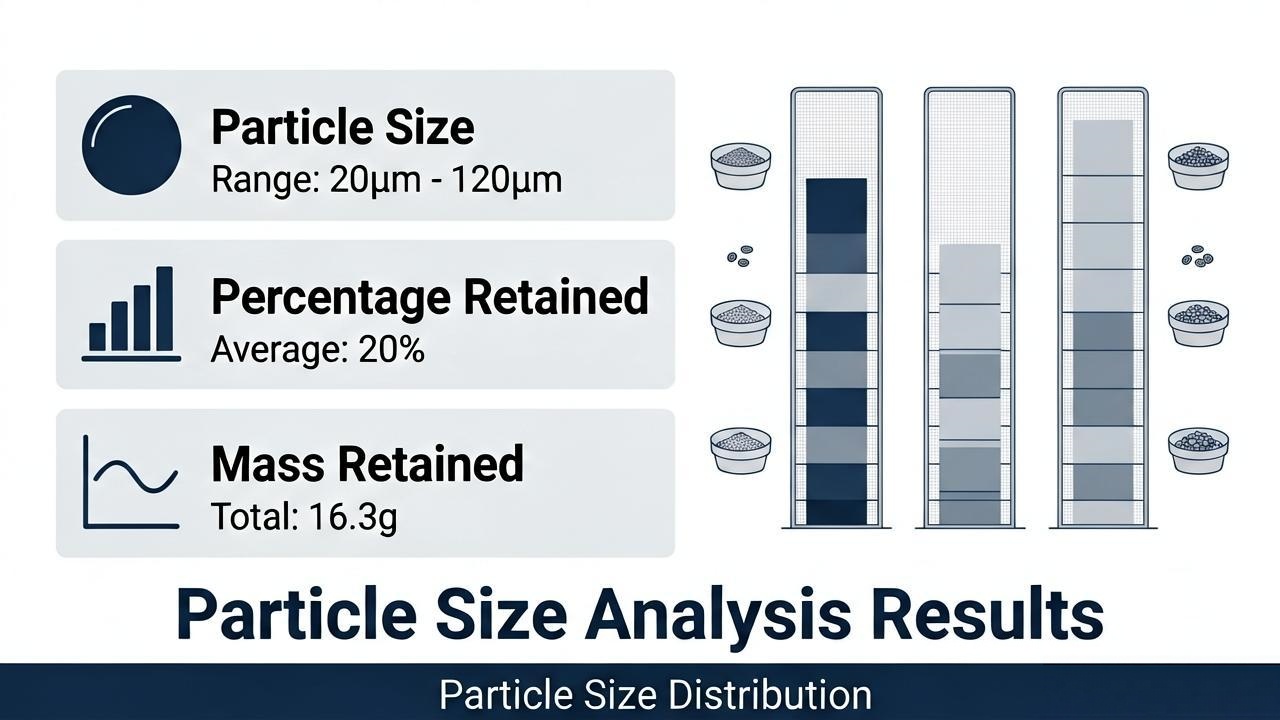
A basic calculation is:
Percentage Retained = Mass Retained on Sieve ÷ Total Sample Mass × 100
The results can be used to compare particle size distribution between different samples or production batches.
Applications
The equipment can be used for laboratory testing of powders, granules, and other particulate materials.
Food and agriculture: flour, starch, sugar, grains, spices, and other particulate ingredients.
Pharmaceutical: powders, granules, and excipients.
Chemical: pigments, catalysts, mineral powders, and granular materials.
Mineral and construction: sand, aggregates, and mineral powders.
Quality control and research: raw material inspection, batch comparison, particle size testing, and product consistency evaluation.
How to Choose a Test Sieve Shaker
The correct configuration should be based on the testing requirement.
Sieve diameter: Match the diameter to the sample quantity and required screening area.
Particle size range: Select the mesh and aperture according to the target particle size.
Number of layers: Choose the number of sieves according to the required particle size fractions.
Sample quantity: Ensure the sample amount is suitable for the selected sieve configuration.
Sieve material: Select stainless steel or another suitable material according to the application.
Testing requirements: Confirm screening time, vibration settings, sieve specifications, and power requirements.
For configuration assistance, provide the material type, target particle size, sample quantity, preferred sieve diameter, and required number of layers.
Test Sieve Shaker vs Industrial Vibrating Sieve
Although both use vibration for material separation, their primary applications are different.
| Feature | Test Sieve Shaker | Industrial Vibrating Sieve |
|---|---|---|
| Main Purpose | Particle size analysis | Production screening |
| Environment | Laboratory | Production line |
| Operation | Batch testing | Continuous screening |
| Sample Quantity | Controlled samples | Medium to large quantities |
| Main Goal | Determine particle size distribution | Separate and classify materials |
| Typical Application | Quality control and research | Industrial processing |
A laboratory shaker is appropriate for controlled particle size testing, while an industrial vibrating sieve is generally selected for continuous screening and production processing.
Why Choose Dahan Test Sieve Shaker?
Dahan provides configurable laboratory screening equipment for different sieve diameters, sieve layers, mesh requirements, and particle size testing applications.
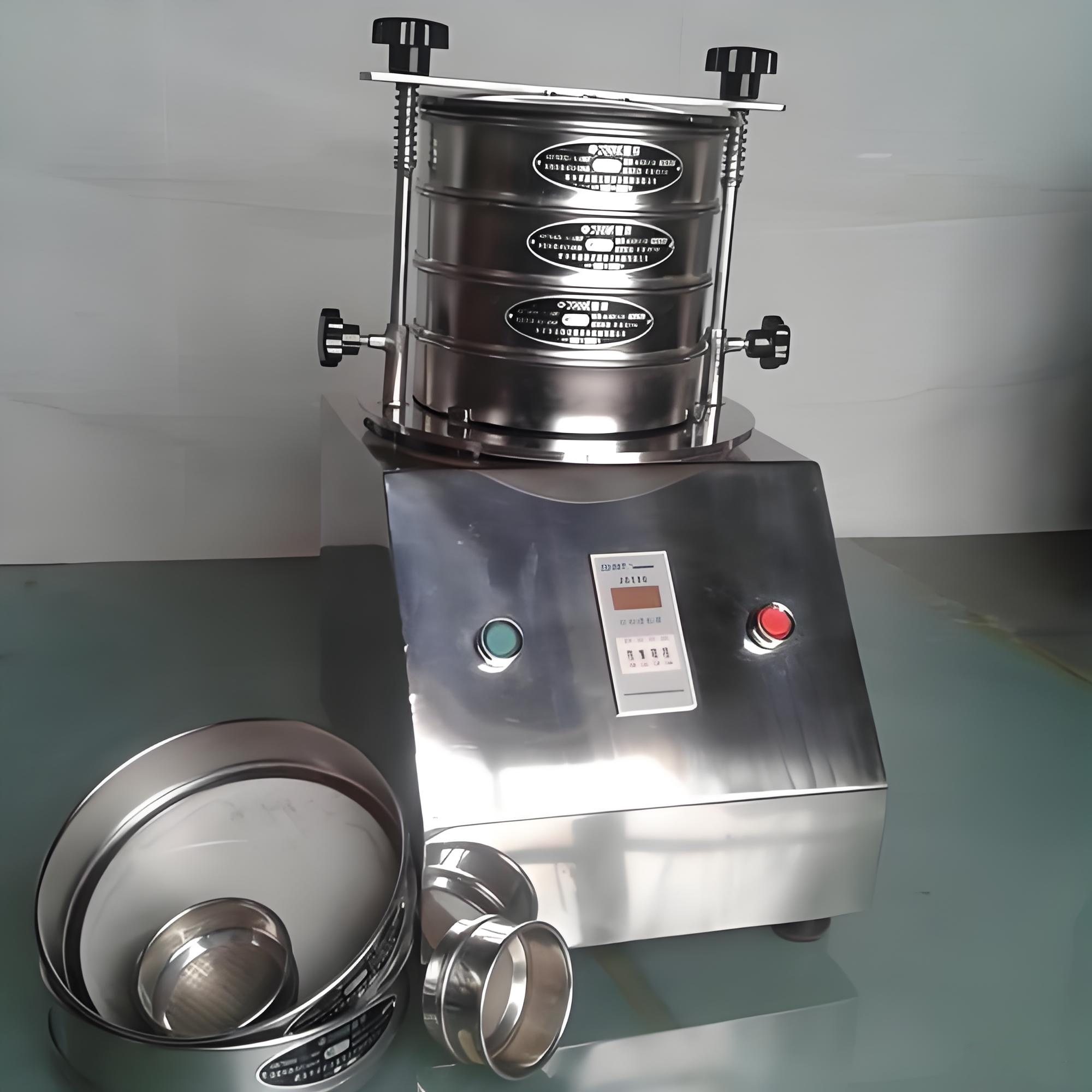
Configurations can be matched to material type, sample quantity, target particle size range, and required number of particle size fractions.
Frequently Asked Questions
What is a Test Sieve Shaker used for?
It is used for laboratory particle size analysis, material classification, and quality control.
What sieve diameter should I choose?
The choice depends on sample quantity, required screening area, laboratory space, and the testing method.
How many test sieves can be used at one time?
The number depends on the equipment configuration and required particle size fractions. Multiple sieve layers can be used for simultaneous separation of different size ranges.
What mesh sizes are available?
Mesh sizes can be selected according to the required aperture and target particle size range.
Can it be used for particle size analysis?
Yes. It separates a sample into different particle size fractions for particle size distribution analysis.
What is the difference between a laboratory shaker and an industrial vibrating sieve?
A laboratory shaker is designed mainly for controlled batch testing, while an industrial vibrating sieve is generally designed for continuous production screening.
Request a Test Sieve Shaker
For a suitable configuration, provide the material type, target particle size range, sample quantity, sieve diameter, and required number of sieve layers. Dahan can recommend a suitable configuration according to your laboratory testing requirements.
-
Why Does Fine Powder Clog the Mesh and How Ultrasonic Technology Solves It?
Fine powder screening can become difficult when particles stick to the mesh, lodge in apertures, or build up on the screen surface ...
-
How to Choose the Right ASTM E11 Test Sieve Size and Mesh?
Choosing the right test sieve is not simply a matter of selecting a mesh number ...
-
How to Clean and Maintain Stainless Steel Laboratory Test Sieves?
Stainless steel laboratory test sieves are precision tools used for particle size analysis ...

Email:
sale@xxdahan.com
WhatsApp:
+86 15236742901
Add:
1000m West of Forest Park,Yanjin County,Xinxiang City,Henan Province,China.