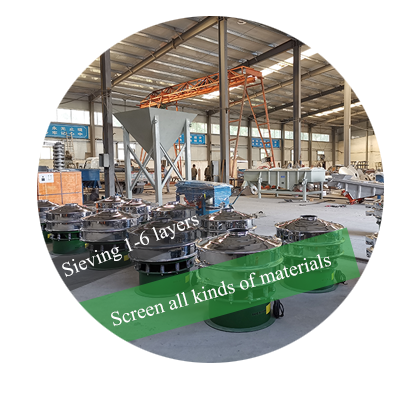
Coffee bean vibrating screen
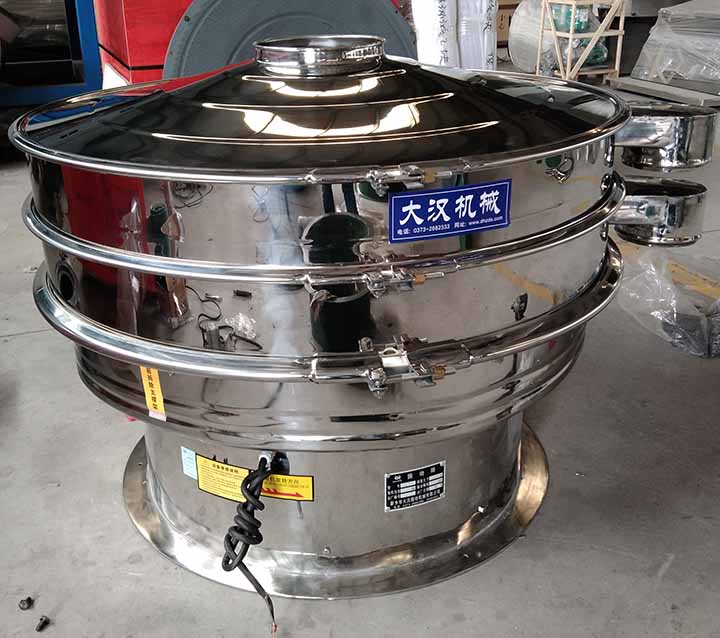
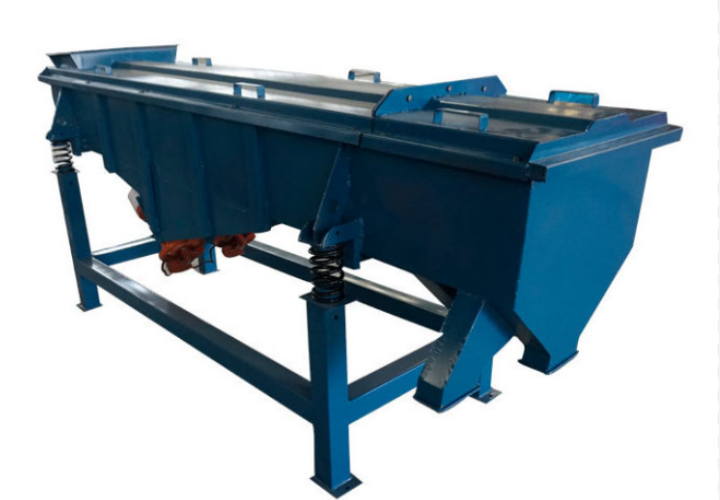
Coffee beans are the raw material for making coffee. A Coffee bean vibrating screen can effectively remove impurities from coffee beans or grade them to achieve a purer particle size, facilitating subsequent grinding and brewing. Commonly used equipment can sieve coffee beans ranging from 4.8 mm to 8.0 mm, corresponding to screen sizes of Screen 12 to Screen 20. Depending on the required coffee bean production volume, the screen can sieve approximately 0.1 to 15 tons of coffee beans per hour. The equipment is typically made of stainless steel to maintain the cleanliness of the coffee beans.
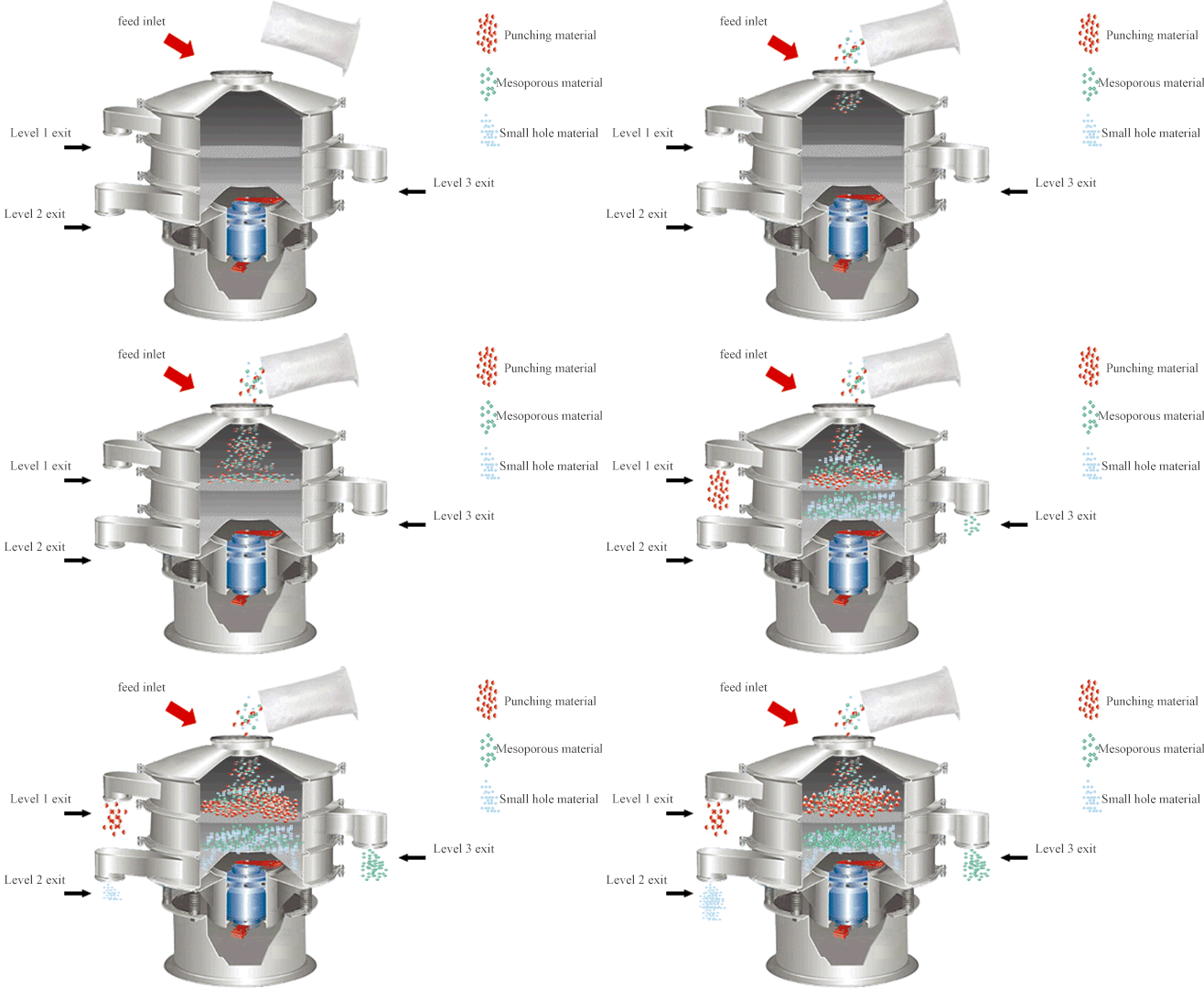
The Sieving Process of a Coffee Bean Vibrating Screen
When sieving with a coffee bean vibrating screen, the coffee beans to be sieved are first evenly poured into the feed inlet of the screen. The coffee beans will be repeatedly tossed up and down by the vibration of the screen surface, slowly moving along the screen surface towards the discharge end. The screens in the sieving machine are arranged in layers from top to bottom according to their aperture size. The upper coarse screen first blocks large particles and unhulled beans, which are discharged from the side outlet. Coffee beans of the correct size can pass through the upper screen and fall onto the lower fine screen. The fine screen removes broken beans, fine powder, and other small impurities. Finally, coffee beans that meet the particle size standard are collected from the fine screen outlet.
International Common Coffee Bean Sieve Grading Table
| Screen Number | Mesh Diameter (Inch) | Approximate Equivalent (Millimeter) | Common Grade Designation |
| Screen 20 | 20/64" | ≈ 7.94 mm | Extra Large |
| Screen 19 | 19/64" | ≈ 7.54 mm | Very Large |
| Screen 18 | 18/64" | ≈ 7.14 mm | Large |
| Screen 17 | 17/64" | ≈ 6.75 mm | Medium-Large |
| Screen 16 | 16/64" | ≈ 6.35 mm | Medium |
| Screen 15 | 15/64" | ≈ 5.95 mm | Medium-Small |
| Screen 14 | 14/64" | ≈ 5.56 mm | Small |
| Screen 13 | 13/64" | ≈ 5.16 mm | Very Small |
| Below Screen 12 | <12/64" | <4.76 mm | Fragments |
Benefits of a Coffee Bean Vibrating Screen
A coffee bean vibrating screen offers benefits such as screening, cleaning, and grading. During the harvesting and drying process, green coffee beans may be mixed with impurities such as sand and broken bean husks. The equipment can separate these impurities from the coffee beans, preventing them from affecting subsequent processing. The vibrating screen can grade coffee beans according to their particle size based on the preset screen aperture, ensuring that beans roasted in the same batch are of uniform size, heated for the same time and degree, achieving uniform roasting. Coffee beans of different sizes and plumpness have different uses. Vibrating screens, by changing the mesh size of the sieves, separate coffee beans into multiple grades, enabling graded sales and enhancing the commercial value of the raw coffee.
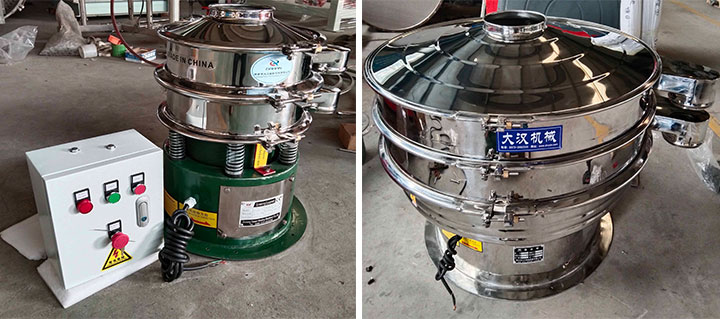
Coffee Bean Vibrating Screen Parameter Table
| Model |
Diameter (mm) |
Feeding Size (mm) |
Frequency (RPM) |
Layers |
Power (kw) |
Capacity (kg/h) |
| DH-400 | 400 | <10 | <1500 | 1-5 | 0.18 | 100 |
| DH-600 | 600 | 0.25 | 200 | |||
| DH-800 | 800 | 0.55 | 500 | |||
| DH-1000 | 1000 | 0.75 | 800 | |||
| DH-1200 | 1200 | 1.1 | 1200 | |||
| DH-1500 | 1500 | 1.5 | 1800 | |||
| DH-1800 | 1800 | 2.2 | 2000 |
Application Scenarios of Coffee Bean Vibrating Screens
The coffee bean vibrating screen is used throughout the entire processing chain, from green beans to finished product. In the green bean processing stage, the equipment separates impurities such as soil, branches, and bean husks using 1-5 layers of sieves, and performs preliminary grading based on particle size. Before entering the roaster, this process removes broken beans, ensuring a more uniform particle size and reducing uneven roasting. After roasting, sieving removes burnt residue, detached bean husks, and fine powder, minimizing the impact of impurities on the taste and appearance of the finished product. In large coffee processing plants, this equipment supports large-scale screening needs through continuous operation.
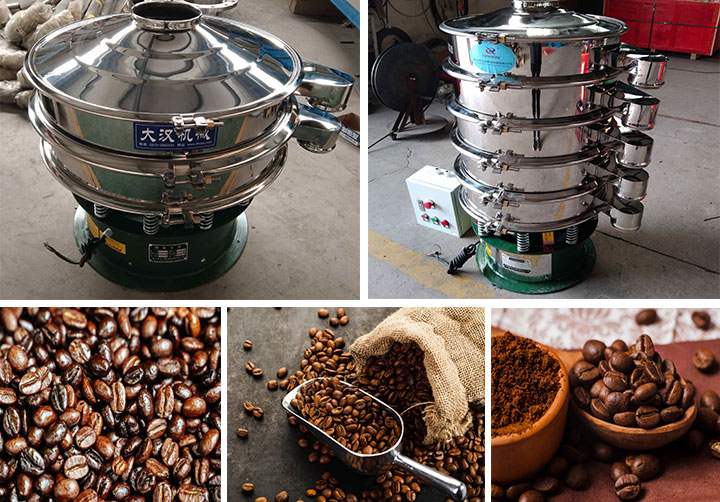
After harvesting, processing, drying, and roasting, coffee beans become grindable and brewable. The different flavor characteristics of coffee, such as acidity, sweetness, bitterness, and aroma, make coffee tasting a unique and enjoyable experience. Coffee bean vibrating screens provide an excellent screening solution for coffee bean production.
-
Vibro Sifter Baking Soda
Vibro Sifter Baking Soda is a process or equipment that uses a vibrating screen to sieve, grade, or filter baking soda...
-
Linear Vibrating Screen For Plastic Particles
Linear Vibrating Screen For Plastic Particles is used for screening and grading plastic particles...
-
Pharmaceutical powder vibrating screen
Pharmaceutical powder vibrating screen is a specialized device used for screening pharmaceutical powders...
-
Vibratory Sifter Medicine Powder Sieving
Vibratory Sifter Medicine Powder Sieving is a device used in the pharmaceutical industry for fine sieving of pharmaceutical powders...

Email:
sale@xxdahan.com
WhatsApp:
+86 15236742901
Add:
1000m West of Forest Park,Yanjin County,Xinxiang City,Henan Province,China.