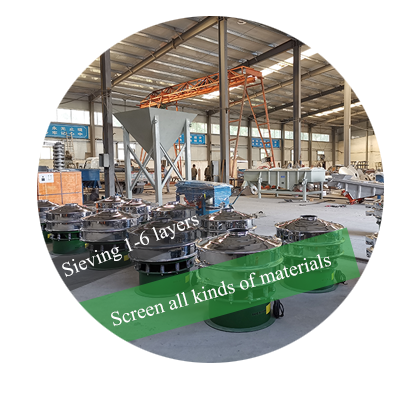
Sunflower seed vibrating screen
Sunflower seed vibrating screen are used for grading, removing impurities, and improving seed quality. They quickly separate seeds of different sizes and states through vibration. Common screen diameters range from 800 to 2000 mm and can be customized to meet production line requirements. Single-unit output is typically 1–10 tons/hour, suitable for small to medium-sized processing lines. The machine has a compact design, approximately 1.2–3.5 meters long, 0.8–2.2 meters wide, and 1.0–1.8 meters high, facilitating integration with elevators, color sorters, and other equipment. Screen mesh sizes are usually between 6–40 mesh and can be configured in combination to separate large, standard, and small seeds, as well as broken seeds and light impurities. Types of equipment include linear vibrating screens and rotary vibrating screens, both of which can be equipped with 1–5 layers of screens for grading and screening sunflower seeds.
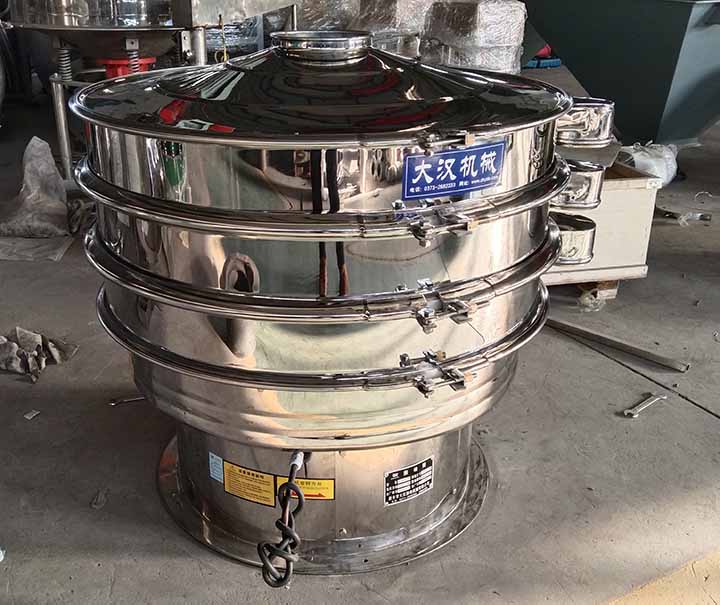
Sunflower Seed Vibrating Screen Screening Principle
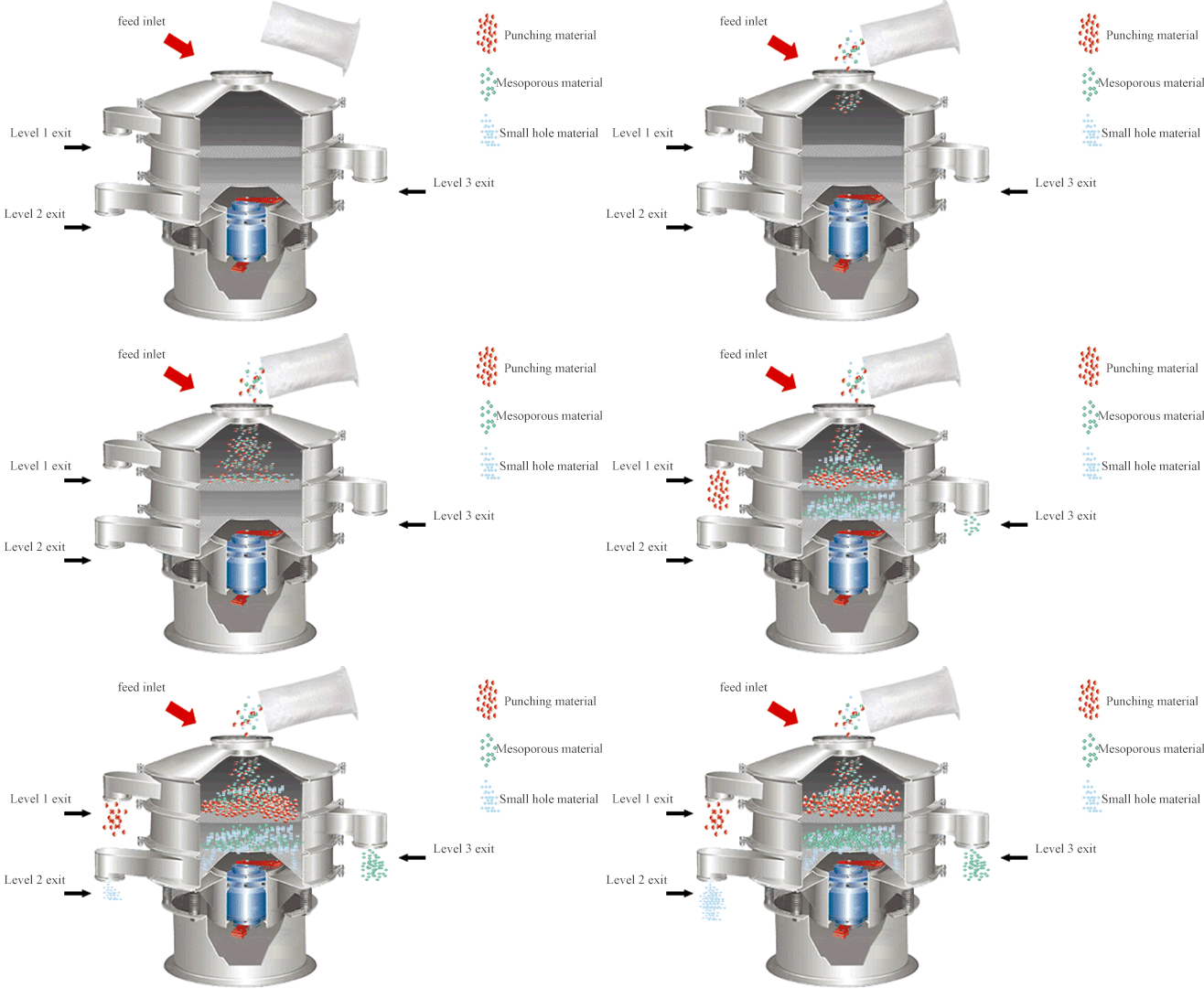
The sunflower seed vibrating screen uses a vibrating motor to generate excitation force, causing the screen surface to move periodically. Sunflower seeds are continuously tossed and bounced on the sieve surface. Larger, intact seeds move forward on the upper sieve layer, while smaller or broken seeds fall through the corresponding mesh size. The sieving process is completed within a sealed sieve box, preventing dust escape. The material's movement speed and sieving efficiency can be optimized by adjusting the vibration frequency, amplitude, and sieve surface angle.
Benefits of Sunflower Seed Vibrating Screen Based on Seed Condition
The sunflower seed vibrating screen improves seed uniformity and purity. Grading ensures that sunflower seeds used for the same packaging or batch processing are of similar size. This not only improves the final product's appearance and market grade but also guarantees even heating during roasting and consistent taste. The machine also removes immature, shriveled, damaged seeds and hard impurities. Shriveled seeds have low oil content and are prone to burning, while stones and other impurities can damage processing equipment and affect product safety. Removing these improves the overall plumpness of the raw material, oil yield, and food safety. The screening process also helps to further clean the surface of the seeds, removing some residual dust and light impurities through vibration and friction, making the seeds cleaner and brighter. Through grading, seeds in different states can be optimized for use: plump, large seeds are prioritized for the high-end snack market, standard seeds for regular packaging or oil extraction, and small seeds for animal feed or specific processing.
Characteristics of Different Sunflower Seed Vibrating Screen Types
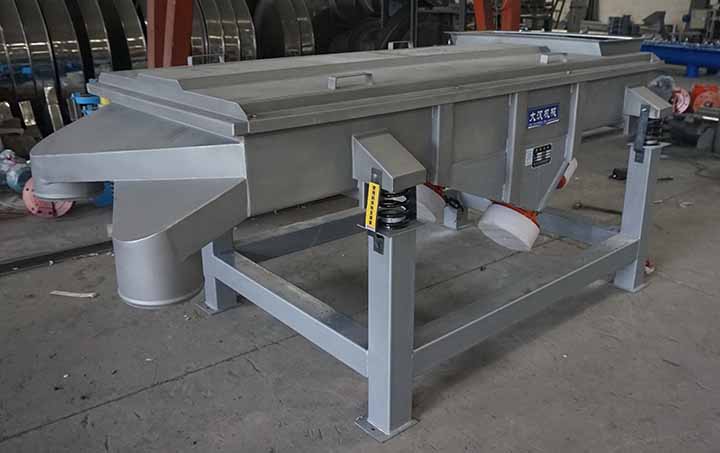
Among the classifications of vibrating screens, linear vibrating screens and rotary vibrating screens are two commonly used types for screening sunflower seeds.
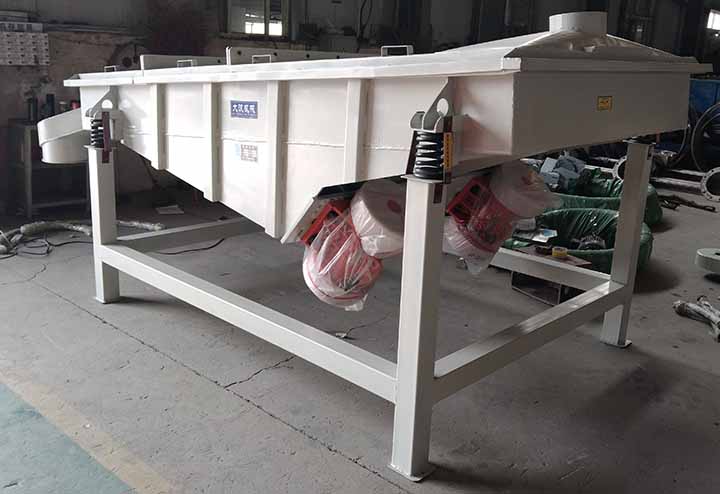
When a linear vibrating screen is working, the material jumps forward along a straight line on the screen surface, with very stable movement, suitable for easily flowing materials like sunflower seeds. It boasts high output and continuous operation, commonly used for preliminary cleaning, impurity removal, and coarse grading. It can quickly separate most impurities and perform coarse grading of 2 to 4 grades, making it a mainstay piece of equipment in large processing plants.
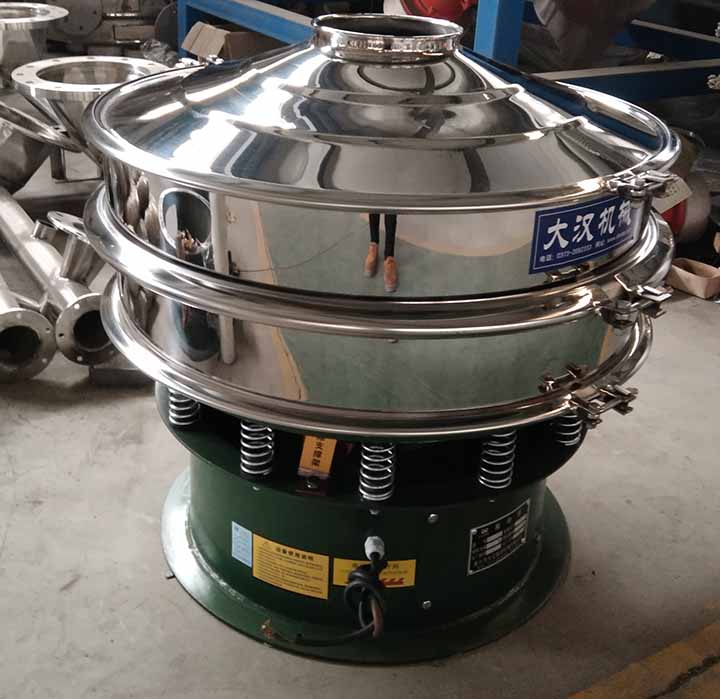
The rotary vibrating screen is characterized by finer sieving, convenient screen replacement, and good sealing. Its vibration trajectory is a three-dimensional ellipse, causing the material to spread like a vortex on the screen surface, resulting in more material passing through the screen and finer sieving. Rotary vibrating screens are suitable for fine grading, final inspection, or removing small impurities, and can more accurately separate seeds close to size boundaries. However, its single-unit processing capacity is usually smaller than that of a linear screen.
Sunflower Seed Vibrating Screen Parameter Table
| Model |
Diameter (mm) |
Feeding Size (mm) |
Frequency (RPM) |
Layers |
Power (kw) |
Capacity (kg/h) |
| DH-400 | 400 | <10 | <1500 | 1-5 | 0.18 | 100 |
| DH-600 | 600 | 0.25 | 200 | |||
| DH-800 | 800 | 0.55 | 500 | |||
| DH-1000 | 1000 | 0.75 | 800 | |||
| DH-1200 | 1200 | 1.1 | 1200 | |||
| DH-1500 | 1500 | 1.5 | 1800 | |||
| DH-1800 | 1800 | 2.2 | 2000 |
Sunflower Seed Vibrating Screen Application Case
In a sunflower seed primary processing workshop, the raw material contained stems, leaves, sand, and broken seeds. After introducing a sunflower seed vibrating screen, using double-layered screens of 8 mesh and 20 mesh, large impurities were removed first, followed by grading. Small and broken seeds were effectively removed, increasing the finished product qualification rate by approximately 15%, reducing manual sorting costs, and making the production cycle more stable.
Applications of Sunflower Seed Vibrating Screens in Processing
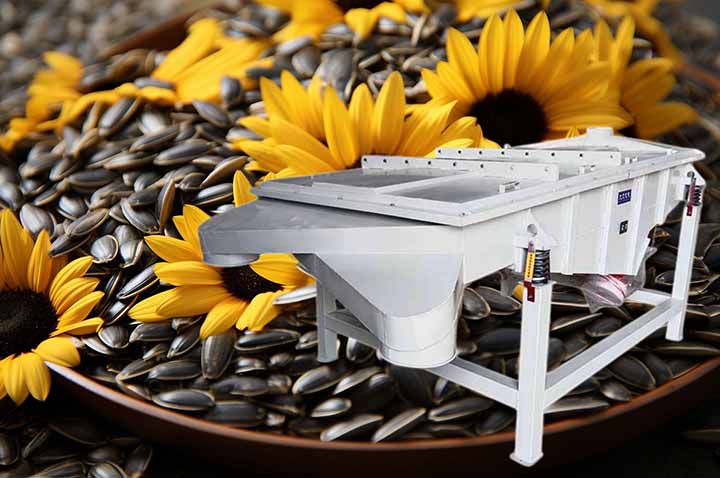
In sunflower seed processing, sunflower seed vibrating screens are used for raw material pre-cleaning, size grading, removal of broken seeds, and finished product re-inspection. It is usually used in conjunction with elevators, air separators, and color sorters to form a stable automated production line. This not only ensures continuous and smooth production but also guarantees consistent and controllable quality for each batch of seeds.
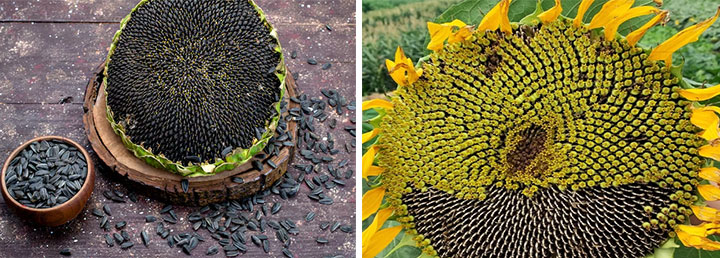
The sunflower seed vibrating screen meets various seed processing needs with its high efficiency, low breakage rate, and strong adaptability. By selecting the appropriate screen type, screen mesh size, and adjusting parameters, it can improve grading accuracy while ensuring output. Simply put, it allows for more accurate seed sieving, less breakage, and larger throughput, making it an indispensable piece of equipment in modern sunflower seed processing plants.
Frequently Asked Questions
1. What are the common malfunctions of a sunflower seed vibrating screen?
In daily processing, the most common malfunctions include screen clogging, abnormal vibration amplitude, and motor overheating. Regularly checking the bolt tightness and cleaning the screen surface promptly can prevent 80% of downtime.
2. How to judge the quality of sunflower seeds?
High-quality sunflower seeds are usually bright in color, plump, and free of mold. After grading by a vibrating screen, sunflower seeds with fewer impurities and uniform size have a higher market value. Good seeds have a firm outer shell, thick kernels when pinched open, and no signs of insect damage.
3. What other sunflower seed-related materials can this equipment process?
This vibrating screen can process not only mature sunflower seeds but also shelled sunflower kernels. Furthermore, it is compatible with crops grown in similar environments to sunflower seeds, such as oil sunflowers, pumpkin seeds, and various shelled nuts. Simply changing the screen mesh size allows for a transition from fine impurity removal to multi-stage sorting.
-
Centrifugal screening machine
Centrifugal screening machine is designed and produced for screening problems such as light materials...
-
Pharmaceutical excipient powder vibrating screen
Pharmaceutical excipient powder vibrating screen is a screening device designed to meet the special physical and chemical properties of...
-
TPU Polymer Powder Sieving Machine
TPU polymer powder sieving machine is a mechanical equipment specially used for particle size classification, impurity removal or particle...
-
Powder Sieve Machine Price
Powder Sieve Machine Price varies depending on the specifications, and the market quotation is usually between US$500 and US$8000...

Email:
sale@xxdahan.com
WhatsApp:
+86 15236742901
Add:
1000m West of Forest Park,Yanjin County,Xinxiang City,Henan Province,China.