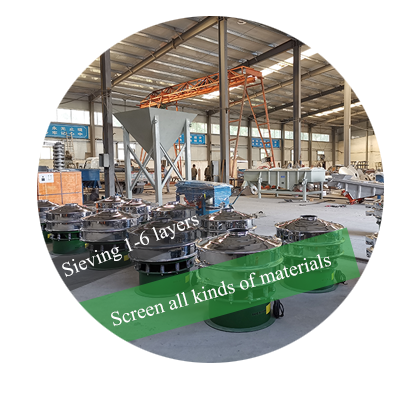
Peanut vibrating screen
Peanut vibrating screen remove impurities such as peanut stems, grade peanut kernels, and separate shelled kernels from the hulled kernels. Processing capacity ranges from 0.5 tons to 20 tons. Screening apertures range from 3 mm to 25 mm, and the mesh size can be configured according to the specific peanut size. The parts in contact with the material are typically made of 304 stainless steel, while the frame can be selected from carbon steel with powder coating or a full stainless steel structure to ensure a long service life and prevent peanut contamination in humid and dusty environments.
Peanut Vibrating Screen Working Principle
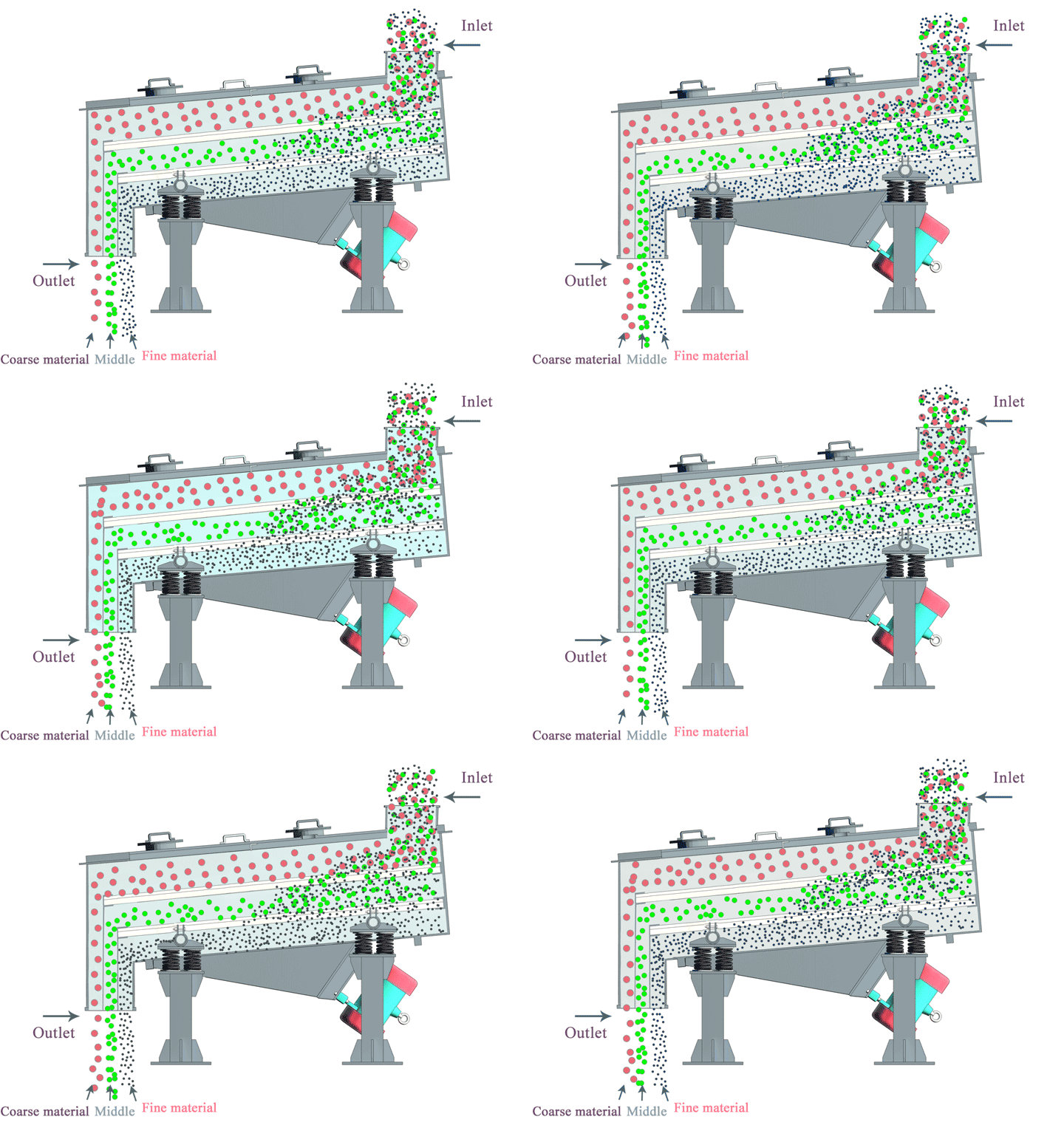
After the Peanut vibrating screen is started, the vibrating motor generates a bidirectional excitation force, causing the screen box to drive multiple layers of horizontally or inclined screens to reciprocate. The peanut material to be screened is evenly fed into the top screen through the inlet. Under the vibration, small impurities, broken kernels, or peanuts of a specified size pass through the screen and fall, while peanuts larger than the screen aperture size move along the screen surface to different outlets for discharge. The machine screens can be made of lightweight, wear-resistant woven metal wire mesh. When changing the screen, simply loosen the fixing clips or bolts on the screen frame, pull out the frame, replace the screen, and then push it back in and tighten.
Peanut Vibrating Screen Functions
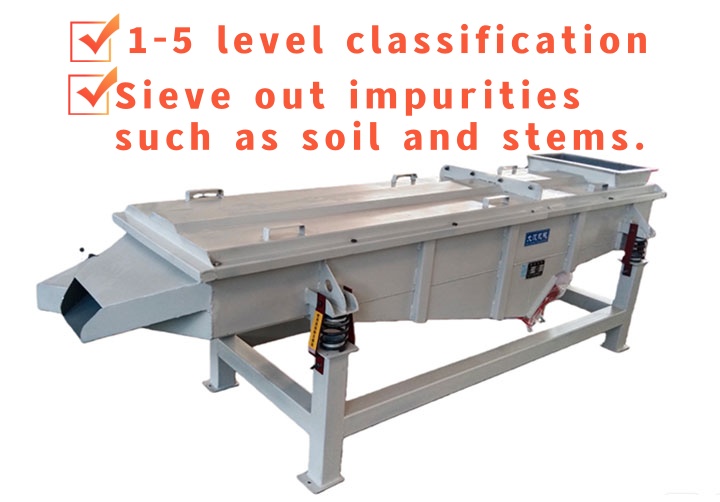
The Peanut vibrating screen can be equipped with 1-5 layers of screens to separate peanuts according to particle size, such as classifying peanuts into different grades or sorting peanut kernels according to plumpness and size specifications.
The machine can separate impurities from peanuts, such as soil, sand, withered leaves, and weeds, which have a significantly different specific gravity or particle size from the peanuts. It can also remove light impurities such as shriveled peanuts and peanut shell fragments through a combination of air separation and a vibrating screen.
The Peanut vibrating screen can also integrate a dust removal device to adsorb dust and fine debris during the screening process, maintaining a clean processing environment and preventing dust wear on the equipment. It can also clean the soil adhering to the peanut surface, reducing the workload of subsequent washing processes.
For shelled peanuts, the screen aperture and vibration frequency can be adjusted to separate whole peanut kernels from broken particles, facilitating subsequent sorting and processing.
The vibration trajectory of a vibrating screen can cause peanuts to be evenly distributed and moved forward in an orderly manner on the screen surface, avoiding peanut accumulation. It can also be connected to shelling machines, dryers, packaging machines, and other upstream and downstream processing equipment to achieve automated production line operations.
The machine supports adjustment of vibration frequency, amplitude, and screen surface inclination angle, allowing for optimization of screening parameters based on different peanut types (shelled peanuts, peanut kernels, peanut pieces, etc.), moisture content, and throughput.
Peanut Vibrating Screen Types
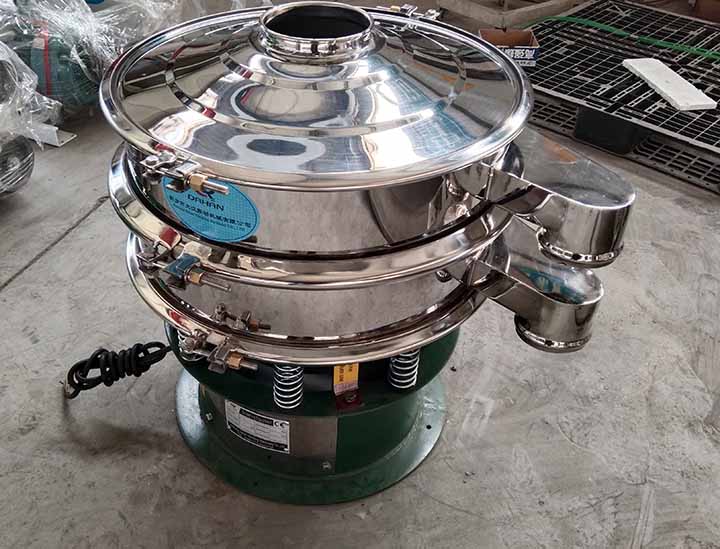
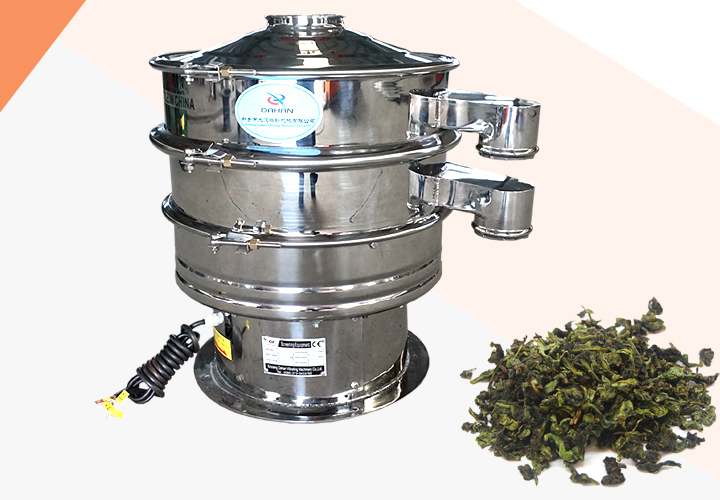
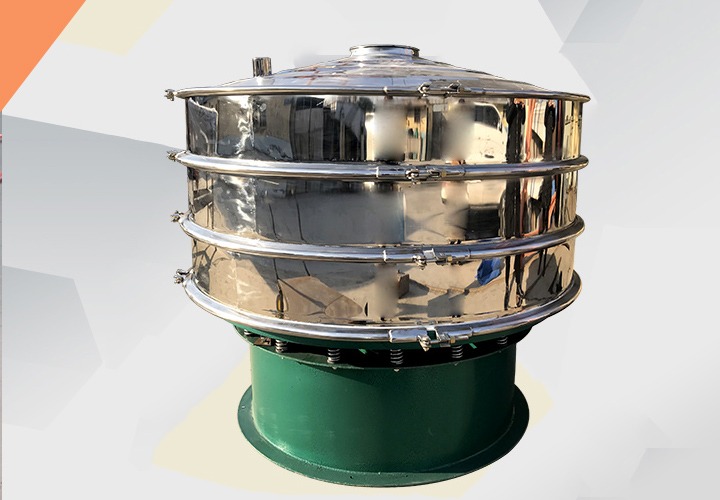
In peanut screening, rotary vibrating screens and linear vibrating screens are common types. Rotary vibrating screens are suitable for fine screening of small peanut particles, while linear vibrating screens are suitable for high-volume peanut screening.
Rotary vibrating screens offer high screening accuracy and are suitable for fine separation of peanut kernels from shells after shelling, grading of peanut pieces from whole kernels, and final impurity removal and grading of finished peanut products. Due to its gentle motion trajectory, it has a low material breakage rate. The hourly output of a single unit ranges from 0.1 to 5 tons. A 1000mm diameter rotary vibrating screen processes approximately 1-2 tons of peanuts per hour, while a 1500mm diameter model processes approximately 3-5 tons per hour.
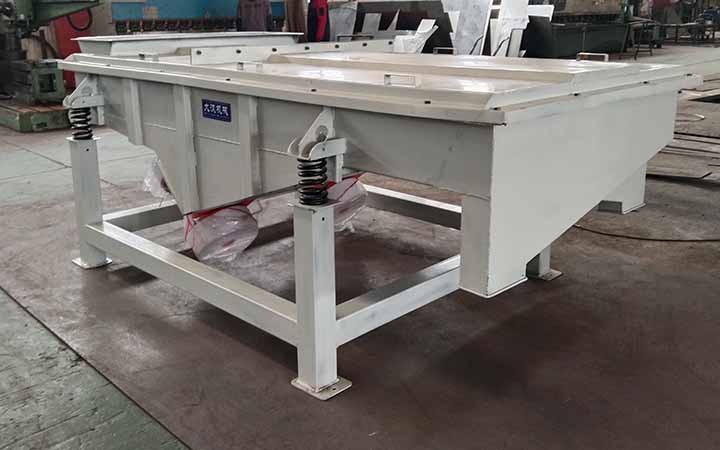
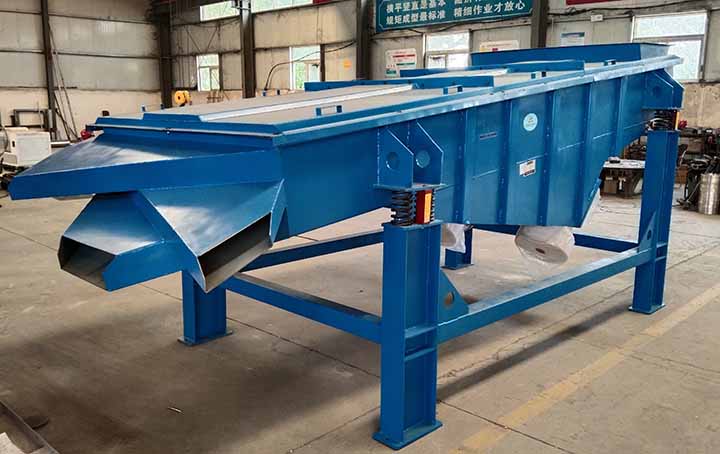
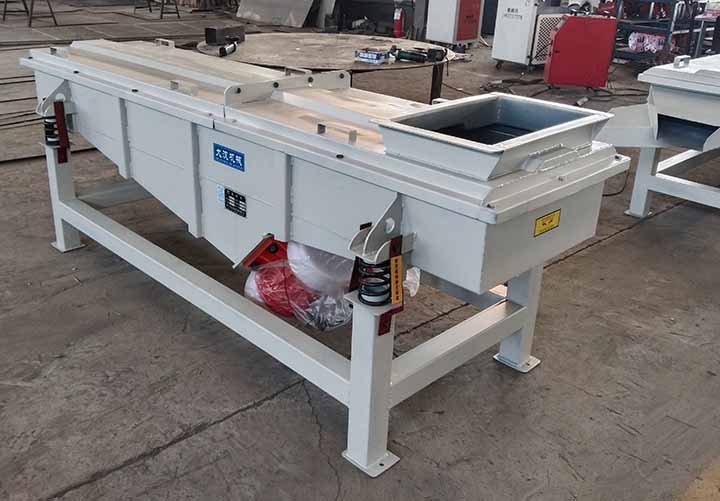
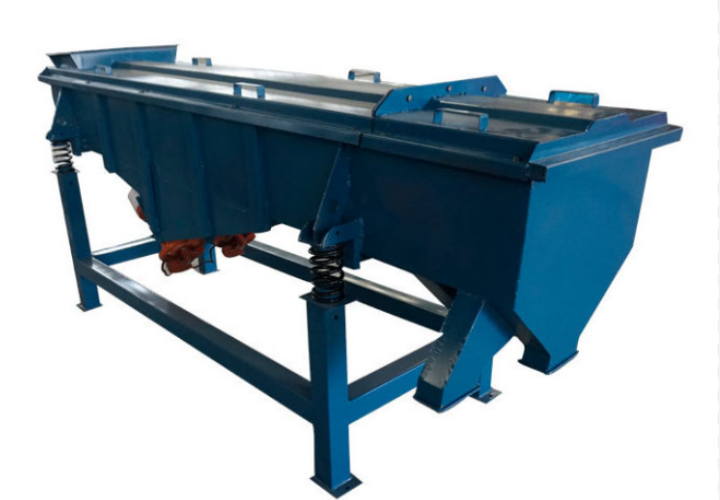
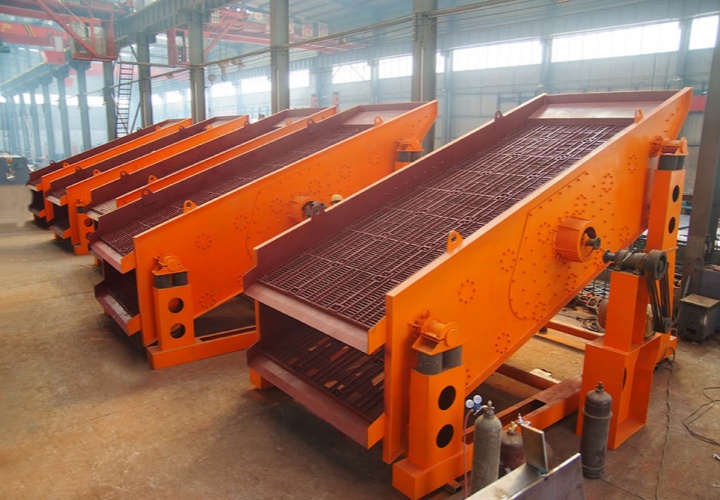
A linear vibrating screen uses two horizontal vibrating motors rotating synchronously in opposite directions to generate a linear forward throwing force. It has a large processing capacity, a robust structure, and is suitable for efficient preliminary cleaning and size grading. It is commonly used for primary cleaning after peanut harvest, preliminary size grading of shelled peanuts, and applications requiring high throughput. Linear screens can have hourly processing capacities ranging from 2 to 20 tons and can be used in large-scale peanut processing lines.
Peanut Vibrating Screen Price
The price of a peanut vibrating screen depends on factors such as the type, size, material, and level of automation. A small, carbon steel standard linear or rotary vibrating screen starts at around $2,000 to $4,500. Medium-sized, stainless steel equipment with multi-layered screens and a basic control system typically ranges in price from $5,000 to $10,000. Prices will vary depending on whether custom screen sizes or additional features are required.
Peanut Vibrating Screen Suppliers
Peanut vibrating screen suppliers are located in Xinxiang, Shanghai, and other areas, offering a full range of products from economical to high-performance models. Dahan Machinery stands out for its cost-effectiveness and customization capabilities. Dahan Machinery provides a one-stop service from design and manufacturing to installation and commissioning, and can customize non-standard products based on specific peanut varieties, factory space limitations, and other requirements. As a source manufacturer, its prices are also competitive.
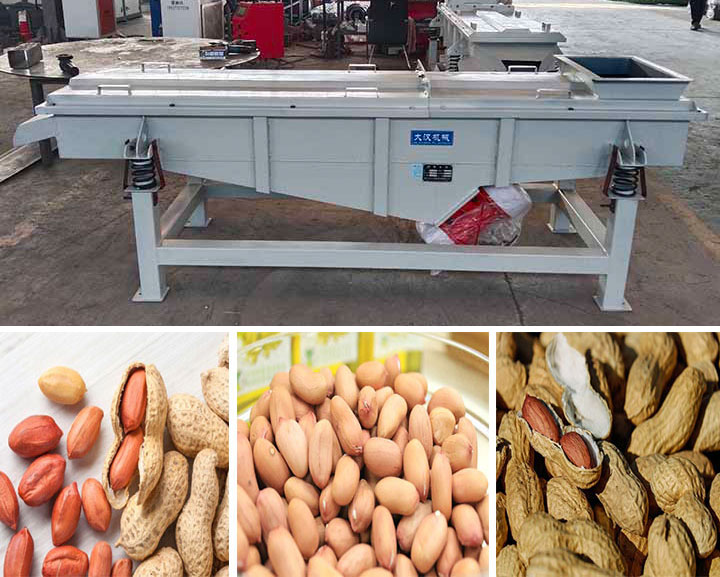
Peanut vibrating screens remove various impurities, grade peanuts, and preserve the peanut kernels, enabling them to meet the needs of packaging and oil extraction. Whole, large peanut kernels can be used for snacks or export, while smaller or half kernels can be used for oil extraction or peanut butter production. Furthermore, automated screening replaces traditional manual sorting, improving peanut production efficiency and reducing labor costs.
-
Sunflower seeds screening machine
Sunflower seed screening machine, also known as sunflower seed vibrating screen or separator, is a special equipment ...
-
Powder Sieve Machine Price
Powder Sieve Machine Price varies depending on the specifications, and the market quotation is usually between US$500 and US$8000...
-
Sea salt sieve field application
In the working process of sea salt sieve, the material is transferred to the screen surface, making the material expand and involute on the screen surface...
-
Vibrating screen for sieving iodized salt
Iodized salt is not uncommon in daily life. In the iodized salt processing technology...

Email:
sale@xxdahan.com
WhatsApp:
+86 15236742901
Add:
1000m West of Forest Park,Yanjin County,Xinxiang City,Henan Province,China.