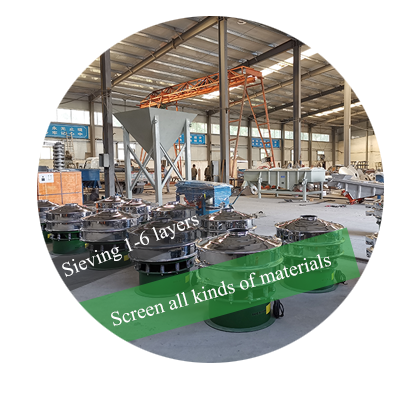
Activated Carbon Screening Machine
Activated Carbon Screening Machine is a commonly used screening device in activated carbon production. It is used to classify activated carbon in different forms, remove impurities, and produce a more uniform particle size and higher purity. It can process powdered, columnar, or crushed granular activated carbon, and its design takes into account the characteristics of activated carbon: light weight, strong adsorption, and tendency to stick together. Processing capacity ranges from 0.5 to 20 tons per hour, with screen mesh sizes from 2 to 400 mesh. The screens can be configured with 1 to 5 layers, separating the material into 2 to 6 different sizes.
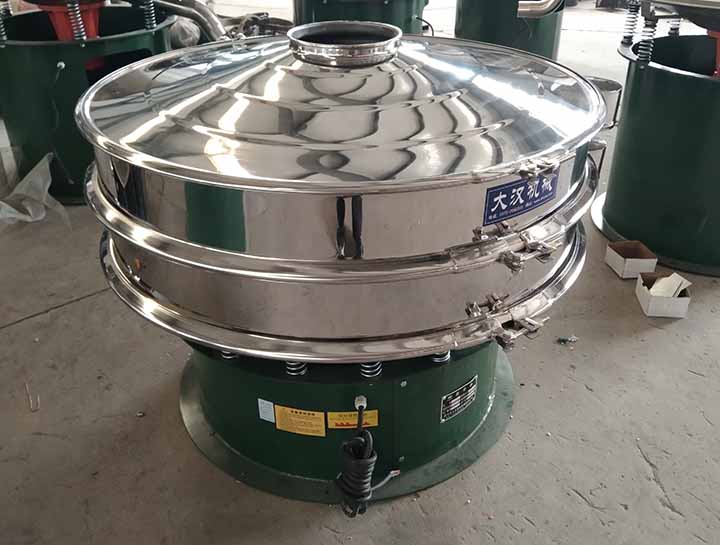
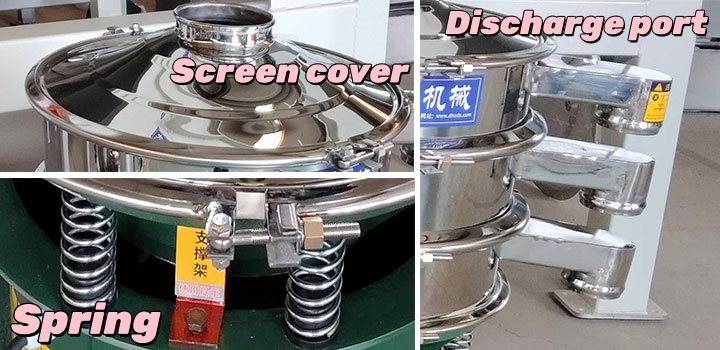
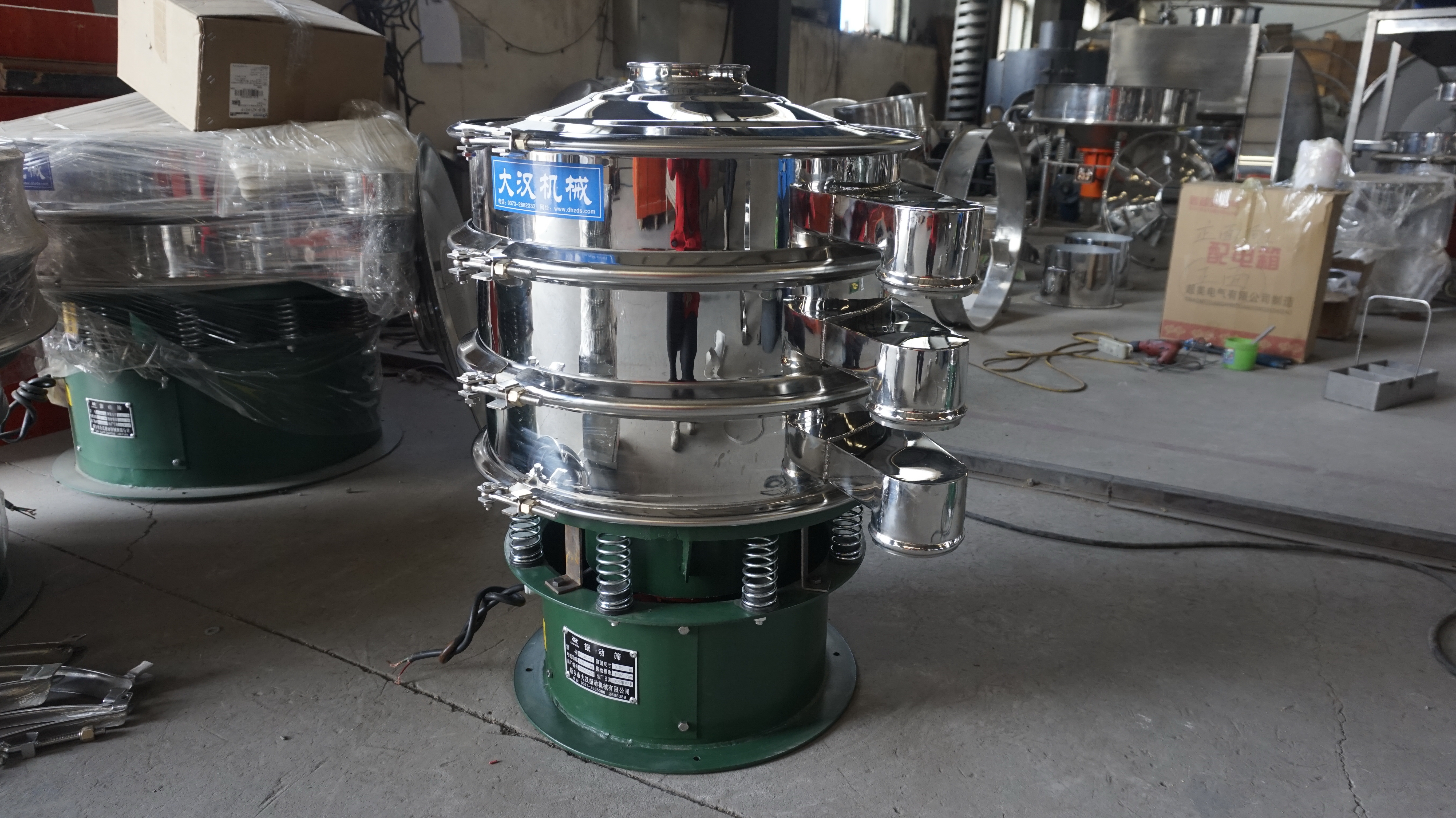
The equipment can be made of carbon steel, 304, or 316L stainless steel. The structure includes a screen box, screens, vibrating motor, spring support, and motor base. The screen aperture, machine size, vibration frequency, and screen cleaning method are all adjustable, allowing for flexible adjustments based on production volume and product requirements. During operation, the material is continuously thrown across the screen surface; the vibration allows powders and particles to pass through quickly, resulting in clear grading and facilitating subsequent packaging or processing.
What are the functions of an Activated Carbon Screening Machine?
Activated Carbon Screening Machines solve many problems encountered during screening. For example, powdered activated carbon is very light, and traditional screening often results in dust flying all over the workshop, not only polluting the environment but also potentially affecting worker health, and causing significant material waste. This vibrating screen is usually fully enclosed, so dust doesn't scatter, keeping the workshop clean and preventing material waste. Activated carbon has strong adsorption properties and easily gets stuck in the screen mesh, slowing down screening or even causing the machine to stop. The equipment has bouncing balls, ultrasonic transducers, or rotating brushes to continuously clean the screen, preventing clogging, ensuring smooth grading, and resulting in more uniform particle size. Columnar activated carbon is easily broken during screening. This equipment adjusts the vibration frequency and motion trajectory, allowing the material to be gently tossed on the screen surface, reducing impact and friction, lowering the breakage rate, and improving product integrity and strength. It can process 0.5 to 20 tons per hour, much faster than manual screening or older equipment, keeping production line output up to par, and is easy to operate, improving overall production efficiency.
Actual component images of the Activated Carbon Screening Machine
What types of Activated Carbon Screening Machines are available?
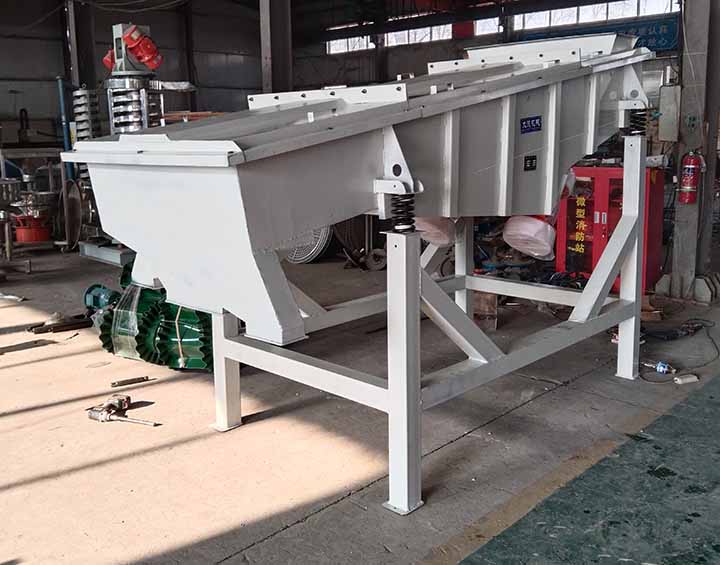
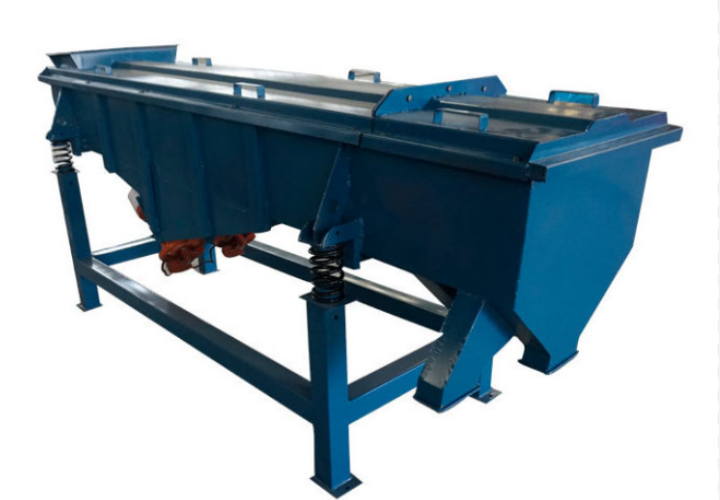
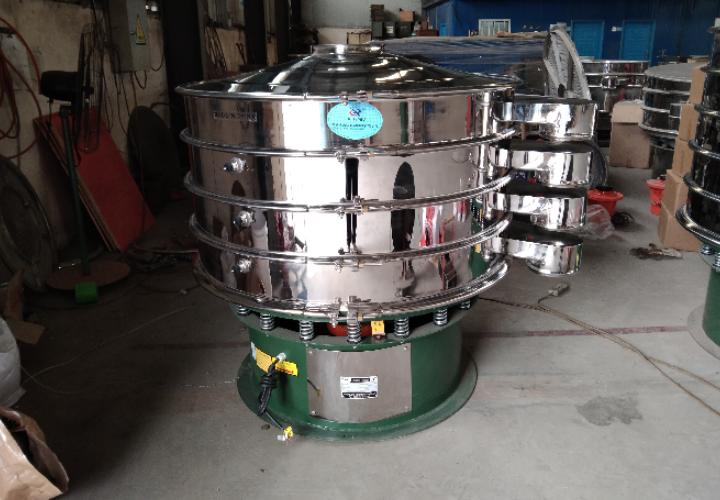
Different forms of activated carbon require different screening equipment. Linear vibrating screens are suitable for columnar and broken granular activated carbon, and can also handle coarse powder activated carbon, with a screening mesh size generally ranging from 2 to 325 mesh. Driven by dual motors, it boasts strong vibration, high throughput, and is easy to use in production lines. The equipment is also equipped with an anti-clogging screen to prevent columnar activated carbon from getting stuck or broken particles from damaging the screen. Circular vibrating screens can screen powdered activated carbon, with a screening mesh size ranging from 80 to 400 mesh, and are particularly suitable for ultrafine powders from 80 to 325 mesh. It offers more accurate screening, lower impact force, smaller size, and a closed design to reduce dust emissions and maintain a clean workshop. Adding an ultrasonic device further improves the penetration rate of fine powders and results in more uniform grading.
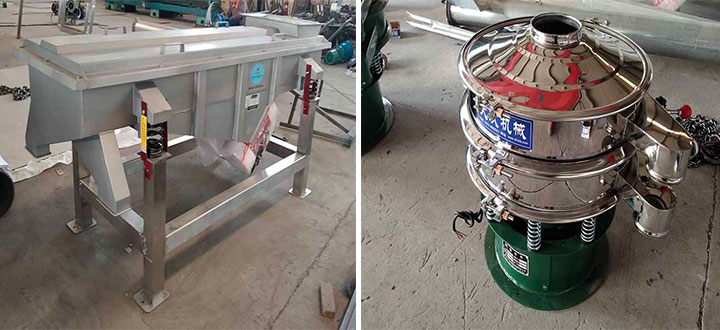
In short, linear vibrating screens are suitable for large particles and high-volume operations, and are easy to operate and maintain; circular vibrating screens are suitable for powders and ultrafine powders, offering finer screening and less dust.
Activated Carbon Screening Machine Parameter Table
| Model |
Diameter (mm) |
Feeding Size (mm) |
Frequency (RPM) |
Layers |
Power (kw) |
Capacity (kg/h) |
|
| DH-400 | 400 | <10 | <1500 | 1-5 | 0.18 | 100 | |
| DH-600 | 600 | 0.25 | 200 | ||||
| DH-800 | 800 | 0.55 | 500 | ||||
| DH-1000 | 1000 | 0.75 | 800 | ||||
| DH-1200 | 1200 | 1.1 | 1200 | ||||
| DH-1500 | 1500 | 1.5 | 1800 | ||||
| DH-1800 | 1800 | 2.2 | 2000 |
Activated Carbon Screening Machine Prices
The price of activated carbon screening machines varies considerably, depending on configuration, throughput, material, and screening requirements. All-carbon steel equipment is suitable for activated carbon production where corrosion resistance is not critical, offering lower costs. Small single- or double-layer linear vibrating screens typically cost between $800 and $1,300. Equipment with 304 stainless steel contact parts and a carbon steel base balances hygiene and cost, suitable for industrial-grade activated carbon screening, and usually costs between $1,200 and $3,100, depending on the number of layers and size.
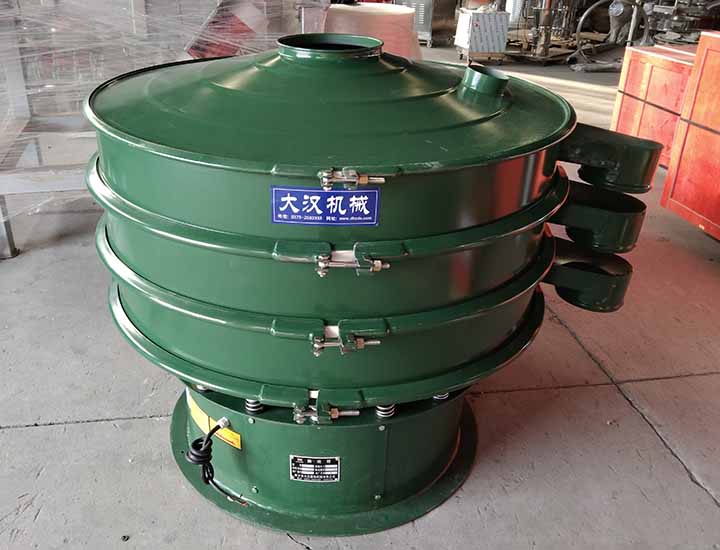
All-stainless steel equipment is corrosion-resistant and easy to clean, suitable for food-grade or pharmaceutical-grade activated carbon production. A standard circular vibrating screen costs approximately $2,000 to $7,000, while large or custom-made linear vibrating screens or equipment with ultrasonic devices can exceed $9,000. Adding anti-clogging devices, special motors, or explosion-proof features will increase the cost accordingly. The price of equipment is closely related to its materials, processing capacity, number of layers, and additional functions. Selection should be flexible and tailored to production volume and process requirements.
Activated Carbon Screening Machine Solutions
Activated Carbon Screening Machines can be customized based on the type of activated carbon, production volume, and workshop conditions. For example, for coconut shell or fruit shell activated carbon, the screen surface is designed with an arc shape to prevent particle breakage; for powdered activated carbon, negative pressure can be added to assist screening, allowing fine powder to pass through more smoothly. Small workshops can choose a single-unit version with a capacity of 0.5-3 tons per hour, while large production lines can use a linked version with a capacity of 8-15 tons per hour, allowing multiple machines to operate simultaneously. If needed, explosion-proof motors or food-grade seals can be added. Manufacturers typically provide sample screening and operation training. The equipment can also be connected to crushers, dryers, and packaging machines, making the production line run more smoothly and conveniently.
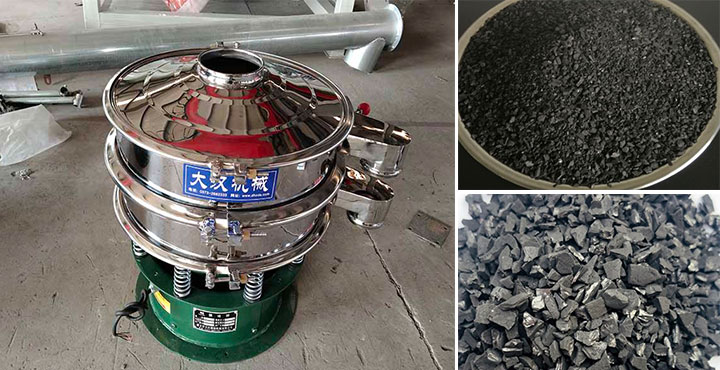
Activated carbon screening machines are essential equipment used in activated carbon production. Different forms of activated carbon have different screening requirements; suitable equipment can be found for powder, columnar, or crushed particles. Whether it's a linear vibrating screen or a circular vibrating screen, both offer advantages such as high throughput and low breakage rate. Equipment prices vary depending on the material and configuration, but the increased production efficiency and guaranteed product quality result in a quick return on investment. A scientific screening solution can solve problems such as dust generation, screen clogging, and particle breakage. Furthermore, the equipment can be integrated with crushing, drying, and packaging processes, making the production line run more smoothly and facilitating cleaner and more organized production for businesses.
-
Iron ore powder Vibrating Screen
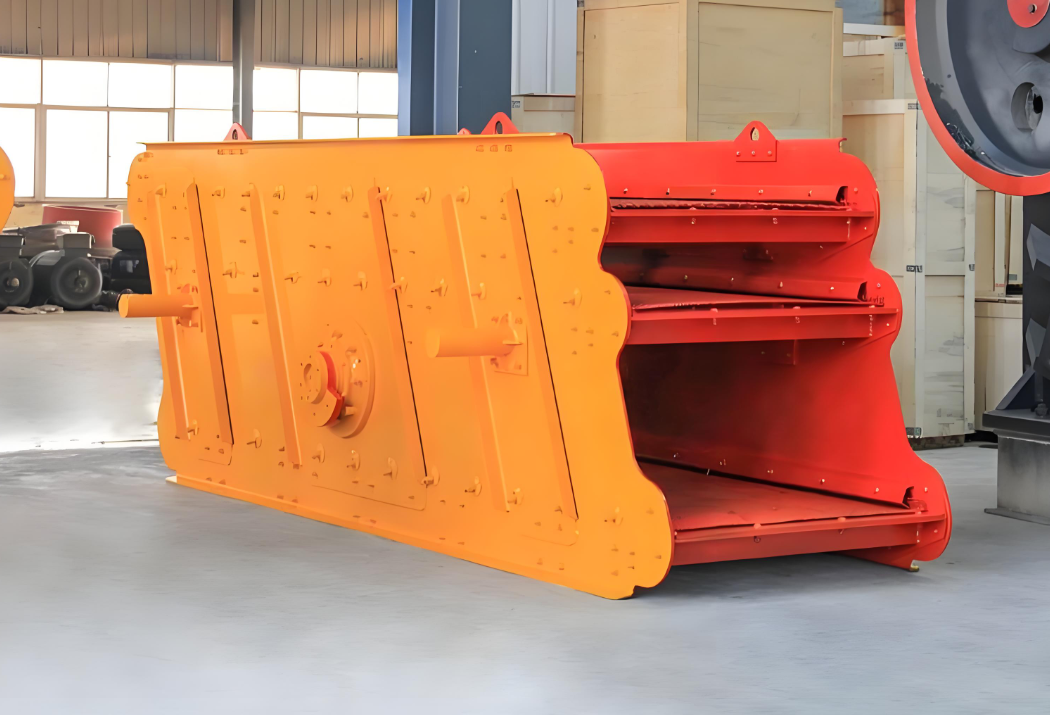
Iron ore powder Vibrating Screen uses two motors running synchronously in opposite directions to generate vibration, causing the screen surface to vibrate uniformly in a straight line...
-
Coffee bean vibrating screen
A Coffee bean vibrating screen can effectively remove impurities from coffee beans or grade them to achieve a purer particle size, facilitating subsequent grinding and brewing...
-
Cocoa Powder Vibrating Screen
The Cocoa Powder Vibrating Screen is used to remove lumps and impurities from cocoa powder, and it can also classify and sieve according to particle size...
-
Sunflower seed vibrating screen
Sunflower seed vibrating screen are used for grading, removing impurities, and improving seed quality...

Email:
sale@xxdahan.com
WhatsApp:
+86 15236742901
Add:
1000m West of Forest Park,Yanjin County,Xinxiang City,Henan Province,China.