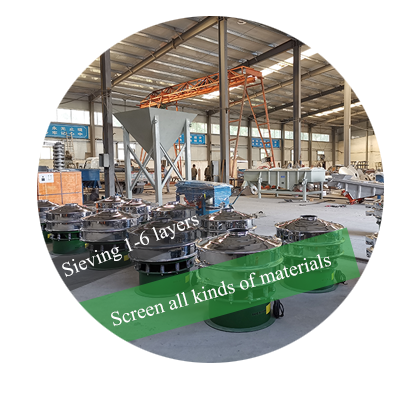
Vibrating Screen for Sand
Vibrating Screen for Sand can screen sand of different particle sizes from 4 to 200 mesh. The equipment comes in different specifications, with hourly processing capacities ranging from 1 ton to 30 tons. Smaller units can process 5 tons of sand and gravel per hour, while larger models can complete 20 tons of screening per hour. The screen size is adjustable; small units have a screen width of less than one meter, while larger units can have a screen width of over two meters. The number of screen layers can be flexibly combined: one screen separates two sizes of sand and gravel, two layers separate three sizes, and three or more layers can separate four or more different particle sizes. The main body of the equipment is mostly made of carbon steel, while the screens are commonly made of spring steel, stainless steel, or wear-resistant polyurethane. The parts in contact with the sand and gravel are reinforced with thicker plates to extend service life.
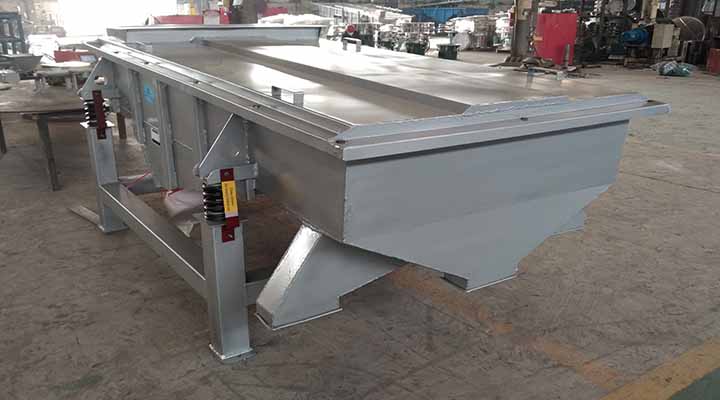
Components of the Vibrating Screen for Sand
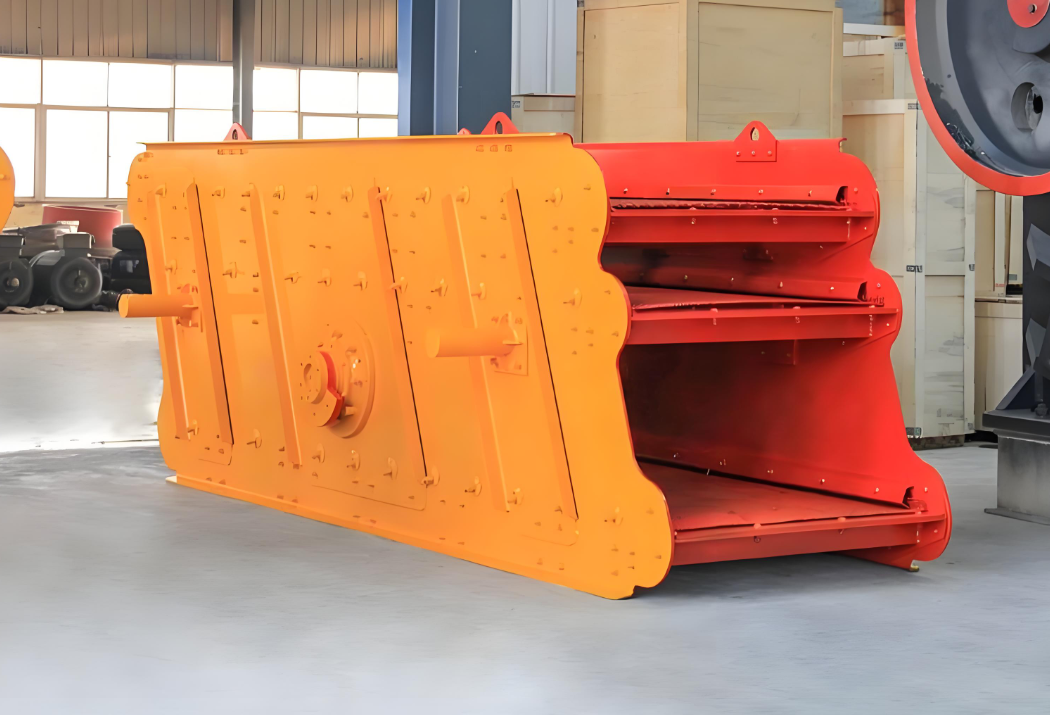
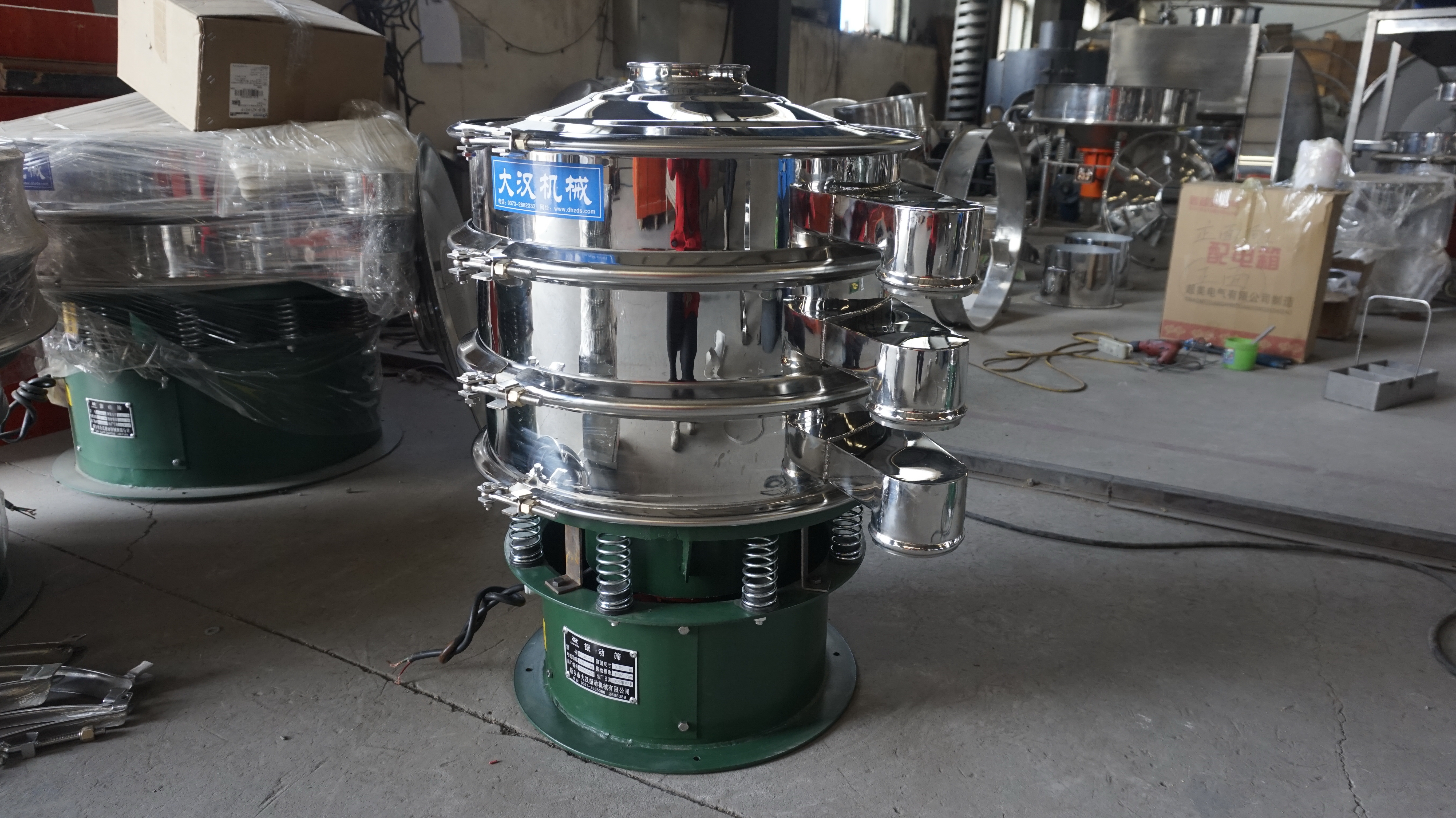
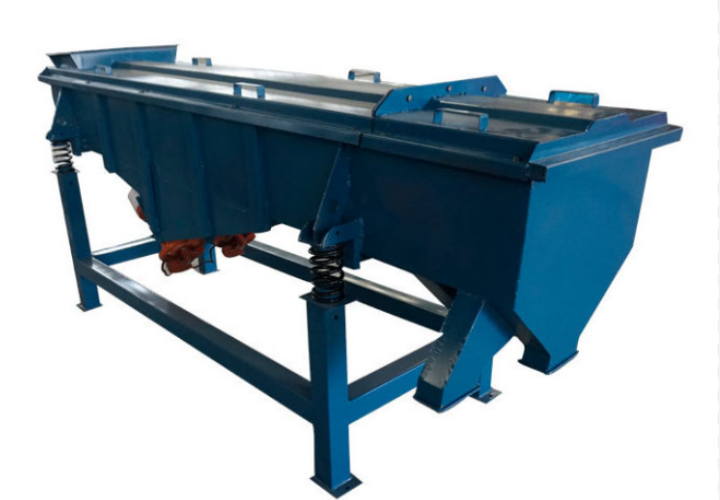
The Vibrating Screen for Sand consists of a screen box, screens, a vibrating motor, damping springs, a support frame, and a discharge port. The equipment's amplitude is controlled between 2 and 5 mm, and the vibration frequency is 900 to 1500 r/min. The vibrating motor generates excitation force, causing the screen box and screen mesh to vibrate together. Damping springs support the screen body, reducing vibration transmission to the support frame and maintaining the equipment's operating status. Mixed sand and gravel fall from the feed inlet onto the inclined screen surface, continuously bouncing and moving forward under the vibration. Sand and gravel with a particle size smaller than the screen openings pass through the screen mesh and fall to the lower layer, while larger particles remain on the screen surface and continue moving. Sand of different sizes moves along the screen surface and is discharged from the corresponding outlet, completing multi-layer grading.
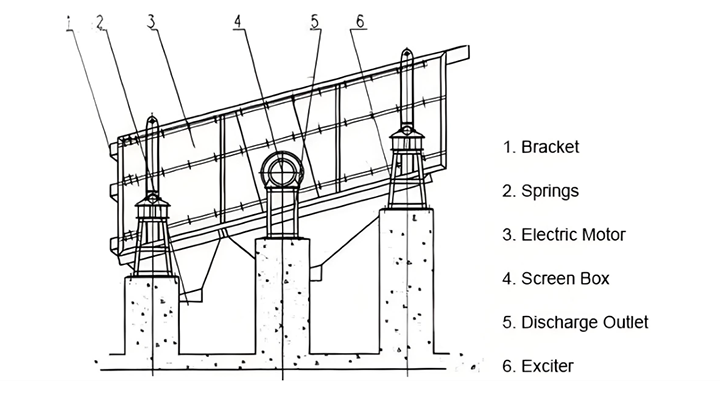
Benefits of Vibrating Screen for Sand
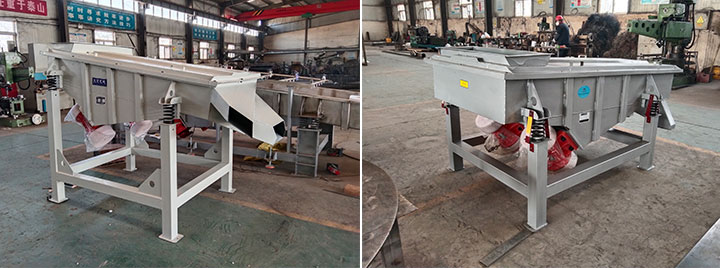
When Vibrating Screen for Sand is working, the sand continuously bounces and tumbles on the screen surface, rather than simply piling and sliding. This reduces the phenomenon of particles clogging the screen openings and lowers the probability of screen blockage, ensuring smooth screening. It can be equipped with 2 to 4 layers of screens, allowing for direct separation of coarse, medium, and fine sand and gravel from a single feed, eliminating the need for repeated sieving and refilling, thus saving considerable time and effort. The internal structure of this type of equipment is rationally designed, with simple replacement procedures for wear parts, and routine inspection and maintenance require minimal effort. The screen size can be changed as needed, sieving from fine sand to crushed stone. Adjustments are quick when changing batches or operational requirements, making it suitable for daily use in construction sites, sand and gravel plants, and other similar settings.
Vibrating Screen for Sand Screening Size Chart
| Mesh | Aperture (mm) | Aperture (µm) | Application |
| 4 Mesh | 4.75 mm | 4750 µm | Coarse sand, crushed stone classification |
| 6 Mesh | 3.35 mm | 3350 µm | Coarse sand |
| 8 Mesh | 2.36 mm | 2360 µm | Construction coarse sand |
| 10 Mesh | 2.00 mm | 2000 µm | Medium-coarse sand |
| 14 Mesh | 1.40 mm | 1400 µm | Medium sand |
| 16 Mesh | 1.18 mm | 1180 µm | Medium sand |
| 20 Mesh | 0.85 mm | 850 µm | Fine sand |
| 30 Mesh | 0.60 mm | 600 µm | Fine sand |
| 40 Mesh | 0.425 mm | 425 µm | Refined fine sand |
| 50 Mesh | 0.30 mm | 300 µm | Quartz sand |
| 60 Mesh | 0.25 mm | 250 µm | Refined sand |
| 80 Mesh | 0.18 mm | 180 µm | Powdered sand |
| 100 Mesh | 0.15 mm | 150 µm | Fine powder |
| 120 Mesh | 0.125 mm | 125 µm | Ultrafine sand |
| 150 Mesh | 0.106 mm | 106 µm | Refined powder |
| 200 Mesh | 0.075 mm | 75 µm | Micro powder |
How to Choose Different Models of Vibrating Screen for Sand?
When selecting a model of Vibrating Screen for Sand, you can choose smaller models such as DZSF-520 and DZSF-525, or larger models such as DZSF-1025 and DZSF-1225. The specific choice depends on the size of the sand being sieved and the required sieving volume.
Small Models
The DZSF-520 model has a screening capacity of 20 to 50 tons per hour. Its compact size and small footprint make it suitable for small-batch, multi-specification screening scenarios. The DZSF-525 has a screening capacity of 30 to 70 tons per hour, with a longer screen surface allowing for longer material residence time and a more refined grading process. The DZSF-1020 has a screening capacity of 60 to 150 tons per hour, with an increased screen width and higher throughput per unit time, suitable for medium-sized production lines. These models are moderately sized and can meet the needs of small to medium-scale sand and gravel screening.
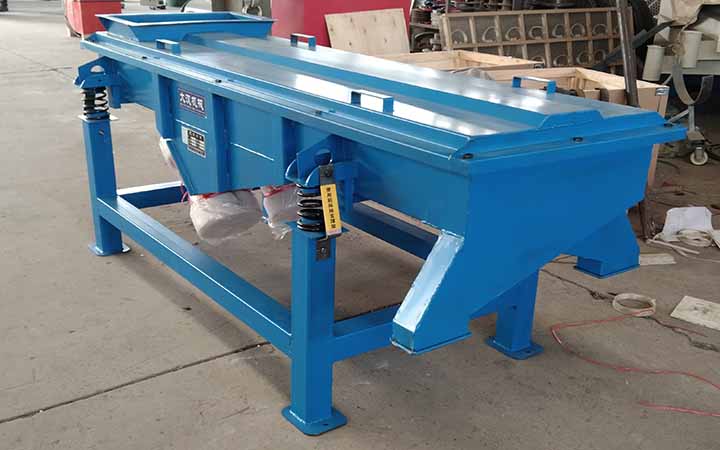
Large Models
The DZSF-1025 has a screening capacity of 80 to 200 tons per hour. Its reinforced structure allows for multi-layer screens to classify various material specifications. The DZSF-1225 has a screening capacity of 120 to 280 tons per hour, with stable operation and support for long-term continuous operation. The DZSF-1540 has a screening capacity of 300 to 600 tons per hour, a larger screen area, and is suitable for large-scale sand and gravel production lines to handle large-volume material processing.
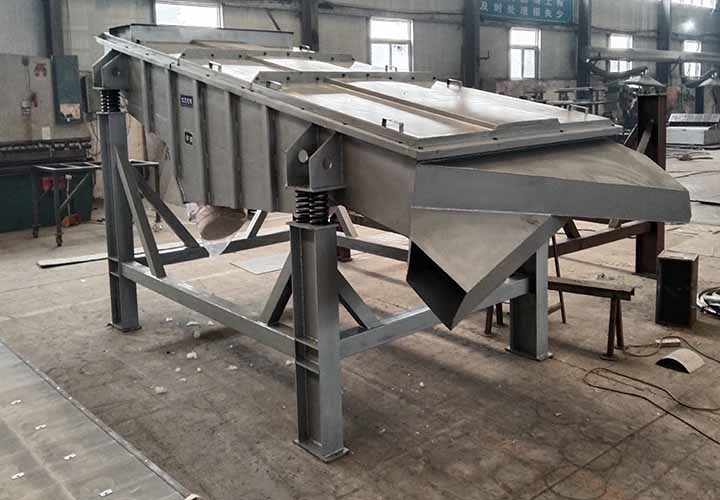
Applications of Vibrating Screen for Sand
Vibrating Screen for Sand can be used in sand and gravel quarries to separate mixed sand and gravel into different specifications such as coarse, medium, and fine sand, solving the problem of inconsistent particle sizes in finished sand that cannot be used directly. On construction sites, it is used to screen sand and gravel, removing soil, stones, and other impurities, ensuring that the sand used in concrete and mortar meets construction requirements. In sand production lines, it connects to crushing equipment to separate crushed materials according to particle size, solving the problem of uneven particle size in finished products. This type of equipment is also used in water conservancy projects and road construction to screen sand and gravel that meet engineering standards, addressing quality risks caused by inconsistent particle sizes in construction materials.

Vibrating Screen for Sand separates sand and gravel by size through its structural design and vibration operation, and can also screen out impurities. It is flexible from equipment selection to actual use; suitable models are available for both small processing points and large production lines. The DZSF series offers a complete range of models, suitable for both small-batch processing and large-scale production. Its parts are robust and durable, routine maintenance is simple, and it operates stably, effectively sorting sand and gravel. It is a common piece of equipment used in sand and gravel processing and construction site operations.
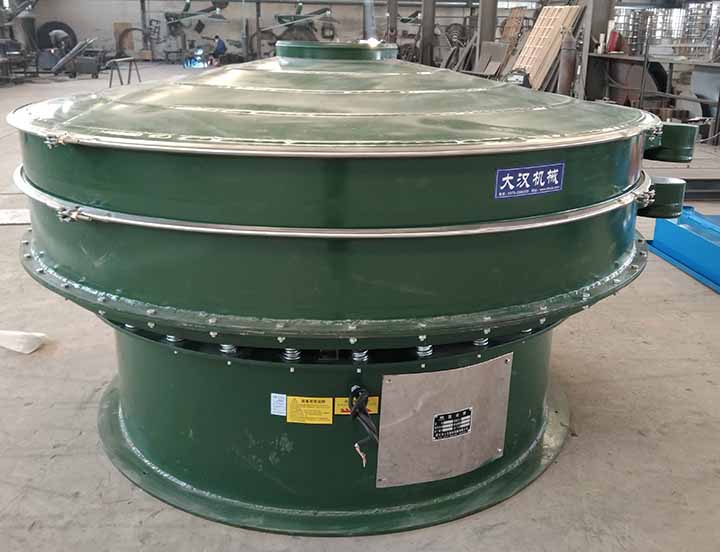
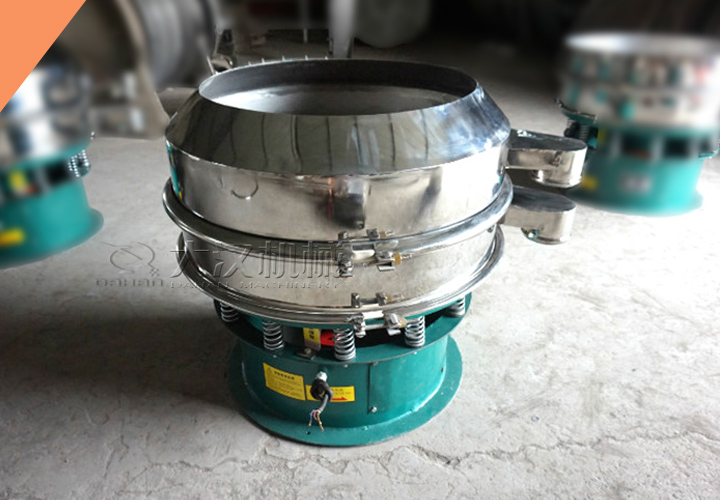
-
Standard test sieve price
Standard test sieve price usually ranges from US$20 to US$300, depending on the size, material and accuracy level...
-
Vibro Sifter Flour
The Vibro Sifter Flour uses a motor-driven eccentric weight to generate three-dimensional vibration...
-
Linear Vibrating Screen For Plastic Particles
Linear Vibrating Screen For Plastic Particles is used for screening and grading plastic particles...
-
High -frequency vibration sieve for latex paint filter
High -frequency vibration sieve for latex paint filter is a filtration device designed for high-viscosity liquid systems such as water-based paints ...

Email:
sale@xxdahan.com
WhatsApp:
+86 15236742901
Add:
1000m West of Forest Park,Yanjin County,Xinxiang City,Henan Province,China.