Carbon Steel Vibrating Screen for Sand
![[field:title/]](/uploads/261020/6-261020140402318.jpg)
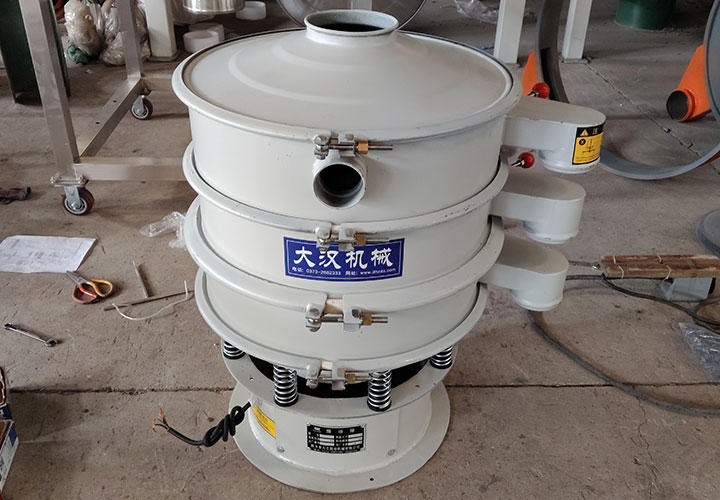
Callback
| Screen layers: | 1–5 layers (Customizable) |
| Screen diameter: | 400–2000 mm (15–78 inches) |
| Processing capacity: | 100–3,300 kg/h |
| Screen material: | Polyurethane or high-manganese steel |
Separates sand into different particle-size grades to meet specific screening requirements.
Multiple screen layers enable several size fractions to be separated in one operation.
Screen configuration and power supply (110–480V, 50/60Hz) can be customized to suit equipment requirements.
High-Capacity Carbon Steel Vibrating Screen for Sand Sifting
The Carbon Steel Vibrating Screen for Sand is engineered for heavy-duty industrial sand and gravel classification. In construction and manufactured sand (M Sand) production lines, this reliable screening machine continuously sorts mixed materials according to precise aperture sizes, handling particles from 0.075mm to 10mm with processing capacities ranging from 100 kg to 2 tons per hour.
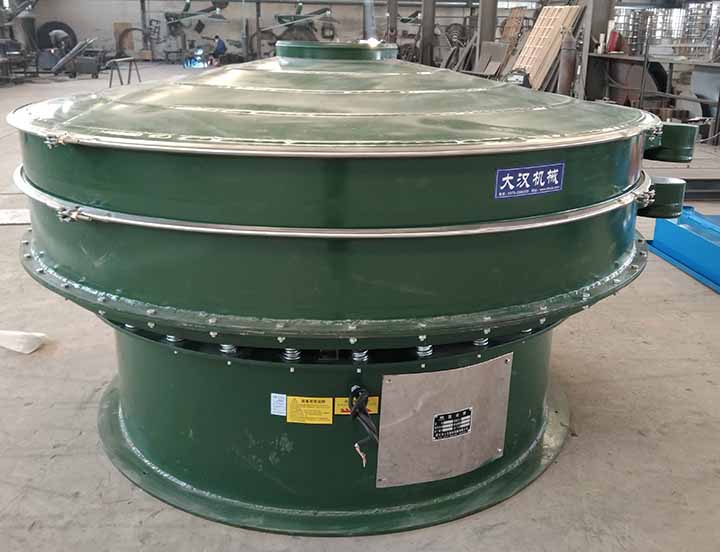
Designed to withstand rigorous continuous vibration loads, our industrial sieving equipment effectively solves problems of mixed particle sizes and foreign matter inclusions, ensuring your final sand products strictly meet professional gradation standards.
Robust Structural Components of Industrial Sand Sifters
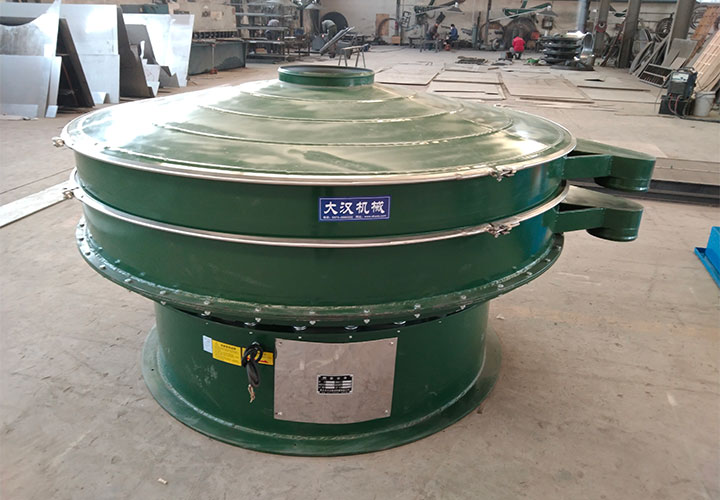
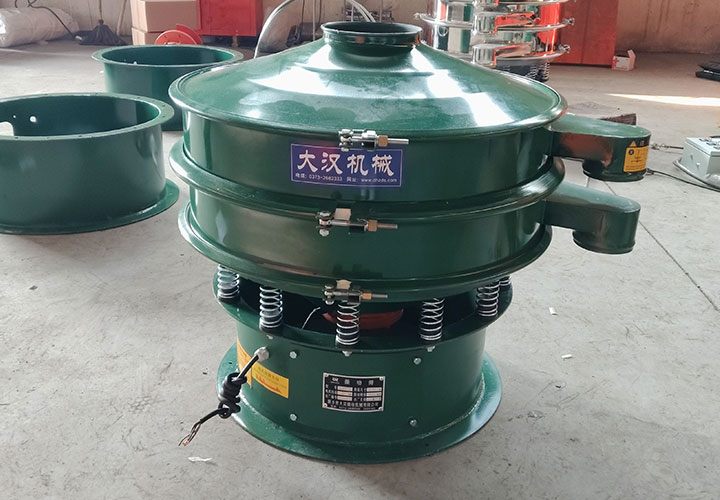
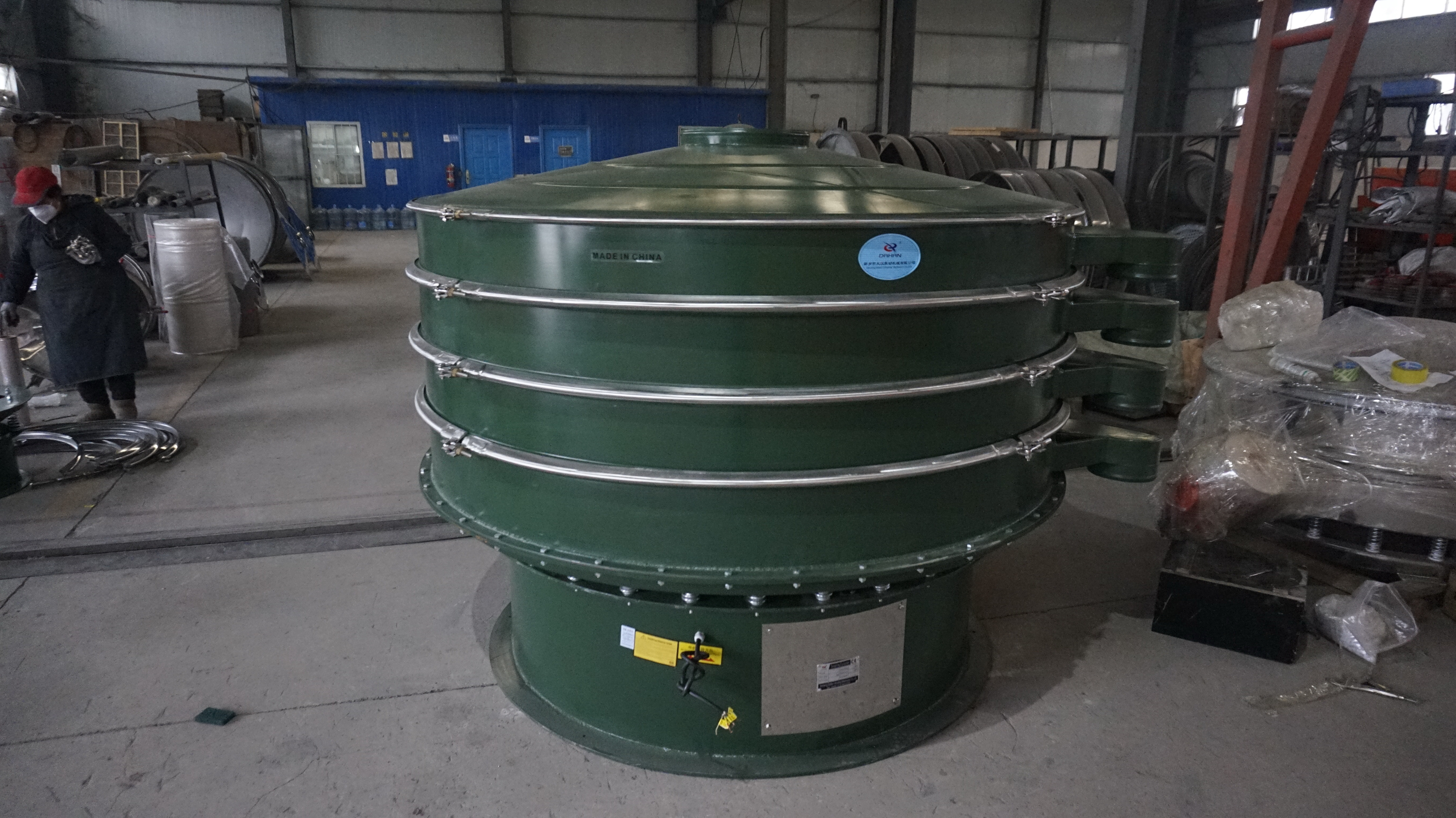
Built by Dahan Machinery with decades of manufacturing expertise, the Carbon Steel Vibrating Screen consists of a heavy-duty carbon steel screen box, high-performance vibrator, wear-resistant screen mesh, and a rigid channel steel base. The 10–12mm thick carbon steel side plates—processed through advanced cold stamping to eliminate welding stress—possess high yield strength capable of withstanding continuous impacts from heavy sand and gravel, preventing fatigue cracking under high-frequency vibration.
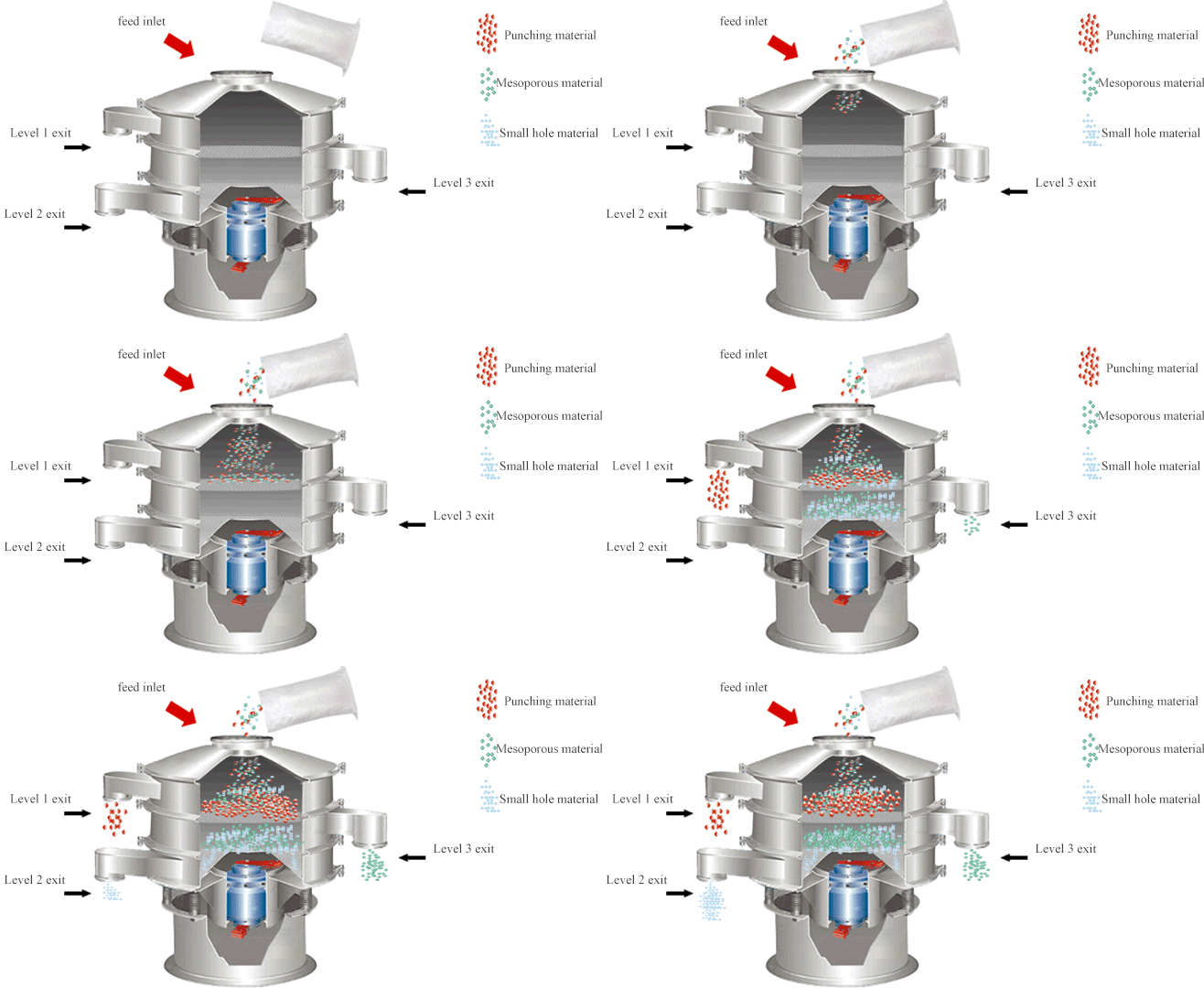
The precision-engineered vibrator, securely fixed to the carbon steel beam, drives sand particles to jump smoothly via eccentric block rotation. The contact surface can be configured with high-manganese carbon steel mesh or anti-jamming polyurethane mesh depending on your material moisture. Supported by a heavy-duty channel steel base and wire springs, dynamic loads are stably transmitted to the foundation, minimizing resonance risks during continuous operation.
Key Advantages of Carbon Steel Sand Screening Machines
Compared to stainless steel models, carbon steel raw materials offer a much lower initial investment cost while maintaining mature, highly reliable processing technology. During operation, sand and gravel undergo continuous jumping motions on the inclined screen surface, enabling a single machine to process large volumes of material per hour with minimal risk of accumulation or blockage.

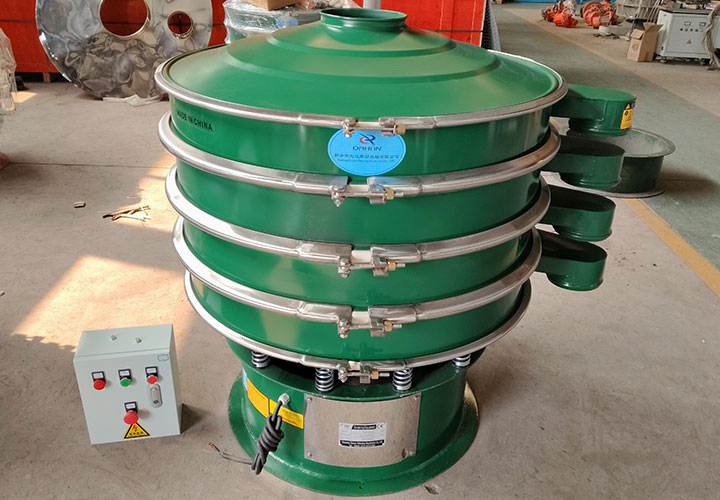
When handling large pieces of manufactured sand or extremely hard quartz sand, the robust carbon steel body absorbs heavy impact energy to prevent localized deformation. All mechanical components feature modular bolt connections, simplifying the replacement of wear parts such as bearings and springs without complex welding. Systems can be stacked with two, three, or four layers based on your specific grading process, and can be paired with elastic polyurethane mesh to effectively prevent wet fine sand from clogging pores.
Working Demonstration of Carbon Steel Sand Sifter
To help you intuitively understand the high-efficiency screening performance and vibration stability of our equipment, the following video demonstrates the actual operation of the Carbon Steel Vibrating Screen processing and grading sand on-site.
Model Parameter Table
Refer to the standard model specifications below to select the right size and capacity for your sand screening requirements. Need a non-standard custom design? Contact us for customized configurations.
| Model |
Diameter (mm) |
Feeding Size (mm) |
Frequency (RPM) |
Layers |
Power (kw) |
Capacity (kg/h) |
| DH-400 | 400 | <10 | <1500 | 1-5 | 0.18 | 100 |
| DH-600 | 600 | 0.25 | 200 | |||
| DH-800 | 800 | 0.55 | 500 | |||
| DH-1000 | 1000 | 0.75 | 800 | |||
| DH-1200 | 1200 | 1.1 | 1200 | |||
| DH-1500 | 1500 | 1.5 | 1800 | |||
| DH-1800 | 1800 | 2.2 | 2000 |
How much does a carbon steel vibrating screen cost?
Due to differences in required processing capacities, mesh layers, and custom motor configurations, the price of a carbon steel vibrating screen varies. For instance, a 600mm diameter model (DH-600) typically costs around $710, a single-layer DH-1800 model costs around $2,850, and a three-layer model costs around $3,800.
How to Choose the Right Carbon Steel Vibrating Screen
Selecting the proper carbon steel vibrating screen starts with evaluating your material type, required hourly capacity, feed particle size, moisture content, and desired screen opening. The number of screen decks and available installation space should also be considered. Matching these factors precisely helps achieve stable operation and consistent screening results while minimizing maintenance and operating costs.
Recommended Mesh Sizes for Different Sand Types
Different sand applications require specific mesh opening configurations. Refer to the standard guidelines below to match your material:
| Sand Type | Recommended Mesh Size | Typical Particle Size |
| Construction Sand | 4–20 Mesh | 1.0–5.0 mm |
| River Sand | 10–30 Mesh | 0.6–2.0 mm |
| Manufactured Sand (M Sand) | 10–40 Mesh | 0.3–4.75 mm |
| Silica Sand | 20–140 Mesh | 0.1–0.85 mm |
| Quartz Sand | 20–120 Mesh | 0.125–0.85 mm |
| Glass Sand | 40–140 Mesh | 0.1–0.425 mm |
| Foundry Sand | 50–100 Mesh | 0.15–0.30 mm |
| Frac Sand | 20–70 Mesh | 0.21–0.84 mm |
Note: The recommended mesh size may vary depending on specific material properties, moisture content, and target particle gradation. Custom mesh configurations are fully available upon request.
Why Choose Carbon Steel Instead of Stainless Steel
| Feature | Carbon Steel Vibrating Screen | Stainless Steel Vibrating Screen |
| Material | Q235 or Q345 carbon steel | SS304, SS316, or SS316L stainless steel |
| Initial Cost | Lower investment cost | Higher purchase cost |
| Corrosion Resistance | Suitable for dry, non-corrosive materials | Excellent resistance to corrosion and moisture |
| Wear Resistance | Excellent for abrasive sand and aggregates | Good wear resistance |
| Best Applications | Construction sand, river sand, manufactured sand, quartz sand | Silica sand, food powder, chemical materials, pharmaceutical products |
| Suitable Environment | Dry indoor or outdoor environments | Wet, humid, or corrosive environments |
| Maintenance | Easy maintenance and low replacement cost | Easy to clean with excellent hygiene |
| Service Life | Long service life under normal conditions | Longer service life in corrosive environments |
| Customization | Supports custom sizes, mesh, and multi-deck designs | Supports custom sanitary and corrosion-resistant designs |
| Typical Industries | Mining, quarrying, construction, building materials | Food processing, chemical, pharmaceutical, recycling |
Carbon steel vibrating screens offer low equipment costs, high structural strength, exceptional wear resistance, and stable performance for screening construction sand, river sand, manufactured sand, quartz sand, and other dry abrasive materials. For wet or corrosive chemical environments, stainless steel vibrating screens provide superior protection and hygiene.
Typical Application Scenarios
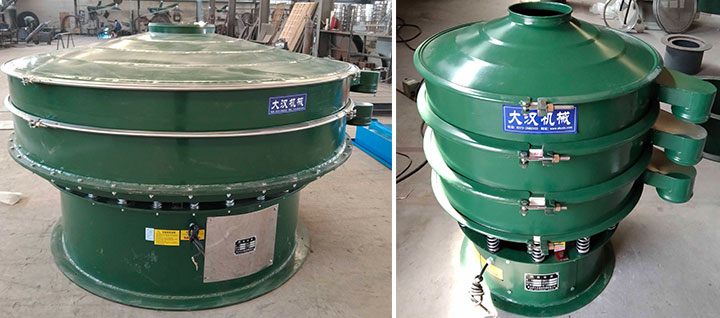
The Carbon Steel Vibrating Screen for Sand has proven applications across a wide range of aggregate and mineral processing fields, including sand grading, solid impurity removal, dewatering, and sizing:
- Natural Sand Cleaning: Efficiently separates shells, tree roots, and oversized pebbles from natural river or washed sand.
- Construction Aggregate Sizing: Sorts crushed pebble, granite, or limestone mixtures into standard 0-5mm construction sand.
- Industrial Sand Processing: Performs strict particle size classification on high-hardness, abrasive foundry silica sand and glass sand.
- Oil & Gas Support: Screens out uniform oil fracturing proppant (frac sand) raw materials with high compressive strength.
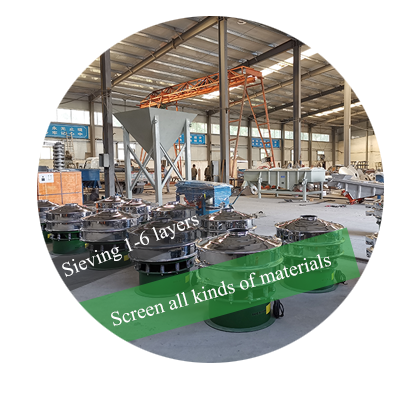
Factory Manufacturing & Quality Inspection
As a professional industrial screening equipment manufacturer, every carbon steel vibrating screen undergoes strict quality control, precision welding, and load testing before leaving our facility. We ensure that every machine delivered to our global clients meets high standards of structural durability and operational stability.
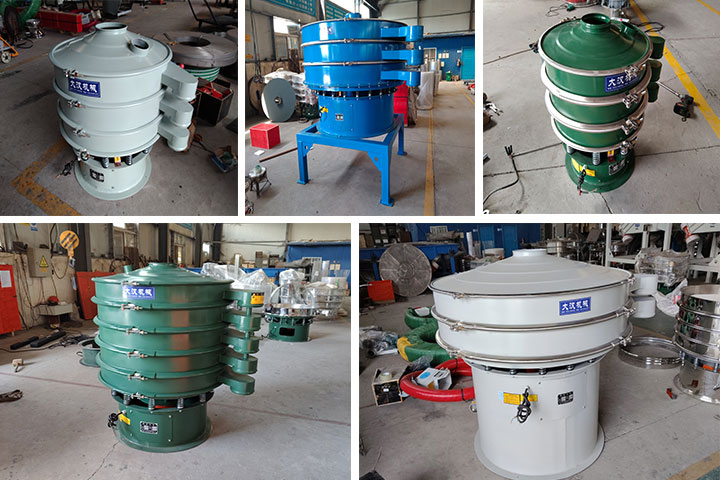
From raw material cutting to final assembly, our manufacturing processes are designed to support customized requirements, multi-deck configurations, and reliable global shipping for sand processing projects of all scales.
Frequently Asked Questions About Carbon Steel Vibrating Screen
What materials can a carbon steel vibrating screen process?
It is widely used to screen construction sand, river sand, manufactured sand (M Sand), quartz sand, silica sand, gravel, and other dry bulk aggregates. We offer customizable multi-deck mesh configurations for precise particle size separation.
How do I choose the right vibrating screen model for my sand project?
Selecting the correct model depends on your material type, required hourly capacity, feed particle size, moisture content, and target screen aperture. You can also send us your material specifications, and our engineers will recommend the ideal model for you free of charge.
What is the main difference between a carbon steel and a stainless steel vibrating screen?
Carbon steel vibrating screens feature high structural strength, excellent wear resistance, and lower initial investment costs, making them ideal for dry abrasive materials like sand and aggregates. Stainless steel models are primarily used in corrosive or wet environments (such as chemical powders or food processing).
How often should the screen mesh be replaced?
The replacement interval depends on the abrasiveness of the material, daily operating hours, and local wear conditions. Modular bolt connections make inspecting and replacing wear parts quick and straightforward without complex welding.
The carbon steel sand and gravel vibrating screen, built with robust carbon steel components and mature vibrating machinery design, completes the entire process from raw sand input to finished product classification. It achieves an optimal balance between procurement cost and structural durability, providing reliable production support for industries such as construction, road building, and quarrying.
Ready to Upgrade Your Sand Screening Line?
Contact Dahan Machinery today for expert consultation, custom design, and competitive factory-direct pricing.
-
How to Choose the Right Sieving Mesh Size
When using a screening machine to screen materials, users often wonder what mesh size to choose...
-
Carbon steel vibrating screen price
The Carbon steel vibrating screen price is influenced by factors such as screening accuracy, processing capacity...
-
Stainless Steel vs Carbon Steel Vibrating Screen
Stainless Steel vs Carbon Steel Vibrating Screen have the same structure and screening principle...

Email:
sale@xxdahan.com
WhatsApp:
+86 15236742901
Add:
1000m West of Forest Park,Yanjin County,Xinxiang City,Henan Province,China.