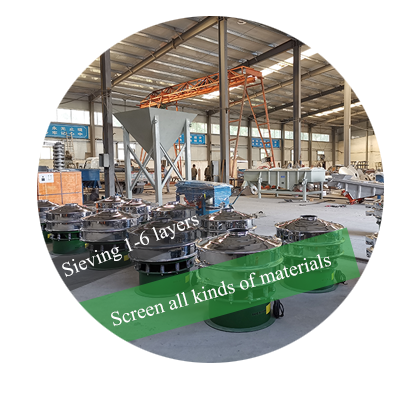
Carbon steel vibrating screen
![[field:title/]](/uploads/260912/6-260912154549206.jpg)


Callback
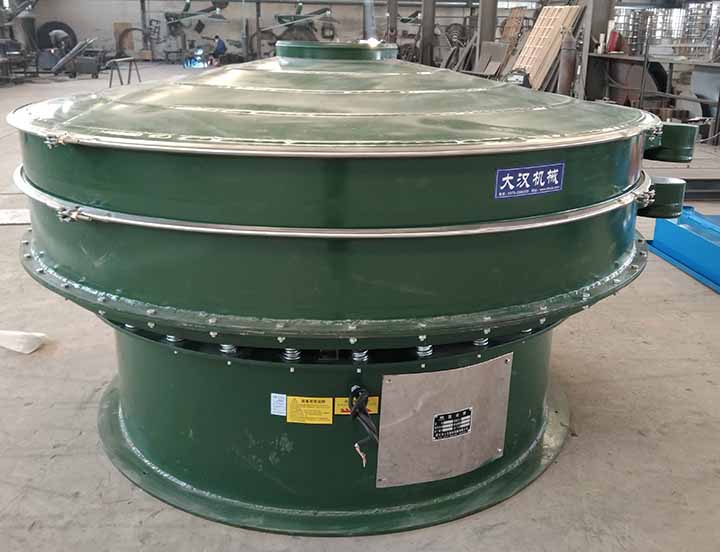
Carbon steel vibrating screen is a screening equipment widely used in industrial production, mainly used for removing impurities and grading dry powder and granular materials.
| Productivity: | 100 kg – 3 tons/hour |
| Number of layers: | 1-5 layers |
| Mesh size: | 5-500 mesh |
Highly wear-resistant and impact-resistant, suitable for handling large, heavy materials
Rugged structure, suitable for screening medium to coarse-grained materials
Why Choose a Carbon Steel Vibrating Screen?
Carbon steel vibrating screens are engineered to process low to medium corrosivity, high-density, dry, or somewhat abrasive industrial raw materials. With a screening particle size range between 2 mm and 50 mm, this equipment achieves precise particle size separation, serving dual purposes as a reliable material conveyor and loosener for optimal final product consistency.
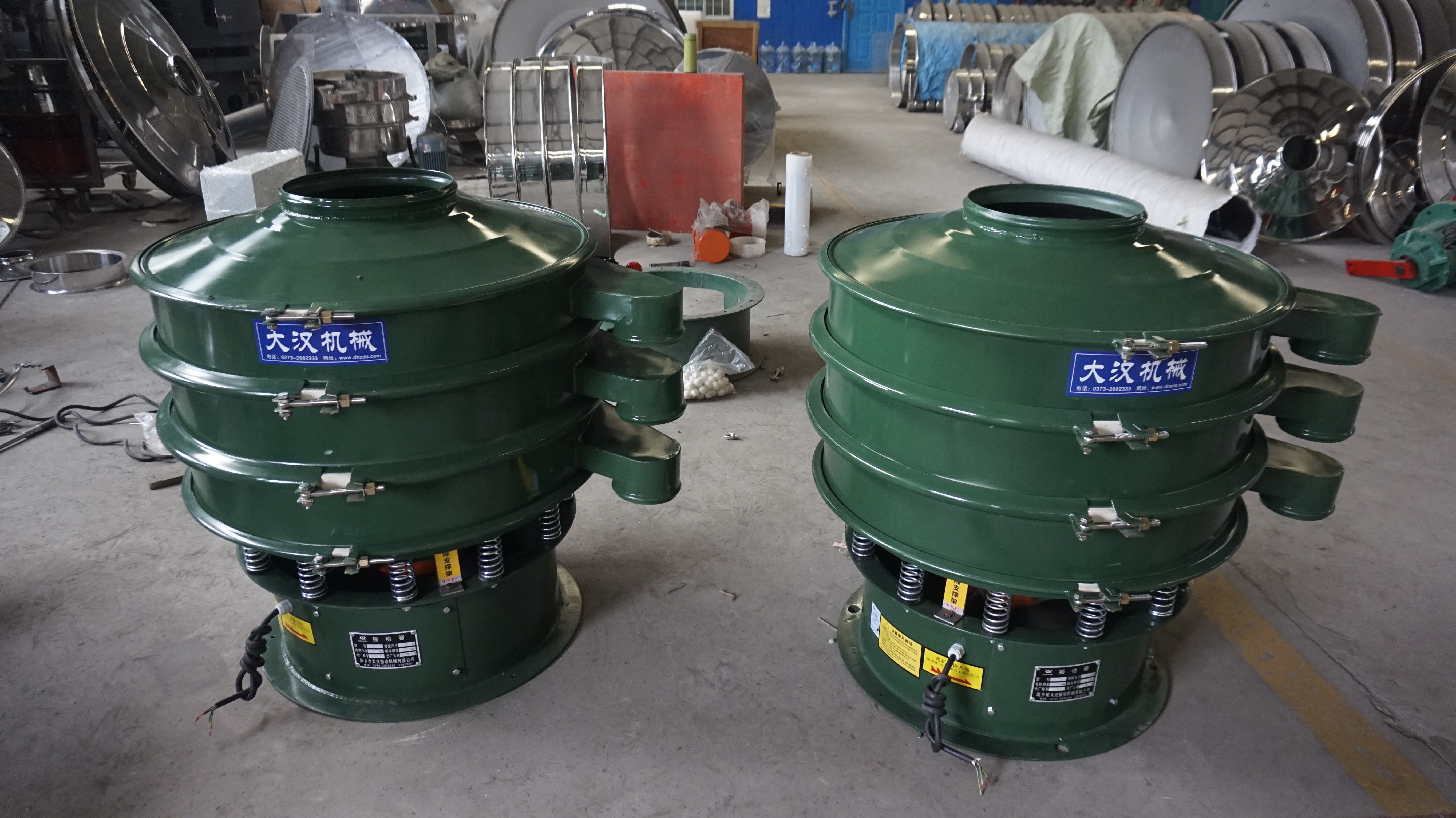
Built as a heavy-duty industrial device, its primary structural components utilize high-grade carbon steel—an iron-carbon alloy containing less than 2.11% carbon. This ensures superior strength, structural toughness, and machinability to withstand severe material weight and vibration impact.
Carbon Steel Vibrating Screen Working Videos & Testing
Watch our industrial-grade carbon steel sieving machines operating live under rigorous factory testing conditions:
How Does a Carbon Steel Vibrating Screen Work?
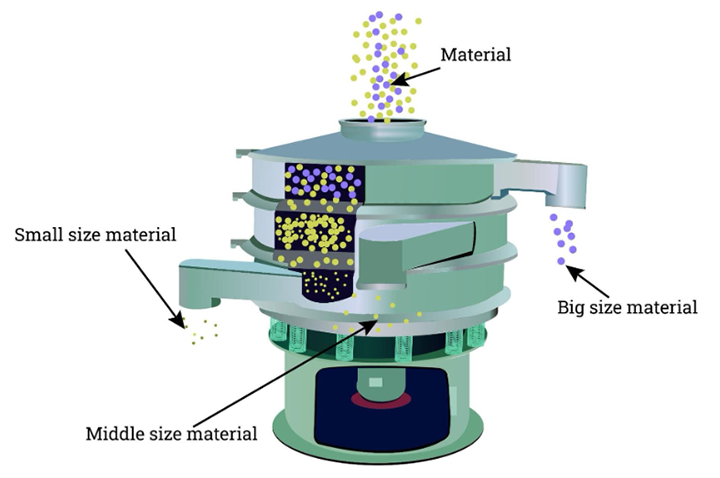
A carbon steel vibrating screen generates multi-directional vibrations through a high-performance electric vibrating motor (exciter), forcing the screen box into horizontal or oblique oscillations. Raw materials on the screen surface bounce and advance forward driven by excitation forces and gravity. Oversized particles are retained on top, while undersized particles fall through the mesh layers into lower discharges.
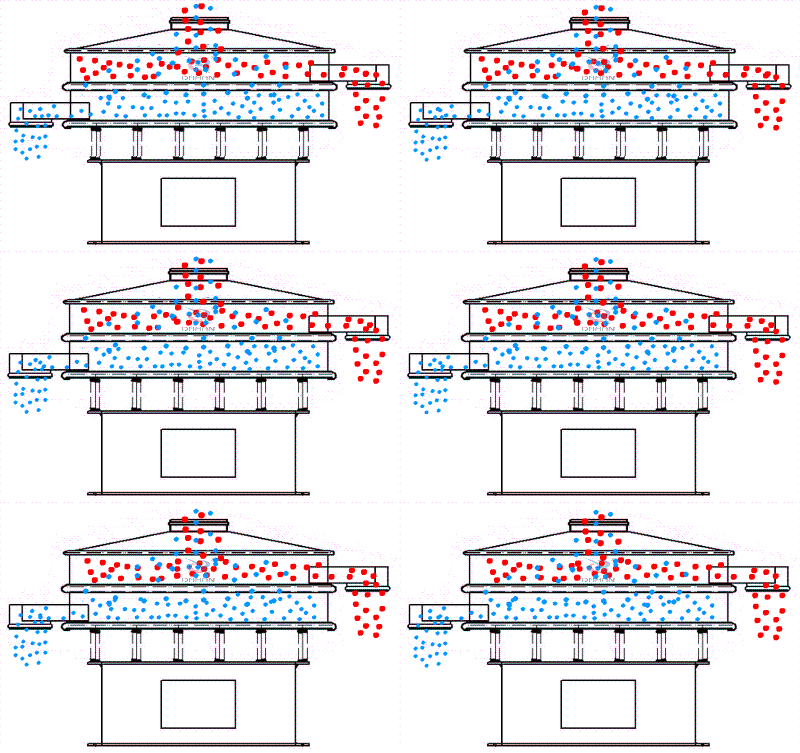
Types of Carbon Steel Vibrating Screens (Circular vs. Rectangular)
Circular Carbon Steel Vibrating Screens: Ideal for screening powders, granules, and fine slurries. Their symmetrical circular design ensures even stress distribution, regular material trajectories, and effective prevention of clumping or blinding. Commonly used across chemical, food-additive, and filtering lines.
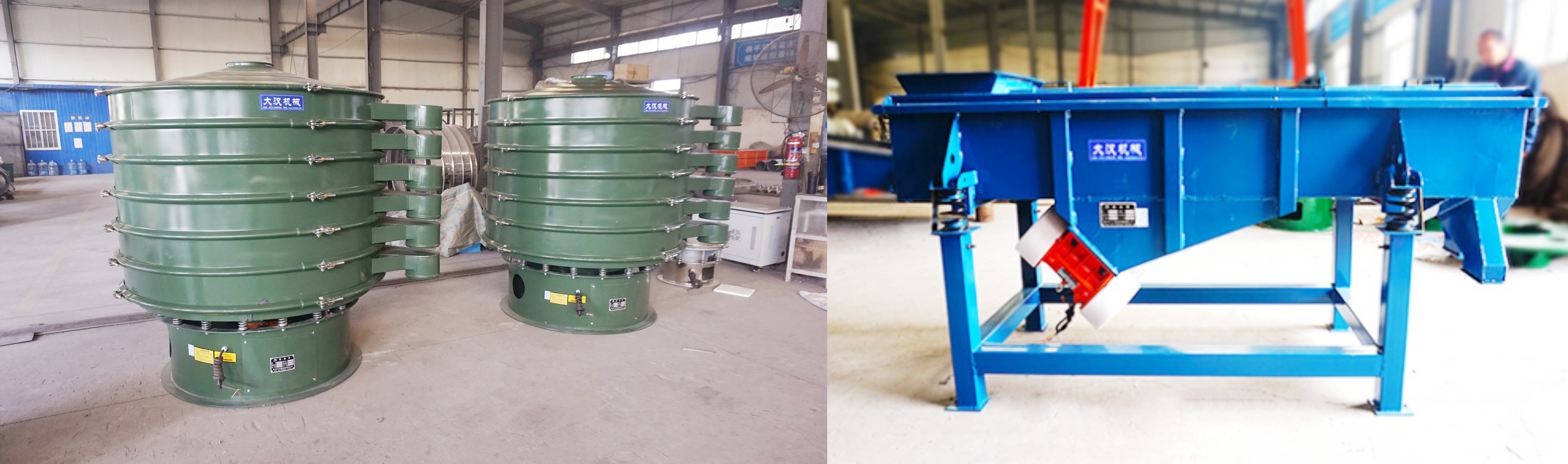
Rectangular Carbon Steel Vibrating Screens: Designed for high-capacity, heavy-duty processing of coarse bulk materials. Featuring a robust square screen box and linear driving system, they provide a massive usable screening area with reinforced corners to handle large volumes of aggregates, coal, and ores.
Technical Specifications & Parameter Table
| Specifications | Typical values | Units | Remarks |
|---|---|---|---|
| Screen frame size | 500mm×1000mm, 1000mm×2000mm, etc. | mm | Select according to the processing volume |
| Screen mesh number | 10 mesh, 20 mesh, 40 mesh, 60 mesh, 100 mesh, etc. | mesh | Select according to the particle size of the material |
| Screen material | Carbon steel | - | Wear-resistant and durable |
| Screen frame material | Carbon steel | - | Consistent with the screen material |
| Vibration frequency | 50-150Hz | Hz | Adjust according to the material characteristics |
| Amplitude | 1-5mm | mm | Affects screening effect |
| Screening efficiency | More than 90% | % | Depends on the material properties and the screen mesh number |
| Processing capacity | 1-100 tons/hour | tons/hour | Depends on the equipment model and material properties |
| Motor power | 2.2kW-15kW | kW | Select according to the processing volume |
Structure of Carbon Steel Vibrating Screen
The carbon steel vibrating screen consists of a screen box, vibrator, support device, and motor. These components work together to perform material screening, impurity removal, and filtration. The screen box is welded from carbon steel plates, resulting in a robust structure with good hardness and stability. The screen mesh is installed inside the screen box, and different materials, mesh sizes, and aperture types can be selected according to the material characteristics and screening requirements. The vibrator is typically an electric vibrating motor, providing the vibration force to the equipment. The suspension device fixes the screen box to the frame, allowing it to vibrate normally, while the base supports the entire device, providing a stable foundation for installation and operation.
Carbon Steel vs. Stainless Steel: Material Comparison
Selecting the optimal metal material is critical for long-term durability and return on investment:
| Features | carbon steel vibrating screen | stainless steel vibrating screen |
|---|---|---|
| Material | carbon steel | stainless steel (such as 304 stainless steel, 316 stainless steel) |
| Corrosion resistance | poor | good |
| High temperature resistance | general | good |
| Sanitary | poor | good |
| Cost | low | high |
| Application range | mining, building materials, etc. | food, medicine, chemical industry, etc. |
| Scope of application | applicable to occasions with low requirements for material purity and relatively dry working environment | applicable to occasions with high requirements for material purity and harsh working environment |
If your material is dry, such as charcoal or sand, carbon steel is usually a good cost-effective choice.
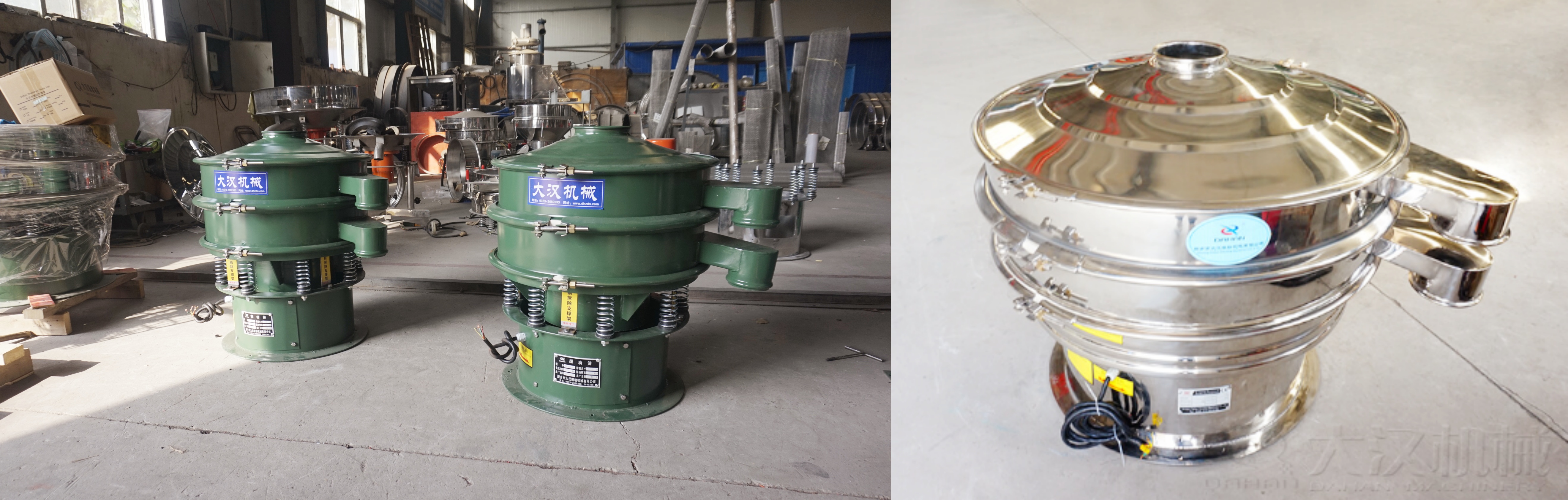
Parameters of carbon steel vibrating screen
| Model | DH-600 | DH-800 | DH-1000 | DH-1200 | DH-1500 | DH-1800 | DH-2000 |
|---|---|---|---|---|---|---|---|
| Diameter mm | Φ600 | Φ800 | Φ1000 | Φ1200 | Φ1500 | Φ1800 | Φ2000 |
| Screen area ㎡ | 0.24 | 0.45 | 0.67 | 1.0 | 1.6 | 2.43 | 3.01 |
| Screen specification (mesh) | 2-500 | 2-500 | 2-500 | 2-500 | 2-500 | 2-500 | 2-500 |
| Feed Particle size mm | <Φ10 | <Φ15 | <Φ20 | <Φ30 | <Φ30 | <Φ30 | <Φ30 |
| Vibration rpm | 1500 | 1500 | 1500 | 1500 | 1500 | 1500 | 1500 |
| Effective screen surface diameter mm | Φ560 | Φ760 | Φ930 | Φ1130 | Φ1430 | Φ1760 | Φ1960 |
| Number of layers | 1-5 | 1-5 | 1-5 | 1-5 | 1-5 | 1-5 | 1-5 |
| Power Kw | 0.25 | 0.55 | 0.75 | 1.1 | 1.5 | 2.2 | 3 |
Application scenarios of carbon steel vibrating screen
Carbon steel vibrating screens are used to screen dry bulk materials such as coal, ore, sand, and grains, and can also perform particle size classification and solid-liquid separation. In the construction materials industry, it can screen building materials such as sand and gravel, separating particles of different sizes to meet construction material needs. For example, concrete mixing plants can use it to separate coarse and fine sand to suit the production of concrete of different strengths. In mining, it can perform preliminary screening and classification of mined ore, providing raw materials of suitable size for subsequent beneficiation and processing. In agricultural product processing, it can screen grains and seeds. Grain purchasing stations use it to remove impurities and empty grains from grains, while seed companies use it to select plump and uniform seeds to improve germination rates.

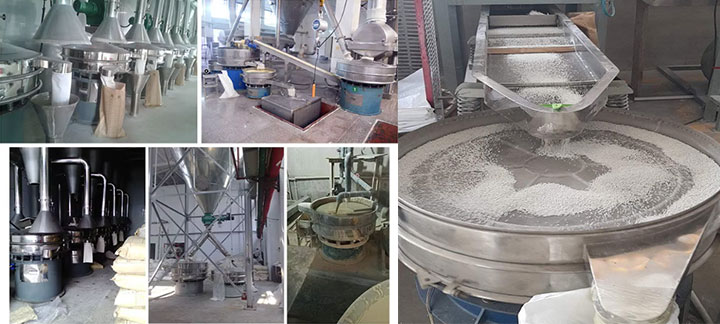
Carbon steel vibrating screen customer case
Carbon steel vibrating screen supplier
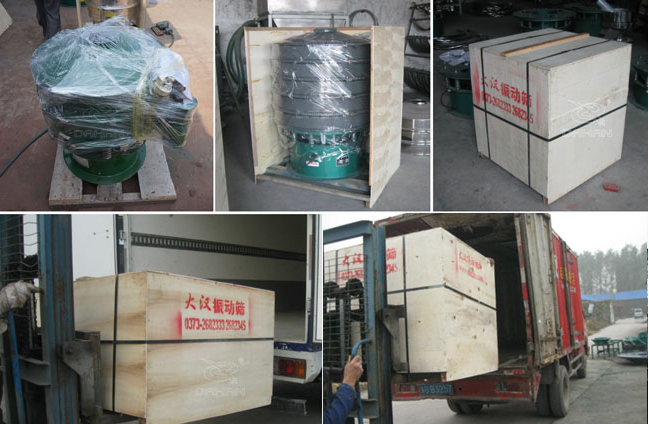
As a supplier of carbon steel vibrating screens, Dahan Machinery understands the critical importance of equipment reliability and durability under harsh operating conditions. Therefore, it selects high-quality carbon steel plates and manufactures the screen body using advanced laser cutting and automatic welding processes to ensure a robust structure and minimal deformation. The screening machines undergo rigorous dynamic balancing calibration to meet the screening needs of large-volume ores and highly abrasive materials. In addition to providing various standard models, Dahan Machinery can also customize designs and production based on specific working conditions, material characteristics, and screening objectives, committed to providing robust and durable products and professional technical support.
FAQ: Common Questions About Carbon Steel Vibrating Screens
Is a carbon steel vibrating screen suitable for wet or high-moisture materials?
They are primarily recommended for dry, non-corrosive materials. For high-moisture slurries or corrosive chemical applications, stainless steel (304/316) is the ideal alternative.
How can I prevent rust on a carbon steel screen?
Regular protective painting, indoor storage, and minimizing exposure to prolonged moisture or rain will ensure long service life.
What mesh size should I select for aggregate screening?
Mesh selection depends entirely on your targeted output particle size, with standard industrial applications ranging from 20 mesh to 200 mesh.
-
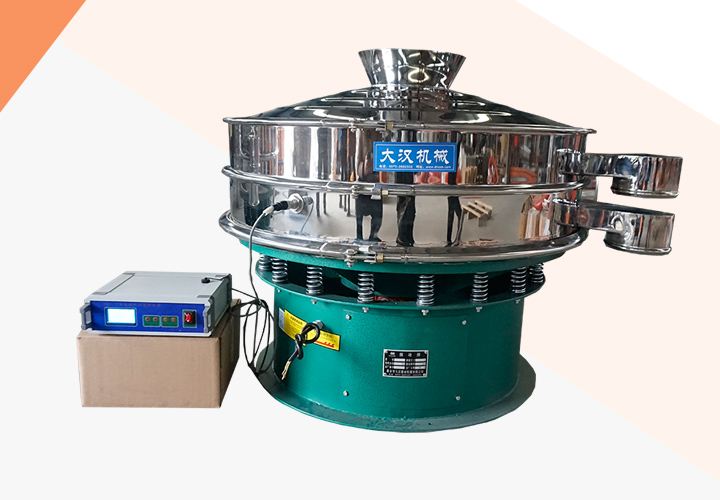
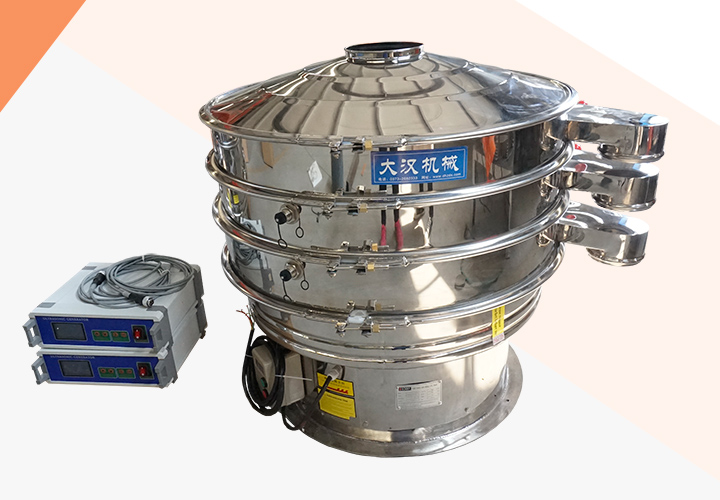
Stainless Steel vs Carbon Steel Vibrating Screen
Stainless Steel vs Carbon Steel Vibrating Screen, The former is made of 304 or 316 stainless steel, w ...
-
Carbon steel vibrating screen price
Carbon steel vibrating screen price is affected by factors such as screening accuracy, processing cap ...
-
Carbon steel straight screen
Carbon steel straight screen is a common screening equipment, usually used in the industrial field to screen and grade granular materials...
-
Charcoal Sieving Carbon Steel Round Vibrating Screen
Charcoal Sieving Carbon Steel Round Vibrating Screen enables rapid grading and impurity removal from flake, strip...
-
Carbon material vibrating screen
Carbon material vibrating screen is a device specially used for screening carbon materials...

Email:
sale@xxdahan.com
WhatsApp:
+86 15236742901
Add:
1000m West of Forest Park,Yanjin County,Xinxiang City,Henan Province,China.