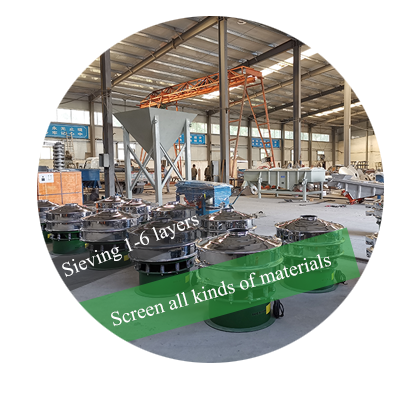
How to Choose the Right Sieving Mesh Size
What Mesh Size Should I Use?
When using a screening machine to screen materials, users often wonder what mesh size to choose. It's helpful to have a general range in mind. Coarse screens are generally 10–40 mesh, used to remove stones or large particles; medium screens are 40–100 mesh, commonly used for flour or particle grading; finer powders, such as additives or micronizers, may require 100 mesh or higher. A simple rule of thumb is that the screen aperture should be slightly larger than the target particle size, but not so large that impurities can pass through. For example, if you need to screen particles around 0.5mm, you would usually choose a screen around 30 mesh, rather than blindly pursuing a finer one.
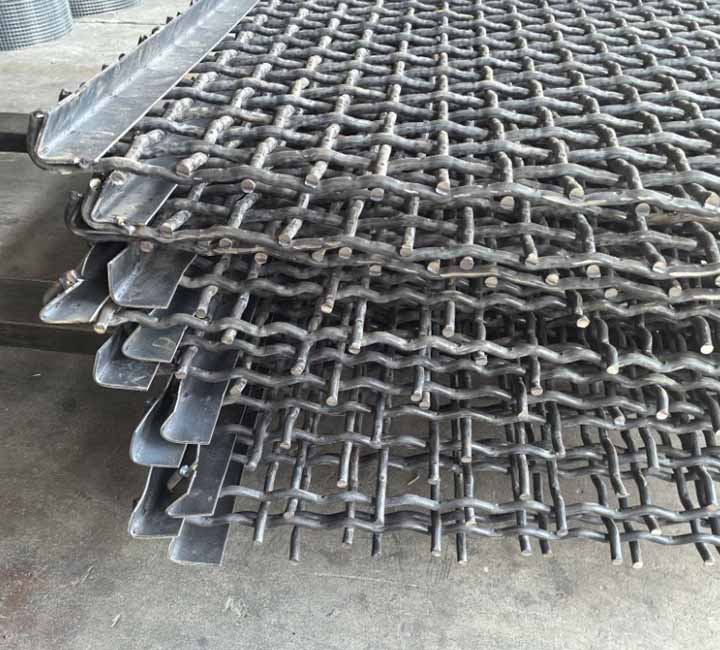
Mesh Size Selection Table
| Application Scenario | Material Type | Typical Particle Size Range | Recommended Mesh | Selection Strategy | Common Mistakes |
| Removal of Large Particle Impurities | Sand, Granular Materials | > 1 mm | 10-20 Mesh | Only intercept large particles to ensure material passing rate | Excessively high mesh number leads to poor material flowability |
| Coarse Screening & Classification | Sand, Plastic Particles | 0.5-1 mm | 20-40 Mesh | Retain large particles and separate coarse & fine materials | Adoption of fine mesh causes obvious output reduction |
| Medium Screening | Flour, Powdered Sugar | 0.2-0.5 mm | 40-80 Mesh | Control uniformity of finished products | Oversized mesh causes fine powder mixing |
| Fine Screening | Additives, Fine Powder | <0.2 mm | 80-150 Mesh | Meet high fineness requirements | Frequent screen clogging, requiring auxiliary screen cleaning device |
| Ultrafine Filtration | Micropowder, Coating Powder | <0.1 mm | Above 150 Mesh | Obtain ultra-fine particle products | Neglected production capacity and increased equipment load |
What Happens If You Choose the Wrong Mesh Size?
When the wrong mesh size is chosen, problems often don't appear immediately, but rather gradually emerge during use. These include issues with precision, screening machine efficiency, and problems with the equipment itself.
Precision Issues: If the screen is too coarse, small particles will mix in, resulting in an uneven finished product. A customer previously used a 30-mesh sieve for seasoning powder, resulting in a mixture of coarse and fine particles, leading to inconsistent taste.
Efficiency issues: If the sieve is too fine, material cannot pass through, causing the machine to idle continuously. For example, using a 100-mesh sieve for dry sand significantly reduces output and requires repeated manual cleaning.
Equipment issues: Long-term use of unsuitable sieves increases the workload. Clogging exacerbates vibration, loosens fasteners, and can even shorten the sieve's lifespan.
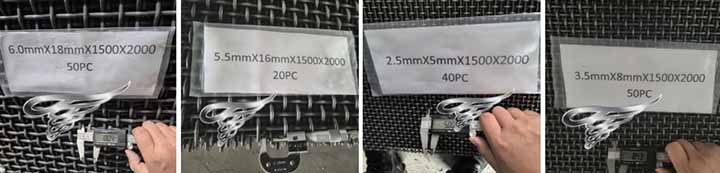
How to Choose the Right Mesh Size
Choosing a sieve can be considered from four perspectives: particle size, sieving purpose, mesh size range, and testing.
When assessing particle size, a simple sieving test or supplier data can be used. If no data is available, samples should be taken for observation to roughly determine the particle size range. Next, clarify the sieving purpose. Some customers want to remove impurities, while others want to grade the material, such as separating coarse and fine powder. The corresponding mesh sizes differ significantly between these two purposes. Based on this, match sieve specifications with similar particle sizes. It is recommended to prepare two mesh sizes for comparison. Finally, observe the output during actual operation. If screen clogging or unclear grading is found, the mesh size can be fine-tuned, for example, from 60 mesh to 50 mesh, and the change in sieving results can be observed.
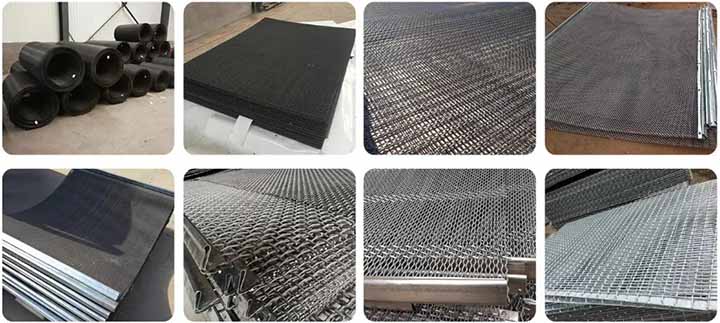
Mesh Size vs Micron
Many people confuse mesh and micron, but they are simply different ways of expressing the same concept. A simple way to understand this is with an approximate relationship:
Micron ≈ 15000 / Mesh, For example, 60 mesh corresponds to approximately 250 micrometers. This conversion is not absolute, as the aperture of different screen materials will vary, but it can be used as a reference in the initial selection process. In actual projects, it is still recommended to combine sample testing.
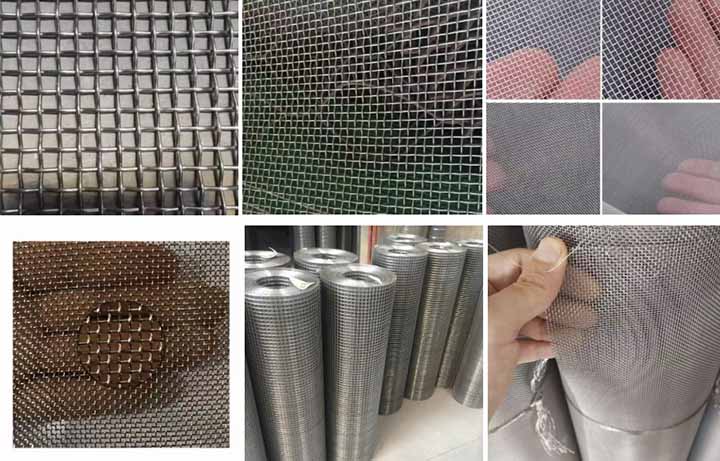
Mesh Size Chart
| Mesh | Aperture (μm) | Aperture (mm) | Corresponding Particle Size |
| 4 | 4750 | 4.75 | Coarse sand, gravel |
| 6 | 3350 | 3.35 | Coarse sand |
| 8 | 2360 | 2.36 | Coarse sand |
| 10 | 2000 | 2.00 | Coarse sand |
| 12 | 1700 | 1.70 | Medium sand |
| 14 | 1400 | 1.40 | Medium sand |
| 16 | 1180 | 1.18 | Medium sand |
| 18 | 1000 | 1.00 | Medium sand |
| 20 | 850 | 0.85 | Fine sand |
| 25 | 710 | 0.71 | Fine sand |
| 30 | 600 | 0.60 | Fine sand |
| 35 | 500 | 0.50 | Extra fine sand |
| 40 | 425 | 0.425 | Extra fine sand |
| 45 | 355 | 0.355 | Powder |
| 50 | 300 | 0.300 | Powder |
| 60 | 250 | 0.250 | Powder |
| 70 | 212 | 0.212 | Fine powder |
| 80 | 180 | 0.180 | Fine powder |
| 100 | 150 | 0.150 | Fine powder |
| 120 | 125 | 0.125 | Ultrafine powder |
| 140 | 108 | 0.108 | Ultrafine powder |
| 170 | 90 | 0.090 | Ultrafine powder |
| 200 | 75 | 0.075 | Ultrafine powder |
| 230 | 63 | 0.063 | Micropowder |
| 270 | 53 | 0.053 | Micropowder |
| 325 | 45 | 0.045 | Micropowder |
| 400 | 38 | 0.038 | Super micropowder |
| 500 | 25 | 0.025 | Super micropowder |
| 625 | 20 | 0.020 | Upper limit of nano-scale |
| 1250 | 10 | 0.010 | Nano-scale |
| 2500 | 5 | 0.005 | Nano-scale |
Applications
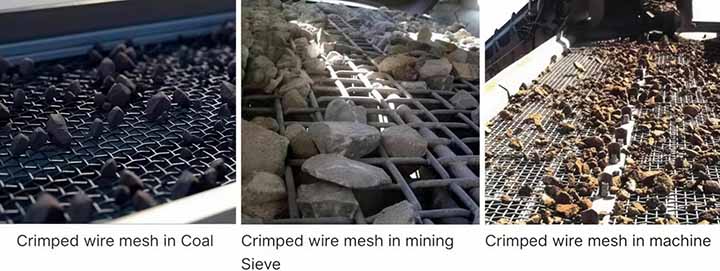
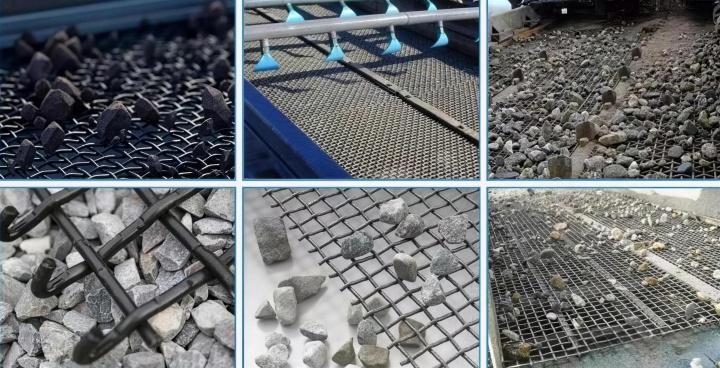
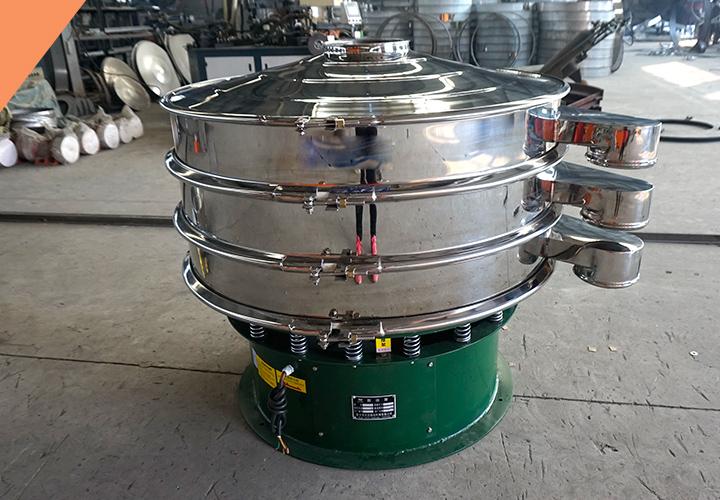
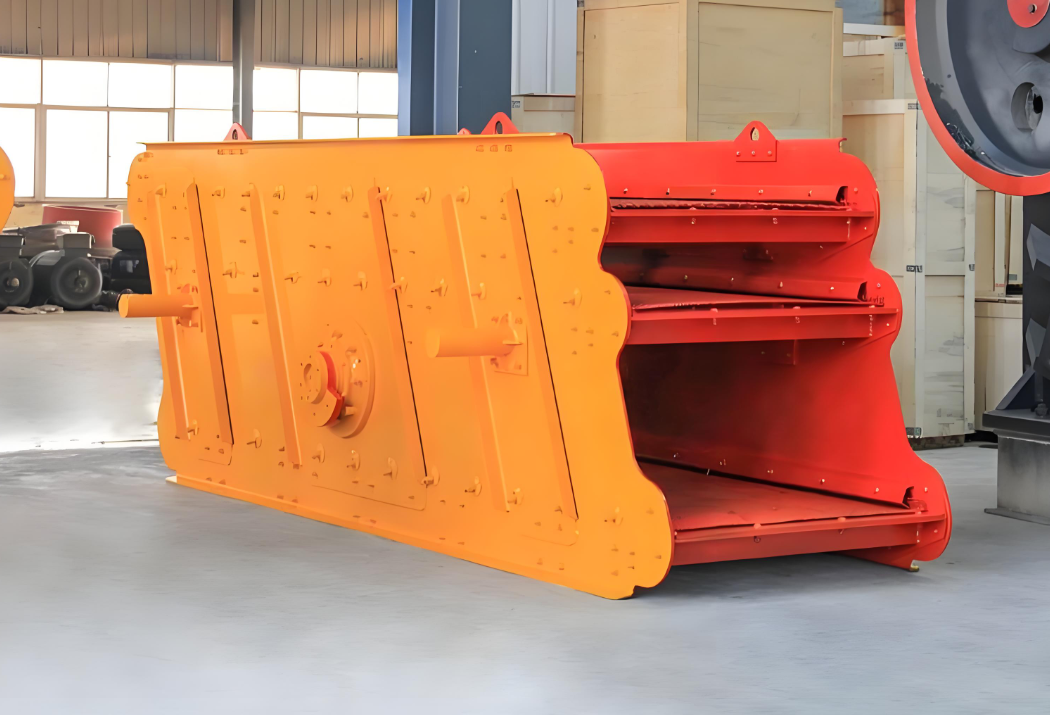
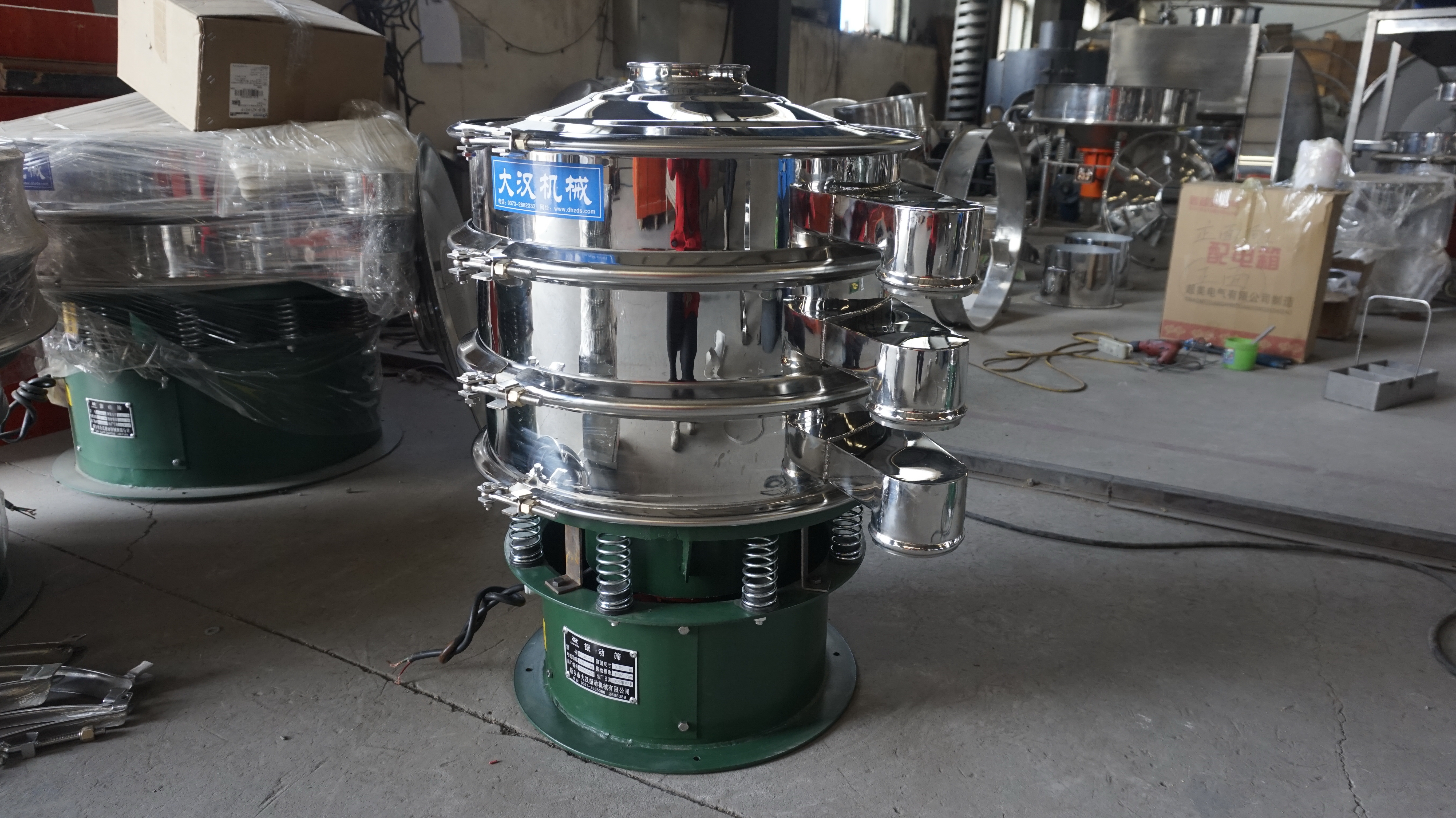
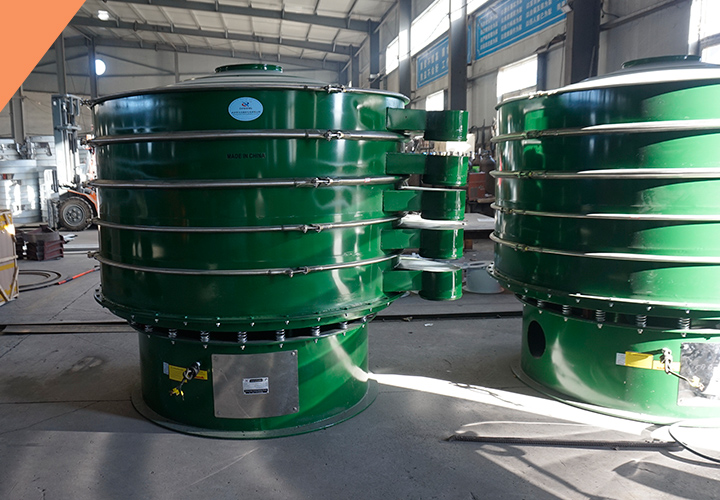
Screens can be installed in vibrating screens and used for screening food, powders, minerals, grains, stones, etc.
In food processing applications, common problems include flour or seasoning powder clumping and incomplete sieving. A 60-100 mesh sieve is recommended, with the specific mesh size adjusted according to the powder's fineness. One example of error is a customer using a 120 mesh sieve for ordinary flour, causing rapid clogging and necessitating machine shutdown for cleaning, disrupting production.
In powder handling scenarios, common problems include fine powder flying through or indistinct grading. An 80-150 mesh sieve is recommended, depending on the target particle size. An example of error shows using a 40 mesh sieve for graphite powder, causing fine powder to pass through directly without grading, making subsequent processes impossible.
For mineral sand screening, a common problem is the mixing of stones and sand. A 10-40 mesh sieve is recommended, selected based on particle size. One example of error is using a 20 mesh sieve for fine sand, resulting in the retention of much fine material, reduced output, and increased secondary processing costs.
Frequently Asked Questions
Q1: What mesh size for 1 mm particles?
A1: For particles around 1 mm, an 18–20 mesh screen is commonly used to allow smaller particles to pass while retaining larger ones.
Q2: What mesh size for powder coating?
A1: Powder coating typically uses an 80–120 mesh, depending on the required surface finish and particle size.
Q3: What is the difference between mesh and micron?
A1: Mesh refers to the number of openings per inch, while micron measures the actual size of those openings, with a higher mesh meaning a smaller micron size.
Choosing the right mesh size mainly depends on understanding the material itself and the intended use. Many problems are not with the equipment itself, but rather with an unsuitable mesh. Instead of worrying about parameters from the start, it's better to test with a sample first, observe the actual output, and then make fine adjustments. Once the direction is correct, the sieving process will be much smoother, and the machine will operate stably.
-
Phosphate rock powder Vibrating Screen
Phosphate rock powder Vibrating Screens are screening devices designed to utilize the characteristics of phosphate rock powder...
-
Gypsum powder Vibrating Screen
The function of a Gypsum powder Vibrating Screen is to remove impurities, classify, and control the particle size of gypsum powder...
-
Soybean Vibrating Screen
Soybean Vibrating Screens are widely used in soybean processing...
-
Iron ore powder Vibrating Screen
Iron ore powder Vibrating Screen uses two motors running synchronously in opposite directions to generate vibration, causing the screen surface to vibrate uniformly in a straight line...

Email:
sale@xxdahan.com
WhatsApp:
+86 15236742901
Add:
1000m West of Forest Park,Yanjin County,Xinxiang City,Henan Province,China.