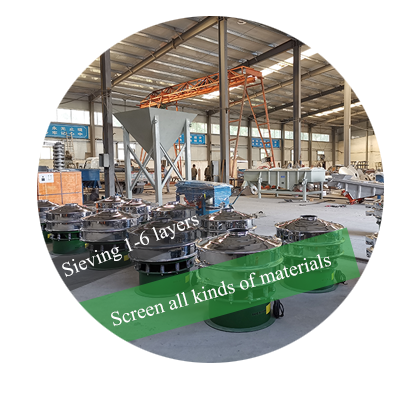
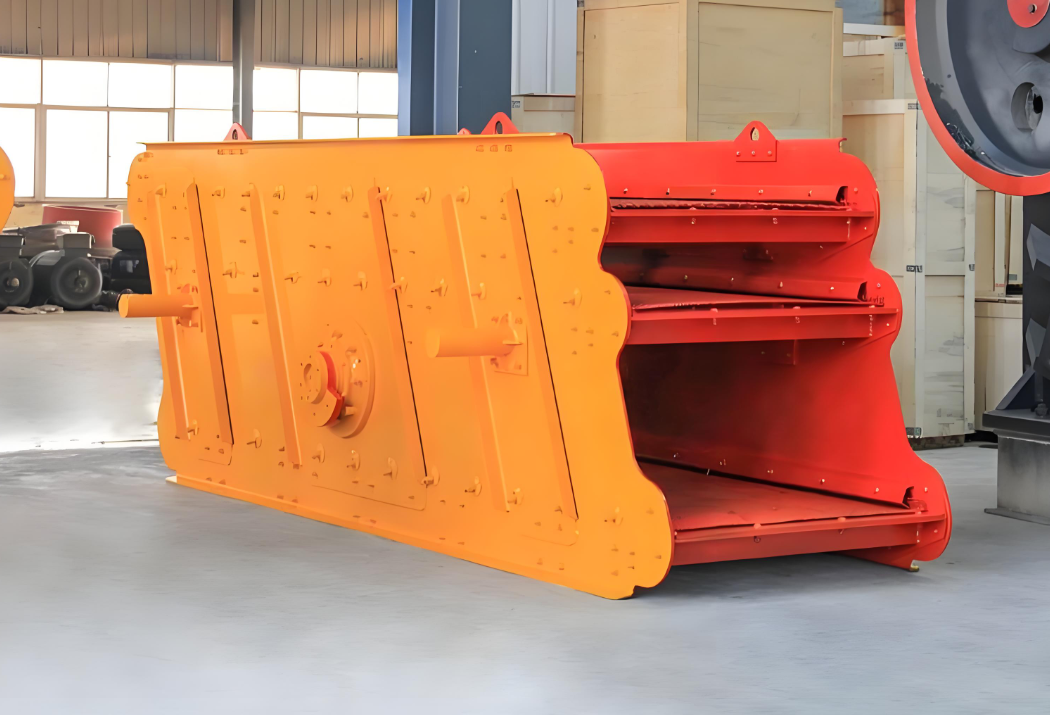
vibrating screen for stone crusher
![[field:title/]](/uploads/261019/6-261019164Q2551.jpg)
Callback
| Capacity: | 50–800 t/h* |
| Max. Feed Size: | Up to 400 mm |
| Screen Decks: | 1–4 Layers |
| Screen Media: | Manganese Steel / Polyurethane |
Heavy-duty vibration for aggregate screening and grading.
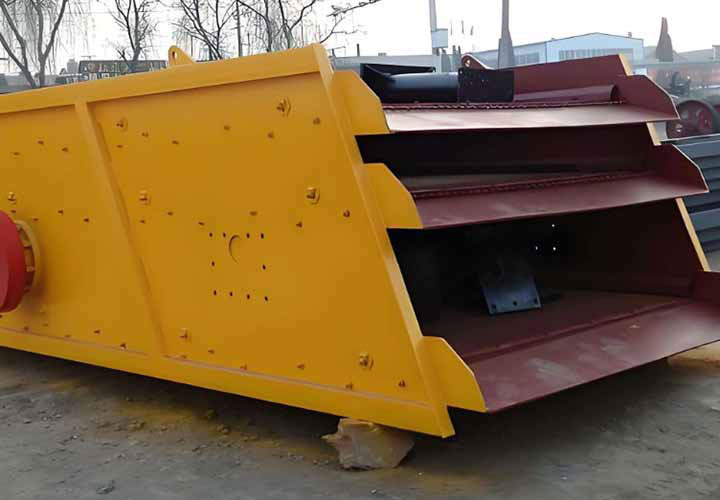
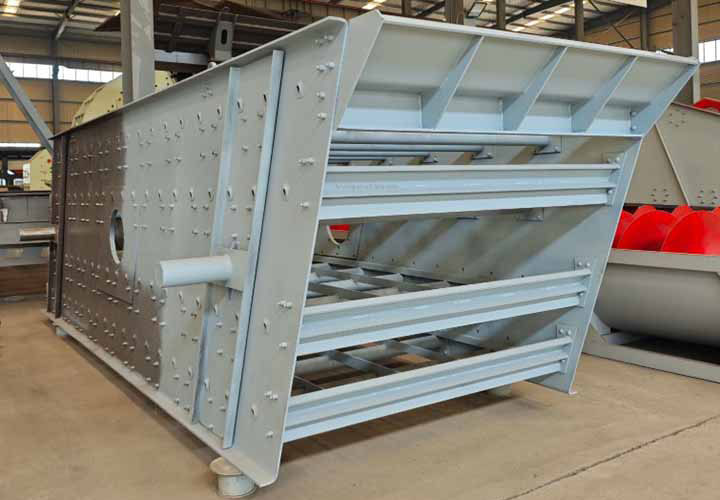
Riveted side-plate construction for robust operation.
Replaceable screen panels for different materials and wear conditions.
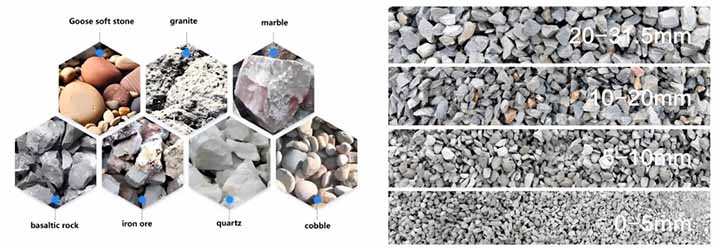
Separates crushed stone into multiple size fractions.
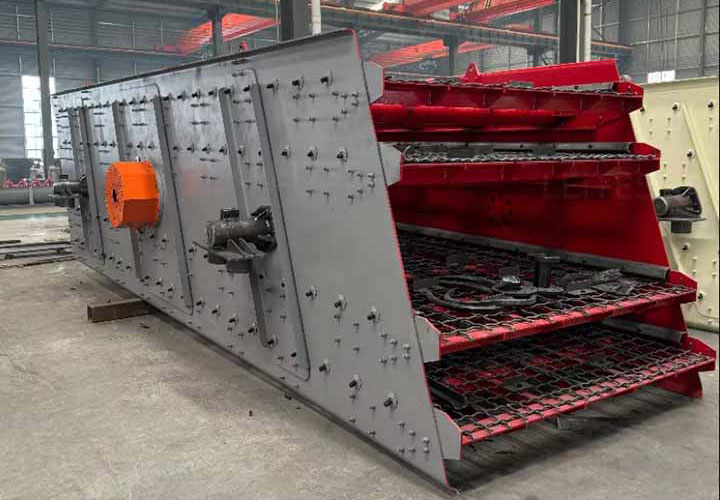
Our vibrating screen for stone crusher receives mixed stone discharge from primary or secondary crushers, separating aggregates with high efficiency. Built for heavy-duty quarry operations, our units deliver a processing capacity of 50 to 800 tons per hour (TPH). To endure high-impact abrasion from hard granite and river pebbles, we equip our vibrating screens with high-manganese steel woven wire or modular polyurethane mesh panels, maximizing wear life under 16-hour continuous shifts.
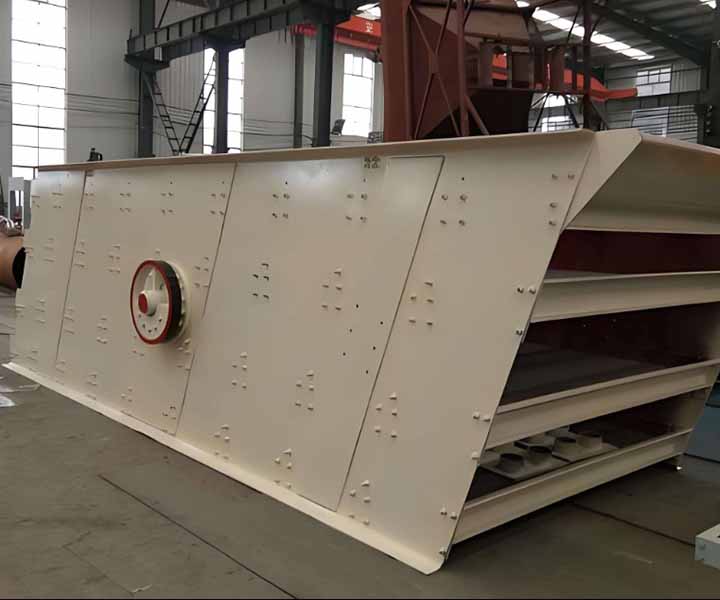
Driven by dual-motor self-synchronizing exciters or robust external vibrators, the screen body maintains high structural rigidity via stress-relieved frame conditioning. Screening precision is strictly sustained at 85% to 95%, ensuring zero oversized particles in fine aggregates. Customizable with 1, 2, 3, or 4 decks, a single machine efficiently sorts 2 to 5 distinct commercial aggregate sizes simultaneously.
Key Benefits of Our Stone Crusher Vibrating Screen
By rapidly separating on-spec finished aggregates, our vibrating screen prevents qualified material from recycling back into the stone crusher, drastically cutting power consumption and mechanical wear. Precise adjustment of vibration amplitude and throwing angle controls material retention time, boosting output purity. Furthermore, our modular clamping design enables operators to change screen apertures in under two hours, minimizing plant downtime.
Core Structural Advantages of Our Stone Crusher Vibrating Screen
The vibrating screen for stone crusher is built with advanced structural components designed to withstand 24/7 heavy-duty plant operations without fatigue failure:
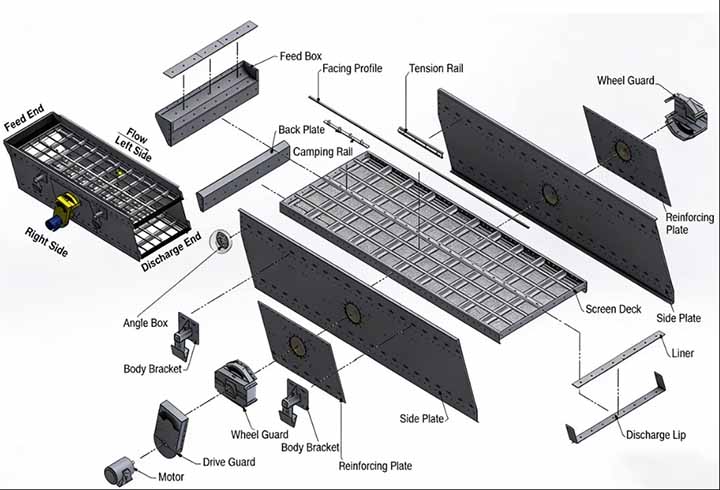
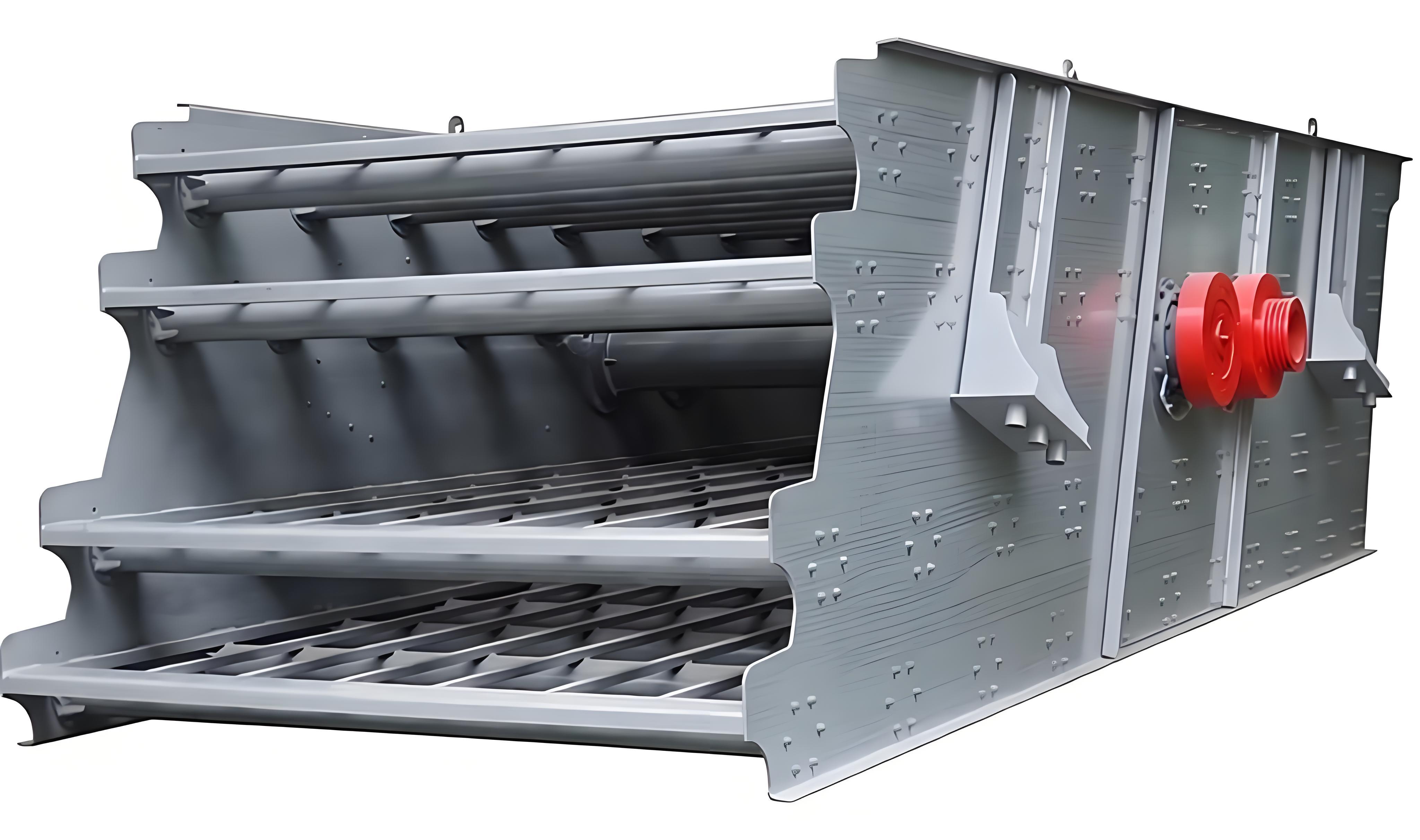
- Ring-Groove Rivet Cold Assembly: Completely abandons traditional welding to eliminate side-plate cracking caused by high-frequency stress concentration, extending overall service life.
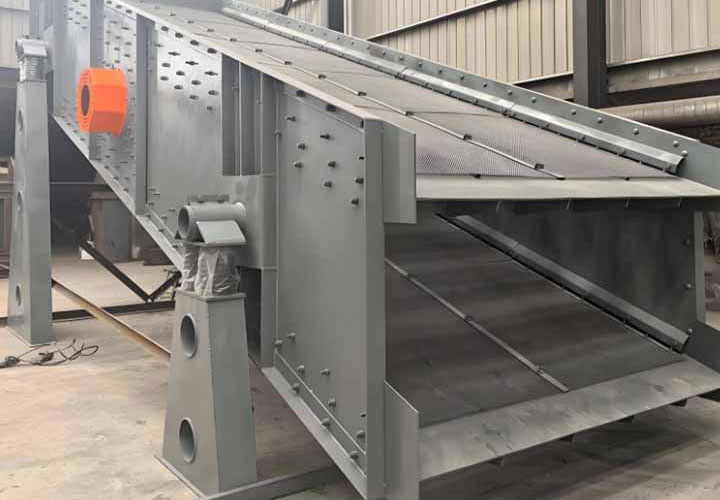
- High-Performance Dual-Shaft Vibrator: Powered by external eccentric blocks and premium heavy-load bearings that deliver robust centrifugal force and simplified field maintenance.
- Multi-Layer Wear-Resistant Screening Decks: Accommodates modular high-manganese steel or polyurethane mesh panels with custom square or slotted holes to prevent blinding during sand making.
- Heavy-Duty Helical Damping Springs: Bottom-supporting steel spiral springs absorb over 95% of dynamic impact, protecting structural foundations and minimizing operation noise.
How Our Vibrating Screen Achieves Precise Aggregate Grading
Driven by dual motors via high-torque belt transmissions, the eccentric block inside the vibrator rotates at high speed, generating an intense centrifugal force that forces the entire screen box into a precise circular or linear trajectory. As crushed stone feeds onto the inclined screening deck, the continuous throwing and tumbling motion stratifies the material. Undersized particles drop cleanly through the apertures into the collection hopper, while oversized stones travel along the deck for discharge, ensuring exact particle size grading for commercial aggregate production.
How to Choose the Right Vibrating Screen Model for Your Plant?
To match your exact aggregate processing requirements and maximize production efficiency, consider the following key technical parameters when selecting a vibrating screen for stone crusher:
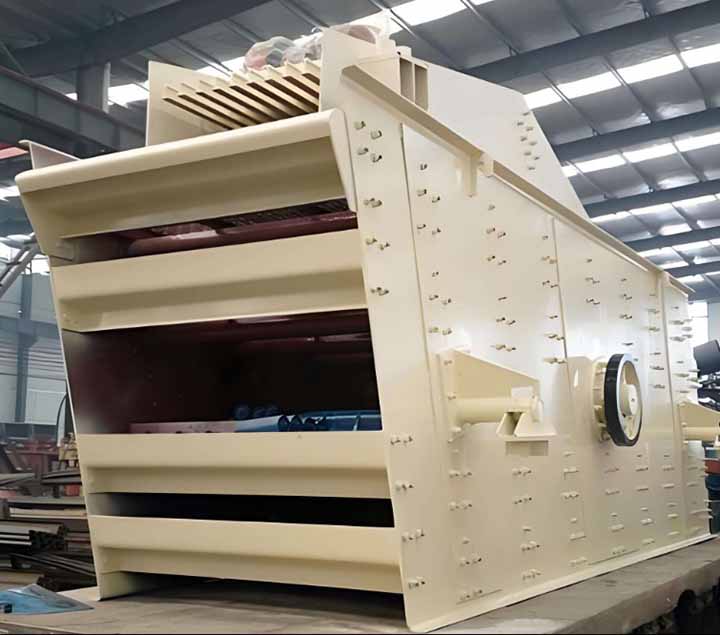
- Feed Particle Size & Hardness: Evaluate the maximum feeding size. For raw stones exceeding 200 mm, heavy-duty YK series screening machines are mandatory; for fine aggregates under 40 mm, medium-duty models are sufficient.
- Required Hourly Capacity (TPH): Align the screen deck area with your target output. For instance, a 200 TPH production line typically requires a screen width of 1.8m or 2.1m paired with a 6-meter length.
- Finished Product Grading & Layers: Determine the number of aggregate specifications required. Select a 2-layer screen for 3 finished sizes, or a 3-layer screen for 4 distinct aggregate outputs.
- Material Moisture Content: For sticky or damp stone materials with over 5% moisture, opt for a high-amplitude, low-frequency configuration or integrate a water spray pipe system for wet screening.
Vibrating Screen for Stone Crusher Model Parameter Table
| Model | Screen Parameters | Max Feed Size (mm) | Capacity (t/h) | Motor Power (kW) | |
| Layers | Area (m²) | ||||
| YK1230 | 1 | 3.6 | ≤200 | 220 | 7.5 |
| 2YK1230 | 2 | 3.6 | ≤200 | 220 | 11 |
| 2YK1530 | 2 | 4.5 | ≤200 | 250 | 18 |
| 2YK1845 | 2 | 8.1 | ≤200 | 350 | 22 |
| 2YK2060 | 2 | 12 | ≤400 | 550 | 30 |
| Model | Screen Parameters | Max Feed Size (mm) | Capacity (t/h) | Dual Amplitude (mm) | Motor | Single Point Dynamic Load (N) | Dynamic Load (N) | ||||
| Layers | Area (m²) | Inclination Angle (°) | Aperture (mm) | Model | Power (kW) | ||||||
| YK1230 | 1 | 3.6 | 15-30 | 3-50 | ≤200 | 220 | 6-10 | Y160M-6 | 7.5 | 440 | 2200 |
| 2YK1230 | 2 | 3.6 | 15-30 | 3-50 | ≤200 | 220 | 6-10 | Y160L-6 | 11 | 732 | 3660 |
| YK1530 | 1 | 4.5 | 15-30 | 3-50 | ≤200 | 250 | 6-10 | Y160L-6 | 11 | 720 | 3600 |
| 2YK1530 | 2 | 4.5 | 15-30 | 3-50 | ≤200 | 250 | 6-10 | Y200L1-6 | 18 | 1154 | 5770 |
| YK1545 | 1 | 6.75 | 15-30 | 3-50 | ≤200 | 300 | 6-10 | Y180L-6 | 18 | 845 | 4225 |
| 2YK1545 | 2 | 6.75 | 15-30 | 3-50 | ≤200 | 300 | 6-10 | Y200L1-6 | 22 | 1360 | 6800 |
| YK1845 | 1 | 8.1 | 15-30 | 3-50 | ≤200 | 350 | 6-10 | Y180L-6 | 18 | 936 | 4680 |
| 2YK1845 | 2 | 8.1 | 15-30 | 3-50 | ≤200 | 350 | 10-15 | Y200L-6 | 22 | 1570 | 7850 |
| YK2045 | 1 | 9 | 15-30 | 6-100 | ≤200 | 450 | 10-15 | Y200L-6 | 18 | 987 | 4935 |
| 2YK2045 | 2 | 9 | 15-30 | 6-100 | ≤400 | 450 | 10-15 | Y250L-6 | 22 | 1593 | 7965 |
| YK2060 | 1 | 12 | 15-30 | 6-100 | ≤400 | 550 | 10-15 | Y200L-6 | 18 | 1339 | 6695 |
| 2YK2060 | 2 | 12 | 15-30 | 6-100 | ≤400 | 550 | 10-15 | Y250L-6 | 30 | 2149 | 7590 |
| YK2460 | 1 | 14.4 | 15-30 | 6-100 | ≤400 | 600 | 10-15 | Y250L-6 | 22 | 1518 | 9545 |
| 2YK2460 | 2 | 14.4 | 15-30 | 6-100 | ≤400 | 600 | 10-15 | Y250L-6 | 37 | 2107 | 10535 |
Real-World Case: Dahan Machine Vibrating Screen in Saudi Arabia
On a high-capacity red granite manufactured sand production line in Saudi Arabia, the client's previous screening equipment suffered from frequent welding-crack failures at the side plates and severe mesh blinding, causing constant line shutdowns and tight delivery delays.
After upgrading to our 3YK2160 model (3-layer screening deck, 2.1m width, 6.0m length) manufactured by Dahan machine the plant handles 0-40 mm cone crusher discharge smoothly. Operating 16 hours daily, the unit stably processes 240 tons of granite per hour. Configured with a 30 mm high-manganese steel woven upper mesh, a 15 mm square-hole middle mesh, and a 5 mm polyurethane strip lower mesh, the machine has run for eight consecutive months with zero rivet loosening or side-plate cracking. The final graded outputs (0-5 mm, 5-15 mm, and 15-30 mm) perfectly meet local light rail concrete aggregate specifications.
Applications of Our Stone Crusher Vibrating Screen
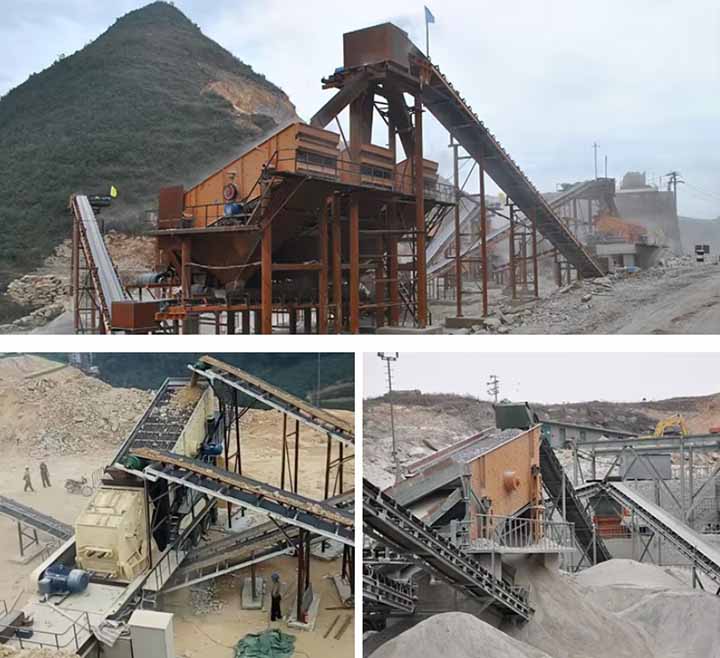
Our industrial vibrating screens are widely implemented across global mineral processing and civil engineering projects. In river pebble and granite crushing plants, they operate downstream of jaw and cone crushers to classify manufactured sand and aggregates. In limestone quarries, they separate raw components for cement production. In construction waste recycling yards, they work with impact crushers to recover clean aggregates, and in metal mining beneficiation plants, they handle closed-circuit inspection and grading operations.
Direct Manufacturer Strength & Customization Support
As an established industrial manufacturing leader, we operates advanced production facilities equipped with state-of-the-art laser cutting, automatic welding, and precision machining lines. We understand that every aggregate crushing plant has unique operational constraints, spatial layouts, and capacity targets. Therefore, we offer comprehensive OEM and custom engineering solutions tailored specifically to your project demands.
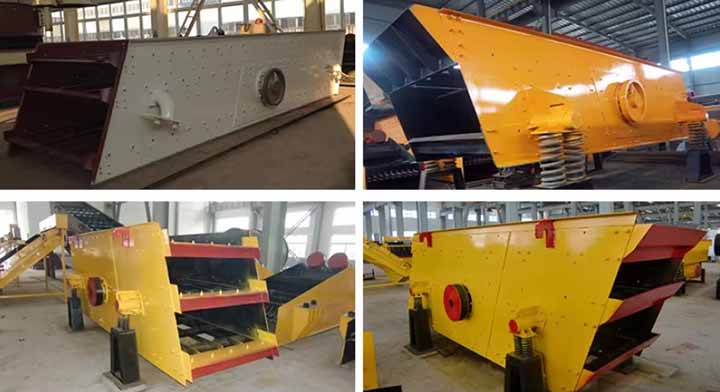
Every single vibrating screen for stone crusher undergoes rigorous 72-hour trial runs and dynamic load testing prior to factory dispatch. Our dedicated international engineering team provides end-to-end support—ranging from initial raw material testing and CAD layout design to on-site installation guidance and spare parts availability—ensuring maximum uptime and profitability for your aggregate production line.
Frequently Asked Questions (FAQ)
Q: What is the price of a vibrating screen for a stone crusher?
A: Small-scale 50 TPH lines range from $2,900 to $5,700; medium-scale 150-300 TPH lines range from $8,000 to $11,000; heavy-duty multi-deck models exceeding 500 TPH range upwards of $17,000. Final pricing varies based on custom polyurethane screen selections and premium bearing brands.
Q: What is the main purpose of a stone crusher vibrating screen?
A: It utilizes mechanical vibration to stratify loose quarried stones into precise particle size fractions, providing compliant feed for secondary crushing or directly outputting commercial construction aggregates.
Q: What are the common problems and troubleshooting for vibrating screens?
A: Key issues include screen blinding due to high moisture content, bearing overheating caused by lubrication faults or misalignment, and metal fatigue side-plate cracking from long-term overloads—all of which are structurally mitigated in our modern designs.
Q: What is the difference between a trommel screen and a vibrating screen?
A: Trommel screens rely on slow drum tumbling and gravity for sticky, low-abrasion materials under 100 mm. Vibrating screens use high-frequency directional throwing action, making them the superior choice for high-hardness, heavy-duty large aggregate grading.
Ready to Boost Your Aggregate Production Efficiency?
Contact our engineering team today for expert model selection, customized layout design, and a competitive factory-direct quotation.

Email:
sale@xxdahan.com
WhatsApp:
+86 15236742901
Add:
1000m West of Forest Park,Yanjin County,Xinxiang City,Henan Province,China.