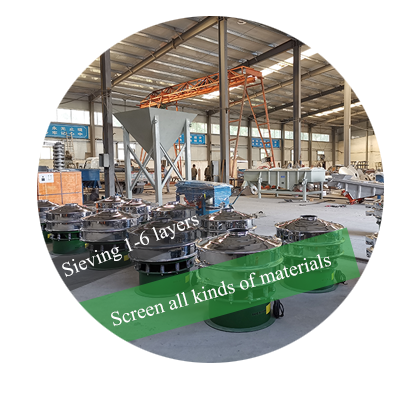
Mining Vibrating Screen
![[field:title/]](/uploads/260811/1-260Q1162K6112.jpg)
Callback
| Screening Area: | 1.2 × 3.0 m–2.4 × 7.5 m |
| Capacity: | 50–1,200 t/h* |
| Screen Decks: | 1–3 Layers |
| Amplitude: | 5–15 mm |
For mineral sizing, grading and aggregate screening.
Screen media options: polyurethane, rubber, woven wire or wedge wire.
Adjustable excitation force and low-maintenance design.
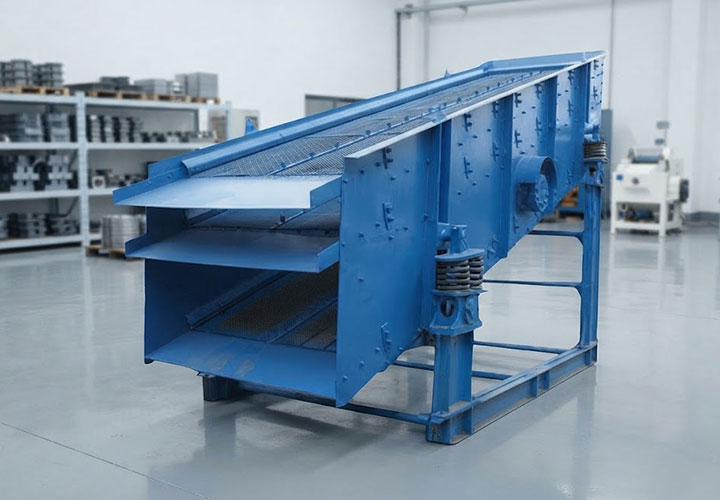
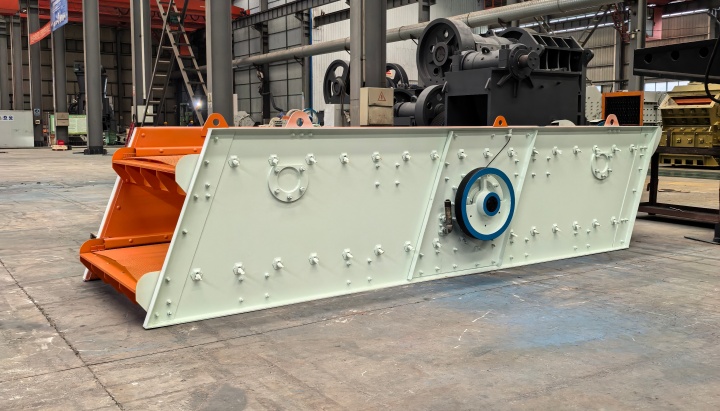
The mining vibrating screen is a specialized industrial screening machine designed for the classification, washing, and dehydration of materials in mineral processing operations. Built to handle demanding applications, it features configurable punching modes that support round holes, square holes, and strip holes to match specific processing requirements.
How Does a Mining Vibrating Screen Work?
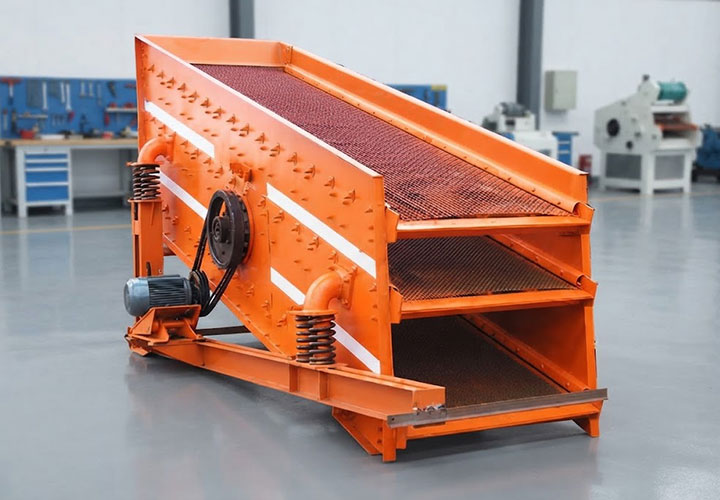
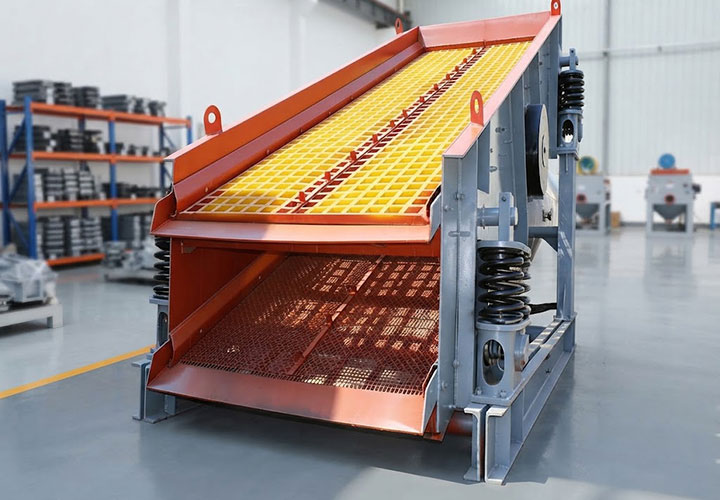
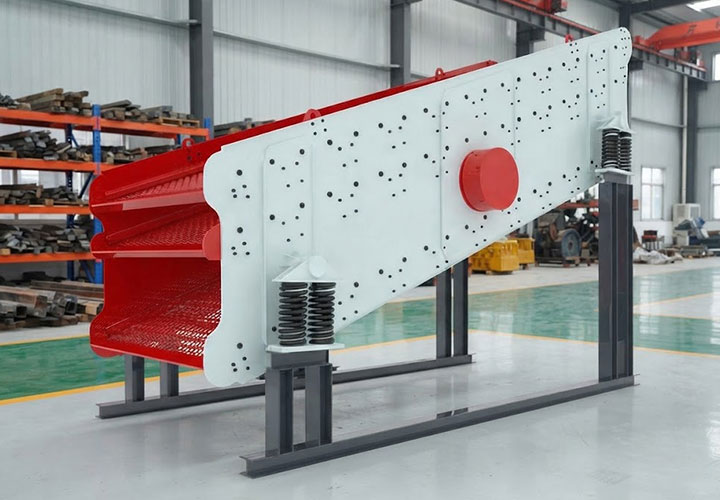
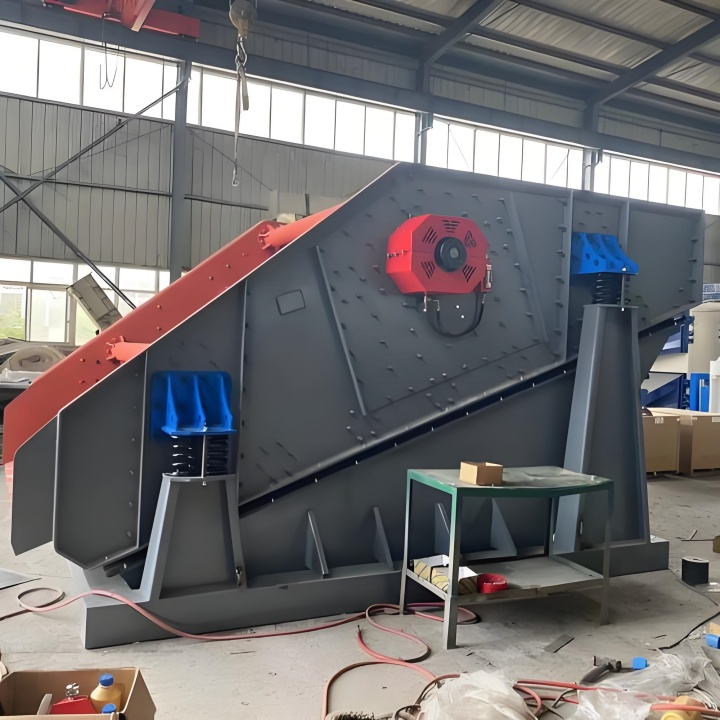
When the exciter generates vibration, the screen box moves in a controlled trajectory. Material fed onto the screen is continuously thrown upward and forward. Finer particles migrate downward through gaps between larger particles and pass through screen openings. Larger particles continue across the screen surface and discharge as oversize material. Key components include screen media, suspension springs, and an exciter drive system.
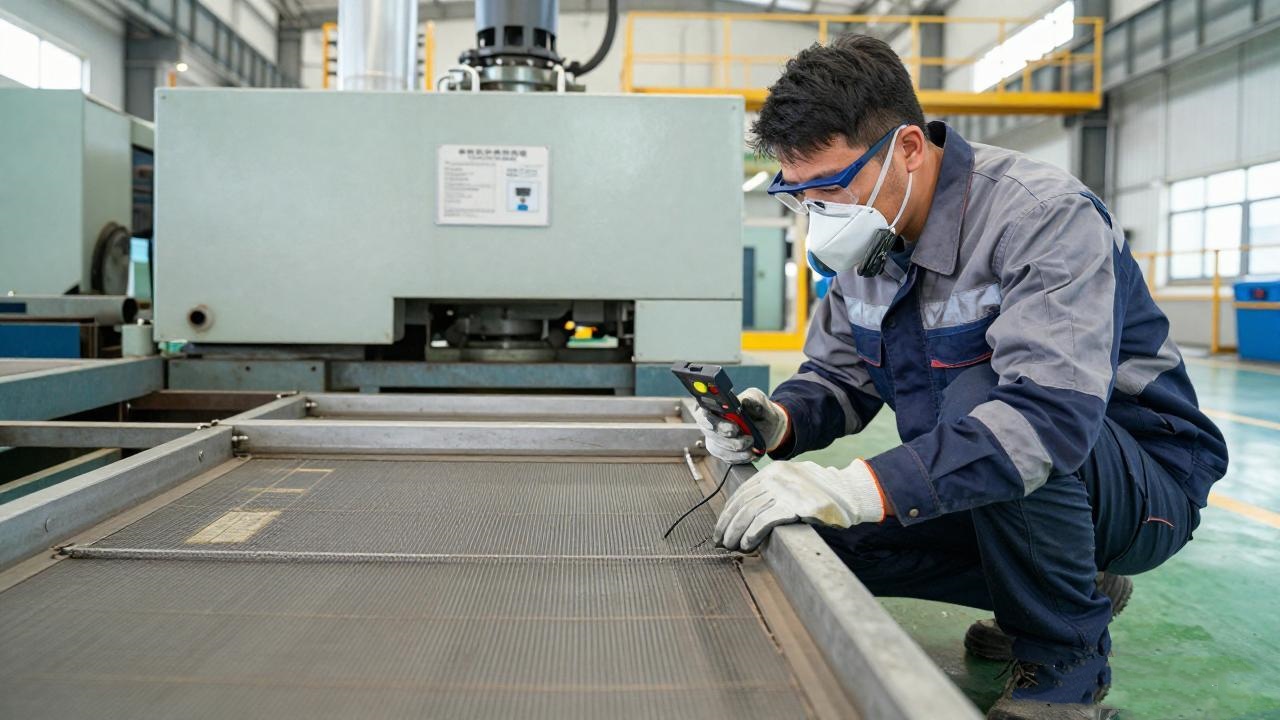
Heavy-duty industrial mining vibrating screen testing and operation in the manufacturing workshop.
Key Operating Parameters
| Parameter | Typical Range | Optimization Guidance |
|---|---|---|
| Amplitude | 5–15 mm | Coarse screening: 10–15mm; fine screening: 5–8mm; dewatering: 8–12mm |
| Frequency | 800–3,000 rpm | Coarse materials: 800–1,200 rpm; fine particles: 1,500–3,000 rpm |
| Screen inclination | 10°–30° | Dry materials: 15°–20°; wet/sticky: 10°–15°; dewatering: -5° to 5° |
| g-value | 3–7g | Higher g-value = better stratification, increases component stress |
Main Types of Mining Vibrating Screens
Circular Vibrating Screens: Generate circular motion driven by eccentric shaft or eccentric block. Offer high screening efficiency, robust structure, and large capacity. Common series include YA (simple structure) and YK (adjustable excitation force).
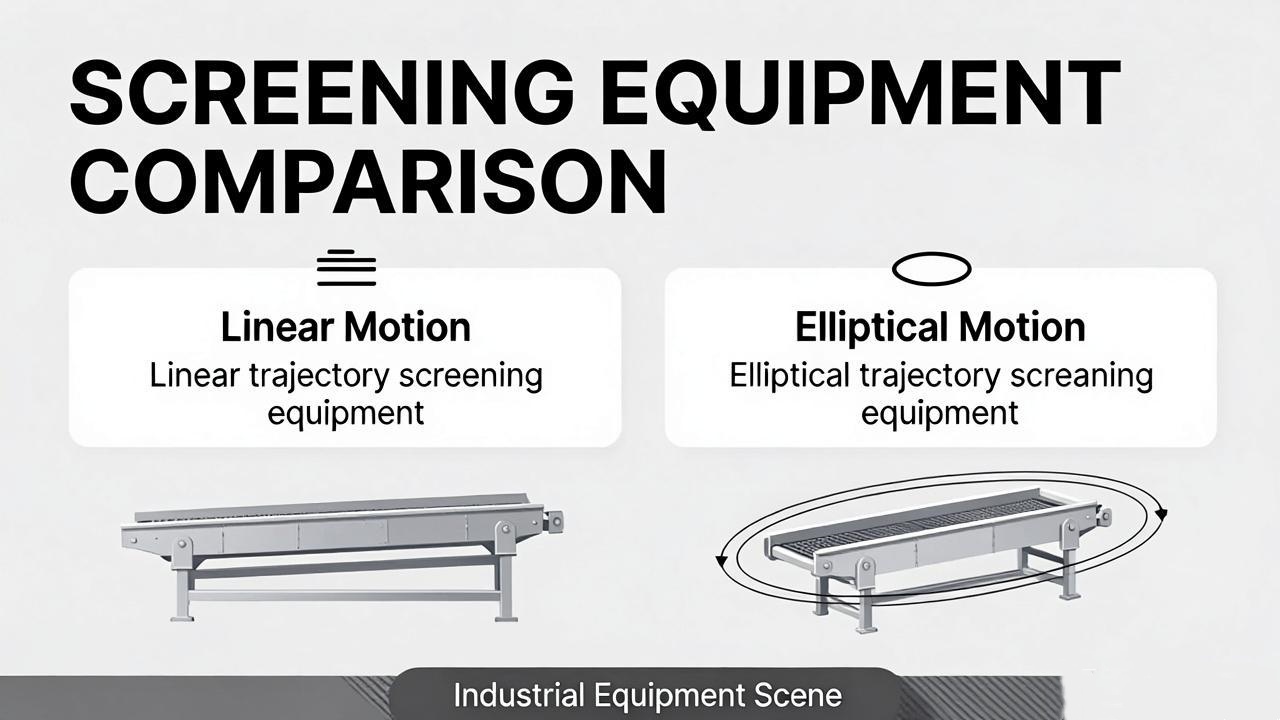
Linear Vibrating Screens: Produce straight-line motion through two motors in synchronous reverse rotation. Offer stable operation and sharp cut points. Constructed with durable materials such as manganese, chromium, and stainless steel.
Elliptical Vibrating Screens: Combine circular and linear features. Trajectory appears circular horizontally and elliptical vertically. Adjustable eccentric weights allow trajectory modification.
Banana Screens (Multi-Slope): Feature multi-angled deck—steep at feed end, flattening toward discharge. Achieve high deck utilization and extreme capacity. Capacity up to 500-600 t/h for iron ore.
High-Frequency Vibrating Screens: Operate at 3,600–4,200 rpm with small amplitude. Effective for apertures below 1mm. Used for fine sand recovery, tailings dewatering, and slurry filtration.
Dewatering Screens: Use linear motion with horizontal or negative inclination (-5° to 5°). Feature U-shaped panel structure. Produce discharged materials with low moisture content.
Screen Media Selection Guide
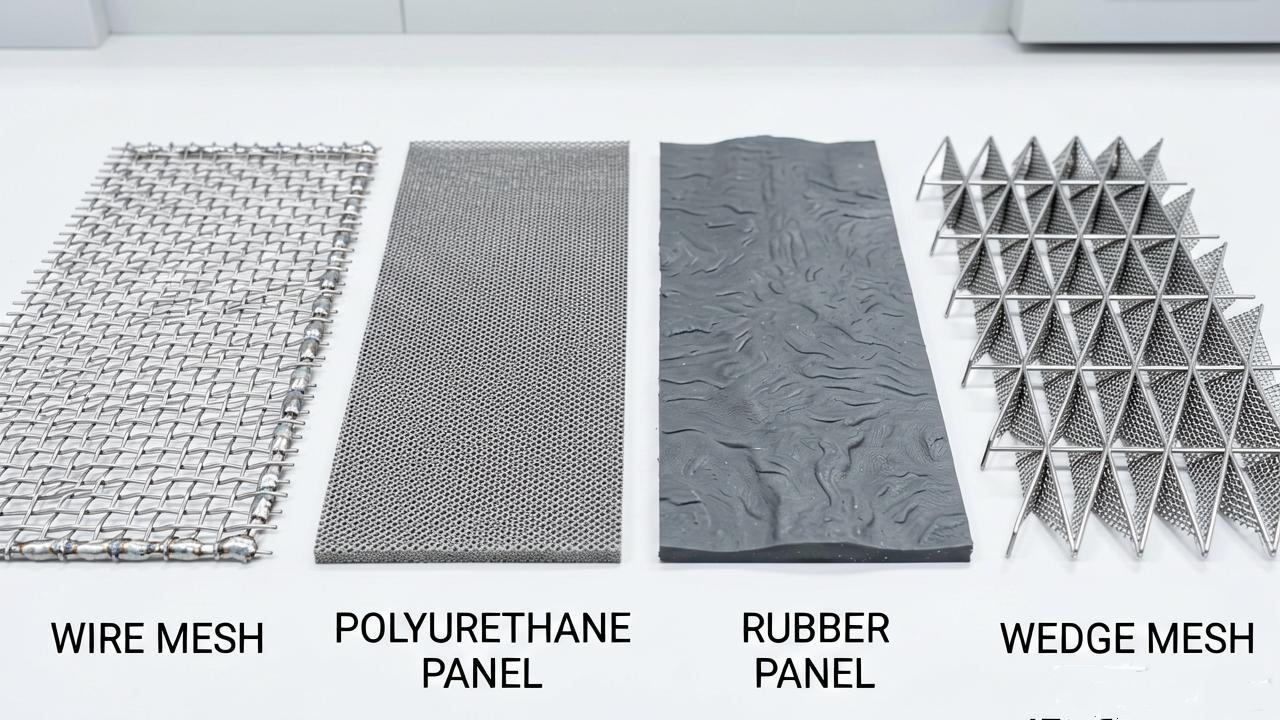
Woven wire mesh – Best for dry screening and coarse sizing (2–100mm). Lowest initial cost but wears rapidly with abrasive feeds and is prone to blinding in wet applications.
Polyurethane panels – Excel in wet screening and medium-fine sizing (0.5–20mm). Offer 3–5× wear life and high clogging resistance. Higher cost; susceptible to cutting damage from sharp rocks.
Rubber panels – Ideal for high-impact coarse screening (5–100mm). Provide 2–4× wear life with medium-high clogging resistance. Limited for fine sizing below 2mm.
Wedge wire panels – Specialized for dewatering and desliming. Offer 2–3× wear life. Require specialized frame compatibility.
Applications by Ore Type
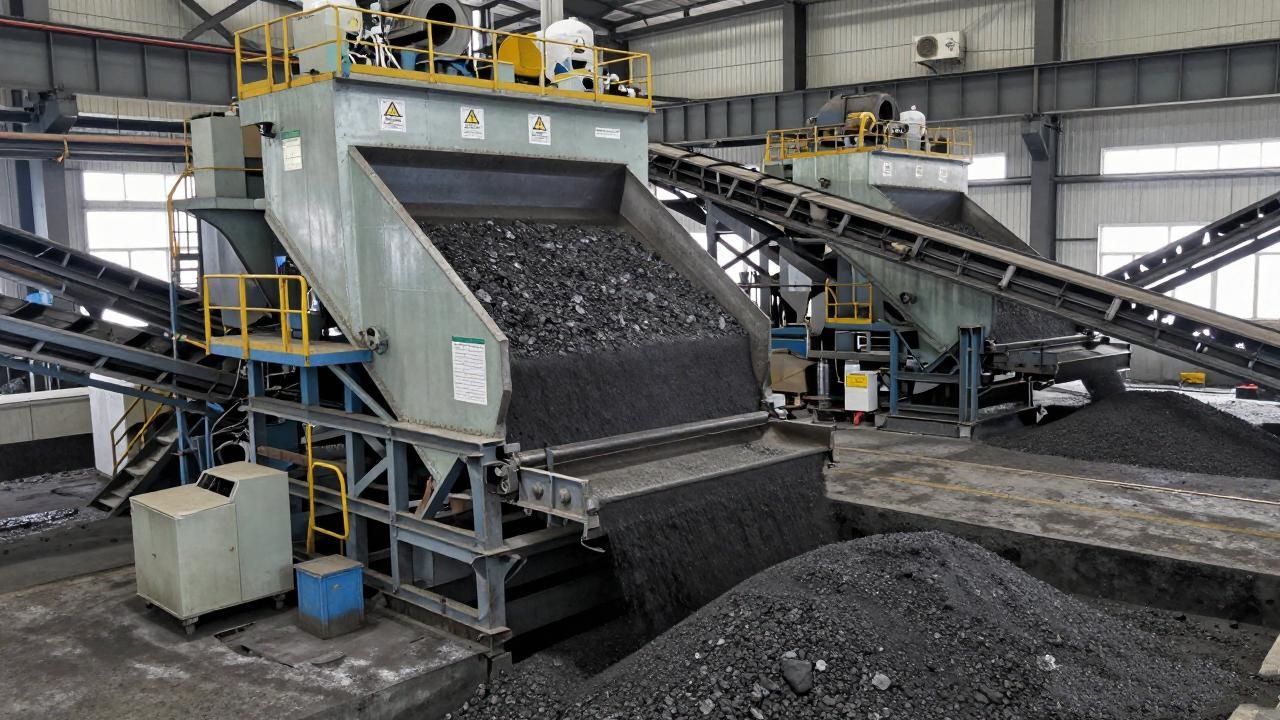
Magnetite and iron ore – Highly abrasive. Circular or banana screens with higher amplitude recommended. Wear-resistant media (polyurethane or rubber) required.
Copper ore – Wet screening common. Circular or linear screens with anti-clogging media recommended.
Coal – High throughput with dewatering. Banana or linear screens preferred.
Gold ore – Fine classification requiring cut-point accuracy. High-frequency screens deliver required precision.
Aggregate – High-capacity scalping. Circular screens provide robust performance.
Lithium ore – Clay contamination impacts efficiency. Linear or circular screens typically specified.
How to Choose the Right Mining Vibrating Screen
Identify Core Pain Point
Insufficient capacity → Larger screen area, banana screen, or parallel screens.
Poor accuracy → Evaluate media type; consider high-frequency screens.
Blinding/clogging → Increase amplitude; use polyurethane/rubber media.
Frequent downtime → Heavy-duty construction; improved maintenance.
Moisture problems → Dewatering screens or pre-drying.
Select Motion Trajectory
| Feed Condition | Recommended Motion |
|---|---|
| Coarse, high-density ore | Circular |
| Fine, wet material | Linear |
| Variable feed | Elliptical |
| High-volume medium-fine | Banana |
Determine Cutting Size Strategy
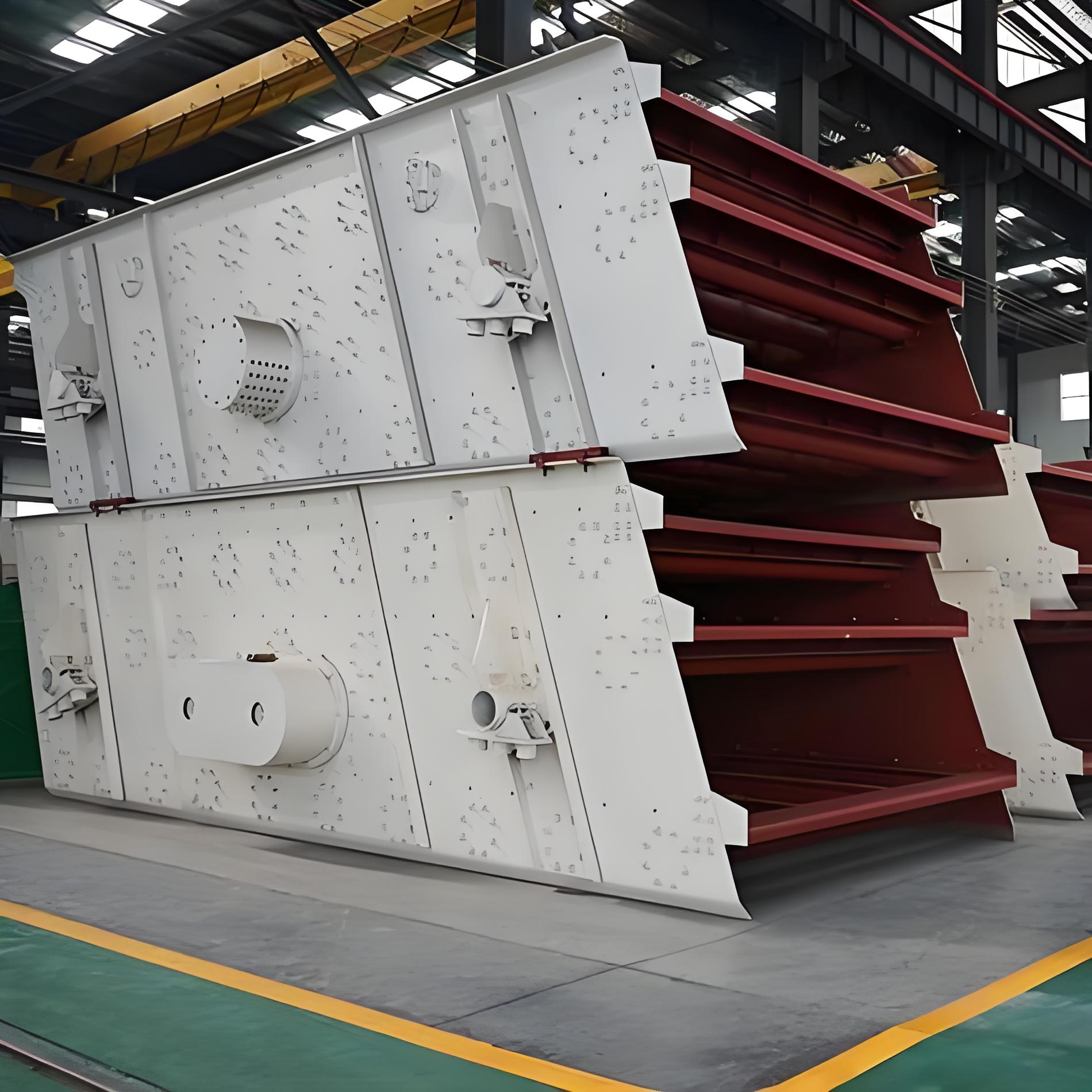
One deck = two fractions; two decks = three fractions; three decks = four fractions.Aperture size based on product specification.
Select Screen Media
Based on moisture and fines content, refer to the Screen Media Selection Guide above for the appropriate choice.
Set Operational Targets
Monitor vibration stability; set wear life expectations; ensure maintenance access.
Validate and Document
Conduct sampling to verify efficiency; track moisture; monitor wear patterns; document parameters.
Maintenance & Troubleshooting
Preventive Maintenance
Replace mesh when wear exceeds 70% or openings stretch.
Replace lubricant after first 40 hours; oil change cycle 120 hours.
Keep spare springs and mesh in stock.
Document maintenance and vibration readings.
Train operators to recognize abnormal sounds and vibrations.
Common Issues & Solutions
Low Screening Efficiency
Causes: Uneven feeding, mismatched amplitude/frequency, high moisture, mesh clogging.
Solutions: Feed distributor, adjust parameters, pre-dry or anti-clogging media.
Screen Mesh Clogging (Blinding)
Causes: Near-aperture particles, high moisture, improper aperture selection.
Solutions: Change aperture size, increase frequency, increase amplitude.
Preventive: Anti-clogging media, ball deck cleaning, moisture control.
Abnormal Vibration
Causes: Unbalanced exciter, loose bolts, worn springs, bearing failure.
Solutions: Rebalance, tighten bolts, inspect/replace springs, monitor bearing temperature.
Insufficient Processing Capacity
Causes: Undersized screen area, feed issues, incorrect inclination.
Solutions: Upgrade screen or add parallel screens, ensure consistent feed, adjust angle.
Frequently Asked Questions
What is the difference between circular and linear vibrating screens?
Circular screens create strong throwing force for coarse materials. Linear screens offer stable operation and sharp cut points for fine classification and dewatering.
How do I prevent screen clogging when screening wet materials?
Increase amplitude, reduce feed moisture if possible, use polyurethane or rubber media. For very sticky materials, install ball deck cleaning systems.
What amplitude and frequency should I use?
Coarse materials (>10mm): 10-15mm, 800-1,200 rpm. Fine materials: 5-8mm, 1,500-3,000 rpm. Conduct screening tests for critical applications.
How often should screen mesh be replaced?
High-abrasion: every few weeks. Non-abrasive: months. Replace when efficiency drops or oversize contamination increases.
Can a single deck produce multiple size fractions?
No. Each deck produces two fractions. Two decks = three fractions; three decks = four fractions.
What is the expected service life of a mining vibrating screen?
Screen box and main structure: 8-10 years with proper maintenance. Wear parts: every few weeks to months.


-
How to Choose Vibrating Screen Mesh Size: 5-Step Guide & Tool
Selecting the correct vibrating screen mesh size directly determines screening efficiency, product quality, and equipment service life...
-
Single-Deck vs Double-Deck Inclined Screens: Differences & Selection Guide
If you're in aggregate, mining, or industrial processing, you've likely faced this question: Single-deck or double-deck inclined vibrating screen?...
-
Factors Affecting Industrial Vibrating Screen Price: 8 Key Factors
The price of an industrial vibrating screen depends on more than machine size...

Email:
sale@xxdahan.com
WhatsApp:
+86 15236742901
Add:
1000m West of Forest Park,Yanjin County,Xinxiang City,Henan Province,China.