What Screen Size Is Best for Compost Screening?
There is no single screen size that works best for every compost screening application. For general-purpose compost, a 1/2-inch screen is often a practical starting point, while finer openings such as 1/4 or 3/8 inch are more suitable when a smoother, more uniform product is required. Larger openings can be useful when coarse material or higher throughput is the priority.
Choosing the right screen size for compost screening depends on what you want the finished compost to look like and how the material behaves during screening. Moisture, particle size distribution, processing capacity, and the intended end use can all affect the result. This guide explains how to select a compost screen size based on these factors rather than relying on one fixed mesh size.
Choosing a Screen Size for Finished Compost
The screen opening should be selected according to the required finished compost, not simply according to the screening machine. If the final product is intended for general soil amendment, a moderately sized opening can provide a good balance between product uniformity and screening capacity. When the compost is used for potting mixes, turf, or other applications that require a finer texture, a smaller opening may be more appropriate.
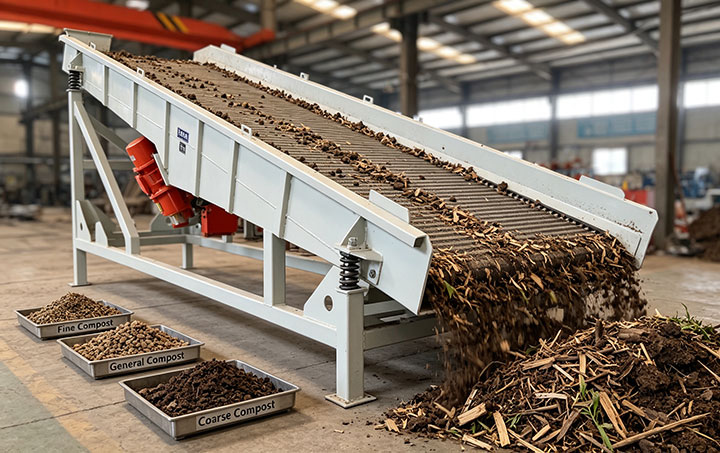
Before selecting the screen, define the acceptable particle size of the finished product and how much oversized material can be returned for further processing. This gives the screening equipment a clear separation target and helps avoid choosing a screen that is unnecessarily fine, which can reduce throughput or increase the risk of screen blinding when the compost contains moisture.
Compost Screen Sizes at a Glance
Compost screening commonly uses openings from about 1/4 inch to 1 inch, depending on the required finished product. Smaller openings produce a finer and more uniform material, while larger openings allow more coarse particles to pass through and generally place less restriction on material flow.
| Screen Opening | Typical Screening Purpose | Main Consideration |
|---|---|---|
| 1/4 inch | Fine compost and applications requiring a smoother texture | Higher separation demand and greater sensitivity to wet, sticky material |
| 3/8 inch | Fine to medium finished compost | Good choice when product uniformity is more important than maximum throughput |
| 1/2 inch | General-purpose finished compost | Practical balance between particle uniformity and screening capacity |
| 3/4–1 inch | Coarser compost and applications where larger particles are acceptable | Higher material flow, but a coarser finished product |
These sizes are starting points rather than fixed specifications. The actual screen opening should be confirmed against the feed material, moisture level, required capacity, and the particle size expected in the finished compost.
Start With the End Use, Not the Screen
The same compost feedstock may need different screening results depending on where the finished material will be used. A landscaping product can usually accept a coarser fraction, while compost intended for potting mixes or turf applications may need a more consistent particle size.
For this reason, the first question should be: What particle size and texture does the customer need in the finished compost? Once that requirement is clear, the screen opening can be selected to remove the unwanted oversize material without unnecessarily restricting the useful fraction.
| Finished Compost Requirement | Screening Priority |
|---|---|
| General soil amendment | Balanced separation and processing capacity |
| Potting mix or fine horticultural compost | More uniform and finer particle size |
| Turf or topdressing material | Fine, consistent finished material |
| Landscaping or coarse organic material | Higher throughput with larger particles permitted |
If the required finished size is not clearly defined, choosing the smallest available screen is usually not the best approach. A finer screen can increase separation requirements without improving the product if the end user does not need a finer material.
Why 1/2 Inch Is a Common Starting Point
A 1/2-inch screen is often used as a starting point for general-purpose compost because it provides a practical middle ground between product fineness and screening capacity. It can remove many larger pieces while still allowing a useful amount of finished compost to pass through the screen.
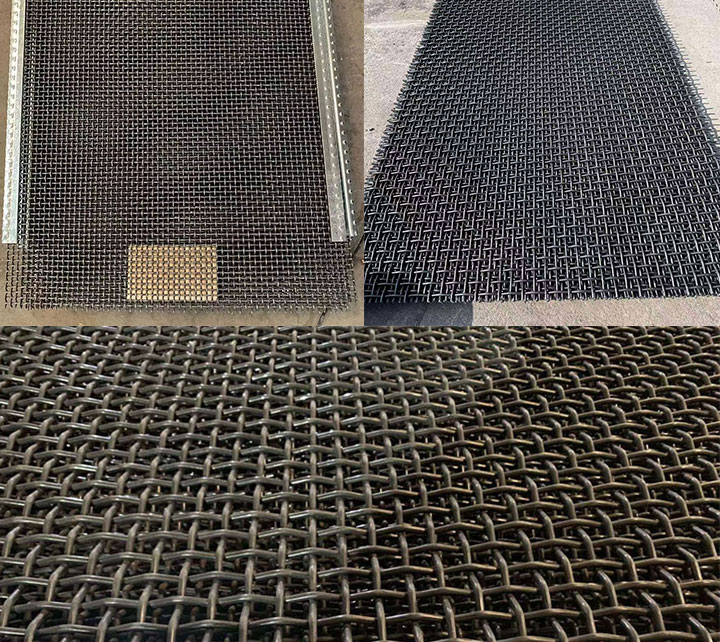
The advantage is mainly its balance. Moving to a smaller opening can produce a finer product, but the screening load may increase, especially when the compost contains moisture or fibrous material. Moving to a larger opening improves material flow but allows more coarse particles to remain in the finished fraction.
For a compost operation without a narrowly defined particle-size specification, starting with a 1/2-inch opening and then adjusting the screen according to the actual product requirement is often more practical than selecting an extremely fine screen from the beginning.
When a Finer or Larger Opening Makes More Sense
A smaller screen opening makes sense when the finished compost needs a finer and more consistent texture. This is common when the screened material will be blended into potting mixes, used around turf, or sold as a higher-uniformity soil amendment. In these cases, removing more coarse particles can be more valuable than maximizing the screening rate.
A larger opening is more suitable when the end product can contain some coarse particles or when processing capacity is the main concern. It can also be useful for compost containing fibrous pieces that would otherwise remain on a fine screen for too long.
The decision should therefore be based on the trade-off between finished product quality, acceptable oversize, and required throughput. If changing the screen size does not solve the actual limitation, the problem may instead be related to feed moisture, material loading, screen area, or the screening method itself.
What Changes When Compost Is Wet?
Moisture can change the way compost behaves on the screen. Instead of separating cleanly into individual particles, wet compost may form soft lumps, adhere to the screen surface, or carry several smaller particles together. This can make a screen appear too fine even when the selected opening is appropriate for the finished product.
When moisture is high, a slightly larger opening may sometimes provide more stable material flow. However, simply increasing the screen size is not always the right solution. Screen surface design, vibration, feed rate, and anti-blinding measures also affect whether wet compost can pass through the openings effectively.
For high-moisture compost, screen selection should therefore be tested with the actual material whenever possible. A screen that performs well with dry compost may give a very different result when the same material contains significantly more moisture or fibrous organic matter.
Screen Size Is Only One Part of the Capacity Equation
A smaller screen opening does not automatically mean lower capacity, and a larger opening does not guarantee higher output. Actual screening capacity depends on how much material reaches the screen, how much screen area is available, how the material moves across the surface, and how easily the compost passes through the openings.
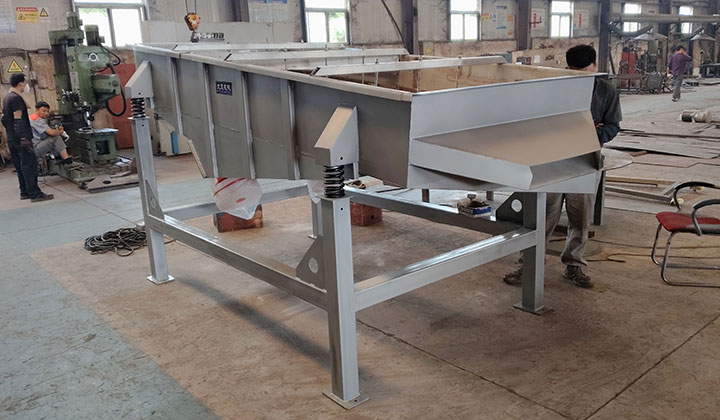
For compost, moisture and fiber content can be especially important. A screen may have enough area on paper but still lose effective capacity if wet or fibrous material stays on the surface instead of separating. Feeding too much material at once can have a similar effect by creating a thick layer that prevents smaller particles from reaching the screen openings.
When estimating capacity, it is therefore better to consider the screen opening, screen area, feed rate, material condition, and required separation efficiency together. This gives a more realistic basis for selecting equipment than using screen size alone.
Choosing the Right Screening Machine for Compost
Once the required screen opening is known, the next step is to match it with a screening machine that can handle the actual compost condition. For relatively dry and free-flowing material, several screening methods may work well. Wet, sticky, or fibrous compost requires more attention to screen movement, material retention, and screen cleaning.
Compost sifter shaker demonstration for compost screening and particle-size separation.
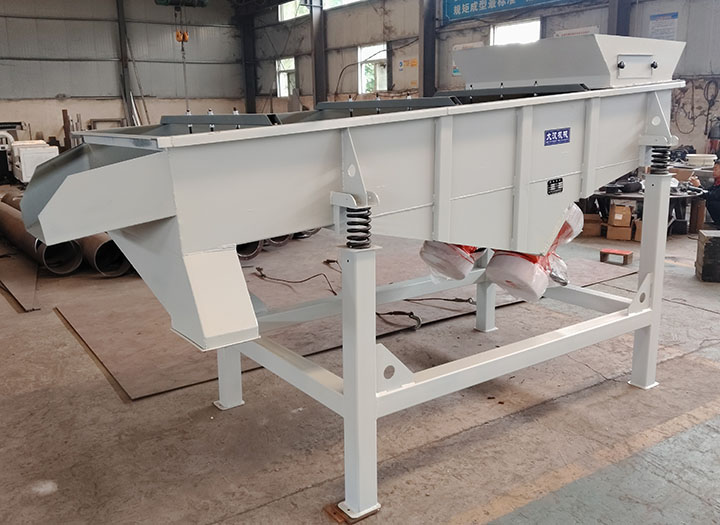
A vibrating screen can be a practical choice when consistent particle separation is required and the process needs controlled material movement across the screen surface. For higher moisture compost, the screen design should also allow the material to separate without excessive buildup or blinding.
The machine should ultimately be selected from the complete operating requirement rather than the screen opening alone: required capacity, feed particle size, moisture and fiber content, number of fractions, available installation space, and the desired finished product all need to be considered together.
What to Tell a Screening Equipment Manufacturer Before Ordering
A screen size recommendation is much more reliable when the manufacturer knows how the compost will actually be processed. Before requesting a machine, provide the basic operating conditions rather than only asking for a quotation.
| Information to Provide | Why It Matters |
|---|---|
| Required capacity | Determines the required screening area and equipment size |
| Feed material and particle condition | Helps evaluate how easily the compost will separate |
| Moisture and fiber content | Affects screen selection, material flow, and blinding risk |
| Required screen opening | Defines the target separation size |
| Number of finished size fractions | Determines whether one or multiple screening stages are needed |
| Installation and feeding conditions | Helps match the machine with the existing production line |
If possible, supplying a representative compost sample or clear photos of the feed material can make the recommendation more accurate. The manufacturer can then evaluate the screen opening and equipment configuration against the actual material instead of relying only on a theoretical capacity.
What Happens to Oversized Material?
Oversized material is the portion of compost that remains above the selected screen opening. It may contain wood pieces, fibrous organic matter, clumps, stones, or partially decomposed material. Its presence does not necessarily mean that the screen is performing poorly; it may simply be material that does not meet the required finished size.
What happens next depends on the production process. In some operations, the oversize fraction is removed as waste or used separately. If it still contains a significant amount of usable organic material, it can be returned for further composting, grinding, or another processing stage before being screened again.
For this reason, the handling of oversize should be considered when designing the screening process. A good setup separates the required finished compost efficiently while providing a practical route for the material that does not pass the screen.
Screen Opening, Mesh Size, and Finished Particle Size
Screen opening and mesh size are related, but they are not the same specification. The screen opening refers to the actual space through which compost particles can pass, while mesh size generally describes the number of openings within a given length of woven wire mesh. The opening size also depends on the wire diameter.
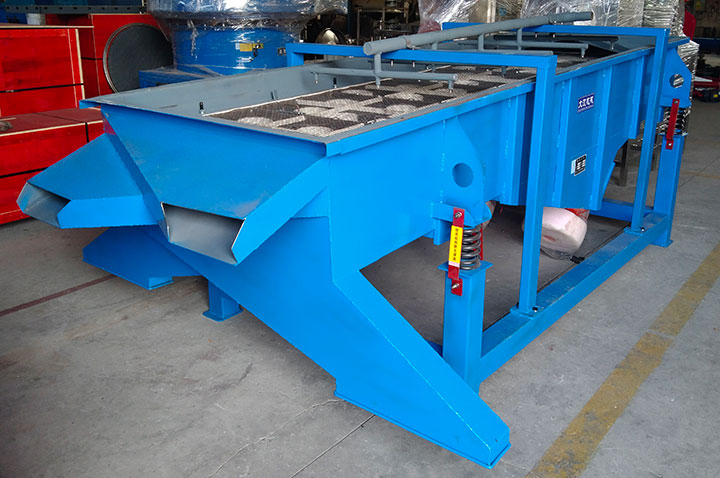
For compost screening, specifying the required opening in inches or millimeters is usually clearer than asking for a mesh number alone. This is especially important when comparing different screen materials or screen constructions, because the same mesh designation does not necessarily represent the same effective opening.
The finished compost will also not always have a perfectly uniform particle size equal to the screen opening. Particle shape, moisture, material flexibility, and the way the particles approach the screen can all affect what passes through. The screen opening should therefore be treated as the separation reference, rather than an exact guarantee of every particle's final dimension.
Frequently Asked Questions About Compost Screening
What screen size is best for compost?
For general-purpose compost, a 1/2-inch screen is a practical starting point. A smaller opening can be selected for finer material, while a larger opening may be more suitable when a coarser product or higher material flow is required.
Is a 1/2-inch screen good for compost?
Yes. A 1/2-inch opening provides a useful balance between finished product uniformity and screening capacity for many general compost applications. The final choice should still be based on the required product size and actual material condition.
What mesh size should I use for compost?
It is better to specify the required screen opening rather than choosing a mesh number alone. For compost, common starting points range from about 1/4 inch to 1 inch, depending on the desired finished product.
Can a vibrating screen process wet compost?
Yes, but wet compost is more difficult to screen because sticky particles and organic fibers can build up on the screen surface. Screen design, vibration, feed rate, and anti-blinding measures should be matched to the material condition.
How do I choose a compost vibrating screen?
Start with the required finished particle size and capacity, then consider compost moisture, fiber content, feed size, number of fractions, and installation conditions. These factors determine the appropriate screen opening and machine configuration.
Need Help Choosing a Compost Screen?
If you are unsure which screen opening or screening machine is suitable for your compost, send us your required capacity, material moisture, feed size, and desired finished product size. Our engineers can recommend a suitable compost screening solution based on your actual material and processing requirements.

Email:
sale@xxdahan.com
WhatsApp:
+86 15236742901
Add:
1000m West of Forest Park,Yanjin County,Xinxiang City,Henan Province,China.