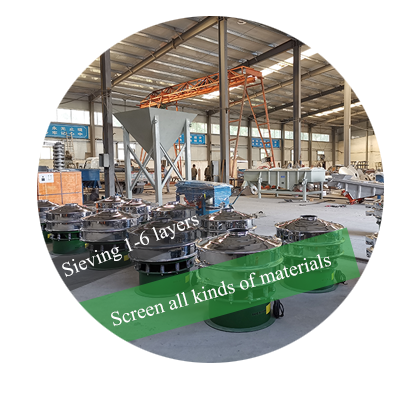
Vibrating Screen for Compost
![[field:title/]](/uploads/261019/6-2610191K43K11.jpg)


Callback
| Capacity: | 5–50 t/h* |
| Screen Aperture: | 5–50 mm (Customizable) |
| Screen Tilt Angle: | 15°–25° Adjustable* |
| Material: | Q235 Carbon Steel / SUS304 |
Separates compost and topsoil from twigs, plastics and debris.
Designed for screening moist organic materials.
Adjustable screen openings for different compost sizes.
Screen configuration customized to material conditions.
As a mechanical sorting device for processing fermented and decomposed materials, the Vibrating Screen for Compost is responsible for removing large pieces of undecomposed organic residue, gravel, and plastic waste to produce commercial-grade organic fertilizer with uniform particle size. During screening, the moisture content of compost is often maintained at around 30% to 40%, exhibiting extremely high and difficult-to-separate adhesion. Furthermore, the compost contains intertwined complex impurities such as dead branches and broken glass.
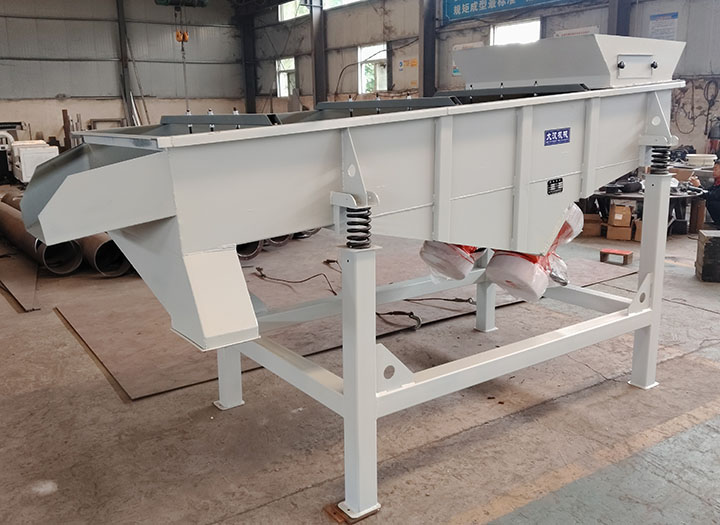
To overcome the screening obstacles of compost, the vibrating screen uses dual vibrating motors to provide excitation force, working in conjunction with a highly resilient polyurethane screen surface or built-in bouncing ball components. This causes the strongly adhering fertilizer to continuously bounce on the screen, thereby breaking down the surface tension caused by moisture. Depending on the actual width of the machine's screen frame and the installation tilt angle, it can achieve a material throughput ranging from 10 kg to 32 tons per hour.
Key Advantages of Dahan Compost Vibrating Screen in Organic Processing
Integrating an industrial compost vibrating screen replaces inefficient manual labor, dramatically streamlining organic waste processing lines with higher precision and durability.
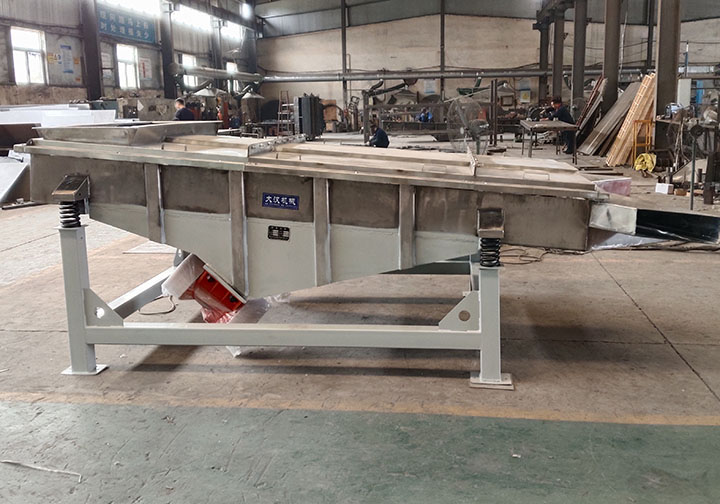
Advanced Anti-Clogging Technology for High-Moisture Compost
When handling compost with 30% to 40% moisture, standard metal woven meshes easily blind and clog. Our equipment features an independent support grid equipped with highly elastic rubber bouncing balls underneath the screen. During operation, these balls continuously bounce to impact the screen, instantly dislodging trapped fibers and wet mud. Alternatively, self-cleaning polyurethane screen plates utilize material micro-deformation to prevent sticky buildup.
Quick-Change Modular Design for Adjustable Grading Sizes
Different commercial applications demand precise particle diameters. Utilizing a modular pressure bar locking structure, operators can swap out screen meshes within 15 minutes. For instance:
2mm aperture: Ideal for fine seedling nutrient soil.
5mm aperture: Perfect for potted flower substrates.
10mm aperture: Tailored for landscaping cover soil and organic fertilizer.
Heavy-Duty Corrosion-Resistant Construction
Fermented compost contains organic acids and moisture that aggressively corrode standard carbon steel. To withstand open-air, harsh operational environments, all material contact areas—such as the feed hopper and inner screen box walls—are manufactured using manganese steel plates, thickened 304 stainless steel, or finished with triple-layer epoxy coal tar anti-corrosion coatings to significantly extend machinery lifespan.
Linear Vibrating Screen vs. Trommel Drum Screen for Compost Sorting
In the organic waste recycling industry, choosing the right sorting machine is critical. The comparative performance matrix below evaluates linear vibrating screens and trommel drum screens across key operational indexes.
| Operation Index | Dahan Linear Vibrating Screen | Traditional Trommel Screen |
|---|---|---|
| Screening Accuracy | High (Materials jump linearly with distinct stratification) | Medium (Materials tumble inside drum; long strip debris can leak through) |
| Multi-layer Classification | Strong (2 to 3 layers of mesh stacked vertically for simultaneous grading) | Weak (Requires extended drum length for extra sizing, expanding footprint) |
| Equipment Footprint | Compact, low-profile structure with exceptional space utilization | Bulky overall volume and large axial length required |
| Power Consumption | Relatively low (Driven by dual high-efficiency vibration motors) | Relatively high (Requires rotating the entire heavy-duty drum) |
| Consumable Replacement | Fast & easy (Swap out screens via side access doors or top covers) | Slow (Requires disassembling bolts inside or outside the drum cylinder) |
When Should You Choose a Linear Vibrating Screen?
A linear vibrating screen is the ideal choice when organic fertilizer plants face workshop space limits or insufficient ceiling heights that cannot accommodate a tall drum screen. Furthermore, if your facility requires multi-level precision grading (such as simultaneously separating 0-2mm, 2-5mm, and 5mm+ particles in one compact run), the vertical multi-deck screen plate structure of our vibrating equipment delivers unmatched efficiency.
Dahan Compost Vibrating Screen Technical Specifications & Model Parameters
Review our standard DZSF series linear vibrating screen models below. Custom screen layers, voltages, and mesh sizes are available upon request to fit your specific organic fertilizer processing capacity.
| Model | Layers | Screening Area (mm) | Mesh Size (mesh) | Particle Size (mm) | Capacity (t/h) | Power (kw) | Vibration Angle (°) | Inclination (°) | Dual Amplitude (mm) |
|---|---|---|---|---|---|---|---|---|---|
| DZSF-520 | 1-6 layers | 500*2000 | 2-400 | 0.074-10 | ≤3 | 0.37×2 | 45-60 | 0-7 | 3-4.5 |
| DZSF-525 | 500*2500 | ≤5 | 0.37×2 | ||||||
| DZSF-612 | 600*1200 | ≤8 | 0.37×2 | ||||||
| DZSF-1020 | 1000*2000 | ≤12 | 0.75×2 | ||||||
| DZSF-1025 | 1000*2500 | ≤16 | 0.75×2 | ||||||
| DZSF-1030 | 1000*3000 | ≤20 | 1.1×2 | ||||||
| DZSF-1224 | 1200*2400 | ≤23 | 1.5×2 | ||||||
| DZSF-1525 | 1500*2500 | ≤28 | 1.5×2 | ||||||
| DZSF-1530 | 1500*3000 | ≤32 | 2.2×2 |
How Much Does a Compost Vibrating Screen Cost? Pricing Factors
The budget for an industrial linear vibrating screen used for organic composting generally ranges between $2,900 and $9,500. The final quotation is custom-determined by several core manufacturing variables:
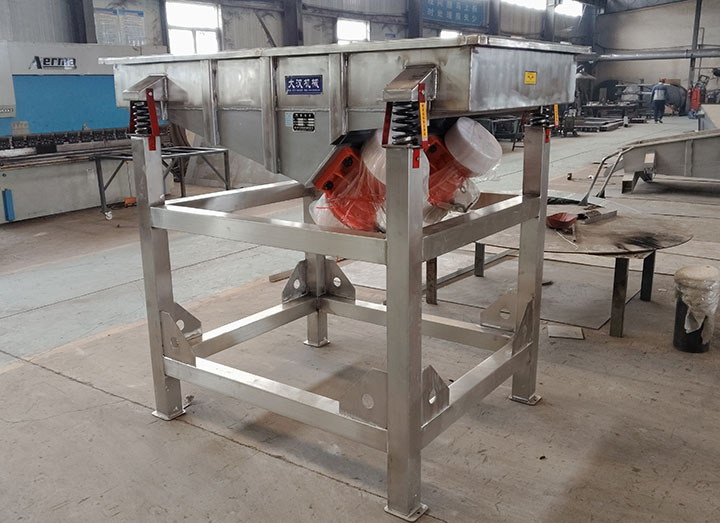
Hourly Processing Capacity: Compact units with 5 t/h capacity feature lighter steel gauges and lower motor power, keeping costs minimal. Heavy-duty models handling over 30 to 50 t/h require high-power vibration motors and enlarged screen frames, raising material and structural investments.
Material Construction Grade: Standard units built with Q235 carbon steel and anti-corrosion paint are cost-effective. Upgrading material-contact areas to 304 stainless steel withstands aggressive organic acids in compost, though it increases the initial investment.
Screening Layers: Single-deck screens (yielding 2 particle grades) feature simpler fabrication. Multi-deck designs (double or triple layers for 3+ simultaneous particle sizes) require complex precision engineering.
Anti-Clogging & Cleaning Configuration: Integrating automated mechanical brushes or specialized high-resilience polyurethane bouncing balls impacts the custom configuration cost.
Need an Exact Quotation for Your Composting Project?
Tell us your daily throughput, raw material moisture, and separation targets. Our Dahan Machinery engineers will provide a custom configuration drawing and free quote within 2 hours.
Application Scenarios of Compost Vibrating Screens
This specialized industrial sorting machinery is deployed across diverse organic waste recycling and soil conditioner manufacturing plants. Major application scenarios include:
Commercial Organic Fertilizer Plants: For impurity removal, de-lumping, and refining fermented chicken manure, cow manure, and livestock bedding before granulation or bagging.
Municipal Solid Waste (MSW) Composting Plants: Separating residual plastic bags, packaging films, and hard fragments from organic fractions after mechanical-biological treatment.
Mushroom Culture Medium Recycling: Sorting spent mushroom substrate, stripping away spent topsoil, and grading bottom plant straw debris.
Topsoil & Landscaping Soil Screening: Processing collected urban green waste, fallen leaves, and branches to produce premium urban greening substrate soil.
Agricultural Waste Disposal Centers: Screening well-rotted crop straws, cotton stalks, and biochar blends to manufacture high-efficiency greenhouse soil amendment fertilizers.
Frequently Asked Questions (FAQ)
Can a linear vibrating screen handle wet, high-moisture compost?
Yes. By installing rubber bouncing balls underneath the screen or utilizing self-cleaning slotted polyurethane mesh plates, the continuous vibration and impact effectively break surface tension, dislodging sticky compost materials with moisture levels exceeding 30% to 40%.
How often should compost screen meshes be replaced?
The standard lifespan of compost screen mesh ranges from 6 to 18 months, depending heavily on the proportion of abrasive sand, gravel, and construction debris in your raw material. Routinely checking and maintaining proper tension bar tightness helps maximize component lifespan.
Can the screen aperture and layer count be customized for different fertilizer grades?
Absolutely. Dahan Machinery provides fully customizable screen aperture designs (ranging from 1.5mm to 25mm) and multi-deck configurations (1 to 6 layers) to simultaneously separate distinct fertilizer particle sizes according to your precise market standards.
Get Your Custom Compost Screening Solution from Dahan Machinery
Choosing the right composting vibrating screen directly influences the commercial market value of your organic waste products. By correctly configuring anti-clogging mesh structures to combat high moisture and utilizing corrosion-resistant materials against organic acids, industrial processors can maintain stable, continuous production.
As an expert engineering manufacturer in industrial screening, Dahan Machinery provides free compost screening solution designs. Share your daily throughput, raw material moisture conditions, and separation requirements with us, and our engineers will formulate a tailored quotation and technical drawing for your plant.
-
Stainless Steel vs Carbon Steel Vibrating Screen
Stainless Steel vs Carbon Steel Vibrating Screen have the same structure and screening principle...
-
How to Choose the Right Sieving Mesh Size
When using a screening machine to screen materials, users often wonder what mesh size to choose...
-
Carbon steel vibrating screen price
The Carbon steel vibrating screen price is influenced by factors such as screening accuracy, processing capacity...

Email:
sale@xxdahan.com
WhatsApp:
+86 15236742901
Add:
1000m West of Forest Park,Yanjin County,Xinxiang City,Henan Province,China.