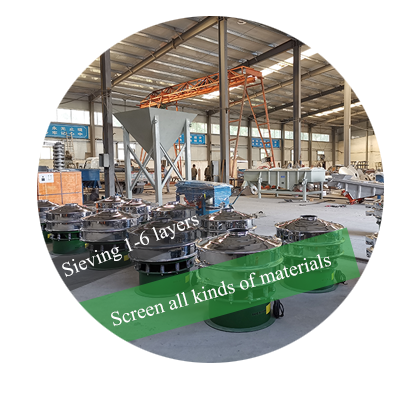
Vibrating sieve for liquid solid separation
In production processes,Vibrating sieve for liquid solid separation are used to recover valuable materials, purify liquids, or treat waste. They use mechanical vibration to force slurry materials through a screen, achieving rapid screening, filtration, dewatering, and classification. The processing capacity of these devices ranges from 50 kg/hour for small experimental machines to 15 tons/hour for large industrial machines. Power varies from 0.75 to 5.5 kW, depending on the model and load. The number of screen layers is commonly 1-3 layers, suitable for solid-liquid materials with different properties.
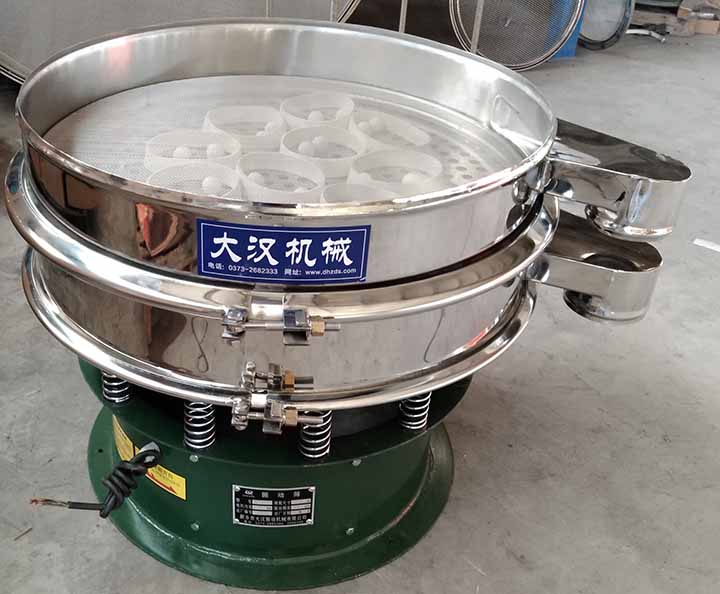
How does a vibrating sieve for liquid solid separation work?
When a slurry containing solid particles is uniformly fed onto the screen surface, the vibration of the vibrating sieve first disrupts the surface tension of the slurry, causing it to spread and thin rapidly on the screen surface, greatly increasing the chance of liquid passing through the screen. For materials with high viscosity or high solid content, the impact force generated by the vibration can break up slight agglomerates, disrupting the viscous structure of the slurry and promoting the separation of the solid and liquid phases. Simultaneously, vibration helps to "dry" the material on the screen, removing more moisture during the movement and achieving a preliminary dehydration effect.
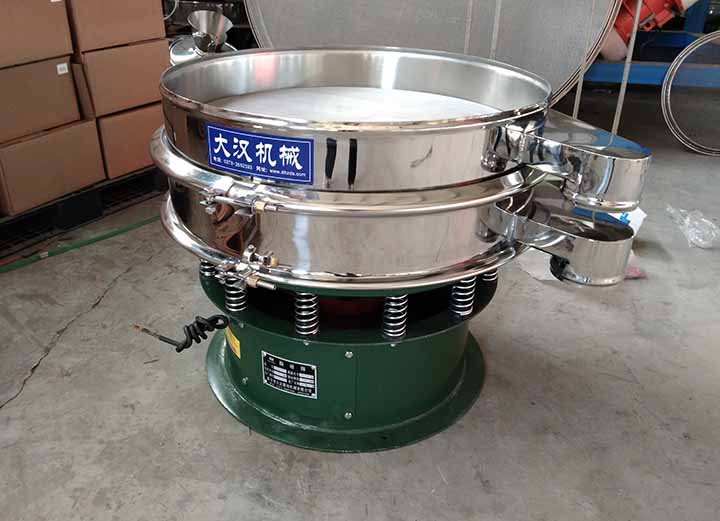
What materials is a vibrating sieve for liquid solid separation suitable for?
A vibrating sieve for liquid solid separation can be used for wet screening and grading of quartz sand and manufactured sand, separating sand and gravel products of different particle sizes and achieving mud-water separation; in starch production, it is used to separate protein and fiber from starch milk; in juice production, it is used for separating pulp and juice; in the sugar industry, it is used for filtering and clarifying sugar solutions; for slurry filtration of raw materials such as pigments, coatings, and resins, removing impurities and lumps; in wastewater treatment plants, it is used to intercept and dewater suspended solids in primary sedimentation tanks or aeration tanks; it is also used for particle size classification of ore slurries such as magnetite and ilmenite, and for dewatering and recovering coal slurry in coal preparation plants.
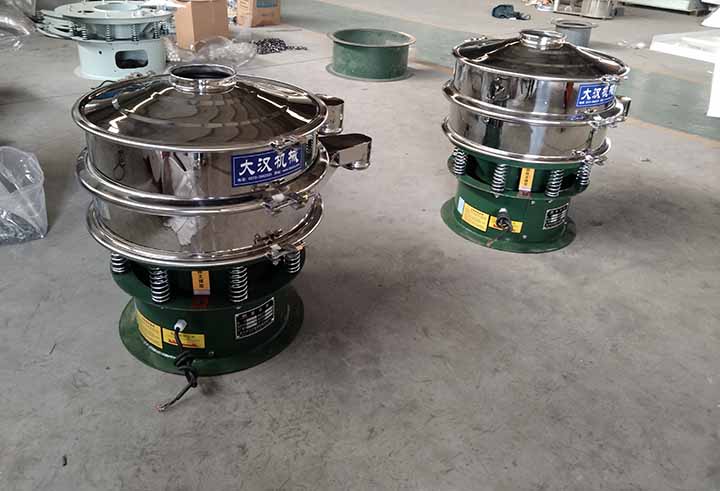
Features of Vibrating Sieves for Liquid Solid Separation
Vibrating sieves for liquid solid separation can be configured with features such as tilting discharge, automatic screen cleaning, and leak-proof sealing, depending on the state of the solid and liquid materials and the specific operating conditions. The following are common characteristics of the equipment during solid-liquid separation.
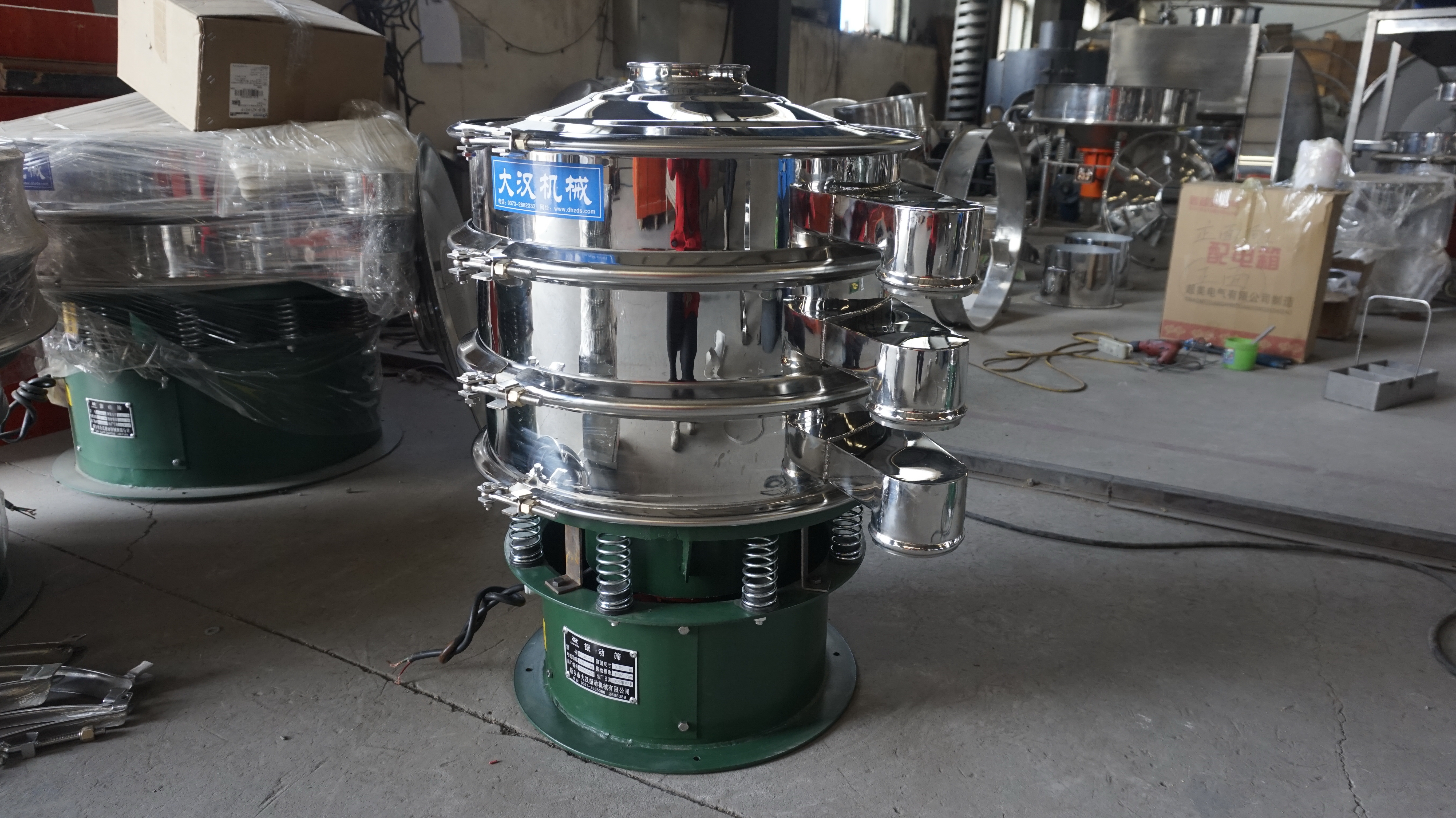
Equipment Material: Parts in contact with the material are typically made of 304 or 316L stainless steel to ensure corrosion resistance and hygiene. For less corrosive conditions, carbon steel is also an economical choice.
Equipment Motor: A vertical vibrating motor is used as the excitation source. This type of motor has a compact structure, large and adjustable excitation force. The excitation force can be changed by adjusting the angle between the eccentric blocks at both ends of the motor. The motor protection rating is typically IP55 or higher, ensuring stable operation in dusty and humid environments.
Equipment Functions: Equipped with a bouncing ball or ultrasonic screen cleaning device for strong anti-clogging; a fully enclosed structure to prevent dust escape and liquid splashing; modular design allows for quick and convenient screen replacement, greatly reducing downtime.
Screen Material: Common materials include high-strength stainless steel wire mesh and polyurethane mesh. Stainless steel wire mesh is wear-resistant and has a long service life; polyurethane mesh is known for its excellent anti-clogging and wear-resistant properties. Screens can be woven into any shape and size of mesh as needed.
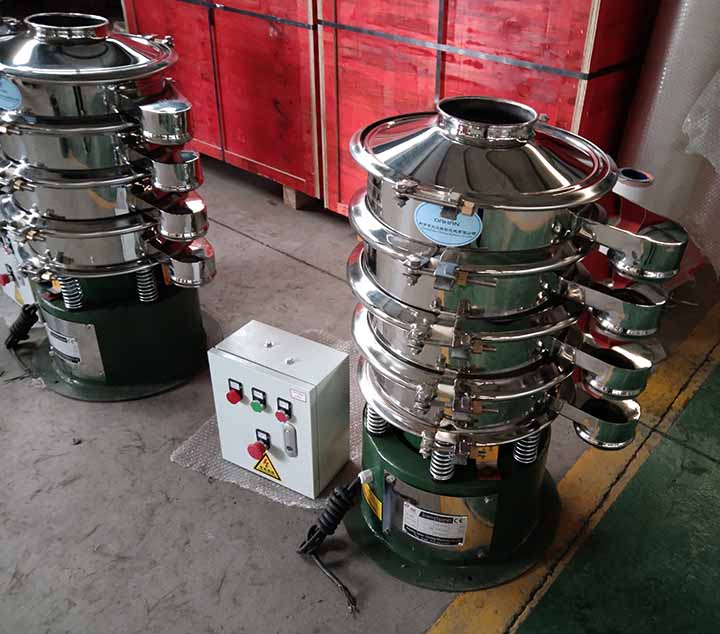
Vibrating Sieve for Liquid Solid Separation Equipment Selection
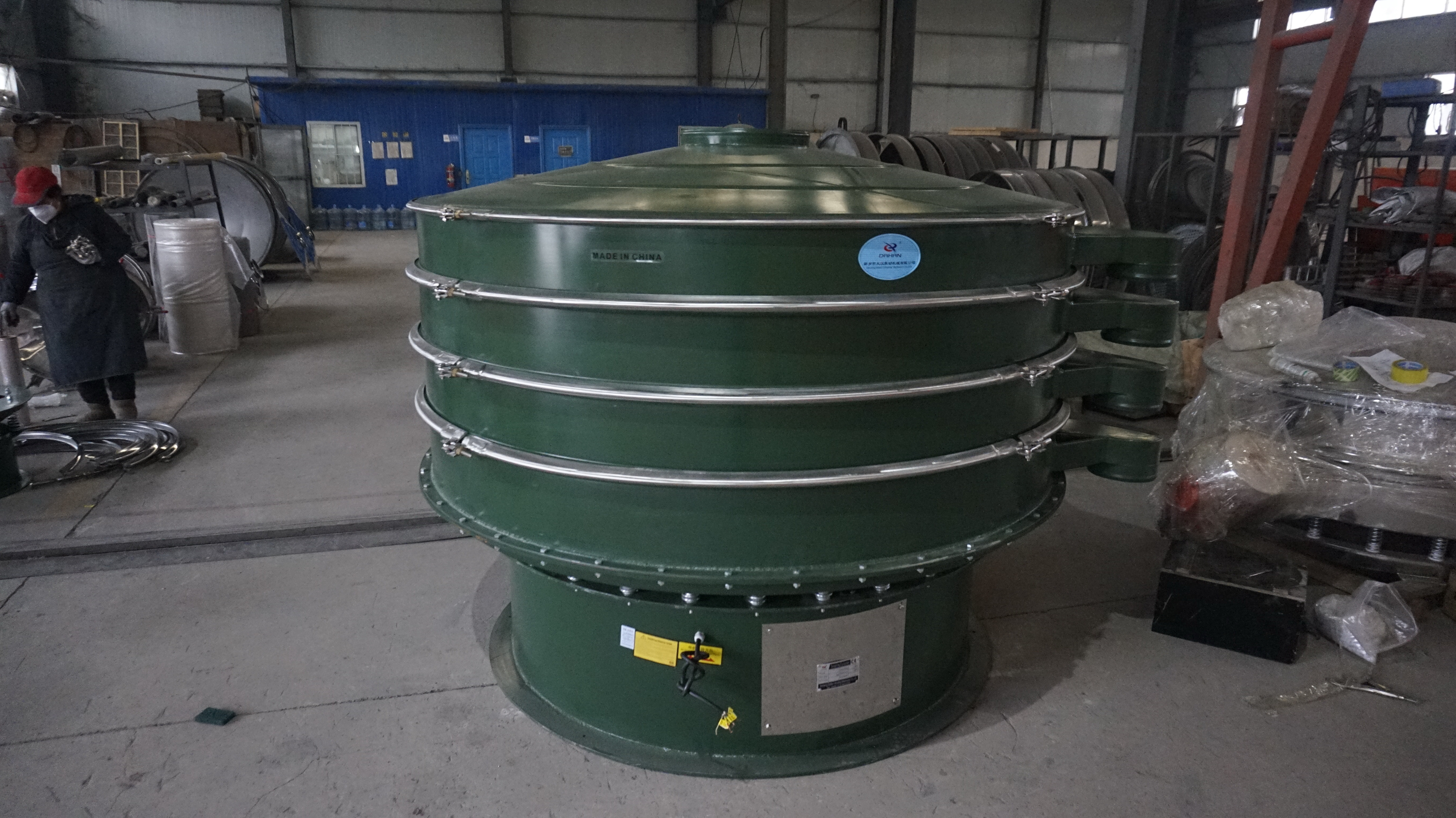
When selecting a vibrating sieve for liquid solid separation, if small-batch filtration, dewatering, and impurity removal of solid-liquid materials is required, the DH 450 filter screen can be selected. This equipment features a single-layer screen, is compact, and can be moved by installing wheels at the bottom or using a small trolley. The rotary vibrating screen, because it can be equipped with 1-5 layers of screens, can not only filter, dewater, and remove impurities, but also classify. Furthermore, equipment models range from DH-400 to DH-1800, meeting solid-liquid separation needs from small to large production volumes.
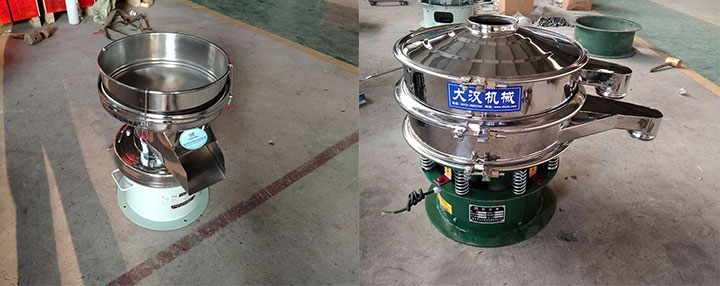
Vibrating sieves for liquid solid separation can separate solid particles into two or more products according to different particle size ranges; remove as much moisture as possible from the surface of solid particles to obtain relatively dry solid materials; remove insoluble solid impurities from liquids to obtain clean liquids; and remove small amounts of excessively coarse or unwanted impurities from slurries to protect downstream equipment or ensure the quality of the final product. While improving separation efficiency and quality, they also achieve continuous and automated production, and reduce energy consumption and maintenance costs.
-
Charcoal powder grading vibrating screen
Charcoal powder grading vibrating screen is a high-performance device used to classify charcoal powder by particle size...
-
Large vibrating screen equipment manufacturers
Xinxiang Dahan Machinery is a large-scale manufacturer specializing in the manufacture of vibrating screen equipment...
-
Different types of powder sieve machine
Dahan powder sieve machine are commonly used in vibro sifer, ultrasonic sieving machine, etc., which will be introduced in detail below...
-
What is the difference between ultrasonic sieving machine and vibratory sifter
The Ultrasonic Sieving Machine and the Vibratory Sifter belong to the same screening equipment...

Email:
sale@xxdahan.com
WhatsApp:
+86 15236742901
Add:
1000m West of Forest Park,Yanjin County,Xinxiang City,Henan Province,China.