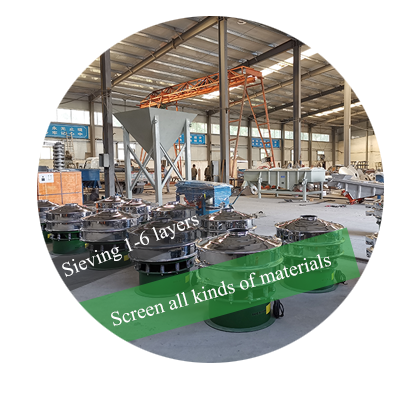
Preventing Mesh Clogging in High-Moisture Grain Screening: Practical Solutions
Understanding Screen Blinding in Wet Grain Processing
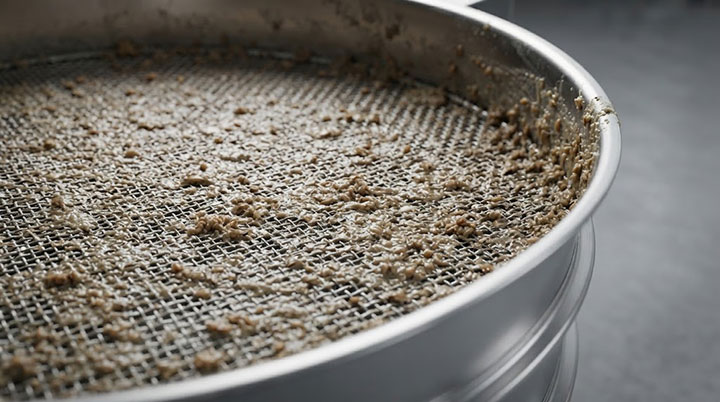
Screening grains with elevated moisture levels routinely triggers severe mesh blinding. As surface water and natural starches bind fine particles to the wire apertures, open area diminishes rapidly, forcing throughput rates down.Effectively preventing mesh clogging in high-moisture grain screening requires going beyond basic equipment cleaning. Operators must combine precise mechanical adjustments, smart feeding methods, and proper anti-clogging attachments to maintain continuous output for damp crops.
Environmental Impacts and Pre-Conditioning Solutions
Ambient humidity and seasonal temperature shifts directly alter the free moisture clinging to grain surfaces. During humid or rainy periods, hygroscopic grains absorb atmospheric moisture, aggravating particle agglomeration and speeding up mesh blinding on the vibrating screen.To counteract environmental factors before material enters the deck, facilities can integrate low-intensity pre-conditioning methods:
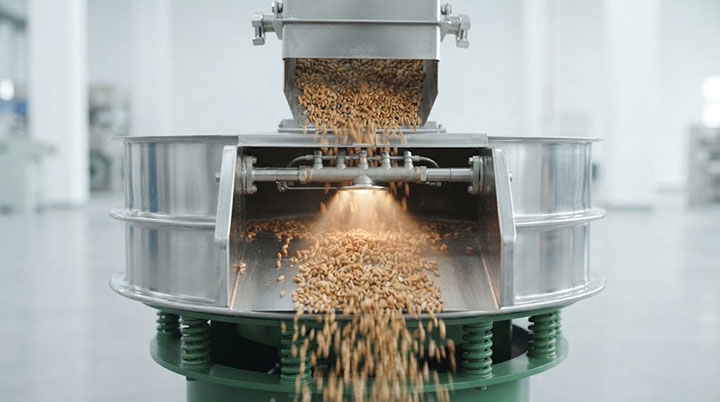
- Inflow Air Sweeping: Position a targeted warm-air knife or low-pressure sweep across the feed chute to strip surface condensation from damp kernels.
- Controlled Feed Ambient: Enclose the feed hopper and inlet zone to isolate grains from high-humidity shop floors, preventing secondary moisture uptake right before screening.
Material Feeding and Flow Control Strategies
Surging feed rates overwhelm the screening surface, forcing damp particles into the mesh apertures under excessive pressure. Consistent material distribution is critical to prevent localized overloading on the top deck.Implement these flow management steps to stabilize wet grain input:
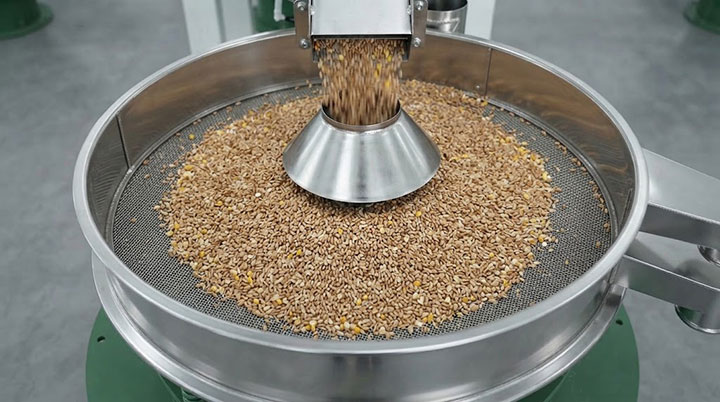
- Regulated Feeders: Use rotary valves or vibratory feeders ahead of the gyratory sifter to ensure a steady, measured curtain of grain rather than intermittent batch dumps.
- Full-Width Spreading: Direct incoming grain through a distribution cone or baffle plate so material fans out evenly across the entire screen diameter, utilizing 100 percent of the effective sieving area.
Optimizing Screen Mesh Selection and Aperture Design
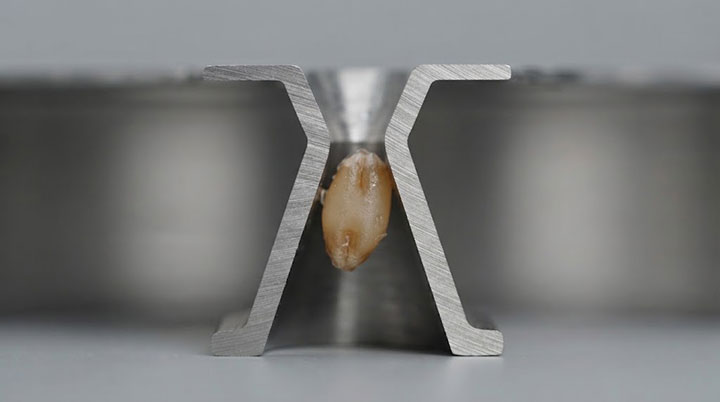
Traditional square wire mesh struggles with wet materials because sticky particles wedge firmly into sharp corners. Selecting alternative mesh constructions changes how grain interacts with the wire surface during vibration.Consider these structural modifications for damp grain screening:
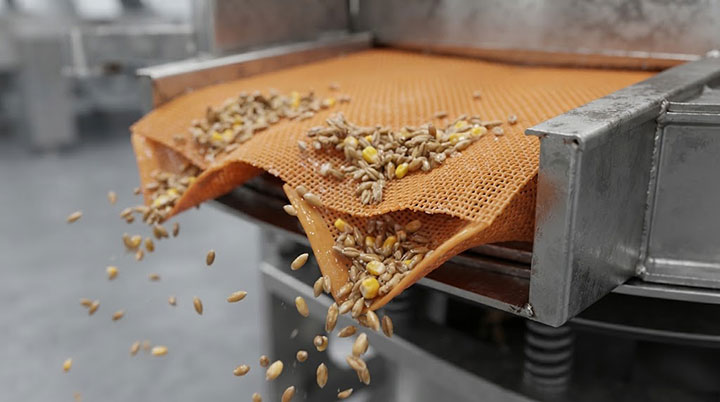
- Polyurethane and Rubber Panels: Flexible polymer meshes flex under continuous vibration, actively popping out trapped damp kernels that rigid metal wires retain.
- Tapered Aperture Geometry: Use screens featuring a slight downward expansion (wider on the bottom than the top) so that any particle passing the initial entry point cannot jam halfway through.
Integrating Mechanical Anti-Clogging Systems
Physical clearing accessories provide continuous, automated assistance to keep apertures open during high-moisture operations. Relying solely on the main centrifugal force is rarely enough when processing sticky food grains.Integrates these proven mechanical add-ons beneath the screen deck:
- Bouncing Ball De-blinding Kits: Install food-grade rubber or silicone balls inside a sub-screen bouncing tray. Continuous multi-directional vibration causes the balls to strike the underside of the mesh, instantly dislodging trapped kernels.
- Ultrasonic Conversion: Apply high-frequency, low-amplitude ultrasonic energy directly to the mesh frame. This secondary vibration breaks the surface tension holding damp fines to the wire, preventing buildup without damaging fragile grain kernels.
Fine-Tuning Vibrating Screen Operating Parameters
Incorrect motor settings and motion angles cancel out the natural self-cleaning capacity of industrial sifters. Adjusting kinetic parameters forces damp grain particles to bounce cleanly rather than smear across the mesh surface.Optimize machine settings with these adjustments:
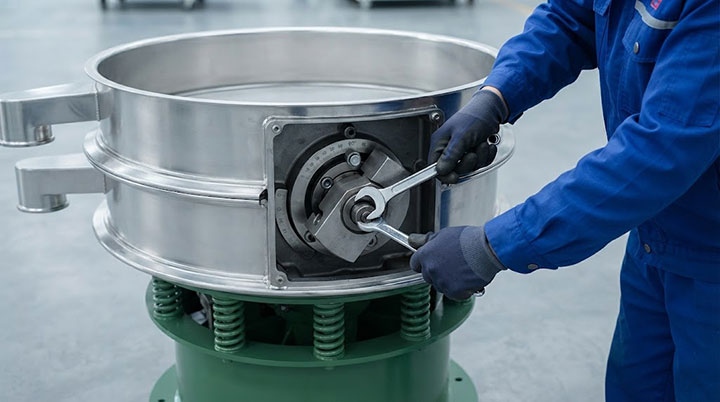
- Elevated Vertical Acceleration: Adjust the upper and lower eccentric weight angles to increase vertical throw, accelerating the upward release of wet grain clusters.
- Optimized Deck Inclination: For direct-discharge or circular vibrating screen models, slight adjustments to the discharge port angle control retention time, ensuring sticky materials exit before building up static layers.
Establishing Routine Maintenance and Inspection SOPs
Even optimized screening setups accumulate residual starch and moisture film over extended operating hours. Systematic cleaning routines prevent minor buildup from turning into total screen blinding.Maintain consistent performance with these maintenance practices:
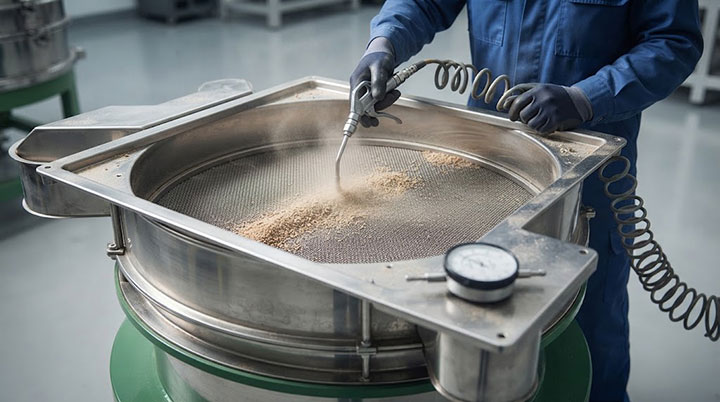
- End-of-Shift Purging: Clear all damp grain residue immediately after shutdown using safe scraping tools or compressed air before starches harden on the wire surface.
- Mesh Tension Verification: Check wire or polymer mesh tension regularly. Loose screens dampen kinetic impact and allow wet material to wrap around slack wires.
Cost-Benefit Analysis of Anti-Clogging Upgrades
Investing in anti-clogging equipment requires balancing upfront capital expenditures against long-term operational savings. Unplanned downtime for manual mesh clearing reduces daily plant capacity and increases labor costs.Evaluate upgrade returns by comparing these key factors:
- Ultrasonic Systems: Higher initial investment, but eliminates frequent production halts, reduces mesh wear, and increases overall throughput by up to 30 percent for sticky powders and damp grains.
- Polymer Meshes & Ball Trays: Cost-effective, low-maintenance retrofits that immediately lower cleaning frequency without demanding complex electrical installations.
Ensuring Food-Grade Compliance and Material Safety
Screening grains for human or animal consumption demands strict adherence to food safety regulations. Any anti-clogging upgrade or replacement part in the product zone must prevent chemical contamination and physical wear debris.Verify compliance during equipment selection with these standards:
- Certified Food-Grade Elastomers: Ensure all bouncing balls, sealing gaskets, and wiper blades utilize FDA-compliant or EU-approved silicone, natural rubber, or polyurethane materials.
- Non-Toxic Surface Finishes: Use mirror-polished stainless steel (SUS304 or SUS316L) for all contact frames and bowls to remove microscopic crevices where moisture and grain residue could harbor bacteria.
Frequently Asked Questions (FAQs)
Q: Can ultrasonic systems completely solve mesh blinding for extremely wet grains?
A: Ultrasonic conversion significantly reduces blinding by breaking surface tension, but extremely high-moisture grains exceeding critical saturation limits may still require pre-drying or auxiliary ball trays for optimal performance.
Q: How often should bounce balls be replaced in high-capacity grain sifters?
A: Food-grade rubber or silicone bouncing balls typically require inspection every 3 to 6 months. Replacement frequency depends on daily operating hours and the abrasiveness of the grain variety being processed.
Q: Are polyurethane screens better than stainless steel wire mesh for damp products?
A: Polymer and polyurethane meshes provide superior flex action that actively pops out sticky particles, making them more effective than rigid wire mesh for high-moisture and cohesive grain applications.
Ready to Optimize Your High-Moisture Grain Screening Line?
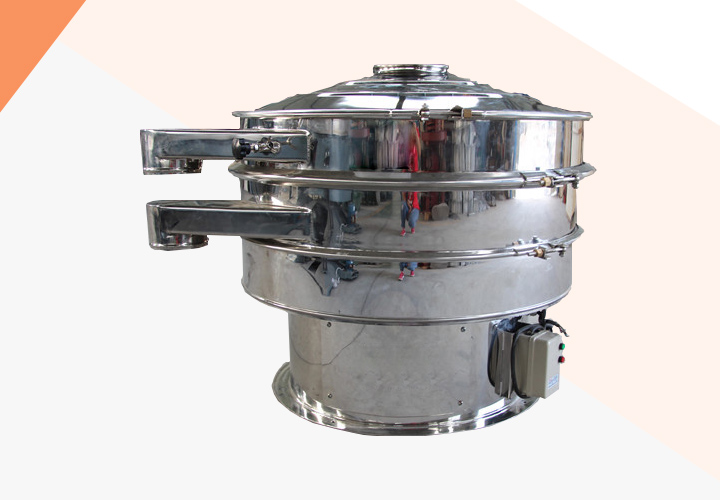
Dealing with stubborn mesh blinding, low throughput, or sticky agricultural materials? Dahan Machinery engineers custom stainless steel rotary vibrating screens equipped with advanced anti-clogging attachments, ultrasonic systems, and food-grade polymer panels tailored to your exact material specs.

Email:
sale@xxdahan.com
WhatsApp:
+86 15236742901
Add:
1000m West of Forest Park,Yanjin County,Xinxiang City,Henan Province,China.