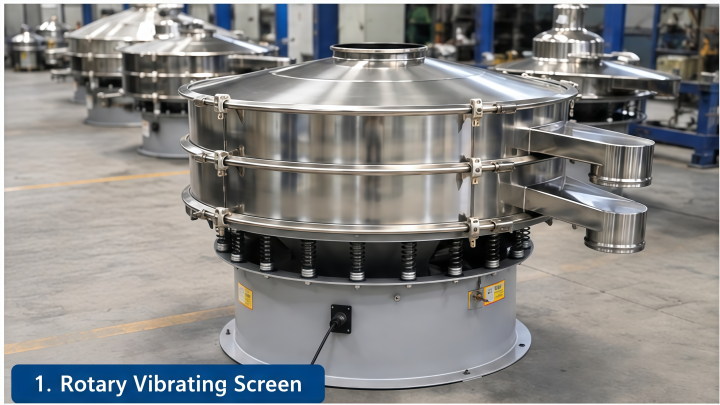
Rotary Vibrating Screen Maintenance: Extend Screen Mesh Lifespan
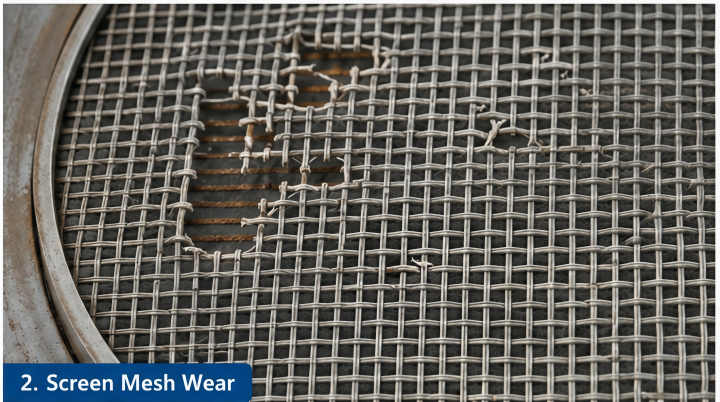
Screen mesh life is mainly affected by material abrasiveness, feed distribution, mesh tension, blinding, cleaning and operating conditions. Regular inspection can help identify premature wear before it affects screening accuracy or causes unnecessary mesh replacement.
What Affects Screen Mesh Lifespan?
Material Characteristics
Abrasive materials gradually wear mesh wires through repeated contact. Fine, sticky or moist materials are more likely to cause blinding and material buildup.Sharp or irregular particles may create more concentrated contact and accelerate local wear. Mesh selection should therefore consider the actual material and required particle size.
Mesh Specification
Mesh aperture and wire construction should match the required separation and operating conditions. Very fine mesh can provide precise separation but may be more sensitive to blinding and wear in demanding applications.
Feed Distribution
Uneven feeding can concentrate material impact on one section of the screen. Stable material distribution helps reduce localized wear and keeps the screening surface more evenly loaded.
Screen Tension
Proper tension is essential. Loose or uneven mesh can move excessively during vibration, develop wrinkles or sagging, and experience premature fatigue. The goal is stable, uniform tension rather than maximum tension.
Mesh Blinding
Blinding occurs when particles block screen openings and reduce the effective open area. Fine particles, moisture and sticky materials can contribute to this problem.
What Causes Rotary Vibrating Screen Mesh Wear?
A Rotary Vibrating Screen Maintenance Guide: Extending Screen Mesh Lifespan should identify the cause of wear before replacing the mesh.
Concentrated Feed Impact
Repeated impact near the feed point can cause localized wear. Check feed distribution and feed rate before changing the mesh specification.
Loose or Uneven Mesh
Sagging, wrinkles or unstable mesh movement may indicate insufficient tension or a fixing problem. Check the mesh, clamps and supporting surfaces.
Incorrect Mesh Selection
An unsuitable mesh may cause rapid wear, frequent blinding or poor screening accuracy. Selection should consider material properties, target separation and operating conditions.
Inadequate Cleaning
Material buildup reduces the usable screening area. If blinding occurs repeatedly, review the mesh specification and cleaning method.
Loose Fixing Components
Clamps, bolts, gaskets and other fixing components should remain secure. Vibration can gradually loosen components and affect mesh stability.
How to Read Screen Mesh Wear Patterns?
One of the most useful parts of a Rotary Vibrating Screen Maintenance Guide: Extending Screen Mesh Lifespan is identifying where the mesh is wearing.
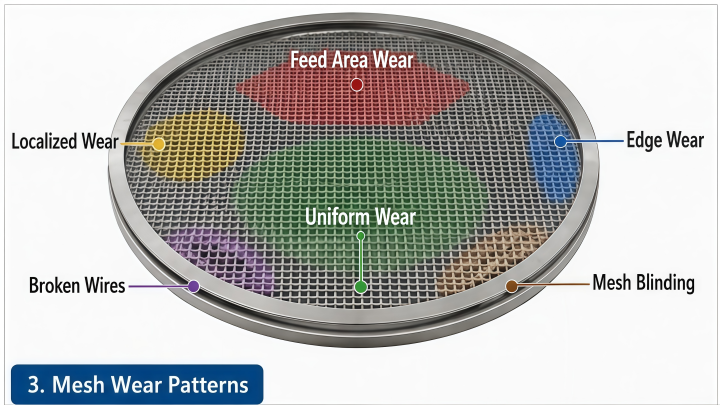
A repeated wear location can reveal an operating or installation problem. Correcting the cause before replacing the mesh can help prevent repeated failure.
| Wear Pattern | Possible Cause | What to Check |
|---|---|---|
| Wear near feed area | Concentrated material impact | Feed distribution and feed rate |
| Wear in one local section | Uneven loading | Material flow |
| Excessive edge wear | Fixing or tension problem | Clamps and mesh tension |
| Uniform surface wear | Normal abrasion | Mesh specification and material |
| Isolated broken wires | Fatigue or local impact | Mesh support and installation |
| Frequent blocked openings | Fine, sticky or moist material | Cleaning or deblinding |
How to Maintain a Rotary Vibrating Screen?
A practical maintenance routine should focus on the conditions that directly affect mesh performance.
Inspect the Mesh
Check for broken wires, tears, excessive wear, deformation and material buildup. Pay particular attention to localized wear.
Check Mesh Tension
The mesh should remain flat and stable during operation. Inspect for sagging, wrinkles and loose sections.
Clean Before Severe Buildup
Remove accumulated particles before blinding becomes extensive. For fine or difficult materials, an appropriate cleaning or deblinding method can help maintain usable screen openings.
Check Clamps and Seals
Inspect clamps, gaskets and sealing surfaces for looseness, cracking, deformation or material buildup.
Monitor Vibration
Abnormal noise or unusual vibration should be investigated promptly. Check accessible fasteners and supporting components when operating conditions change unexpectedly.
How to Extend Screen Mesh Lifespan in Daily Operation?
Match the Mesh to the Application: Choose the mesh according to material, target separation and operating conditions.
Keep Feed Distribution Stable: Avoid concentrating material on one small section of the screen whenever possible.
Maintain Uniform Tension: Keep the mesh flat and properly secured. Stable and even support is more important than maximum tension.
Control Mesh Blinding: Remove buildup before blocked openings become widespread and select the cleaning method according to material behavior.
Track Wear Patterns: Record the wear location, operating hours and processed material. Repeated wear in the same area can help identify a recurring cause.
Recommended Maintenance Schedule
A Rotary Vibrating Screen Maintenance Guide: Extending Screen Mesh Lifespan should use inspection intervals as practical references rather than fixed replacement deadlines.
| Frequency | Main Checks | Action |
|---|---|---|
| Before or after operation | Mesh condition and buildup | Clean and inspect |
| Weekly | Tension, clamps and seals | Adjust or tighten |
| Monthly | Motor, springs, fasteners and frame | Inspect operating condition |
| Periodically | Overall machine and mesh | Detailed inspection |
Inspection frequency should be increased for abrasive, sticky, wet or difficult-to-screen materials.
When Should You Replace the Screen Mesh?
Mesh should be replaced according to its actual condition rather than a universal time period.
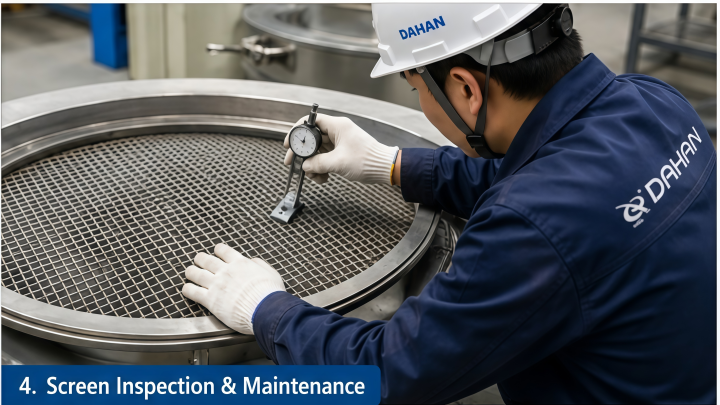
Typical replacement indicators include:
Broken wires or visible tears
Severe localized wear
Permanent deformation
Repeated loss of tension
Persistent blinding
Inability to maintain the required screening accuracy. Keep a simple record of replacement date, operating hours, processed material and main wear location. This can help identify recurring problems and establish a more practical replacement interval.
Before installing new mesh, inspect and clean the supporting and fixing surfaces. If the original cause of failure remains, the replacement mesh may experience the same problem again.
Rotary Vibrating Screen Mesh Troubleshooting
| Problem | Possible Cause | Recommended Action |
|---|---|---|
| Mesh wears too quickly | Abrasive material or concentrated feeding | Review feed and mesh specification |
| Mesh becomes loose | Improper tension or vibration | Check fixing and tension |
| Mesh blocks frequently | Fine, sticky or moist material | Improve cleaning or deblinding |
| Screening efficiency drops | Blinding, damage or uneven feeding | Clean and inspect |
| Localized mesh damage | Uneven material impact | Check feed distribution |
| Abnormal vibration | Loose or worn components | Stop and inspect |
| Material leakage | Damaged mesh or seals | Inspect fixing and sealing |
The correct approach is to identify the underlying cause before replacing the mesh.
Frequently Asked Questions
Why does rotary vibrating screen mesh wear out quickly?
Common causes include abrasive material, concentrated feeding, incorrect mesh selection, loose tension, material buildup and abnormal operating conditions.
When should I replace the screen mesh?
Replace it when there is serious wear, broken wires, visible damage, permanent deformation, repeated tension loss or insufficient screening accuracy.
Can cleaning extend mesh lifespan?
Proper cleaning can reduce buildup and blinding, but the cleaning method should match the mesh and material characteristics.
Conclusion
The key to extending screen mesh lifespan is to control the factors that cause premature wear: mesh selection, feed distribution, tension, blinding, cleaning and regular inspection.Monitoring where wear occurs can also help identify recurring operating problems before another mesh fails.
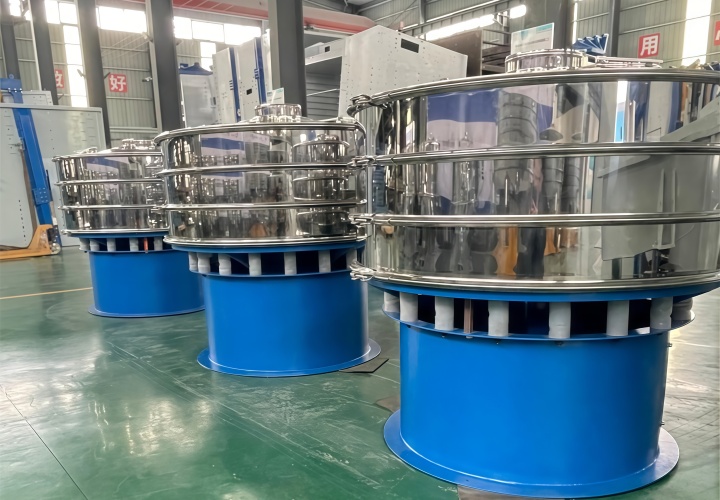
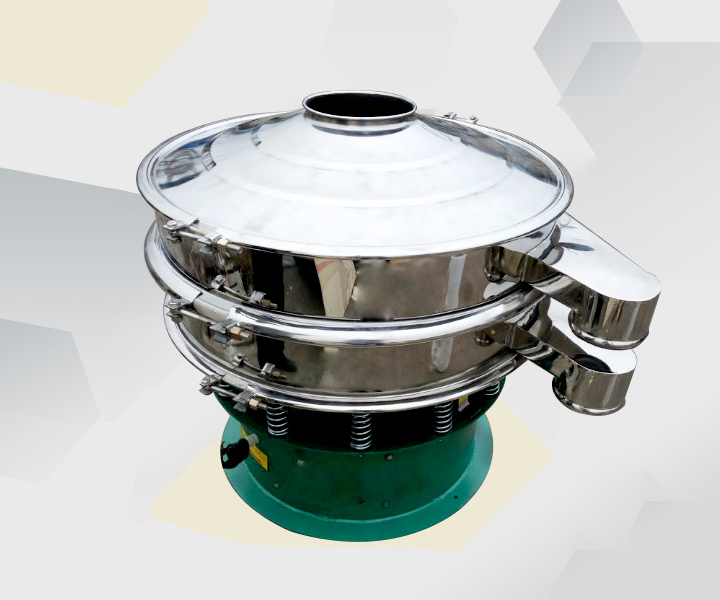
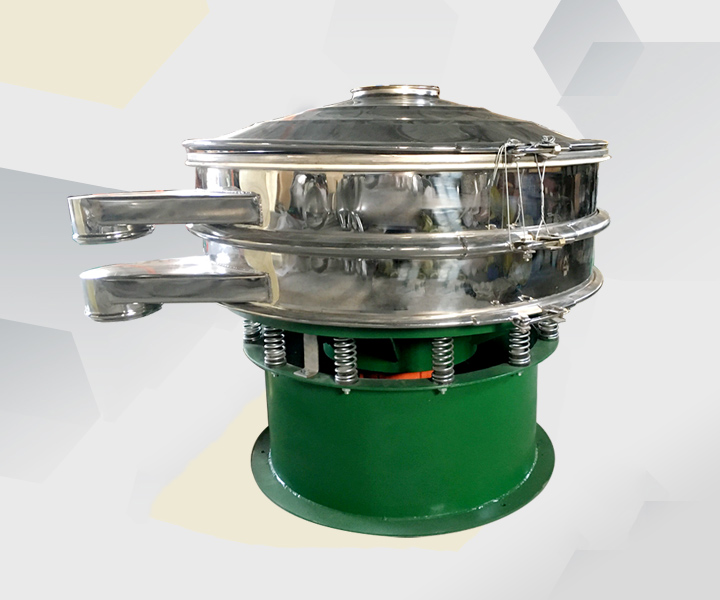
Need help selecting a rotary vibrating screen? Send the material name, feed capacity, target particle size, required screening layers, and whether the material is dry, wet, sticky or abrasive. Dahan can use these details to recommend a suitable screen, mesh configuration and cleaning arrangement.
When repeated mesh failure occurs, do not look only at the mesh. Check the feed condition, tension, fixing system and cleaning method to identify the underlying cause. Dahan can also help review the screening requirements when mesh wear, blinding or separation performance remains difficult to control.
Dahan recommends evaluating the complete screening condition before changing mesh specifications, especially when the same wear pattern repeatedly appears in the same location.
-
Preventing Mesh Clogging in High-Moisture Grain Screening: Practical Solutions
Screening grains with elevated moisture levels routinely triggers severe mesh blinding. ...
-
5 Essential Tips for Selecting the Right Vibro Sifter for Fine Powders
Selecting the right vibro sifter for fine powders requires more than choosing a machine with a fine mesh or a high advertised capacity. ...
-
How to Prevent Mesh Blinding During Fine Powder Sifting for Higher Yields
In fine powder processing, mesh blinding (also known as screen pegging or clogging) is one of the most persistent operational hurdles...

Email:
sale@xxdahan.com
WhatsApp:
+86 15236742901
Add:
1000m West of Forest Park,Yanjin County,Xinxiang City,Henan Province,China.