5 Essential Tips for Selecting the Right Vibro Sifter for Fine Powders
Selecting the right vibro sifter for fine powders requires more than choosing a machine with a fine mesh or a high advertised capacity. Fine powders can have very different screening behaviors depending on particle size distribution, moisture content, flowability, electrostatic properties and tendency to block the screen mesh. A suitable vibro sifter should match the powder characteristics, required separation accuracy, production capacity and cleaning requirements. This guide explains the 5 Essential Tips for Selecting the Right Vibro Sifter for Fine Powders to help buyers choose a suitable screening solution for industrial powder applications.
Understand Powder Characteristics Before Selecting a Vibro Sifter
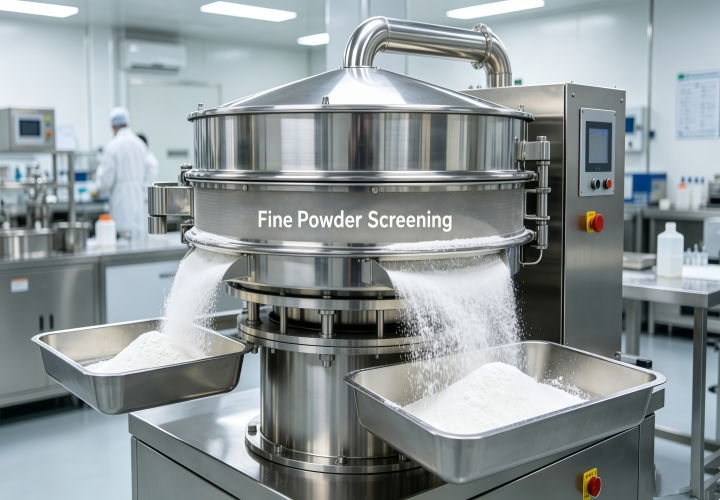
A free‑flowing powder may achieve stable screening with a standard configuration, while sticky or electrostatic powders may require additional cleaning solutions. Therefore, powder characteristics should be evaluated before selecting the machine size, mesh and cleaning method.
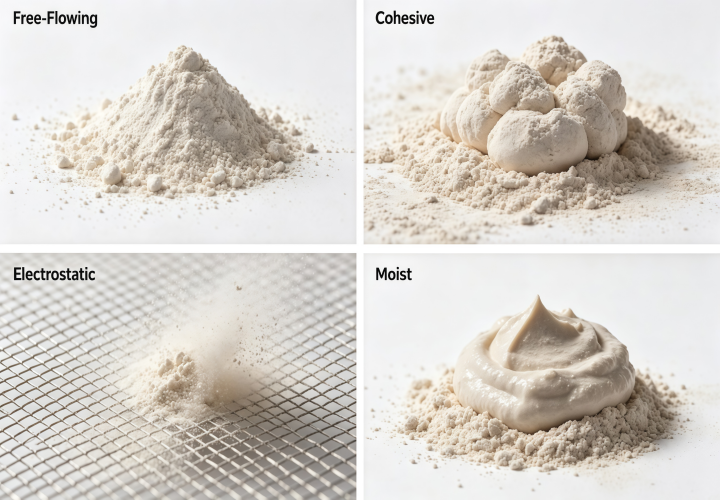
The first step when selecting a vibro sifter for fine powders is understanding the material behavior. Particle size alone cannot determine screening performance. Powders with similar particle sizes may require different screening configurations because of differences in moisture, density, cohesion and electrostatic properties.
| Powder Property | Influence on Screening |
|---|---|
| Particle size distribution | Determines separation accuracy and suitable mesh selection |
| Flowability | Affects material movement across the screen surface |
| Moisture content | May increase adhesion and cause screen blockage |
| Cohesion | Can cause powder agglomeration and uneven feeding |
| Electrostatic behavior | May cause fine particles to attach to the mesh |
| Bulk density | Influences feeding rate and required screen area |
Select the Correct Mesh According to the Screening Target
Mesh selection is one of the most important factors when choosing a vibro sifter for fine powders. A smaller mesh opening does not always provide better screening performance. Although a finer mesh can improve separation accuracy, it may also reduce throughput and increase the risk of mesh blinding.
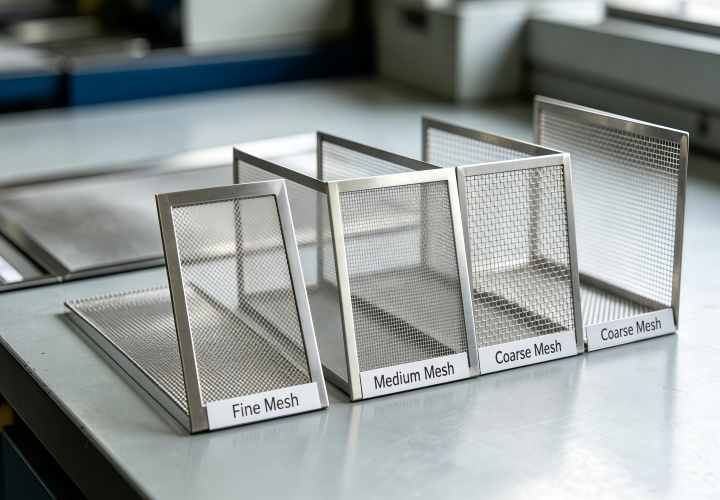
Before selecting the screen mesh, confirm the actual screening purpose:
| Screening Purpose | Typical Requirement |
|---|---|
| Classification | Separating powder into different particle size ranges |
| Impurity removal | Removing oversized particles from finished powder |
| Dedusting | Removing unwanted fine particles |
| Final screening | Ensuring consistent product quality |
Mesh selection should consider: Target particle size, Mesh opening, Wire diameter, Open area, Powder characteristics, Required screening efficiency.
For fine powders, the best mesh choice is a balance between separation accuracy and production efficiency. A smaller mesh opening may improve screening precision, but selecting a mesh that is too fine can reduce capacity and increase cleaning frequency.
Match Vibro Sifter Capacity With Actual Production Requirements
The third point in the 5 Essential Tips for Selecting the Right Vibro Sifter for Fine Powders is selecting the correct capacity. Many buyers compare machines only by maximum output values. However, actual screening capacity depends on material characteristics and operating conditions.
| Factor | Effect on Screening Capacity |
|---|---|
| Required output | Determines suitable machine diameter and screen area |
| Mesh opening | Fine mesh usually reduces material passing speed |
| Bulk density | Affects feeding volume and loading conditions |
| Powder flowability | Poor flow reduces screening efficiency |
| Number of decks | Determines the number of particle‑size fractions |
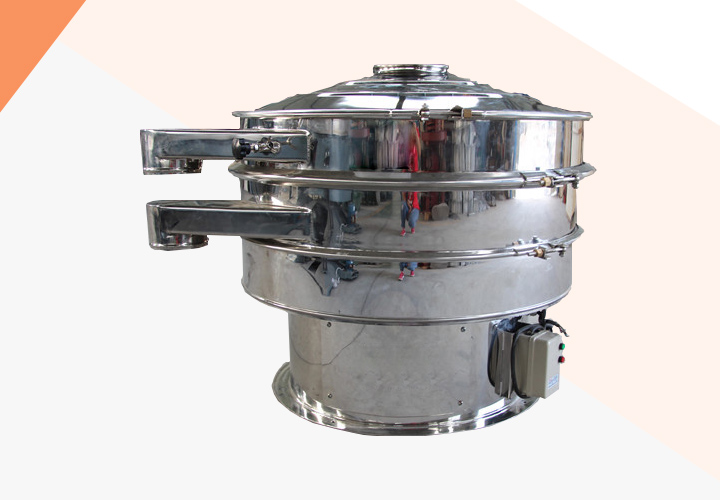
Single deck vibro sifter: Suitable for basic impurity removal or simple screening processes.
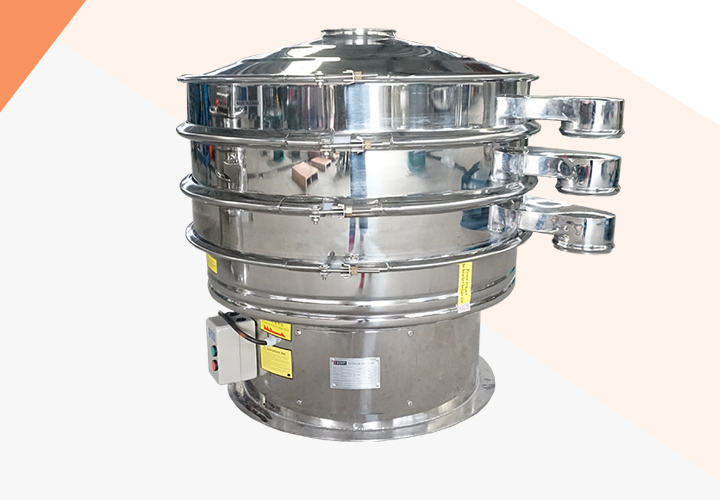
Multi‑deck vibro sifter: Suitable for applications requiring separation into multiple particle‑size ranges.
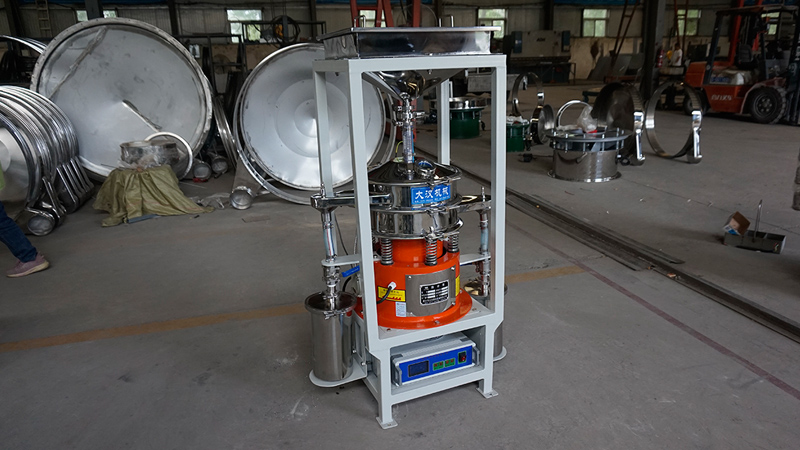
Ultrasonic vibro sifter: Suitable for fine powders where mesh blockage or particle adhesion affects screening performance.
The correct machine size should be selected according to actual production requirements rather than only the highest specification value.
Evaluate Mesh Blinding and Cleaning Requirements
Mesh blinding is one of the most common challenges when screening fine powders. It occurs when particles block the screen openings, reducing the effective screening area and lowering production efficiency.
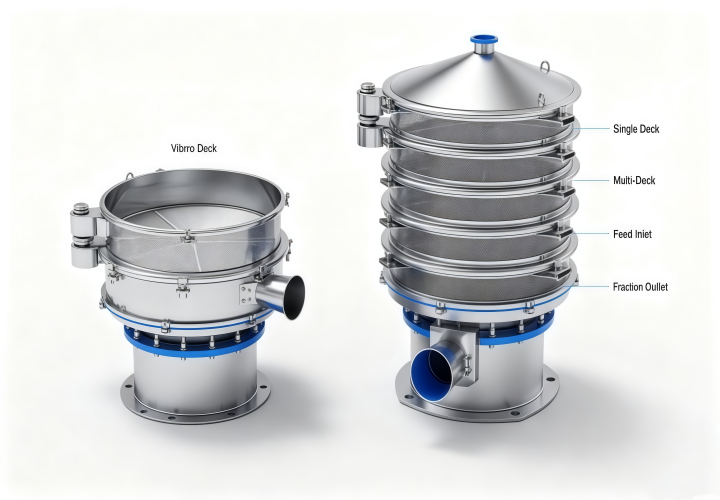
The risk increases when the powder is: Extremely fine, Sticky or cohesive, Moisture‑sensitive, Electrostatic, Containing many particles close to the separation size.
| Question | Purpose |
|---|---|
| Does the mesh block during operation? | Determine whether additional cleaning is required |
| Does capacity decrease over time? | Identify progressive mesh blockage |
| Is manual cleaning frequent? | Evaluate production efficiency |
| Does the powder have strong adhesion? | Select suitable deblinding technology |
For difficult fine powder applications, ultrasonic deblinding can help reduce particle adhesion and maintain open screen areas during operation. However, ultrasonic cleaning is not required for every application. The cleaning method should be selected according to the actual powder characteristics instead of adding additional equipment unnecessarily.
Confirm Machine Material and Configuration Requirements
The fifth factor when selecting a vibro sifter for fine powders is choosing suitable construction materials and machine configuration. The machine material should match the powder characteristics, cleaning requirements and industry standards.
| Application Requirement | Recommended Consideration |
|---|---|
| General industrial powder | Carbon steel or standard construction |
| Food and pharmaceutical powder | SUS304 or SUS316 stainless steel |
| Corrosive materials | Higher corrosion resistance materials |
| Frequent cleaning | Easy screen replacement and maintenance access |
| Continuous production | Stable structure and reliable operation |
Important configuration factors include: Screen diameter, Number of decks, Screen cleaning method, Contact material, Maintenance accessibility. A suitable machine configuration can reduce downtime and improve long‑term screening stability.
Typical Vibro Sifter Configuration for Fine Powder Screening
The final configuration should be selected according to powder properties, required capacity and separation objectives.
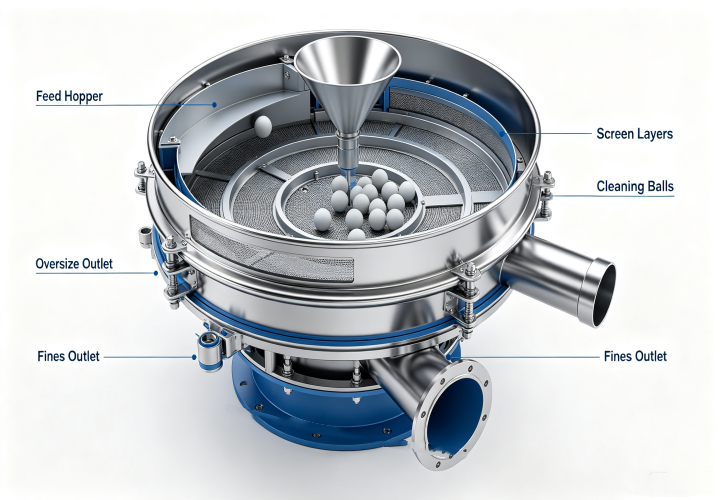
Before selecting equipment, buyers should confirm the basic technical requirements.
| Parameter | Typical Range |
|---|---|
| Screen diameter | 400‑1800 mm |
| Deck number | 1‑5 decks |
| Screen mesh | 2‑500 mesh |
| Contact material | Carbon steel, SUS304, SUS316 |
| Cleaning method | Bouncing balls or ultrasonic cleaning |
Applications of Vibro Sifter for Fine Powders
Different industries may require different materials, sealing requirements and cleaning solutions.
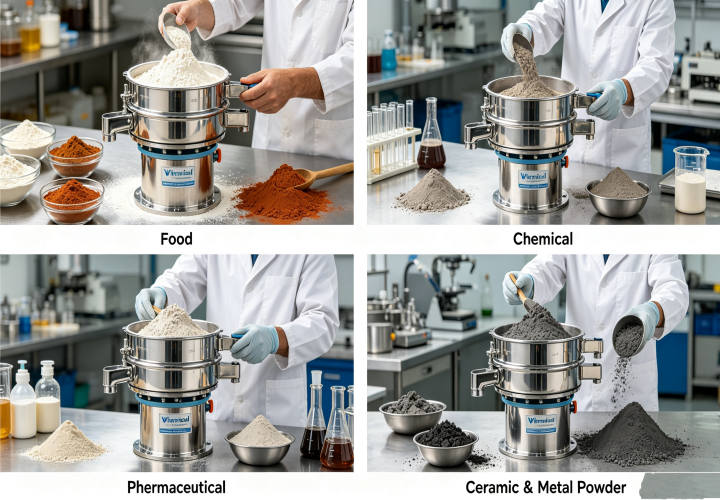
A properly selected vibro sifter for fine powders can be used in many industries.
| Industry | Typical Materials |
|---|---|
| Food industry | Flour, starch, sugar, spices |
| Chemical industry | Pigments, additives, resin powders |
| Pharmaceutical industry | Fine powder ingredients and excipients |
| Ceramic industry | Ceramic raw materials |
| Metal powder processing | Graphite powder, alloy powder and metal powders |
Information Required Before Requesting a Vibro Sifter Quote
Providing complete application information helps determine a more suitable vibro sifter configuration.
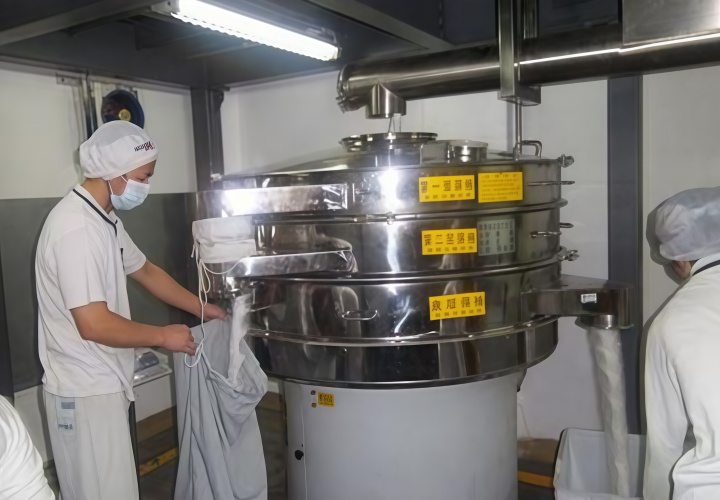
Before selecting a suitable machine, prepare the following information:
| Information | Example |
|---|---|
| Material type | Powder name |
| Particle size | μm or mesh |
| Screening purpose | Classification or impurity removal |
| Required capacity | kg/h |
| Powder behavior | Free‑flowing, sticky or electrostatic |
| Machine material | SUS304, SUS316 or carbon steel |
Common Mistakes When Selecting a Vibro Sifter for Fine Powders
Choosing Only by Capacity
A larger machine does not always provide better screening results. If the mesh size and powder characteristics are unsuitable, actual production may still be limited.
Selecting the Finest Mesh Available
A finer mesh can improve separation accuracy but may reduce throughput and increase cleaning requirements.
Ignoring Powder Characteristics
Powders with similar particle sizes may require different screening solutions because of differences in moisture, density and flowability.
Adding Features Without a Real Requirement
Additional cleaning systems should solve actual production problems rather than increase equipment cost unnecessarily.
FAQ
What is the best vibro sifter for fine powders?
The suitable vibro sifter depends on particle size, powder characteristics, required capacity, separation accuracy and cleaning requirements. There is no single configuration suitable for every fine powder application.
Do all fine powders require ultrasonic deblinding?
No. Many free‑flowing powders can be screened with standard cleaning methods. Ultrasonic deblinding is mainly considered when mesh blockage affects screening efficiency.
How does mesh size affect vibro sifter capacity?
A smaller mesh opening can improve separation accuracy but may reduce throughput. The correct balance depends on powder properties, screen area and required screening performance.
What information should be provided before selecting a vibro sifter?
Important information includes material type, particle size, capacity requirement, screening purpose, powder characteristics and construction requirements.
Conclusion
Selecting the right vibro sifter for fine powders requires matching the machine configuration with actual material characteristics and production requirements. The 5 Essential Tips for Selecting the Right Vibro Sifter for Fine Powders are: Understand powder characteristics before selection. Select the correct mesh according to the separation target. Match capacity with actual production conditions. Evaluate mesh blinding and cleaning requirements. Confirm suitable material and machine configuration.
A properly selected vibro sifter can improve screening stability, reduce maintenance problems and provide consistent powder quality. For a suitable recommendation, provide your powder type, particle size, required capacity and screening objective.
How to Calculate Vibro Sifter Capacity and Yield? Formula & Selection Guide
Calculating How to Calculate Vibro Sifter Capacity and Yield? requires more than checking screen diameter or machine specifications...
Preventing Mesh Clogging in High-Moisture Grain Screening: Practical Solutions
Screening grains with elevated moisture levels routinely triggers severe mesh blinding...
How to Choose Between Stainless Steel and Synthetic Mesh for Polymer Screening
In polymer extrusion and compounding, the screen mesh sits between the screw and the die...

Email:
sale@xxdahan.com
WhatsApp:
+86 15236742901
Add:
1000m West of Forest Park,Yanjin County,Xinxiang City,Henan Province,China.