How to Prevent Mesh Blinding During Fine Powder Sifting for Higher Yields
In fine powder processing, mesh blinding (also known as screen pegging or clogging) is one of the most persistent operational hurdles. When particles wedge into or coat the sieve openings, the effective screening area drastically shrinks. This directly results in plummeting throughput, compromised product purity, and unnecessary production downtime.For plant operators, ignoring screen blinding translates to higher energy consumption per ton, frequent production halts for manual cleaning, and increased labor costs. Understanding these is the first step toward choosing the right anti-blinding device for your sifting equipment.
Why Fine Powder Clings to Your Sieve Screens
To prevent mesh blinding, you first need to understand the root causes. Fine powders often behave unpredictably due to specific physical and environmental factors:
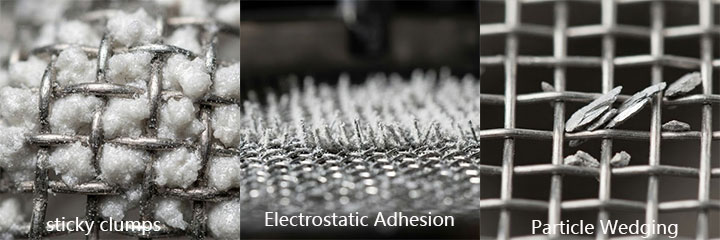
- Moisture Content: Even a slight amount of moisture causes fine particles to agglomerate, forming sticky clumps that wedge firmly into mesh openings.
- Electrostatic Charges: Continuous friction during dry screening generates static electricity, causing powders to cling stubbornly to the wire mesh surface.
- Particle Shape & Size: Flaky, fibrous, or near-mesh-sized particles easily lodge into the apertures like tiny wedges, blocking subsequent material flow.
Anti-Blinding Solutions by Equipment Type
Different industrial sifting machines require tailored anti-blinding configurations to maintain high separation efficiency:
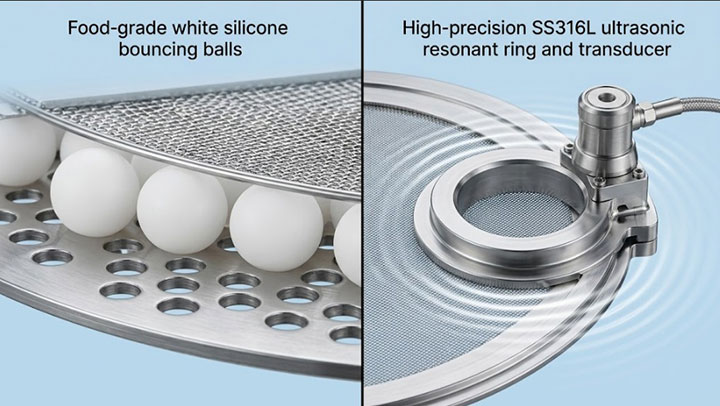
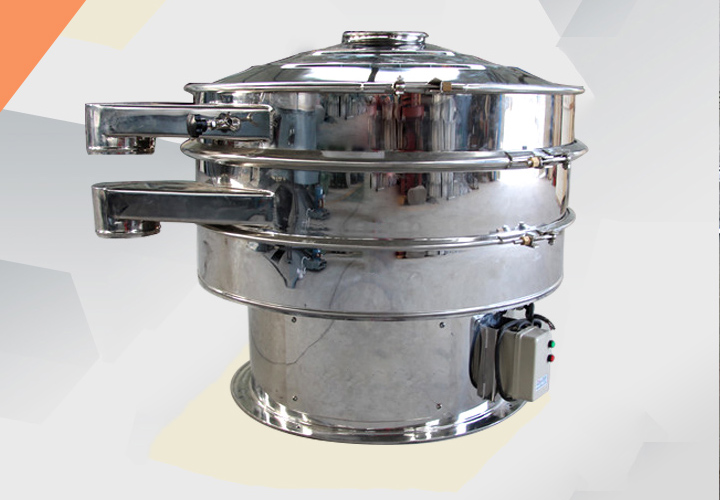
- Rotary Vibratory Sifters: Equipped with bouncing polyurethane or rubber balls beneath the screen deck. As the machine vibrates, these balls strike the underside of the mesh, dislodging stuck particles.
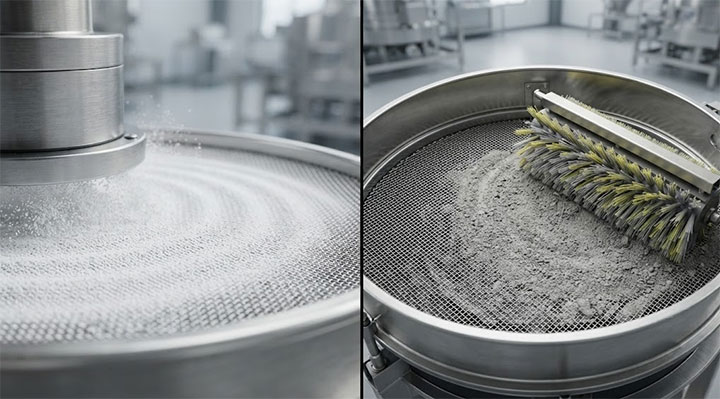
- Ultrasonic Vibratory Sifters: Ideal for ultra-fine powders (often 400 mesh and above). A high-frequency, low-amplitude ultrasonic wave is applied directly to the screen, significantly reducing static friction and breaking particle agglomeration.
- Tumbler Screeners: Utilizing a gentle, multi-dimensional rocking motion combined with optional rotating brushes or bouncing cleaning rings, making them perfect for fragile or high-capacity grading applications.
Matching Materials to the Right Anti-Blinding System
Different fine powders demand specific anti-blinding strategies in real-world plant operations. For instance, screening ultra-fine titanium dioxide or sticky pharmaceutical powders (often exceeding 400 mesh) typically fails with standard mechanical bouncing balls alone; these materials require the high-frequency energy of an ultrasonic sifter to prevent immediate blinding. Conversely, high-capacity, abrasive mineral powders benefit more from the gentle, multi-directional rocking of tumbler screeners equipped with specialized cleaning brushes.
How to Optimize Sifting Parameters & Equipment Setup
Beyond choosing the right equipment, fine-tuning operational parameters and mechanical setup plays a vital role in preventing screen blinding:
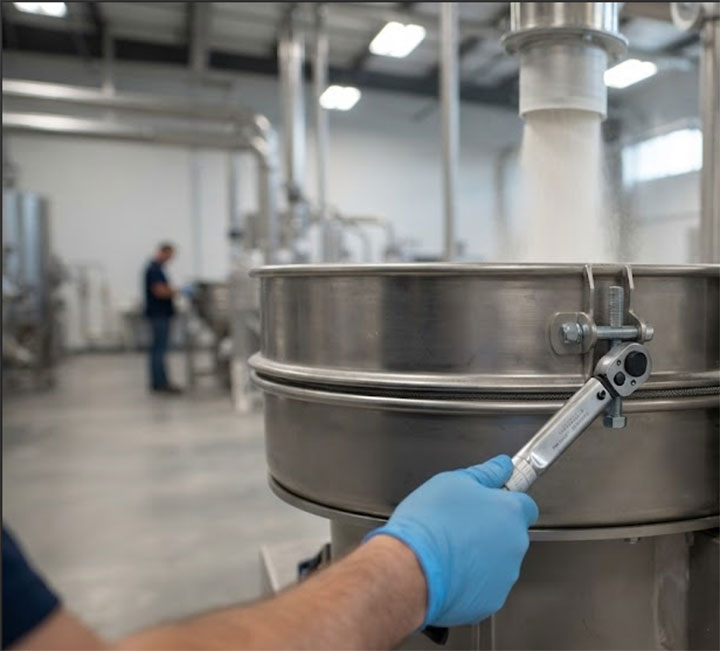
- Maintain Proper Screen Tension: A loose wire mesh causes particles to rub against slack wires, accelerating particle wedging and wear. Ensure the mesh is evenly and firmly tensioned.
- Adjust Motor Angles and Feed Rates: Calibrate the eccentric weights on your vibratory motor to control the material's residence time and trajectory on the screen. Avoid overloading the feeder, which forces un-sifted powder to blanket the mesh.
Routine Maintenance and Mesh Cleaning Protocols
Preventative care and structured maintenance routines ensure your screening media stays clear and extends overall equipment lifespan:
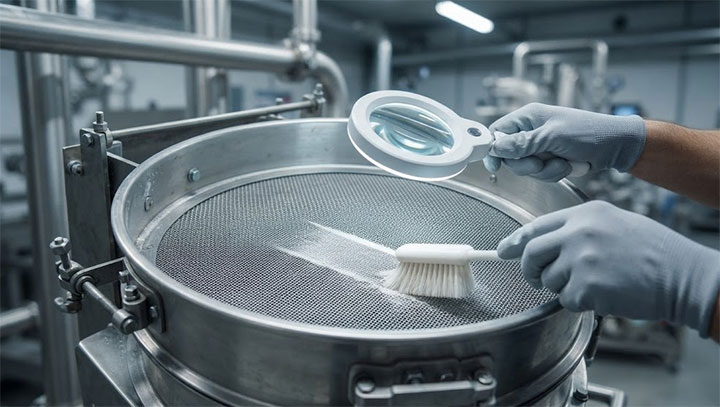
- Establish Inspection Schedules: Regularly inspect sieve decks for early signs of wear, localized blinding, or damaged mesh wires before they cause production shutdowns.
- Safe Cleaning Practices: Use appropriate methods (such as soft brushes or compressed air) to clear residual powder during routine changeovers, avoiding sharp metal tools that can puncture or distort the fine mesh.
Frequently Asked Questions (FAQ)
What is the best method to stop mesh blinding for sticky powders?
For sticky or high-moisture fine powders, integrating an ultrasonic screening system or using specialized bouncing cleaning rings/balls under the screen is generally the most effective way to break agglomeration and keep mesh openings clear.
How often should industrial sieve screens be inspected?
It is recommended to inspect screen tension and check for early signs of blinding or wire wear during every routine material changeover or at least on a weekly basis, depending on your production intensity.
Can ultrasonic systems damage fine wire mesh?
No. When properly installed, ultrasonic screening systems apply high-frequency, low-amplitude energy that transfers smoothly across the mesh surface without causing structural damage or shortening the lifespan of standard wire cloth.
Choosing the Right Anti-Blinding Setup for Your Plant
By selecting the right screening equipment and configuring custom anti-blinding solutions tailored to your unique material characteristics, you can ensure long-term throughput stability. Contact our engineering team today to discuss your specific powder requirements and receive a customized screening solution.
-
How to Choose the Right Sieving Mesh Size
When using a screening machine to screen materials, users often wonder what mesh size to choose...
-
Powder sifter machine graphite powder
Powder sifter machine graphite powder is a screening device used for fine grading of graphite powder...
-
Swing Vibrating Screen Screening Petroleum Coke Powder
The Swing Vibrating Screen Screening Petroleum Coke Powder is designed to process fine, dusty, and potentially statically and sticky materials like petroleum coke powder...

Email:
sale@xxdahan.com
WhatsApp:
+86 15236742901
Add:
1000m West of Forest Park,Yanjin County,Xinxiang City,Henan Province,China.