How to Prevent Oxidation & Mesh Blinding in Micron-Sized Tin Powder Screening?
Micron-sized tin powder can present two screening challenges at the same time: oxidation from air exposure and progressive mesh blinding. How to prevent oxidation or mesh blinding of micron-sized tin powder during screening depends on controlling the screening atmosphere while maintaining enough effective mesh area for stable particle passage.
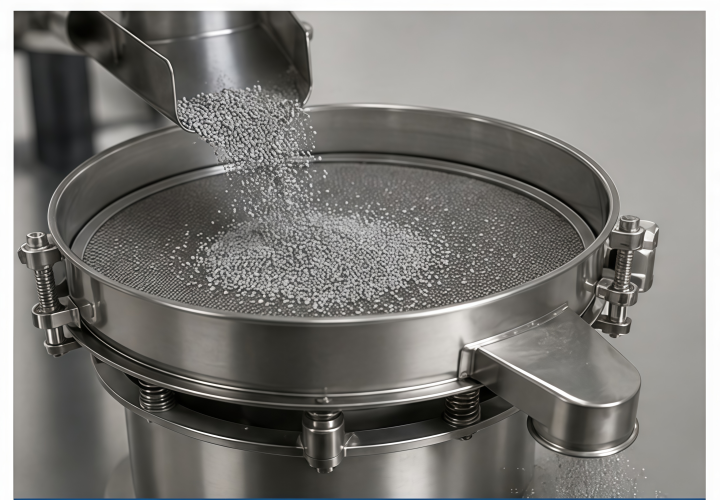
For oxidation-sensitive powder, sealed screening can reduce unnecessary contact with ambient air. Where an inert atmosphere is required, nitrogen or argon can be introduced according to the process specification. When fine particles adhere to the mesh or block small openings, ultrasonic deblinding can help maintain usable screening area.
The target aperture, particle-size distribution, feed loading, powder condition and atmospheric requirements should be evaluated together.
Quick Answer: How Can Micron-Sized Tin Powder Be Screened More Reliably?
The practical approach to how to prevent oxidation or mesh blinding of micron-sized tin powder during screening is to address the two problems separately.
For oxidation, minimize unnecessary air exposure and use controlled inert-gas protection when required.
For mesh blinding, select an appropriate aperture, control feed loading and use ultrasonic deblinding when fine-particle adhesion or blockage limits screening performance.
When both problems occur, a closed screening system combining inert-gas protection with ultrasonic deblinding can be evaluated.
The objective is stable separation, low powder loss and consistent screen performance rather than simply increasing vibration or feed rate.
Why Is Micron-Sized Tin Powder Difficult to Screen?
As the target aperture becomes smaller, fine particles are more likely to reduce the effective open area of the mesh through adhesion, blockage or agglomeration.Fine tin powder screening at approximately 32 μm illustrates this challenge. At very fine sizes, limited screen open area can affect throughput and powder recovery, making mesh management particularly important for valuable metal powders.
Fine-Particle Adhesion: Micron-sized particles can adhere to screen wires and gradually cover mesh openings. As buildup increases, effective open area and screening capacity can decline.
Near-Size Particle Blockage: Particles close to the target aperture can enter openings and remain there, progressively reducing the available screening area.
Agglomeration and Electrostatic Effects: Fine powder may form soft agglomerates or experience electrostatic attraction, increasing the amount of material retained on the mesh.
Excessive Screen Loading: A fine mesh cannot compensate indefinitely for excessive feed loading. Too much material on a limited screening area can accelerate blinding.
What Causes Oxidation During Tin Powder Screening?
Oxidation risk should be considered across the complete powder path, including feeding, screening, discharge, transfer and collection.
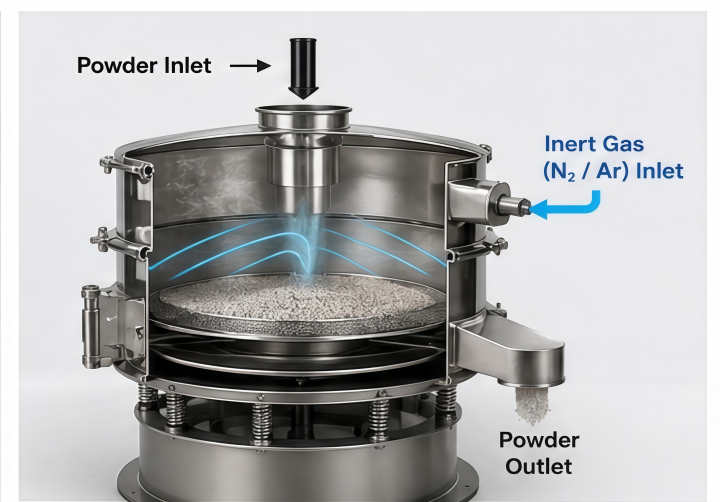
A sealed screening chamber may provide limited protection if the powder is exposed to ambient air before entering or after leaving the chamber. Therefore, how to prevent oxidation or mesh blinding of micron-sized tin powder during screening should begin with the actual atmospheric requirement for the material.
Practical Process Controls
Sealed feeding: Reduce uncontrolled air exchange during powder loading.
Closed screening chamber: Keep the powder inside a controlled enclosure during screening.
Controlled inert gas: Use nitrogen or argon where an inert atmosphere is required.
Sealed collection: Limit unnecessary air exposure after separation.
Oxygen monitoring: Consider monitoring when a defined oxygen condition is part of the process specification.
Inert-gas protection reduces oxygen exposure but should not be treated as a universal guarantee of zero oxidation. The required oxygen condition should be established from the material and process requirements.
How to Reduce Oxidation During Tin Powder Screening
A practical way to reduce oxidation risk is to simplify the powder path and minimize unnecessary exposure.
Minimize Open Handling
Repeated opening of containers or screening equipment creates additional exposure points. A more enclosed process makes atmospheric control easier.
Use Inert Gas When Required
Nitrogen or argon can reduce the presence of ambient air inside the screening chamber. Gas selection, purge method and operating conditions should follow the powder and process specification.
Minimize Unnecessary Transfer
Unnecessary material transfer and prolonged handling should be minimized when oxidation control and powder cleanliness are important.
How to Prevent Mesh Blinding of Micron-Sized Tin Powder?
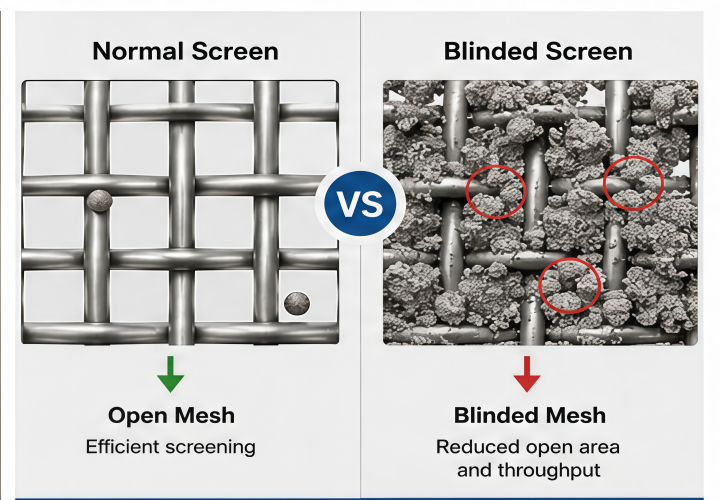
Mesh blinding is primarily an effective-open-area problem.
| Problem | Likely Cause | What to Check |
|---|---|---|
| Mesh blinds quickly | Near-size particles blocking openings | Target aperture and particle-size distribution |
| Fine powder coats the mesh | Adhesion or electrostatic effects | Powder condition and mesh surface |
| Capacity falls during operation | Excessive screen loading | Feed rate and material distribution |
| Agglomerates remain on the screen | Cohesive powder condition | Powder preparation and storage |
| Screening becomes unstable | Progressive loss of effective open area | Mesh condition and deblinding performance |
A screen can have the correct nominal aperture and still lose capacity when part of its effective open area becomes inactive.
For valuable metal powders, progressive blinding can affect both throughput and powder recovery. Fine tin powder around 32 μm is a representative case where maintaining usable screen area is particularly important.
How Should the Screen Mesh Be Selected?
Mesh number alone is not enough for micron-sized tin powder.The key variables include target aperture, particle-size distribution, wire diameter, effective open area and powder behavior.Target aperture: Match the opening to the required particle-size cut.
Particle-size distribution: A large proportion of particles near the target aperture can increase blockage risk.
Wire diameter: Wire size affects opening size and available open area.
Effective open area: Practical capacity depends on how much of the mesh remains available during operation.
Powder behavior: Adhesion, cohesion and electrostatic effects can influence actual screening performance.
Mesh selection should therefore be based on the complete screening condition rather than mesh number alone.
How Does Ultrasonic Deblinding Help?
Ultrasonic deblinding applies high-frequency vibration to the screen mesh. It helps reduce fine-particle adhesion and blockage, allowing more of the mesh surface to remain active during screening.Ultrasonic deblinding is particularly useful when fine particles, near-size particles or electrostatic effects are causing progressive mesh blinding. It is widely used for difficult fine-powder applications where conventional screening becomes unstable because of screen blockage.However, ultrasonic deblinding is a mesh-management method, not a substitute for correct process design.
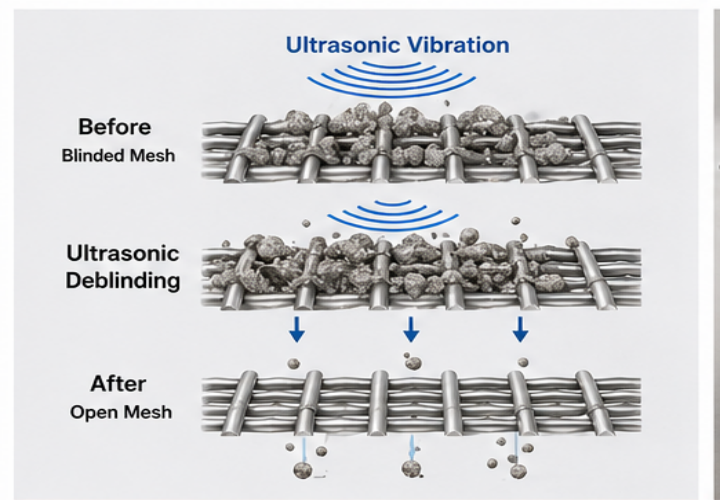
Can Ultrasonic Deblinding Alone Solve Tin Powder Mesh Blinding?
Not always.If the screen is overloaded, the aperture is unsuitable or the powder contains excessive agglomerates, increasing ultrasonic intensity alone may not solve the problem.Check feed loading, aperture, powder condition and mesh condition before changing ultrasonic settings.
When Should Ultrasonic Deblinding and Inert Gas Be Used Together?
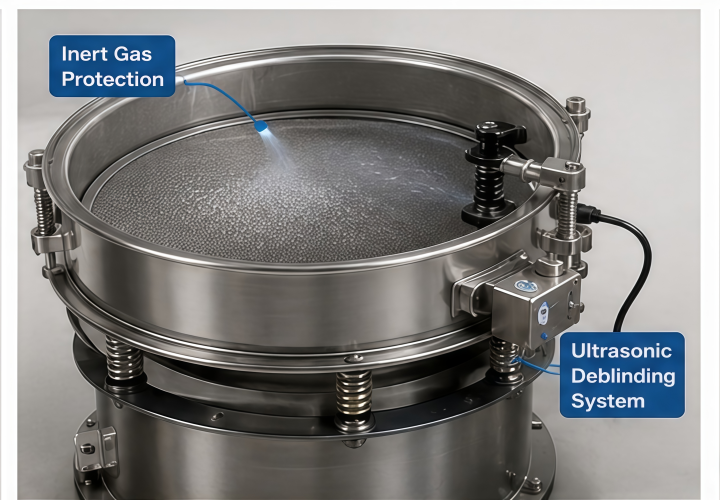
The two technologies address different process requirements.
| Main Problem | First Priority | Suitable Approach |
|---|---|---|
| Oxidation concern | Control air exposure | Closed inert-gas screening |
| Mesh blinding | Maintain effective open area | Ultrasonic deblinding |
| Fine-particle adhesion | Stabilize mesh performance | Ultrasonic deblinding + feed control |
| Oxidation and mesh blinding | Control atmosphere and mesh | Inert gas + ultrasonic deblinding |
| Powder loss during recovery | Control transfer and collection | Sealed powder recovery |
Inert gas controls the screening atmosphere, while ultrasonic deblinding helps control fine-mesh blockage.
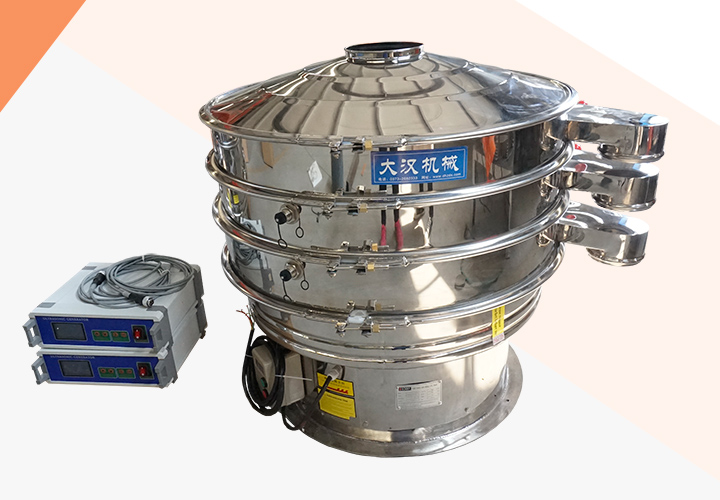
When both problems are present, the two approaches can be combined. Metal-powder screening systems are available that use inert-gas protection together with ultrasonic screen cleaning for fine powder processing.
Example: Fine Tin Powder Screening at 32 μmConsider a process in which micron-sized tin powder must be classified through a fine aperture while oxygen exposure is controlled.
First establish the target cut size, particle-size distribution, required capacity and atmospheric requirement.
If the mesh begins to blind during stable feeding, check the effective open area, near-size particles and powder condition. If fine-particle adhesion is the main cause, ultrasonic deblinding can be evaluated.
If oxidation control is also required, feeding, screening, discharge and collection should be treated as one controlled material path.
Recommended Screening Configuration
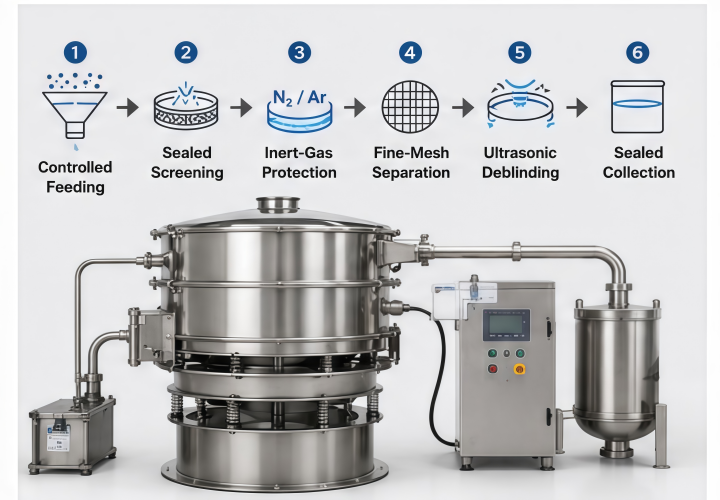
For applications requiring both fine separation and atmospheric control, a practical configuration may include controlled feeding, a sealed screening chamber, an inert-gas inlet where required, ultrasonic mesh deblinding and enclosed powder collection.
Final aperture, screen area, feed rate, gas condition and ultrasonic settings should be confirmed from the powder characteristics and process requirements.
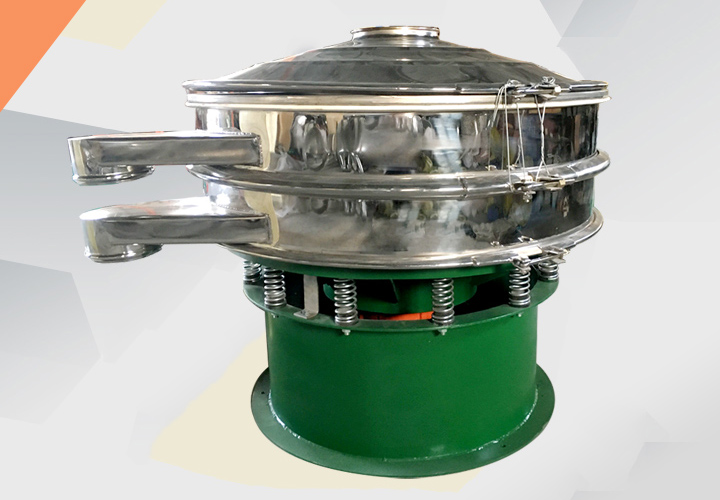
A metal powder sieving machine can be configured with fine-mesh screening, ultrasonic deblinding and inert-gas protection for applications where mesh blockage and oxygen exposure must both be controlled.
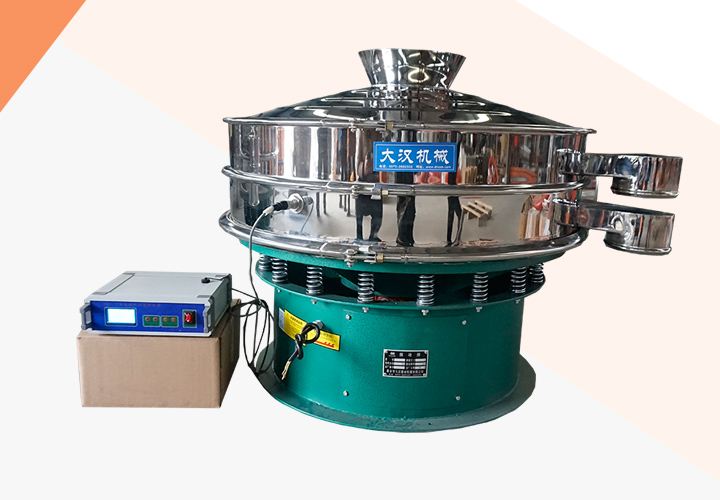
For micron-sized tin powder, Dahan can evaluate a screening configuration combining fine-mesh screening, ultrasonic deblinding and inert-gas protection where appropriate.
Troubleshooting Tin Powder Screening Problems
| Symptom | First Check | Possible Action |
|---|---|---|
| Mesh blinds quickly | Feed loading and aperture | Reduce loading or evaluate ultrasonic deblinding |
| Oxidation increases | Sealing and gas condition | Inspect the complete powder path |
| Capacity declines | Effective open area | Check mesh blockage and feed distribution |
FAQ Can Micron-Sized Tin Powder Be Screened in Open Air?
It depends on the powder specification and required oxidation control. Where oxygen exposure must be minimized, a closed system with controlled atmosphere is more appropriate.
Does Ultrasonic Deblinding Prevent Tin Powder Oxidation?
No. Ultrasonic deblinding addresses mesh blockage and particle adhesion. Oxidation control requires management of air exposure and, where necessary, an inert atmosphere.
What Mesh Should Be Used for Micron-Sized Tin Powder?
The screen should be selected according to target aperture, particle-size distribution, wire diameter, effective open area and powder behavior rather than mesh number alone.
Can Ultrasonic Deblinding and Inert-Gas Protection Be Used Together?
Yes. They address different process requirements and can be combined when fine-mesh stability and atmospheric control are both important.
Need a Screening Recommendation?
To evaluate a micron-sized tin powder screening application, provide the particle-size distribution, target cut size, required capacity, planned mesh aperture, powder condition and oxygen-control requirement.These parameters help determine whether conventional screening, ultrasonic deblinding, inert-gas protection or a combined configuration is appropriate.For fine metal powder applications, a screening test can help verify mesh performance and atmospheric-control requirements before finalizing the equipment configuration.
-
Preventing Mesh Clogging in High-Moisture Grain Screening: Practical Solutions
Screening grains with elevated moisture levels routinely triggers severe mesh blinding. ...
-
5 Essential Tips for Selecting the Right Vibro Sifter for Fine Powders
Selecting the right vibro sifter for fine powders requires more than choosing a machine with a fine mesh or a high advertised capacity. ...
-
How to Prevent Static in Plastic Powder Sieving: Proven Methods & Equipment
When processing fine plastic resins like PE, PVC, or ABS, fine particles frequently cling to the stainless steel mesh instead of passing through...

Email:
sale@xxdahan.com
WhatsApp:
+86 15236742901
Add:
1000m West of Forest Park,Yanjin County,Xinxiang City,Henan Province,China.