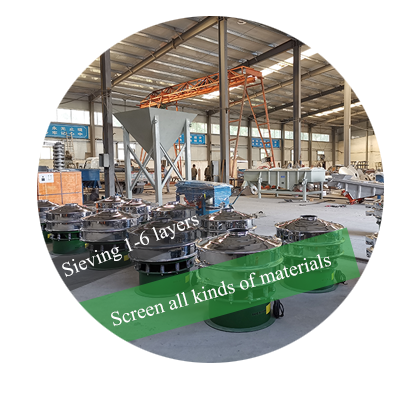
How to Choose the Right Material for a Vibrating Screen
Choosing the right material for a vibrating screen depends on more than the material name. The screened material, moisture exposure, corrosion risk, cleaning method, and material-contact requirements can all affect which construction is suitable.Carbon steel and stainless steel are both widely used for vibrating screens, but they are suited to different operating conditions. In some applications, the entire machine can use one material, while in others, stainless steel may only be required for parts that contact the screened material.
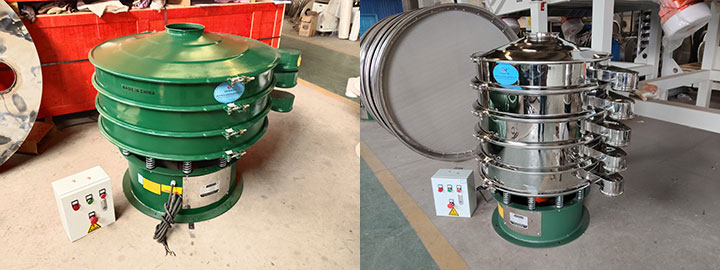
This guide explains how to choose the right material for a vibrating screen based on actual operating conditions, including dry and wet materials, corrosive substances, cleaning requirements, and stainless steel grade selection.
What Factors Determine the Material of a Vibrating Screen?
The material of a vibrating screen should be selected according to the conditions the machine will face during operation. The same screen design may use different construction materials depending on the screened product and production environment.
| Operating Factor | Why It Matters |
|---|---|
| Material characteristics | Abrasive, corrosive, sticky, or chemically active materials can place different demands on the equipment. |
| Moisture exposure | Wet feed, humidity, and water contact can increase corrosion concerns for carbon steel. |
| Cleaning method | Frequent washing or chemical cleaning can affect the required surface material. |
| Material-contact requirements | Food, chemical, and other sensitive applications may require specific materials for contact surfaces. |
| Equipment structure | The frame, base, screen deck, and other components may have different material requirements. |
| Corrosion environment | The type and level of corrosive exposure can influence whether stainless steel and which grade should be considered. |
These factors should be reviewed together before the vibrating screen material is specified. Choosing the material first and considering the operating conditions afterward can lead to unnecessary specifications or unsuitable construction.
When Is Carbon Steel Suitable for a Vibrating Screen?
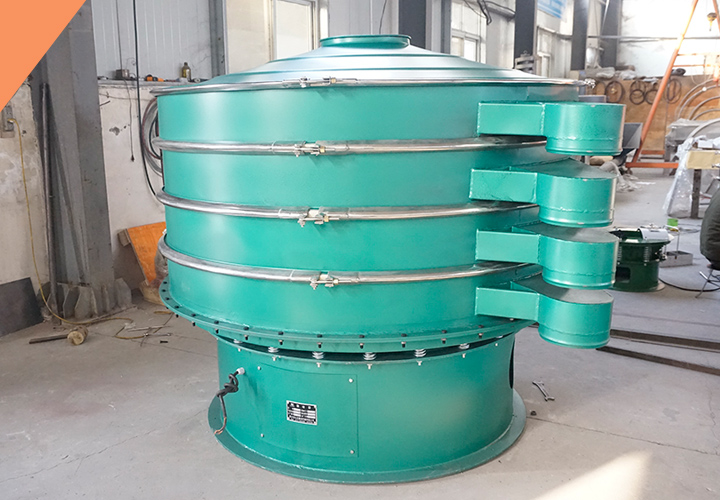
Carbon steel is commonly considered for dry, non-corrosive materials where the equipment does not require regular washing or prolonged exposure to moisture. Typical applications include sand, gravel, aggregates, minerals, coal, and other dry bulk materials.
Carbon steel vibrating screen working and testing video
For these applications, the supporting structure needs to withstand continuous vibration, material impact, and repeated loading. Carbon steel can provide the mechanical strength required by many conventional screening applications without adding stainless steel where corrosion resistance is not needed.
However, the material should not be selected based only on whether the feed material is dry. Humidity, water contact, cleaning methods, and the properties of the screened material can also affect the suitability of carbon steel.
When Should You Choose Stainless Steel for a Vibrating Screen?
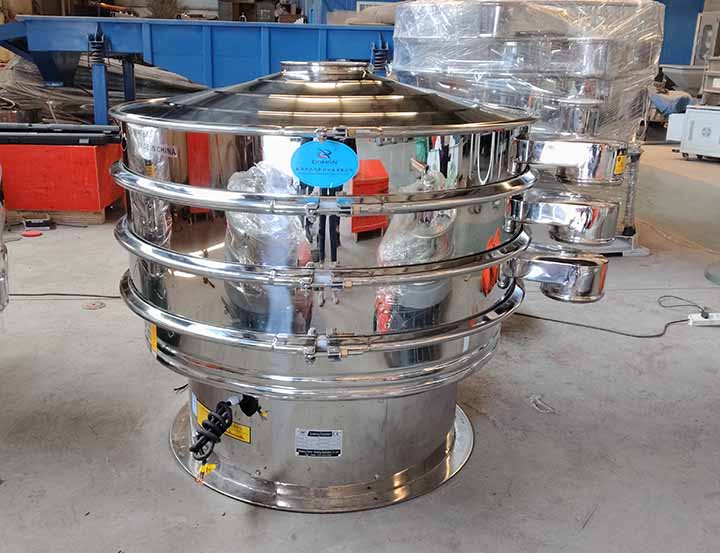
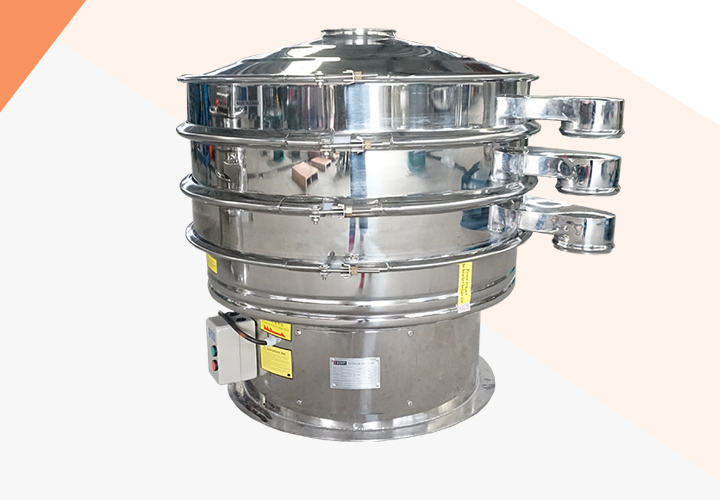
Stainless steel is often considered when a vibrating screen is exposed to moisture, corrosive substances, frequent cleaning, or strict material-contact requirements. It is commonly used for food powders, chemical materials, wet products, and applications where the equipment needs regular washing.
Stainless steel vibrating screen working and testing video
Stainless steel can provide a corrosion-resistant surface that is easier to clean than an unprotected carbon steel surface. This can be useful when residual material needs to be removed between production runs or when the equipment is washed regularly.
The required stainless steel grade depends on the actual operating conditions. General applications may use 304 stainless steel, while more demanding corrosion exposure may require 316 or another specified grade.
How Does Moisture Affect Vibrating Screen Material Selection?
Moisture can change the material requirements of a vibrating screen even when the screened material itself is not highly corrosive. Wet feed, humidity, water contact, and regular washing can expose the machine to conditions that increase corrosion risk.
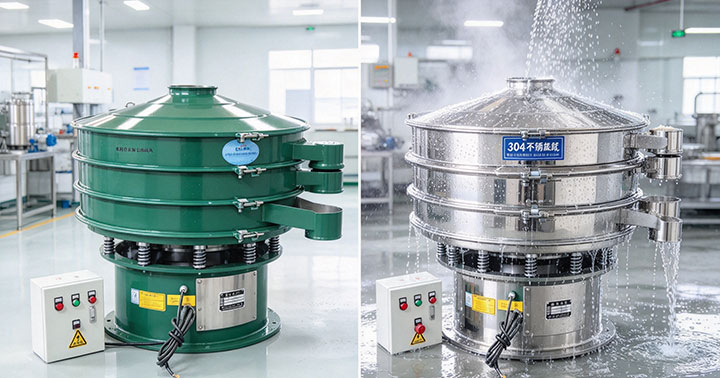
Occasional water contact is different from continuous wet screening or repeated washing. Chemical cleaning solutions, salts, and other corrosive substances can further increase the demands placed on the equipment material.
For dry screening in a controlled environment, carbon steel may be suitable when corrosion protection is not a major concern. When moisture or regular washing is part of normal operation, stainless steel can reduce corrosion concerns associated with carbon steel.
How to Choose 304 or 316 Stainless Steel for a Vibrating Screen?
Once stainless steel has been selected for a vibrating screen, the next question is which grade fits the application. 304 stainless steel is commonly considered for general screening applications where corrosion exposure is moderate. It can be suitable for many food powders, dry materials, and industrial processes where regular cleaning is required.
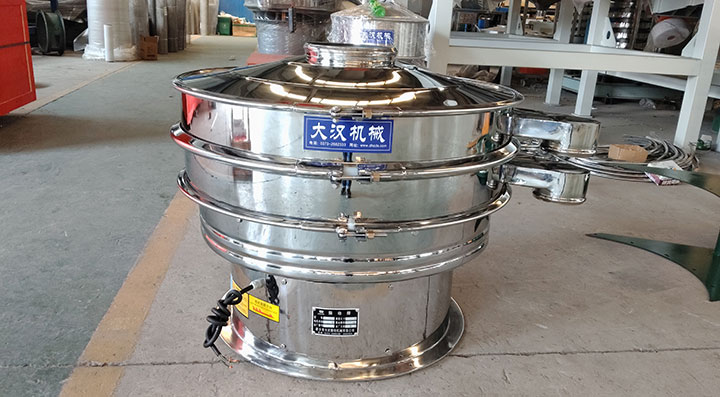
316 stainless steel is generally considered when the equipment faces more demanding corrosion conditions, particularly where chlorides, salts, or more aggressive substances may be present. The additional corrosion resistance can be useful when the screening environment would place greater demands on the machine surface.
| Operating Condition | Stainless Steel Grade to Consider |
|---|---|
| General screening with moderate corrosion exposure | 304 stainless steel |
| Food powder screening with regular cleaning | 304 or 316 depending on the cleaning and corrosion requirements |
| Wet or humid processing | 304 or 316 depending on the exposure |
| Chloride-containing or more corrosive conditions | 316 stainless steel may be considered |
The grade should be selected according to the material, moisture level, cleaning chemicals, and surrounding environment. If the corrosion conditions are unclear, provide these details to the vibrating screen manufacturer before specifying the stainless steel grade.
Do All Vibrating Screen Components Need the Same Material?
Not necessarily. A vibrating screen can use different materials for different components when the operating conditions require it.
For example, the supporting structure may use carbon steel while the screen deck or other material-contact parts use stainless steel. This type of construction can be considered when only certain areas require greater corrosion resistance, easier cleaning, or specific material-contact properties.
The right combination depends on how each component is exposed during screening. Parts that directly contact wet, corrosive, or hygiene-sensitive materials may require stainless steel, while components outside the material-contact area can sometimes use a different construction material.
What Information Should You Provide When Ordering a Vibrating Screen?
Choosing the right vibrating screen material starts with the screening conditions. When requesting a quotation, providing a few basic details can help the manufacturer determine the suitable construction and screen configuration.
| Information | What to Provide |
|---|---|
| Material | Name and characteristics of the material to be screened |
| Particle Size | Feed size and required separation size |
| Capacity | Required screening capacity per hour |
| Moisture | Whether the material or process involves water or high humidity |
| Corrosion | Whether the material or cleaning process is corrosive |
| Screening Levels | Required number of fractions or screen decks |
| Machine Material | Carbon steel, 304 stainless steel, 316 stainless steel, or a combination |
Photos, material samples, existing screen specifications, or a description of the production process can also be useful when the application is difficult to define by specifications alone. With this information, the vibrating screen can be configured around the actual screening conditions rather than selecting the machine material first and adapting the process afterward.
Vibrating Screen Material Selection FAQs
What material is commonly used for a vibrating screen?
Carbon steel and stainless steel are both commonly used for vibrating screens. Carbon steel can be suitable for dry, non-corrosive materials, while stainless steel is often considered when the equipment is exposed to moisture, corrosive materials, frequent cleaning, or specific material-contact requirements. The suitable material depends on the actual screening conditions and equipment configuration.
When should I choose stainless steel for a vibrating screen?
Stainless steel should be considered when a vibrating screen is regularly exposed to moisture, wet materials, corrosive substances, or frequent washing. It can also be suitable for applications where cleanable material-contact surfaces are important, such as food powder and certain chemical processing applications. The required stainless steel grade depends on the type and level of exposure.
Should I choose 304 or 316 stainless steel for a vibrating screen?
304 stainless steel is commonly considered for general screening applications with moderate corrosion exposure, while 316 stainless steel may be more suitable for environments involving chlorides, salts, or other more demanding corrosive conditions. The choice should be based on the screened material, moisture, cleaning chemicals, and surrounding environment rather than the stainless steel grade alone.
How to Calculate Vibro Sifter Capacity and Yield? Formula & Selection Guide
Calculating How to Calculate Vibro Sifter Capacity and Yield? requires more than checking screen diameter or machine specifications...
Preventing Mesh Clogging in High-Moisture Grain Screening: Practical Solutions
Screening grains with elevated moisture levels routinely triggers severe mesh blinding...
How to Choose Between Stainless Steel and Synthetic Mesh for Polymer Screening
In polymer extrusion and compounding, the screen mesh sits between the screw and the die...

Email:
sale@xxdahan.com
WhatsApp:
+86 15236742901
Add:
1000m West of Forest Park,Yanjin County,Xinxiang City,Henan Province,China.