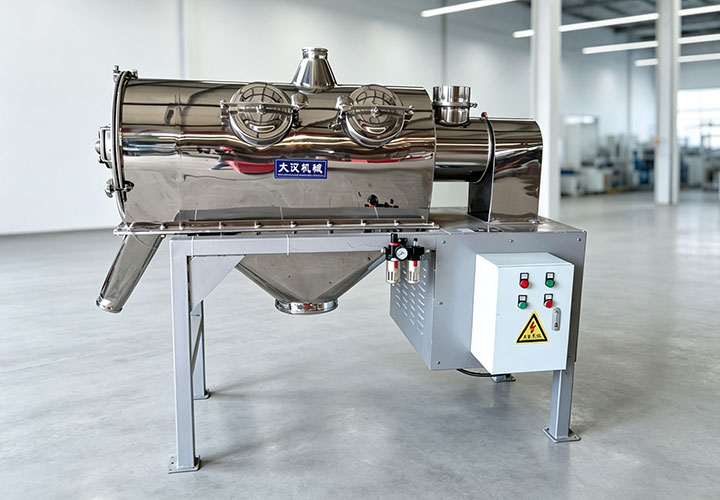
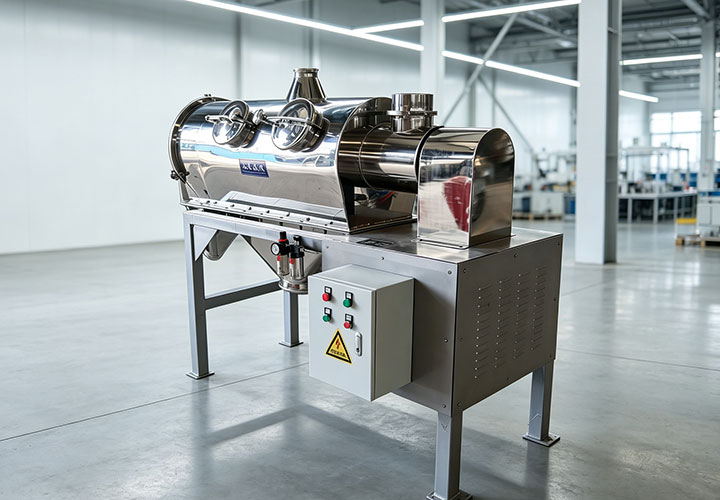
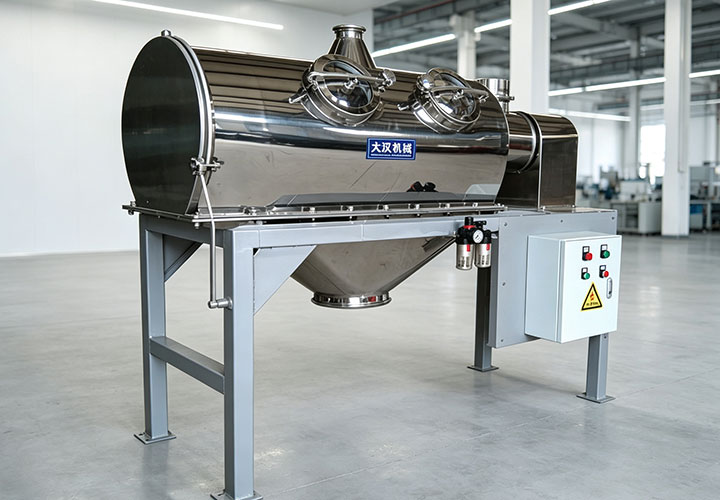
Centrifugal Sifter Machine
![[field:title/]](/uploads/260808/1-260PQ13S6208.jpg)
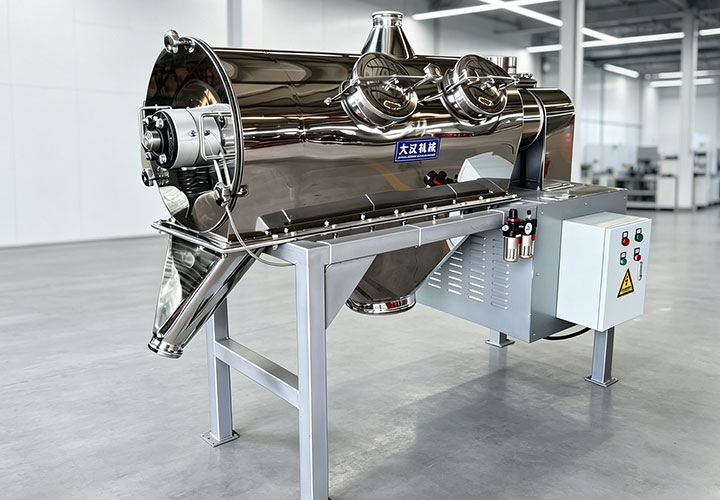
Callback
| Screening Method: | Centrifugal Screening |
| Suitable Materials: | Dry Fine Powders and Granules |
| Screen Cleaning: | Rotating Paddles |
| Design: | Enclosed, Continuous Operation |
Rotating paddles help reduce screen blinding during operation.
Separates oversized particles and contaminants through a separate outlet.
Quick-access design simplifies screen inspection and replacement.
A centrifugal sifter machine solves the common problem of fine powder blinding and blocking on conventional screening equipment. When processing light, fluffy, or static‑prone materials such as talc, flour, or resin powders, traditional vibratory screens often clog within hours—causing costly downtime and rejected product.
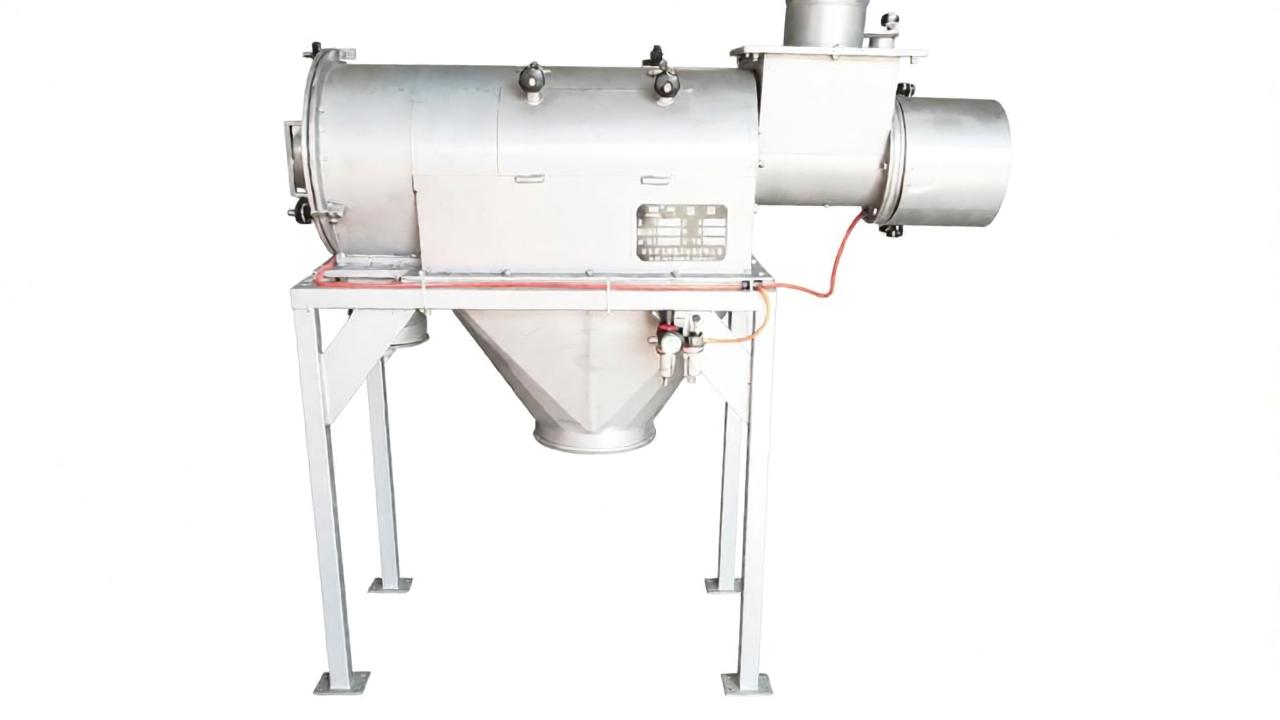
This machine uses high‑speed centrifugal force to actively propel material through the screen while continuously cleaning the surface, delivering consistent throughput without frequent manual intervention. Available in food‑grade and industrial configurations meeting FDA, 3‑A, and BISSC standards.
How a Centrifugal Sifter Machine Works
The working principle of a centrifugal sifter machine is straightforward:
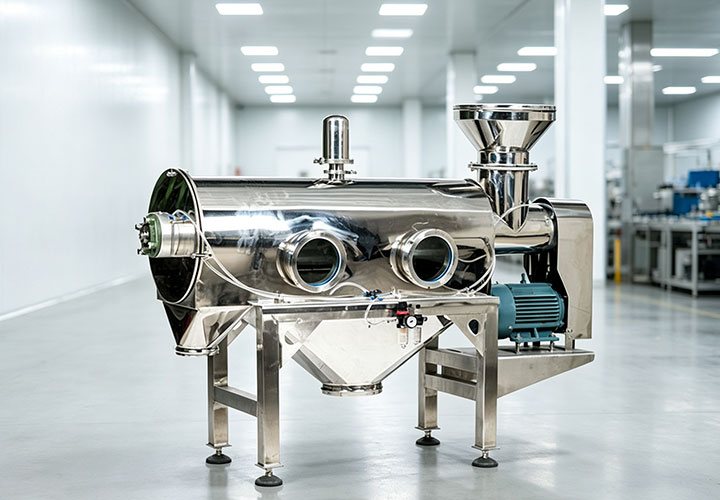
Material Feeding – Powder enters the machine via a screw conveyor or gravity feed into a horizontal cylindrical screening chamber.
Centrifugal Force & Screening – A rotor with paddles spins at high speed (typically 600–700 RPM) inside the chamber, generating centrifugal force that propels material outward against the cylindrical screen surface.
Particle Separation – Particles smaller than the screen mesh pass through the apertures and discharge through the fines outlet. Oversized particles and contaminants are carried to the end of the screen basket and ejected through a separate rejection port.
Continuous Operation – The rotating paddles continuously expose fresh screen surface, providing an automatic cleaning effect that prevents clogging and ensures consistent throughput.
The mechanical contact between the rotor and the powder provides both de‑agglomeration and screening in a single pass.
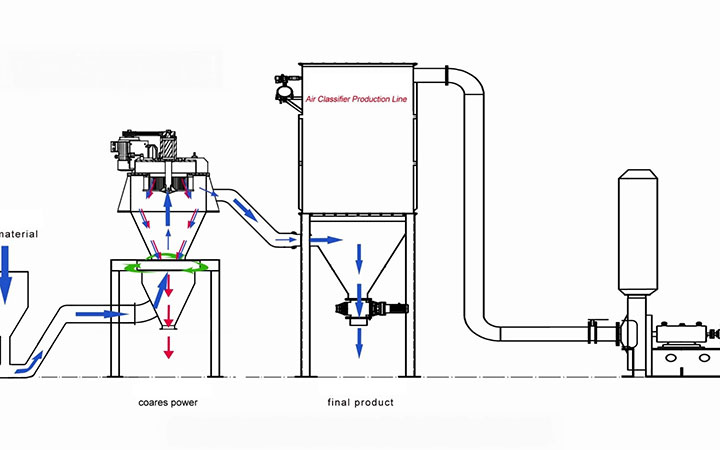
Field Experience – Solving Real Production Bottlenecks
At a talc processing plant, the switch to a centrifugal sifter machine (Model QLSP30‑100) solved a persistent bottleneck. The old vibratory screen blinded every 4 hours with 200‑mesh talc, causing costly downtime. After installation, the plant achieved a steady 2,800 kg/h throughput over 72 hours with zero cleaning intervention.
The plant manager's feedback was clear: “We used to shut down every 4 hours to clean the screen. Now we run three full shifts without touching it. That's 6 hours of production time back every week.”
At a flour milling facility, moisture‑induced agglomeration was causing frequent screen blockages and inconsistent product quality. The centrifugal sifter machine resolved this by breaking down soft lumps during screening. The rotor paddle clearance was adjusted through on‑site testing to achieve gentle de‑agglomeration without degrading the flour particles.
This guide is based on field installation experience and operational data collected from centrifugal sifter deployments across food, mineral, and chemical processing facilities.
Product Features
Screening efficiency reaching 85–95% penetration rate;
Processing capacity 5–10 times higher than conventional vibrating screens;
Effectively handles light, fluffy, static‑prone, and easily agglomerated materials;
Self‑cleaning screen action prevents blinding and reduces maintenance;
Fully enclosed, dust‑free design ensures a clean working environment;
Low noise operation – typically below 75 dB;
Available in carbon steel, stainless steel 304, and stainless steel 316L;
Suitable for mesh sizes ranging from 5 to 500 mesh;
Quick‑access doors for rapid inspection, washdown, and screen changes;
Available in configurations meeting FDA, 3‑A, and BISSC sanitary standards.
Solving Common Screening Challenges – A Material‑Based Guide
The effectiveness of a centrifugal sifter machine often comes down to choosing the right configuration for your material. Here's how to tackle three common issues:
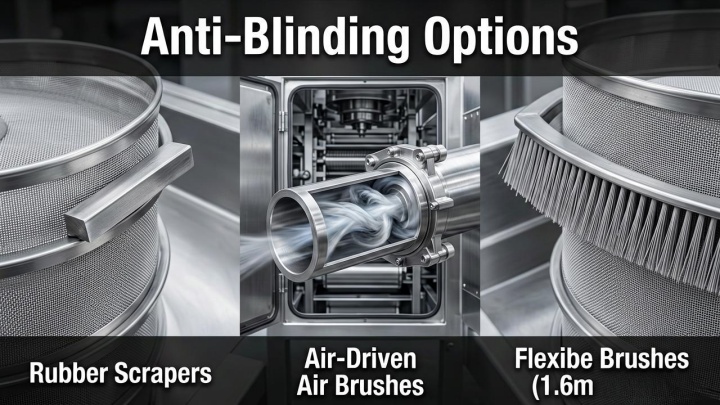
- Fibrous Materials (herbal powders, spices) – Standard bristle brushes can become entangled and fail. Rubber wiper blades are the solution. They flex against the screen, allowing oversize material to pass without wrapping around the rotor.
- Fine Powders Below 200 Mesh – Mechanical cleaners can damage delicate screens. Pneumatic air brushes are the preferred option. Compressed air enters through the hollow drive shaft and cleans the screen from the inside out, without any mechanical contact.
- General‑Purpose Screening – Flexible bristle brushes are ideal. They mount with a precise 1/16" to 1/8" (1.6mm to 3.2mm) gap from the screen, preventing damage while ensuring efficient cleaning.
Technical Specifications
| Model | Processing Capacity | Screen Diameter | Power | Material |
| QLSP18‑65 | Up to 3,000 kg/h | 180 mm | 2.2 kW | CS / SS304 |
| QLSP30‑100 | Up to 5,000 kg/h | 300 mm | 4 kW | CS / SS304 |
| Custom Models | Customized | Customized | Customized | SS304 / SS316L / CS |
Specifications may vary. Custom configurations available upon request.
How to Choose and Integrate Your Centrifugal Sifter
To ensure you select the right centrifugal sifter machine for your production line, focus on these key areas:
Feed rate and material – Have your feed rate (kg/h), particle size distribution, bulk density, and material behavior (static, fibrous, abrasive) ready.
Sanitary requirements – Specify food, pharmaceutical, or industrial grade standards (FDA, 3‑A, BISSC).
Integration point – Identify where the sifter adds the most value in your line (e.g., after milling to protect downstream equipment).
Space and access – Ensure the installation location provides enough room for maintenance and screen changes.
For food‑grade applications such as flour, starch, or milk powder, stainless steel 304 is recommended. For abrasive mineral applications, choose models with larger screen diameters and higher power ratings. For fibrous materials, specify rubber wiper blades at the time of order.
Tips for Maximizing Performance
Based on field experience across multiple installations, these practices help achieve optimal performance:
Maintain consistent feed rate – Overfeeding can reduce screening efficiency by 15–20%. Use a screw feeder or rotary valve to control material flow.
Ground the machine frame – For static‑prone materials, proper grounding prevents powder adhesion to the screen surface.
Select the correct mesh – Using a finer mesh than necessary increases wear and reduces throughput. Choose the coarsest mesh that meets your quality specification.
Inspect paddles regularly – Worn paddles reduce centrifugal force and screening efficiency. Replace when clearance exceeds recommended tolerance.
Match anti‑blinding to material – Review the selection guide above and test if possible before finalizing configuration.
Applications – Specific Use Cases
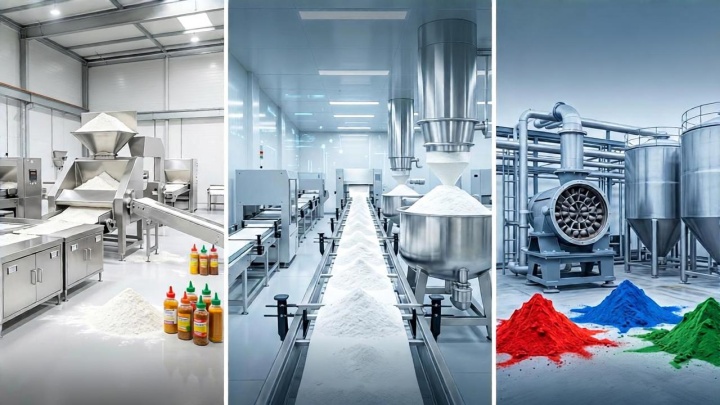
Food Industry – In flour milling, the machine removes bran particles and contaminants post‑grinding while classifying flour by particle size, ensuring consistent baking quality. In spice processing, it removes fibrous contaminants and achieves uniform particle size for flavor release and packaging consistency. For starch processing, it separates fine fiber particles to improve product purity.
Pharmaceutical Industry – The machine gently screens tablet granulations without damaging delicate granules, maintaining precise particle size distribution for consistent tablet weight and hardness. Active pharmaceutical ingredients are screened to remove agglomerates before blending.
Chemical Industry – Resin powders, pigments, and dyes are processed to remove oversized particles that affect finished product appearance or performance. The centrifugal sifter machine handles these materials effectively without generating static buildup.
Mineral Processing – Talc, calcium carbonate, graphite, and alumina are screened for contamination removal and particle size classification. The centrifugal sifter machine is particularly effective for low bulk density minerals that tend to fluidize on vibratory screens.
Plastics and Recycling – Plastic granules are screened before extrusion to remove undersized or oversized particles. In recycling, the machine removes contaminants from regrind material.
Centrifugal Sifter vs. Vibrating Screen – Comparison
| Aspect | Centrifugal Sifter Machine | Vibrating Screen |
| Best For | Light, fluffy, static‑prone, low bulk density powders | High feed rates, multi‑fraction classification |
| Screening Efficiency | 85–95% penetration rate | 80–90% typical |
| Throughput | 5–10x higher per comparable unit | Lower per unit |
| Dust Control | Fully enclosed, dust‑free | Requires flexible connections |
| Noise Level | Low noise (below 75 dB) | Higher noise and vibration |
| Grading Capability | Single screen | Multi‑layer – up to 5 grades |
| Screen Cleaning | Self‑cleaning rotor action | Requires periodic manual cleaning |
Summary: For screening low bulk density, lightweight products like talc, pigments, and silica sand, the centrifugal sifter machine is the superior choice. For applications requiring multi‑fraction grading, a vibrating screen may be more appropriate.
In comparative testing with talc powder at 200 mesh, the centrifugal sifter machine achieved 92% efficiency at 2,800 kg/h, while a vibratory screen of comparable size reached 78% efficiency at 500 kg/h before blinding occurred within 4 hours.
Frequently Asked Questions
What mesh size range can a centrifugal sifter machine handle?
The machine accommodates mesh sizes from 5 to 500 mesh, covering a wide range of particle size separation requirements.
What types of materials are NOT suitable?
Wet, sticky materials or liquids are not ideal. The machine is designed for dry powders. For liquid/solid separations, a vibrating screen or filter is generally recommended.
How does it compare to a vibratory screen for fine powders?
The centrifugal sifter machine is specifically designed for light, fluffy, and static‑prone powders. It offers 5–10 times higher throughput and requires less maintenance due to its self‑cleaning screen action.
What maintenance is required?
Routine maintenance includes periodic screen inspection and replacement (frequency depends on material abrasiveness), checking rotor paddle wear, and ensuring proper lubrication. Quick‑access doors allow inspection and screen changes in under 15 minutes.
Can it be integrated into a pneumatic conveying system?
Yes. The machine works as a standalone unit or integrates into positive/negative pressure pneumatic conveying systems while maintaining system integrity.
-
Preventing Mesh Clogging in High-Moisture Grain Screening: Practical Solutions
Screening grains with elevated moisture levels routinely triggers severe mesh blinding. ...
-
5 Essential Tips for Selecting the Right Vibro Sifter for Fine Powders
Selecting the right vibro sifter for fine powders requires more than choosing a machine with a fine mesh or a high advertised capacity. ...
-
How to Prevent Mesh Blinding During Fine Powder Sifting for Higher Yields
In fine powder processing, mesh blinding (also known as screen pegging or clogging) is one of the most persistent operational hurdles...

Email:
sale@xxdahan.com
WhatsApp:
+86 15236742901
Add:
1000m West of Forest Park,Yanjin County,Xinxiang City,Henan Province,China.