Can You Use Standard Test Sieves for Wet Screening? Best Practices
Yes, standard test sieves can be used for wet screening in suitable applications, but the setup depends on the material, test method, mesh size, water flow, containment, and sample recovery. Can You Use Standard Test Sieves for Wet Screening? Best Practices is therefore a selection and procedure question rather than a simple yes-or-no question.
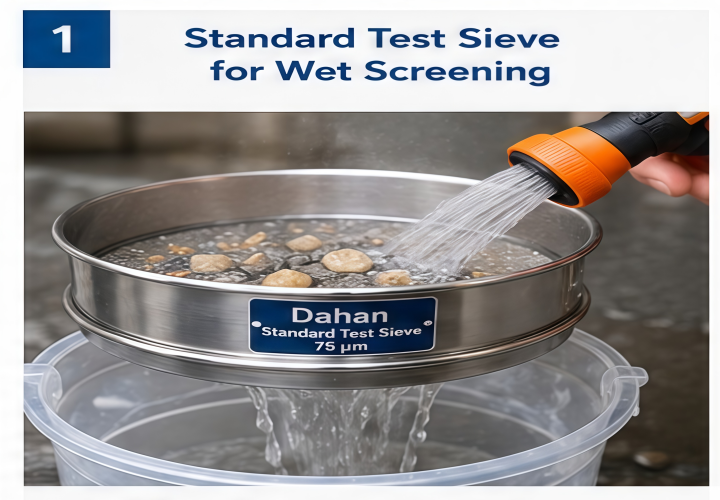
Wet screening uses water or another compatible liquid to separate fine particles from coarser material. It can be useful when fines remain attached to larger particles, dry particles form agglomerates, or a test method requires washing. For occasional wet screening, a properly selected standard test sieve can be practical. Routine washing or applications requiring greater liquid and sample containment may benefit from a deeper configuration.
Can Standard Test Sieves Be Used for Wet Screening?
Yes, when the sieve and complete screening setup are appropriate for the application.A standard test sieve separates particles through woven wire mesh with defined apertures. During wet screening, water helps disperse the sample and carry smaller particles through the openings. The separation principle remains the same, but liquid control becomes important.
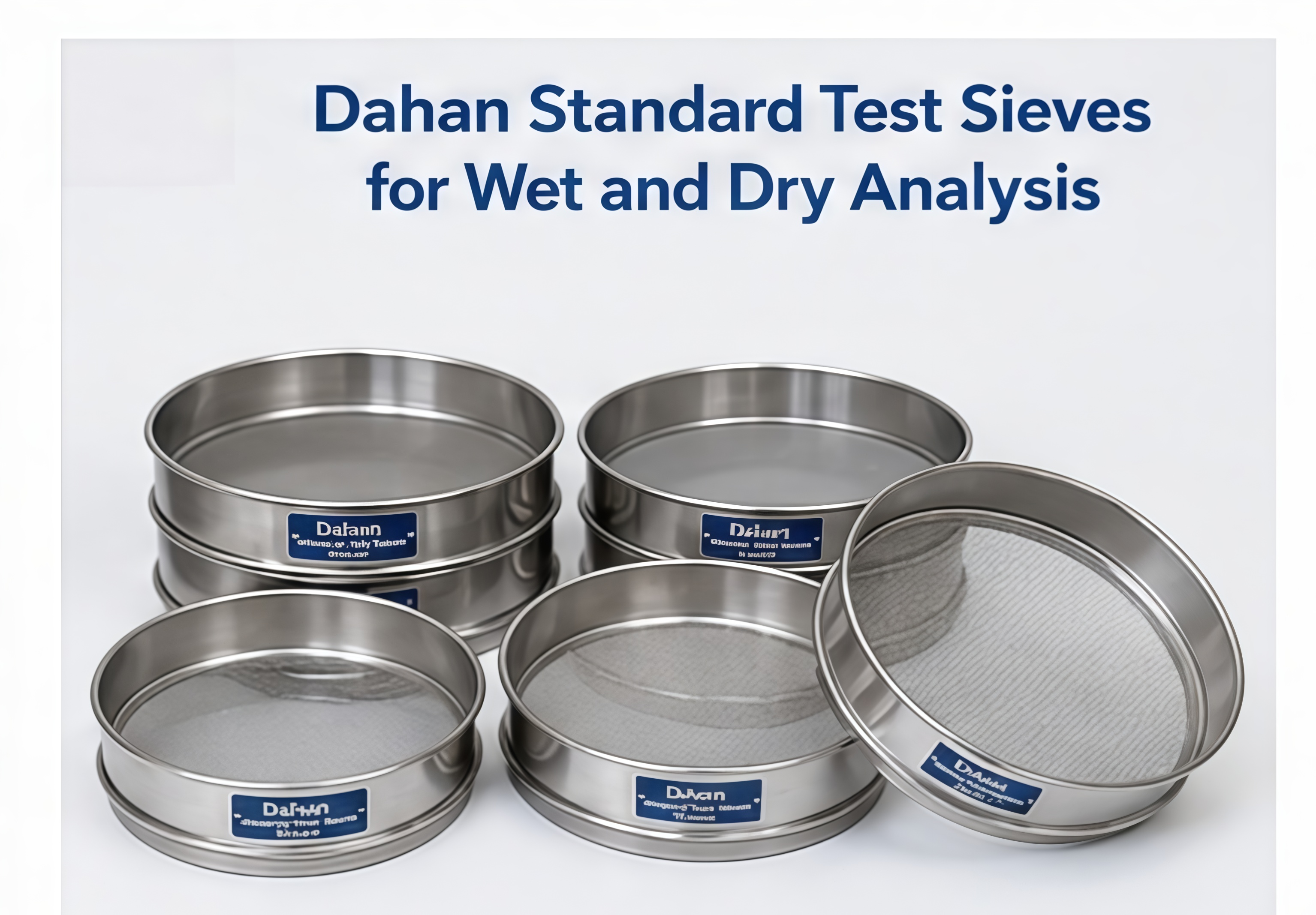
A suitable setup should provide:
Correct sieve and material: The aperture, frame, mesh, sample, and liquid should be suitable for the intended procedure.
Controlled water flow: Water should assist separation without washing material over the sieve frame.
Containment and recovery: The sieve and receiver should minimize sample loss, and retained material should be recovered and weighed according to the test method.
ASTM E276 identifies wet screening as screening wetted solids with water or another liquid and distinguishes standard sieves from special wet-screening apparatus, including deep-frame sieves.The key point is that the complete wet-screening arrangement, rather than the sieve alone, determines whether the application is appropriate.
Standard Test Sieve vs. Wet-Wash or Deep-Frame Configuration
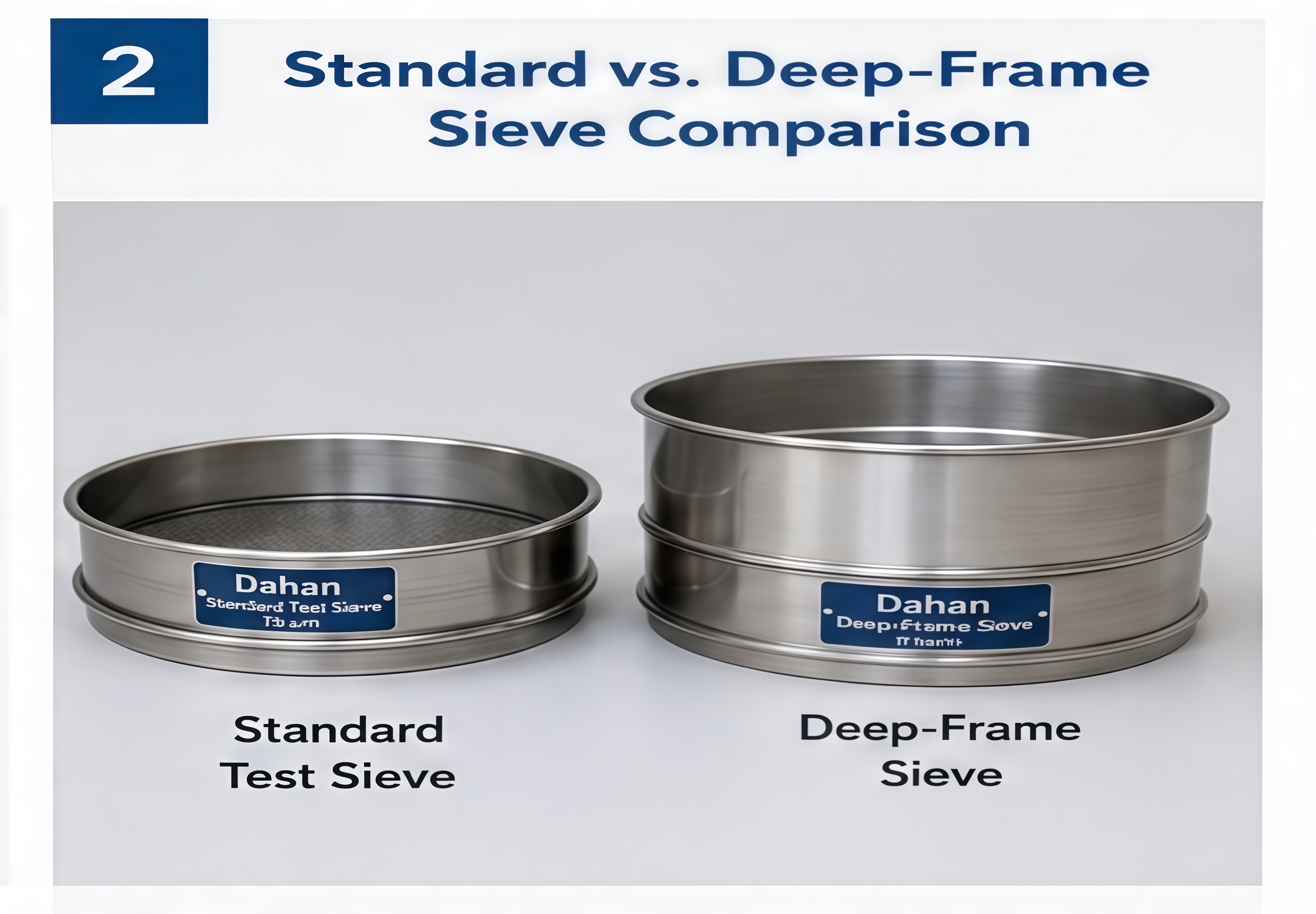
The main difference is how the system manages liquid, sample containment, and drainage.
| Factor | Standard Test Sieve | Wet-Wash / Deep-Frame Configuration |
|---|---|---|
| Occasional wet screening | Suitable with proper setup | Suitable |
| Routine wet washing | Depends on method and setup | More suitable |
| Sample containment | Requires careful setup | Better suited |
| Frame depth | Standard | Deeper |
| Drainage | May require additional components | Easier to configure |
| Higher liquid flow | Requires close control | Better suited when specified |
A standard test sieve is often practical when dry particle-size analysis is the main application and wet screening is occasional. A deeper configuration becomes more useful when washing is routine or greater liquid containment is required.
What Do Test Methods Say About Wet Screening?
A sieve specification defines requirements for the sieve and mesh, while a test method defines how the material is prepared, washed, screened, recovered, dried, and measured.ASTM E276 provides an example by identifying standard sieves together with special apparatus for wet screening, including deep-frame sieves.ASTM C786/C786M-25 covers wet sieving of hydraulic cement and raw materials using 300 μm, 150 μm, and 75 μm sieves.
The practical rule is:
The sieve specification defines the sieve.The test method defines how the sieve is used.
Always check the applicable procedure before selecting the wet-screening configuration.
How to Perform Wet Screening with a Standard Test Sieve?
A controlled procedure helps reduce sample loss and improve repeatability.
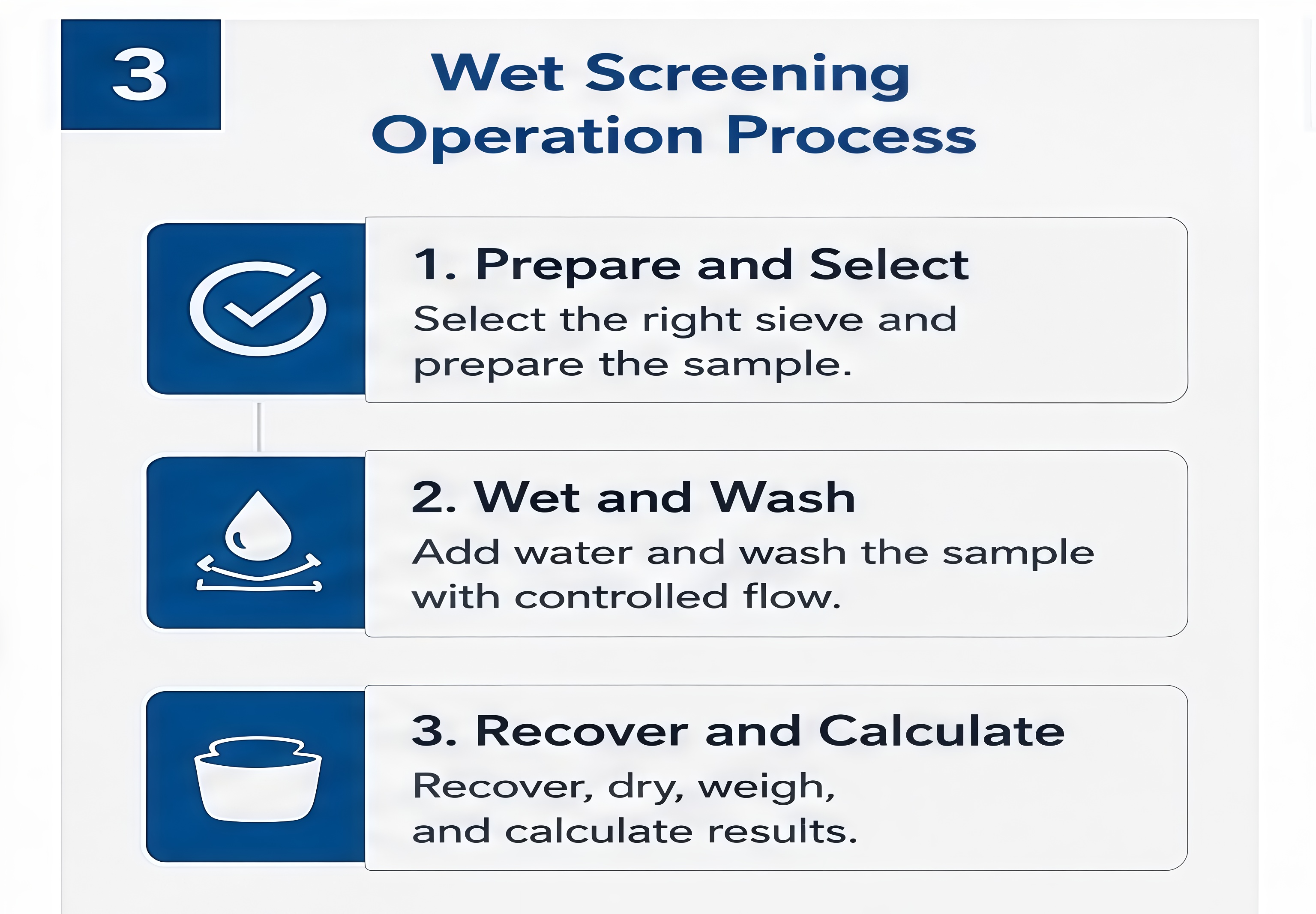
Prepare and Select
Record the initial sample mass before washing. Avoid excessive sample loading because too much material on the mesh can restrict particle movement.
Select the aperture required by the test method and inspect the mesh for blocked openings, deformation, contamination, or damage. Assemble the sieve over a suitable receiver and check the connections before washing.
Wet, Wash, and Control Water Flow
Introduce the liquid gradually and wet the material evenly. The objective is to disperse the sample rather than force particles through the mesh with excessive pressure.
Maintain a steady flow appropriate to the procedure. Too little water may leave fines attached to coarser particles, while excessive flow can increase splashing, overflow, and sample loss.
Wash the sample according to the applicable method until the specified endpoint is reached.
Recover, Dry, Weigh, and Calculate
Recover the retained material and other required fractions. Dry the material according to the applicable procedure before weighing.
Prepare → Wet → Wash → Recover → Dry → Weigh → CalculateCompare the recovered fractions with the original sample mass. A significant difference can indicate material loss during washing, transfer, overflow, drainage, or cleaning.
Can Fine-Mesh Test Sieves Be Used for Wet Screening?
Yes, but fine-mesh applications require closer control of sample loading, water flow, cleaning, and recovery.The 75 μm level is particularly relevant to wet screening. ASTM C786/C786M-25 includes 75 μm together with 150 μm and 300 μm in its wet-sieving procedure, while ASTM D1140-25 addresses material finer than 75 μm by washing.
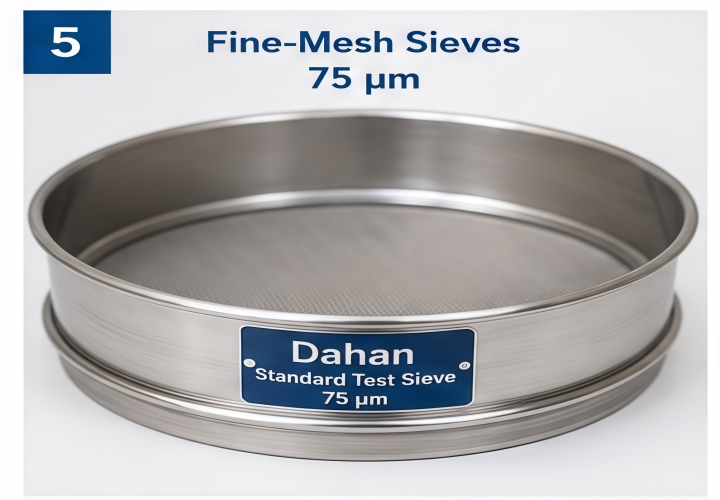
For fine-mesh work, maintain uniform wetting, controlled liquid flow, appropriate loading, gentle mesh cleaning, and complete recovery of fine material.
When Should You Choose a Wet-Wash or Deep-Frame Configuration?
A deeper configuration is worth considering when wet screening is a routine operation or when greater liquid and sample containment is required.
| Application | Recommended Approach |
|---|---|
| Occasional wet screening | Standard test sieve with suitable containment |
| Routine wet washing | Consider a deeper wet-screening configuration |
| Fine particles around 75 μm | Closely control water flow and mesh cleaning |
| Higher liquid flow | Use a configuration suited to the specified procedure |
| Significant soluble substances | Check whether washing affects the intended measurement |
| Standardized laboratory testing | Follow the applicable test method |
A deep-frame configuration is not automatically required for every wet-screening application. For occasional washing, a standard test sieve with proper containment and drainage may be sufficient.
How to Choose a Standard Test Sieve for Wet Screening?
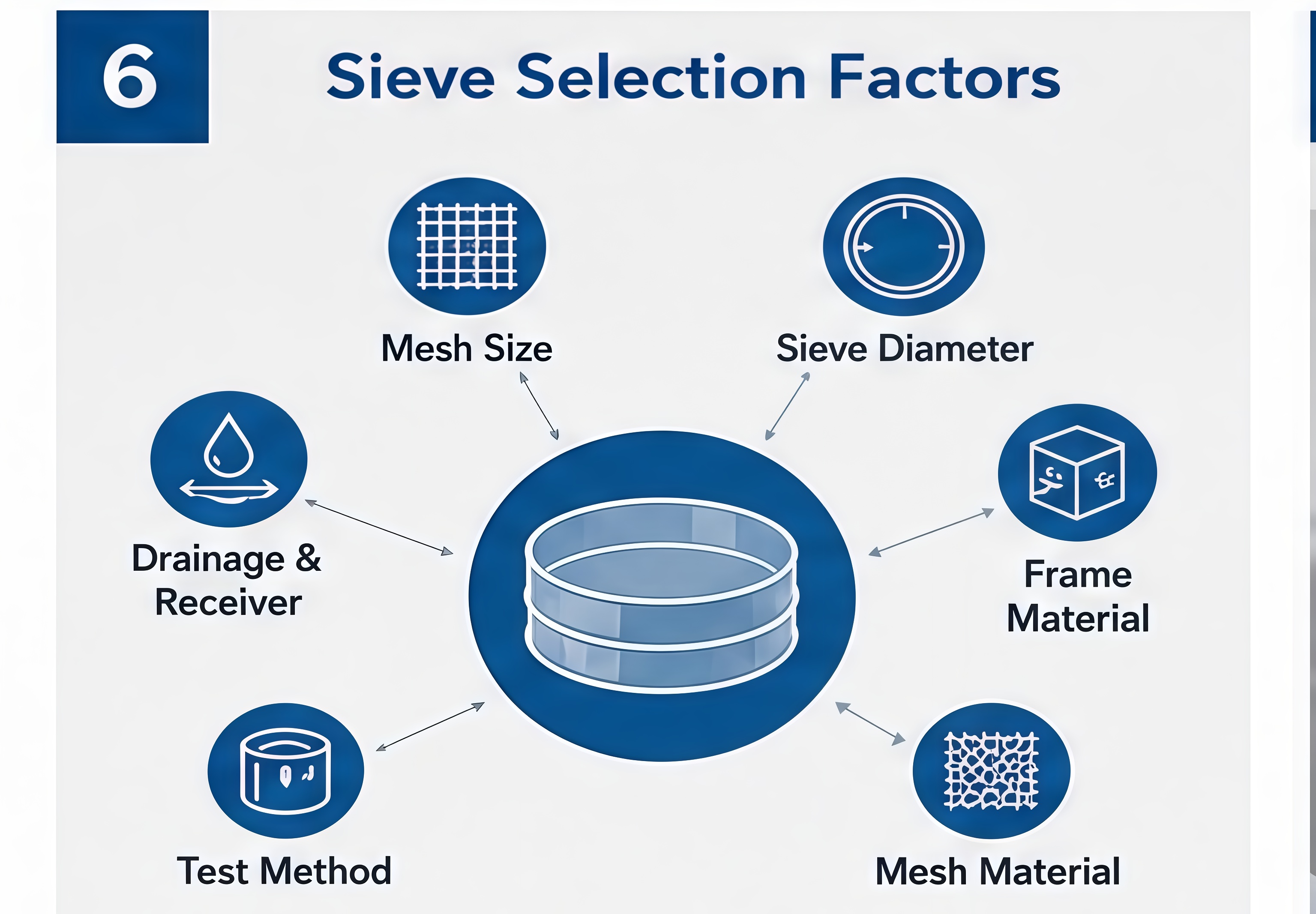
Start with the test method and required particle-size range, then select the sieve configuration.
| Selection Factor | What to Check |
|---|---|
| Mesh size | Required aperture and particle-size range |
| Sieve diameter | Sample quantity and screening area |
| Frame material | Compatibility with sample and liquid |
| Mesh material | Mechanical and chemical requirements |
| Frame depth | Need for additional containment |
| Receiver | Collection capacity |
| Drainage | Liquid removal without sample loss |
| Test method | Required sieve and operating conditions |
For laboratories that mainly perform dry particle-size analysis with occasional wet screening, a suitable stainless steel standard test sieve can be a practical solution. For frequent washing, the sieve should be selected together with the required receiver, sealing, drainage, and frame configuration.
FAQ
Can you use a standard test sieve for wet screening?
Yes, when the sieve, material, liquid, and complete setup are suitable for the applicable procedure. Can You Use Standard Test Sieves for Wet Screening? Best Practices should always be considered together with the test method and sample characteristics.
Is a wet-wash or deep-frame sieve always required?
No. A standard test sieve may be suitable for occasional wet screening when containment and drainage are properly controlled. A deeper configuration may be preferable for repeated washing.
Can fine-mesh test sieves be used for wet screening?
Yes. Fine mesh can be used for suitable wet-screening procedures, but water control, sample loading, cleaning, and material recovery require greater attention.
Does the sieve specification define the complete wet-screening procedure?
No. A sieve specification establishes requirements for the sieve, while the applicable test method determines sample preparation, washing, recovery, drying, and calculation.
Standard Test Sieves for Wet and Dry Particle Size Analysis
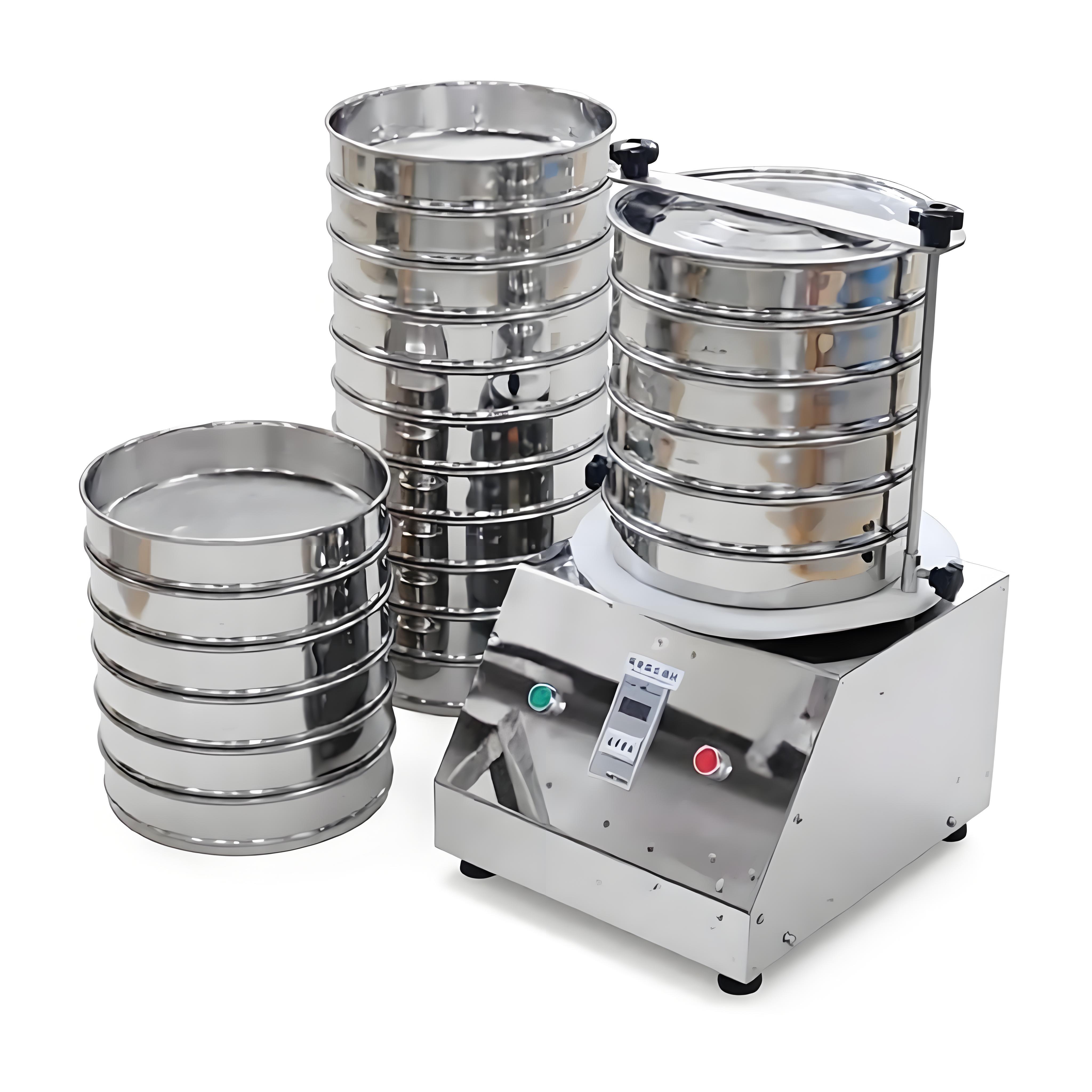
A standard test sieve can support both dry particle-size analysis and suitable wet-screening applications when the sieve, sample, liquid, and procedure are compatible.The most reliable approach is to check the test method first, then match the mesh size, sieve diameter, frame material, mesh material, containment, and drainage to the application.
Dahan provides standard test sieve configurations for laboratory particle-size analysis, including stainless steel options for different mesh and diameter requirements.For laboratories performing mainly dry analysis with occasional wet screening, a suitable standard test sieve can provide a practical solution. When wet washing is frequent or requires greater containment, a deeper wet-screening configuration should be considered.
When requesting a sieve, providing the sieve diameter, mesh size, material, applicable test method, and wet-screening conditions helps identify the appropriate configuration.
Dahan can supply sieve configurations according to the required aperture, diameter, material, and application. Can You Use Standard Test Sieves for Wet Screening? Best Practices ultimately comes down to one principle: match the sieve and wet-screening arrangement to the test method and material, control the liquid, prevent sample loss, and maintain reliable recovery.
-
How to Choose the Right ASTM E11 Test Sieve Size and Mesh?
Choosing the right test sieve is not simply a matter of selecting a mesh number ...
-
How to Clean and Maintain Stainless Steel Laboratory Test Sieves?
Stainless steel laboratory test sieves are precision tools used for particle size analysis ...
-
Sieve Calibration Grades: Compliance vs. Inspection vs. Calibration Under ASTM E11-24
Sieve calibration is not simply a process of making a test sieve “more accurate.” Under ASTM E11-24, Compliance ...

Email:
sale@xxdahan.com
WhatsApp:
+86 15236742901
Add:
1000m West of Forest Park,Yanjin County,Xinxiang City,Henan Province,China.