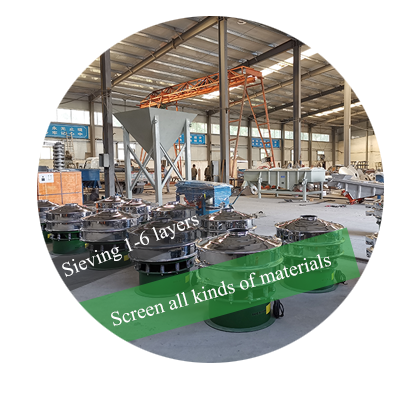
Application of Apatite Vibrating Screen
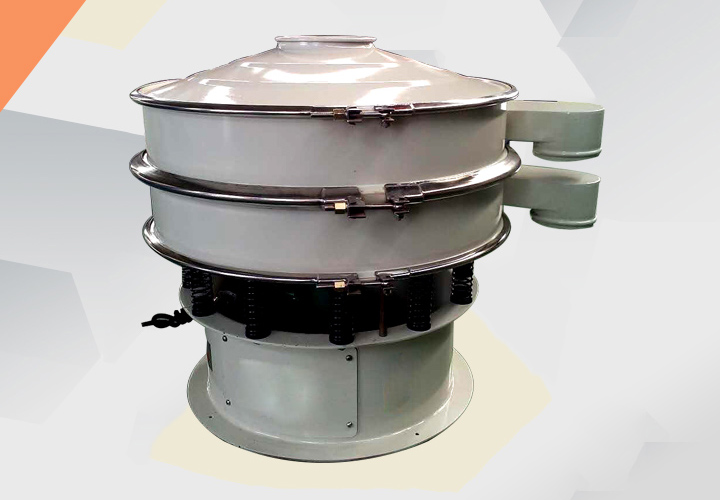
Apatite vibrating screen is used for screening apatite, mainly because apatite materials have the characteristics of uneven particle size distribution, moderate hardness, easy agglomeration and many impurities. Ordinary screening equipment is difficult to achieve efficient and stable screening effect. The apatite vibrating screen drives the screen surface to generate high-frequency vibration through the excitation force, which can make the material quickly stratified and screened, improve the screening efficiency, and effectively prevent the phenomenon of blocking and adhesion.
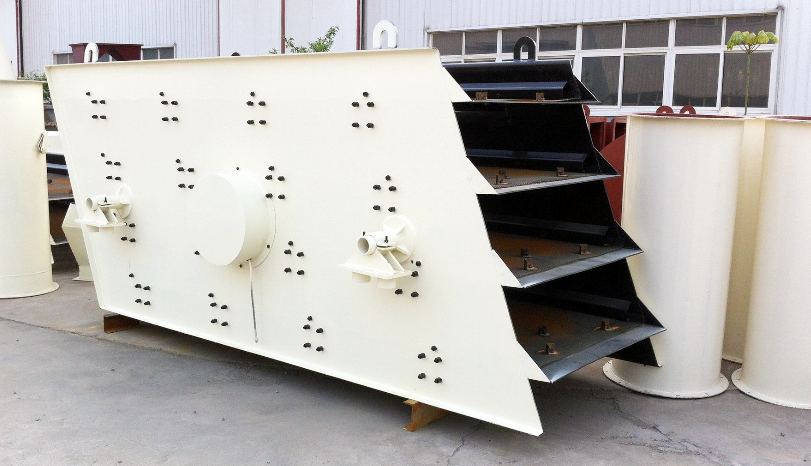
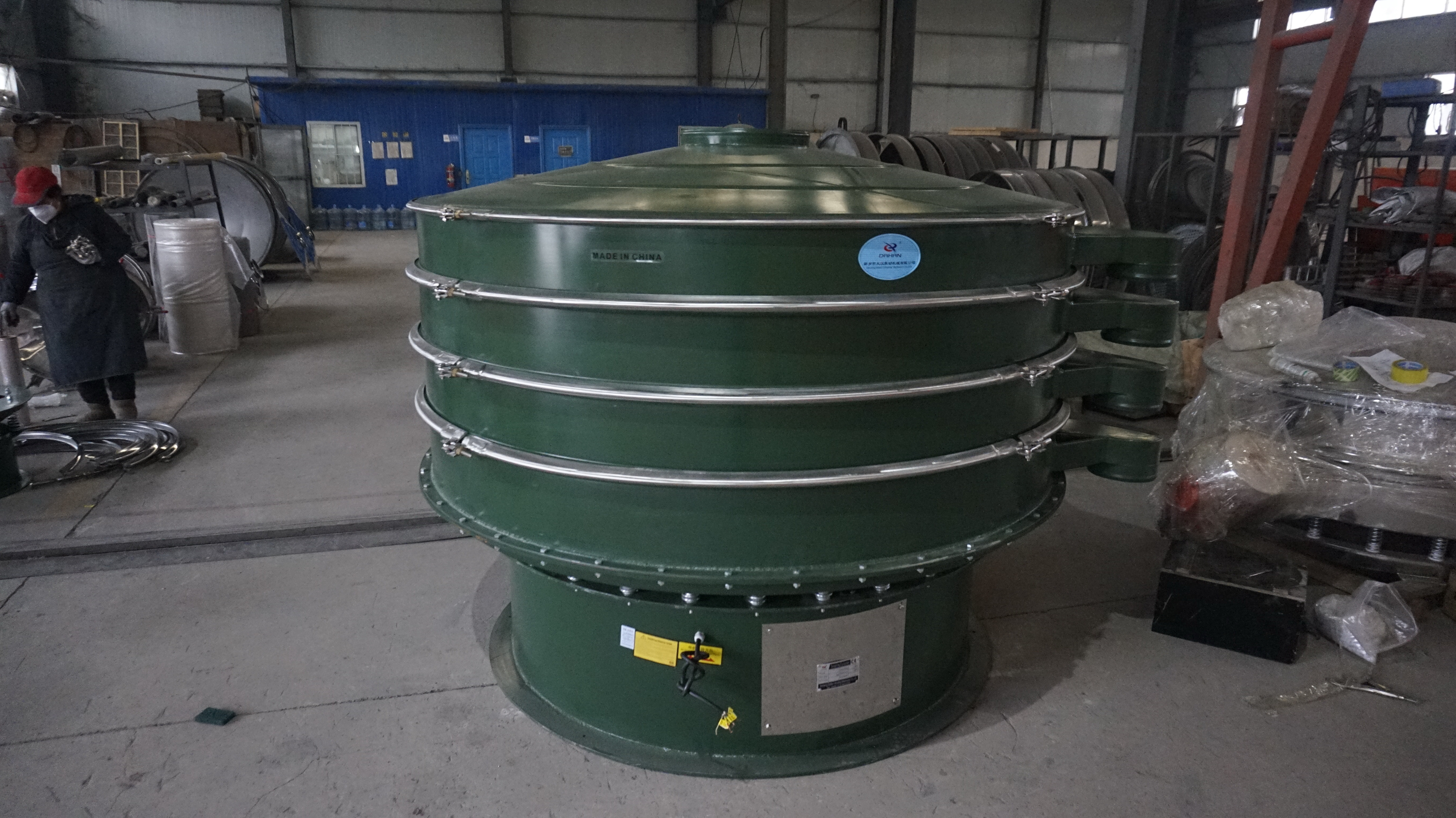
Application of Apatite Vibrating Screen can be equipped with screens of different mesh sizes to achieve full screening control from coarse screening to fine screening. In the grading of coarse particles of phosphate fertilizer, a perforated screen of 10-20 mesh (aperture 2.0-0.85mm) can be selected to efficiently separate particles with a particle size greater than 0.85mm; for fine screening of phosphorus chemical raw materials, a woven screen of 100-325 mesh (aperture 0.15-0.045mm) can be equipped to achieve precise grading of ultrafine powders. The equipment adopts a multi-layer vibrating screen structure, which adjusts the amplitude (adjustable from 0-5mm) and vibration frequency (0-3000 times/minute) by frequency conversion, and is equipped with a 304 stainless steel or polyurethane screen. It can handle wet screening with high water content and complete precise dry screening, and the screening efficiency can reach more than 95%.
Application of Apatite Vibrating Screen working video
How to choose apatite vibrating screen?
Apatite is mostly irregular particles or powders with different particle sizes. The raw ore often contains impurities such as quartz, clay, carbonate, etc. The specific gravity is relatively large, about 3.1~3.2. Therefore, when selecting an apatite vibrating screen, the characteristics of apatite, the screening process requirements and the on-site working conditions should be considered to ensure stable operation of the equipment. Especially for ore pretreatment and classification, phosphate rock powder finished product screening, etc.
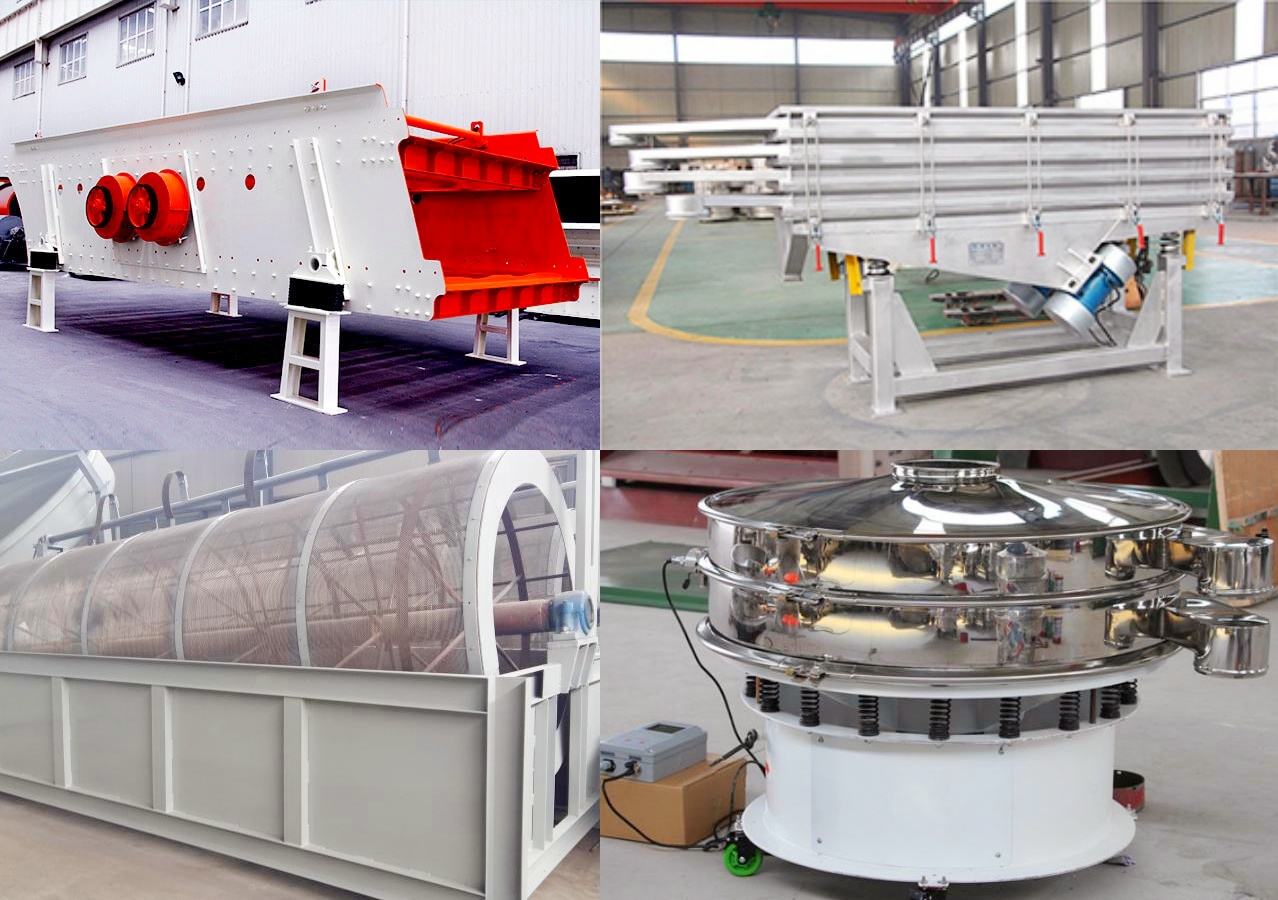
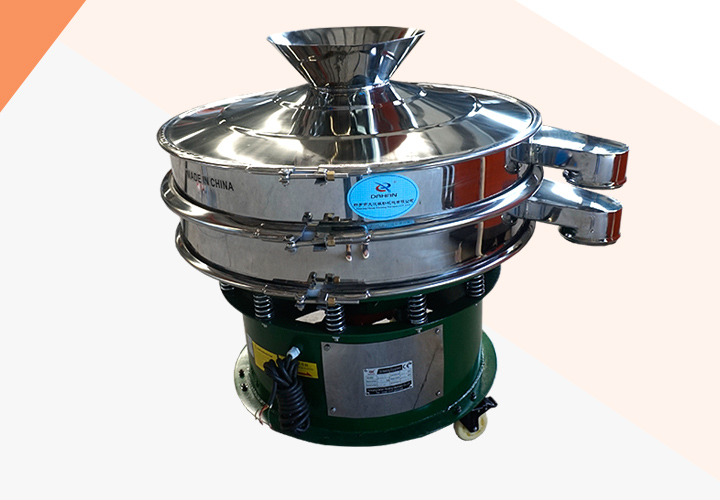
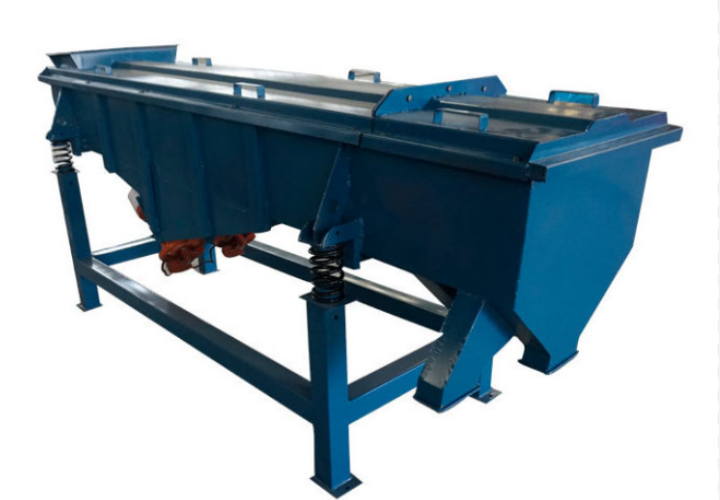
After apatite is crushed, it needs to be screened to separate large pieces, materials of suitable particle size, and fine powder. This step typically uses a circular vibrating screen or a drum screen. In the production of phosphate fertilizers such as superphosphate and ammonium phosphate, linear or multi-layer vibrating screens are used during the granulation process to separate phosphate fertilizer particles of different sizes, removing overly large and overly small particles to achieve a more uniform particle size and better appearance. When producing phosphate chemical raw material powder, fine screening is also required to remove clumps, large particles, and impurities. Ultrasonic vibrating screens are often used in this process as they are less prone to clogging, and the screening range is generally 100-325 mesh. These devices can use different mesh sizes; for example, 10-20 mesh screens can be used for phosphate fertilizer, while 100-325 mesh screens can be used for fine phosphate chemical powder, enabling complete control from coarse to fine screening.
Application of Apatite Vibrating Screen Technical Parameters
| Model | Screen surface parameters |
Feeding granularity (mm) |
Handling capacity (t/h) |
Double amplitude (mm) |
Motor |
Single point dynamic load (N) |
Dynamic load (N) |
||||
| Layer | Area(m²) | Inclination(degree) | Apeture(mm) | Model | Power(kw) | ||||||
| YK1230 | 1 | 3.6 | 15-30 | 3-50 | ≤200 | 220 | 6-10 | Y160M-6 | 7.5 | 440 | 2200 |
| 2YK1230 | 2 | 3.6 | 15-30 | 3-50 | ≤200 | 220 | 6-10 | Y160L-6 | 11 | 732 | 3660 |
| YK1530 | 1 | 4.5 | 15-30 | 3-50 | ≤200 | 250 | 6-10 | Y160L-6 | 11 | 720 | 3600 |
| 2YK1530 | 2 | 4.5 | 15-30 | 3-50 | ≤200 | 250 | 6-10 | Y200L1-6 | 18 | 1154 | 5770 |
| YK1545 | 1 | 6.75 | 15-30 | 3-50 | ≤200 | 300 | 6-10 | Y180L-6 | 18 | 845 | 4225 |
| 2YK1545 | 2 | 6.75 | 15-30 | 3-50 | ≤200 | 300 | 6-10 | Y200L1-6 | 22 | 1360 | 6800 |
| YK1845 | 1 | 8.1 | 15-30 | 3-50 | ≤200 | 350 | 6-10 | Y180L-6 | 18 | 936 | 4680 |
| 2YK1845 | 2 | 8.1 | 15-30 | 3-50 | ≤200 | 350 | 10-15 | Y200L-6 | 22 | 1570 | 7850 |
| YK2045 | 1 | 9 | 15-30 | 6-100 | ≤200 | 450 | 10-15 | Y200L-6 | 18 | 987 | 4935 |
| 2YK2045 | 2 | 9 | 15-30 | 6-100 | ≤400 | 450 | 10-15 | Y250L-6 | 22 | 1593 | 7965 |
| YK2060 | 1 | 12 | 15-30 | 6-100 | ≤400 | 550 | 10-15 | Y200L-6 | 18 | 1339 | 6695 |
| 2YK2060 | 2 | 12 | 15-30 | 6-100 | ≤400 | 550 | 10-15 | Y250L-6 | 30 | 2149 | 7590 |
| YK2460 | 1 | 14.4 | 15-30 | 6-100 | ≤400 | 600 | 10-15 | Y250L-6 | 22 | 1518 | 9545 |
| 2YK2460 | 2 | 14.4 | 15-30 | 6-100 | ≤400 | 600 | 10-15 | Y250L-6 | 37 | 2107 | 10535 |
Advantages of Application of Apatite Vibrating Screen
The Apatite Vibrating Screen offers several advantages in practical use. Powered by a high-frequency vibrating motor, it boasts faster screening speeds and efficiency 30% to 50% higher than ordinary screening machines. It can separate apatite particles ranging from 0.1 to 30 millimeters, making it suitable for the stringent material fineness requirements of industries such as chemicals and fertilizers. The screen mesh is made of 304 stainless steel or polyurethane, offering high wear resistance and extending its service life by more than three times. It also features a flexible cleaning device that automatically removes particles adhering to the mesh, reducing screen clogging. Its vibrating motor consumes 15% to 20% less power than similar equipment, allowing it to process 50 to 100 tons of material per day, reducing operating costs by 25%. The equipment supports frequency conversion adjustment, allowing for adjustments to amplitude and frequency based on material moisture content (not exceeding 8%), adapting to different material conditions. The entire machine adopts a fully sealed structure and is equipped with a pulse dust removal interface, which controls the dust concentration to below 10mg/m³. The shock-absorbing springs can also reduce the noise to 75 decibels, making the operation more stable.
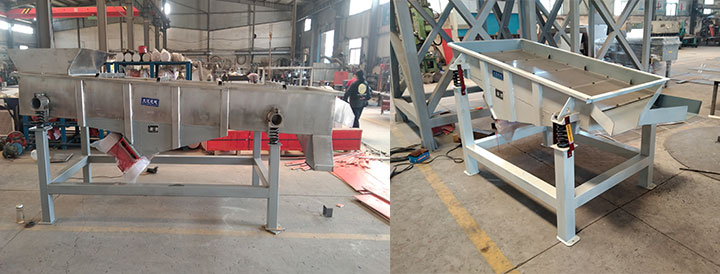
Recommended application of Apatite Vibrating Screen
The mesh number of the apatite vibrating screen needs to be determined according to the specific screening requirements. The larger the mesh number, the smaller the aperture, and the finer the particles of the screened material. For the screening of apatite, if it is a coarse screening, a screen with a smaller mesh number will be selected to remove larger impurities or particles.
|
Application link |
Screening purpose |
Recommended mesh number range |
Corresponding particle size (μm) |
|
Ore initial screening/grading after crushing |
Removal of large particles, coarse screening |
4~10 mesh |
2000~4000μm |
|
Grading of phosphate fertilizer particles after granulation |
Separation of powder and finished particles |
10~20 mesh |
850~2000μm |
|
Medium-sized powder grading (phosphate) |
Control of medium powder particle size |
40~80 mesh |
180~425μm |
|
Fine phosphorus powder classification (chemical grade apatite) |
fine screening to remove impurities and prevent caking |
100~200 mesh |
75~150μm |
|
Ultrafine phosphide fine screening |
precision screening, removal of crystal agglomerates |
200~325 mesh |
44~75μm |
What is the use of apatite vibrating screen?
Apatite vibrating screen is widely used in phosphate ore classification, phosphate fertilizer granulation screening, phosphorus chemical powder fine screening and desludging and impurity removal. In raw ore processing, it can efficiently remove unqualified particle size and improve crushing and flotation efficiency; in phosphate fertilizer production, it can control particle grade through screening and improve finished product consistency; in chemical processing, fine screening ensures powder purity and reaction efficiency; and in pre-packaging impurity removal and environmental dust removal, vibrating screens also play a key role.
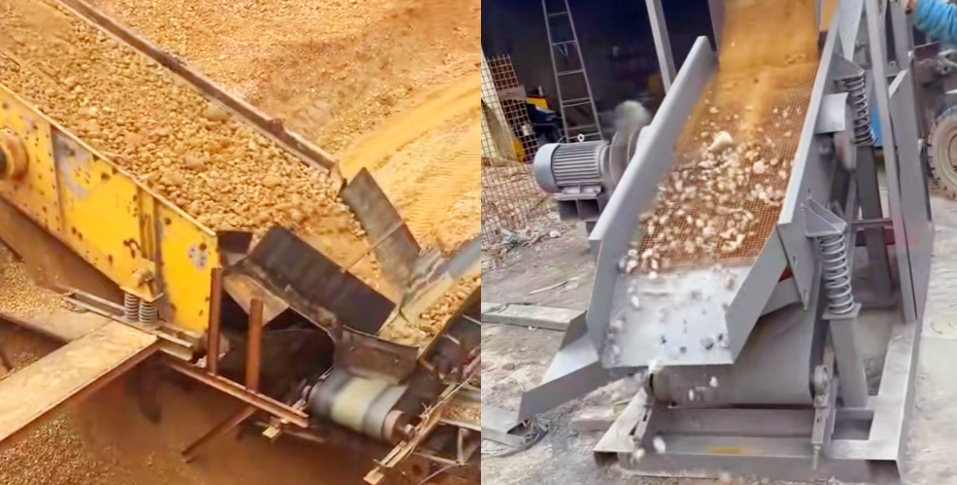
Case Study of Application of Apatite Vibrating Screen
Apatite vibrating screens can be used for pre-screening, particle size classification, impurity removal, and dewatering of materials. Depending on production needs, vibrating screens are placed in crushing, grinding, and flotation processes to improve the quality of phosphate concentrate and overall production efficiency. One concentrator was processing low-grade apatite ore with complex properties and various impurities. To improve the recovery rate of apatite and the grade of concentrate, screening and classification of the ore were necessary. The plant used a circular vibrating screen as a coarse screen to separate large pieces of ore and impurities such as mud from the raw ore, and then used a linear vibrating screen as a fine screen to further screen and classify the crushed ore, providing suitable raw materials for subsequent grinding and beneficiation. By using these two types of vibrating screens in combination, the concentrator's apatite recovery rate increased by more than 10%, and the concentrate grade also increased by about 5%.
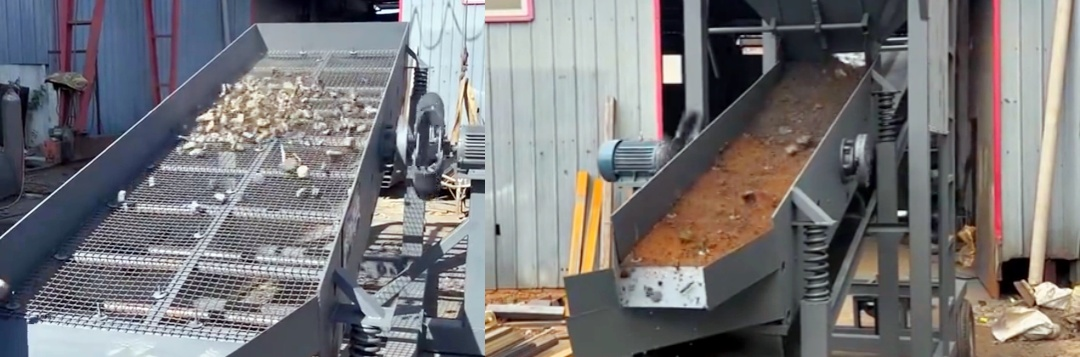
Apatite vibrating screen supplier
When choosing an apatite vibrating screen supplier, it is more important to see whether it has the production capacity of various types of equipment and rich industry application experience. High-quality suppliers can provide a variety of equipment such as linear vibrating screens, three-dimensional vibrating screens, dewatering screens, heavy-duty screens, etc. according to parameters such as apatite particle size, impurity content, humidity and processing capacity, which are suitable for classification before crushing, fine screening before flotation, and dewatering after flotation. Supplier should have non-standard customization capabilities to adapt to different working conditions such as open-pit mines, mineral processing workshops, and wet operations.
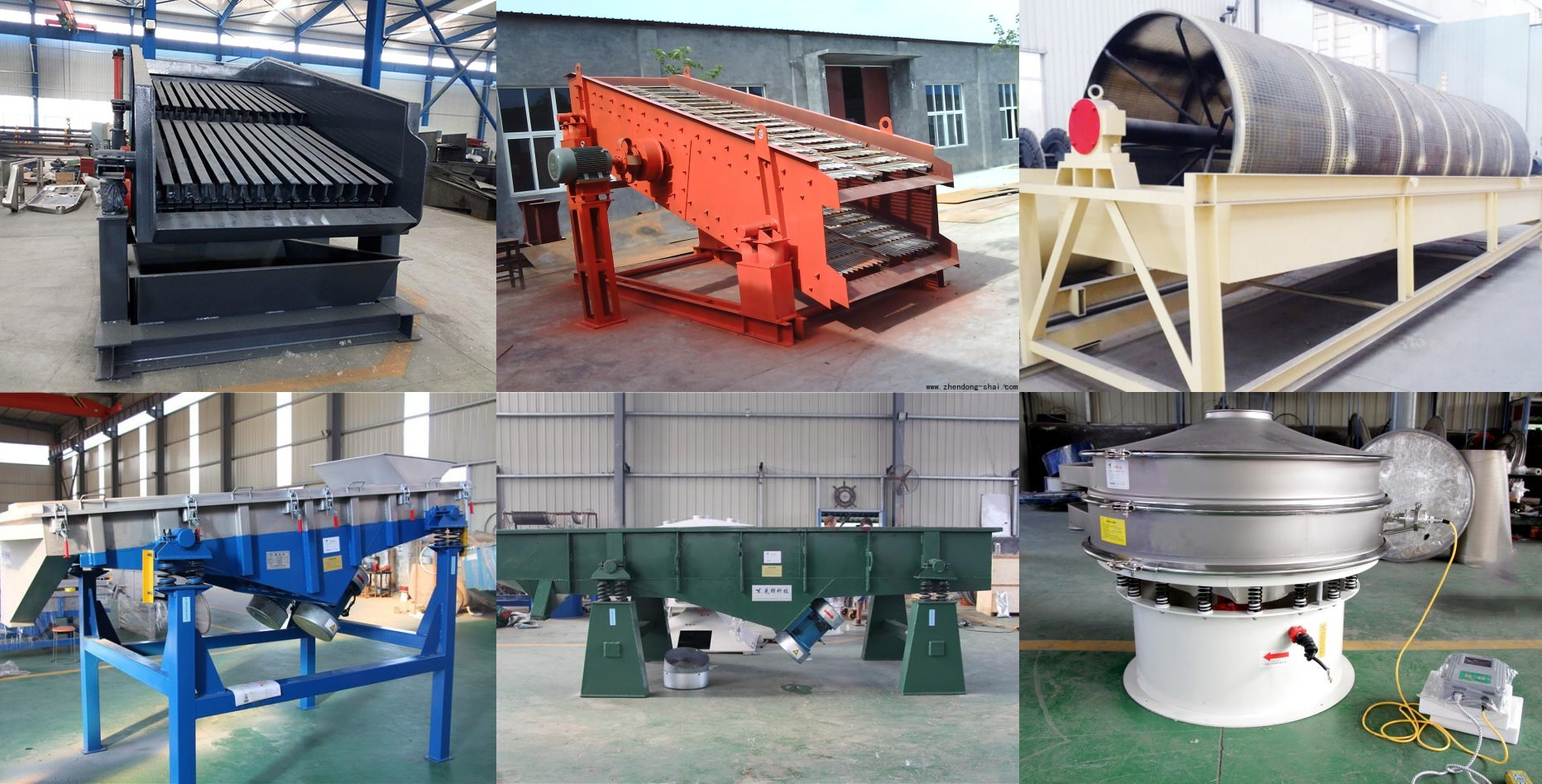
Application of Apatite Vibrating Screen plays a key role in the field of ore processing. Through pretreatment, precise screening and product optimization, efficient grading of apatite is achieved. The refined operation from coarse screening to fine screening not only improves the utilization rate of raw materials, but also meets the stringent requirements of apatite particle size in different industries.
-
Coal Sorting Vibrating Screen
In coal processing, the Coal Sorting Vibrating Screen plays a crucial role in particle size classification, impurity removal, and dewatering/de-mediuming...
-
Pepper Vibrating Screen
Pepper Vibrating Screen is a machine used to process whole, broken, and powdered peppercorns...
-
Slag powder Vibrating Screen
Slag powder Vibrating Screens are screening devices used for slag powder...
-
Gypsum powder Vibrating Screen
The function of a Gypsum powder Vibrating Screen is to remove impurities, classify, and control the particle size of gypsum powder...

Email:
sale@xxdahan.com
WhatsApp:
+86 15236742901
Add:
1000m West of Forest Park,Yanjin County,Xinxiang City,Henan Province,China.