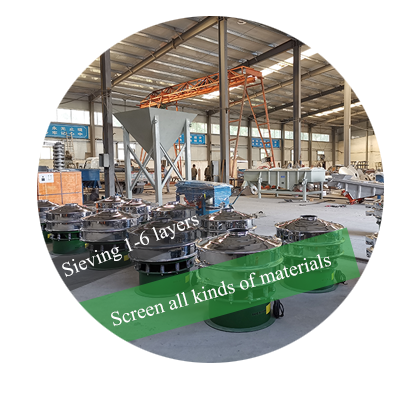
Vibrating Screen for Stone Crushing Plant
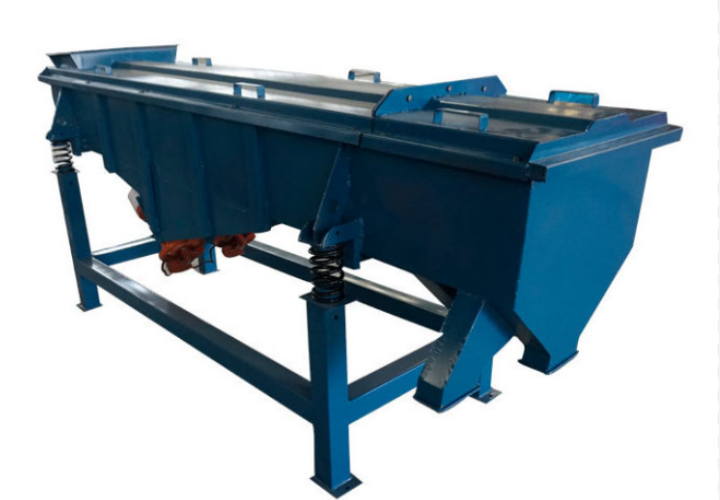
Vibrating Screen for Stone Crushing Plant is a screening device used in stone crushing production lines to separate crushed stone according to different particle sizes. The vibrating screen uses a vibrating device to drive the screen body, causing the material to be screened or graded on the screen surface. In a stone crushing plant, this equipment is usually installed after the crusher to screen the stone that has undergone primary or secondary crushing, and to transport materials of different particle sizes to subsequent processes or finished product stockpiles.
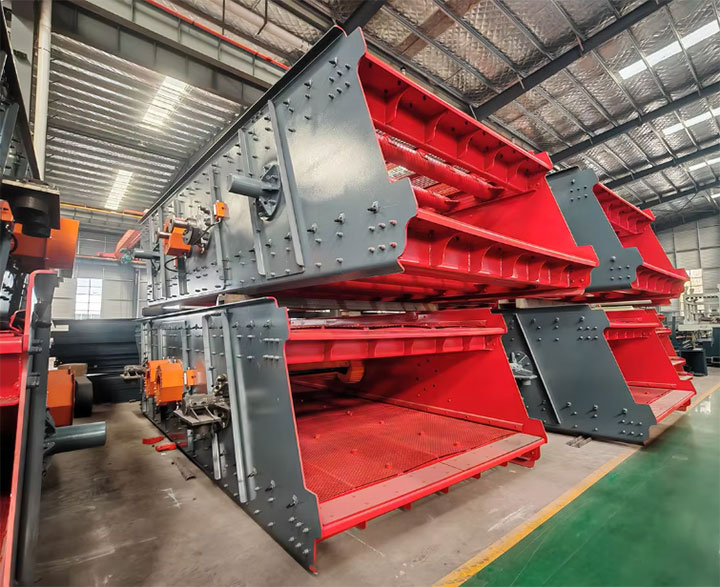
The screening capacity of the equipment varies depending on the model size. Smaller models can process 1-50 tons per hour, while larger models can process 100-500 tons per hour. The equipment structure is typically constructed of robust steel to withstand stone impact and long-term operating environments. The side plates and crossbeams of the screen are made of wear-resistant steel plates to improve the service life of the equipment. The screen material can be woven wire mesh, polyurethane screen plates, or perforated plates, configured according to the characteristics of the material. Depending on production needs, the equipment can be configured with one, two, three, or even four layers of screens, allowing for screening of multiple particle size grades within a single unit.
The Role of the Vibrating Screen for Stone Crushing Plant
The Vibrating Screen for Stone Crushing Plant plays a crucial role in material grading and product control during the stone production process. Firstly, it performs material grading. After the stone has been processed by a jaw crusher, cone crusher, or impact crusher, the vibrating screen divides the material into different particle size grades according to the screen aperture size and conveys them to the corresponding conveyor belts or storage areas. Secondly, it controls product particle size. By adjusting the screen aperture, different aggregate sizes can be produced, such as 0–5 mm manufactured sand, 5–10 mm crushed stone, and other building aggregates within the same particle size range. Furthermore, this equipment improves production efficiency because material that has reached the required particle size leaves the crushing system directly instead of re-entering the crusher. Only material exceeding the required size is returned to the crushing stage for further crushing, thus reducing the amount of recycled material. Vibrating screens also protect crushing equipment to some extent. When excessively large stones or debris enter the screening system, they are intercepted by the screen surface, preventing them from entering the crusher and damaging equipment components. Through continuous vibration and screening, the equipment makes the production process more orderly and the product particle size clearer.
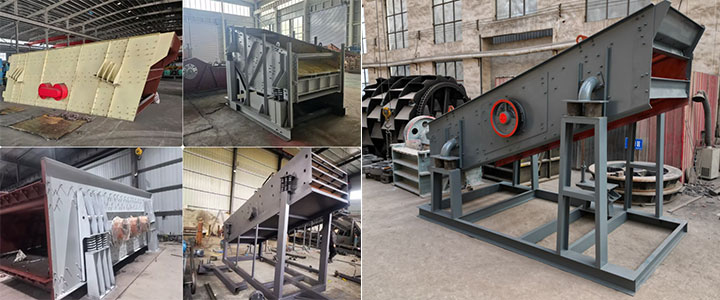
Working principle of stone vibrating screen
A vibrating screen for stone crushing plant achieves stone separation through vibration. The equipment typically consists of a motor, belt drive, and eccentric shaft or vibrator. The motor generates centrifugal force, causing the screen box to vibrate in a circular or linear motion. Crushed stones enter the screen surface from the feed end and are thrown up and moved forward under the vibration. Particles smaller than the screen aperture size fall through the screen to the lower layer or conveyor belt, while larger stones continue to move on the screen surface and are discharged from the discharge end. The screen is usually set at a certain angle to help the material be conveyed smoothly forward. The multi-layer screen structure can simultaneously separate aggregates of different particle sizes, thus completing the material screening and grading in the stone crushing plant.
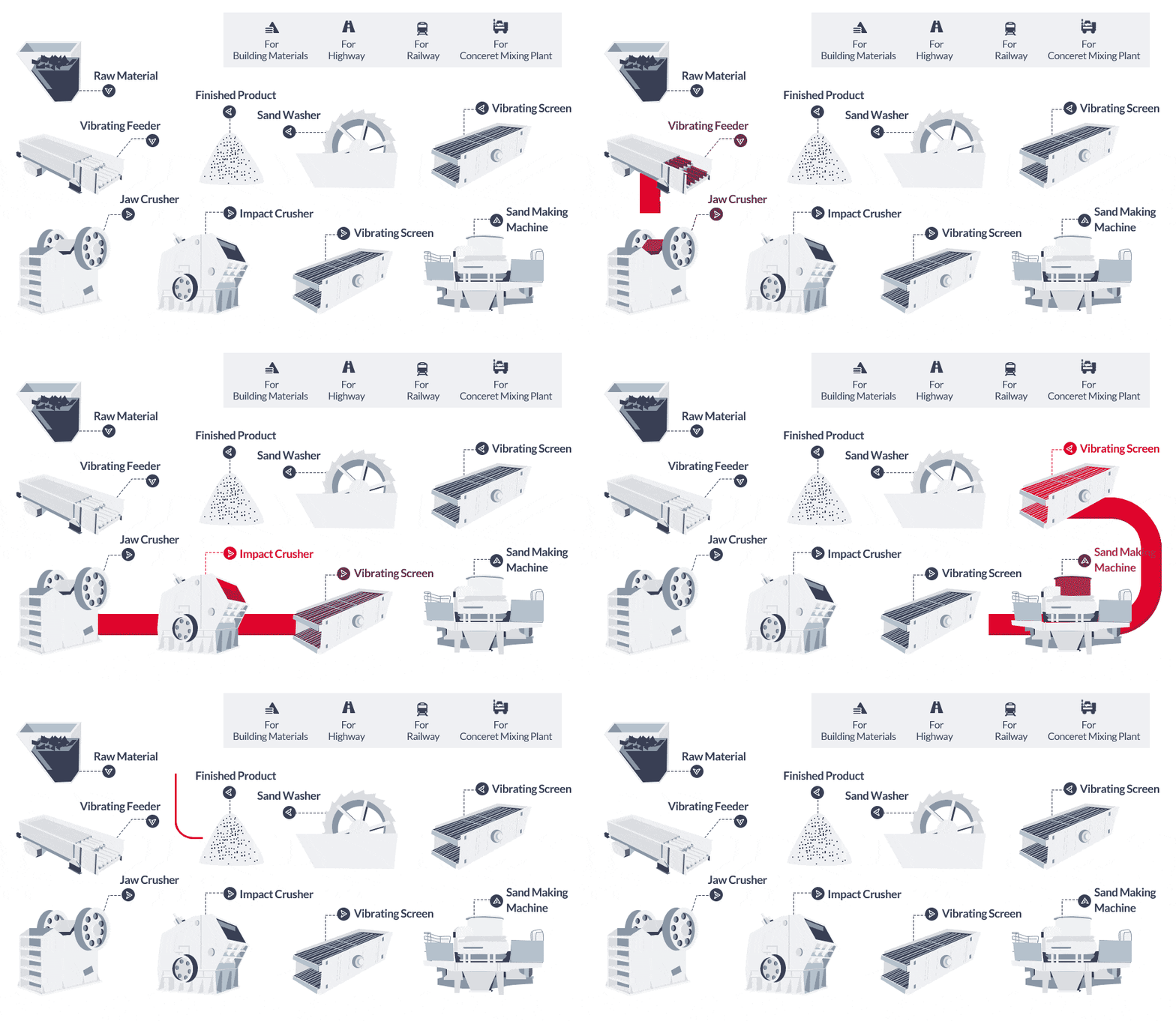
Main Types of Vibrating Screens Used in Stone Crushing
When choosing a machine model, there are two options: circular vibrating screen and linear vibrating screen. The output of a circular vibrating screen is greater than that of a linear vibrating screen, and the choice can be made according to the required screening volume of the stone.
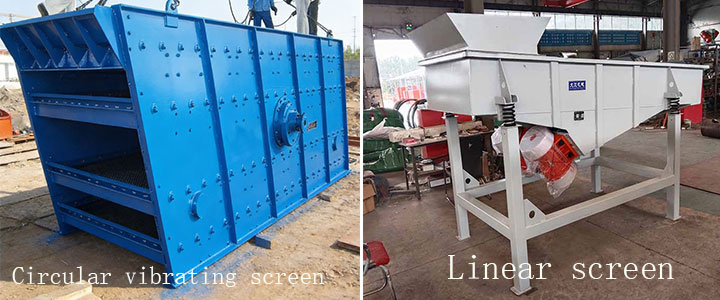
Circular vibrating screens are commonly used for grading stone materials after coarse and medium crushing. The equipment generates vibration through an eccentric shaft vibrator, causing the material to move in a circular motion on a 15°-25° inclined screen surface, thus completing the screening according to particle size. Processing capacity is approximately 10-500 t/h, and the feed particle size can reach 500 mm. The screen surface is usually equipped with 1-4 layers of high manganese steel mesh or polyurethane screen plates, suitable for screening aggregates of hard stones such as granite and basalt. It can handle continuous screening of large-sized stones.
Linear vibrating screens are suitable for fine material grading and dewatering. The equipment uses dual vibrating motors that operate synchronously in opposite directions, driving the material forward in a straight line on a horizontal or 0°-5° inclined screen surface. Processing capacity is approximately 5-150 t/h, suitable for materials smaller than 10 mm. When producing manufactured sand, it can be equipped with 0.1-5 mm screens for further fine grading; in wet production lines, it can also be used for dewatering, desliming, and fine sand recovery. The mud content of the finished product after screening is easier to control, and the subsequent stacking, loading and sales processes are also smoother.
Vibrating screen model parameter table for stone crushing plant
| Model | Screen Size (mm) | Layers | Max Feeding Size (mm) | Capacity (t/h) | Power (kW) |
|---|---|---|---|---|---|
| YK-1235 | 1200 × 3500 | 1-3 | < 200 | 10 - 50 | 7.5 |
| YK-1548 | 1500 × 4800 | 1-3 | < 300 | 30 - 100 | 11 |
| YK-1848 | 1800 × 4800 | 1-4 | < 400 | 50 - 150 | 15 |
| YK-2160 | 2100 × 6000 | 1-4 | < 400 | 100 - 280 | 22 |
| YK-2460 | 2400 × 6000 | 1-4 | < 500 | 150 - 450 | 30 |
| YK-3073 | 3000 × 7300 | 1-4 | < 500 | 300 - 800 | 55 |
How to Choose a Suitable Vibrating Screen for Stone Crushing Plant?
Selecting the right Vibrating Screen for a Stone Crushing Plant requires matching equipment parameters to actual production needs. The throughput must align with the production line's output target, while also considering factors such as raw material hardness, moisture content, and feed uniformity. Screen size determines processing efficiency; a wider and longer screen allows for larger material volumes and provides more residence time, ensuring optimal screening. Screen aperture size directly determines the particle size of the finished product. Common aperture sizes are 5 mm, 10 mm, 20 mm, 30 mm, and 50 mm, and the selection must be based on the project's requirements for finished products such as 13mm, 24mm, or sand and gravel. The installation angle affects material movement speed; a larger angle results in faster material flow but may reduce screening accuracy, while a smaller angle allows for longer material residence time but reduces throughput. In stone crushing production lines, the installation angle is typically set between 15° and 30°. The inherent properties of the material also influence screen selection. Different materials, such as limestone, granite, and basalt, require specific considerations during selection. For instance, highly abrasive materials require wear-resistant screen plates, while moist materials necessitate anti-clogging screen designs to prevent screen hole blockage.
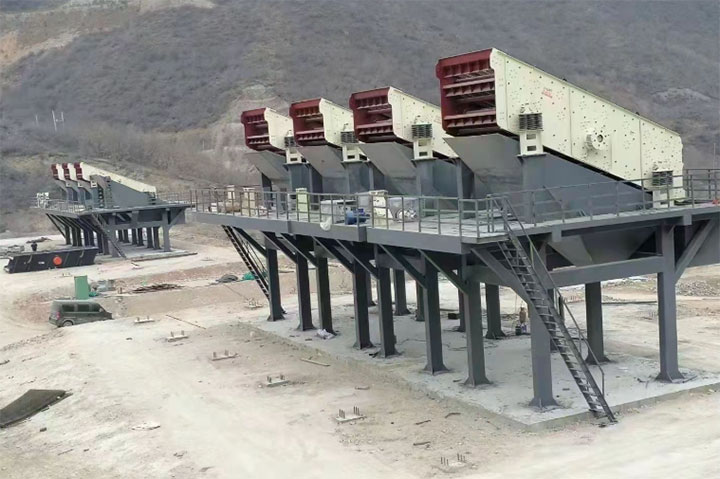
Material Suitability
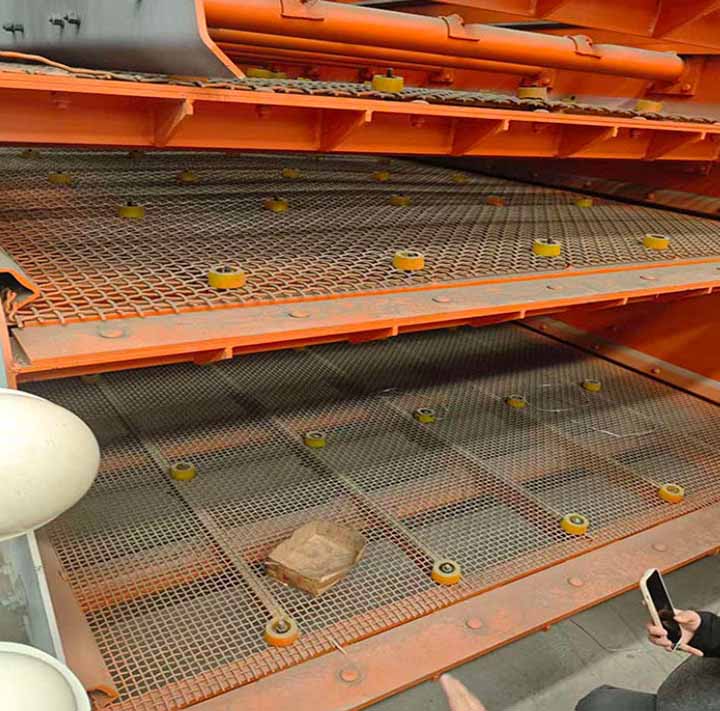
For High-Abrasion Stones (Granite, Basalt): When hard granite and basalt impact the screen surface, ordinary steel wire is easily broken. A high-manganese steel woven mesh or thick polyurethane screen plate can be installed on the top layer where the impact is greatest, utilizing the material's impact force to convert it into abrasion resistance, reducing the frequency of downtime for screen replacement.
For Wet/Sticky Materials: When dealing with rain-soaked mud or high-moisture sand and gravel, mud powder easily adheres to the screen holes, causing the screen to become clogged. In this case, an interlaced woven spring anti-clogging mesh or a high-resilience polyurethane tensioned screen can be used to shake off and eject the wet mud from the gaps.
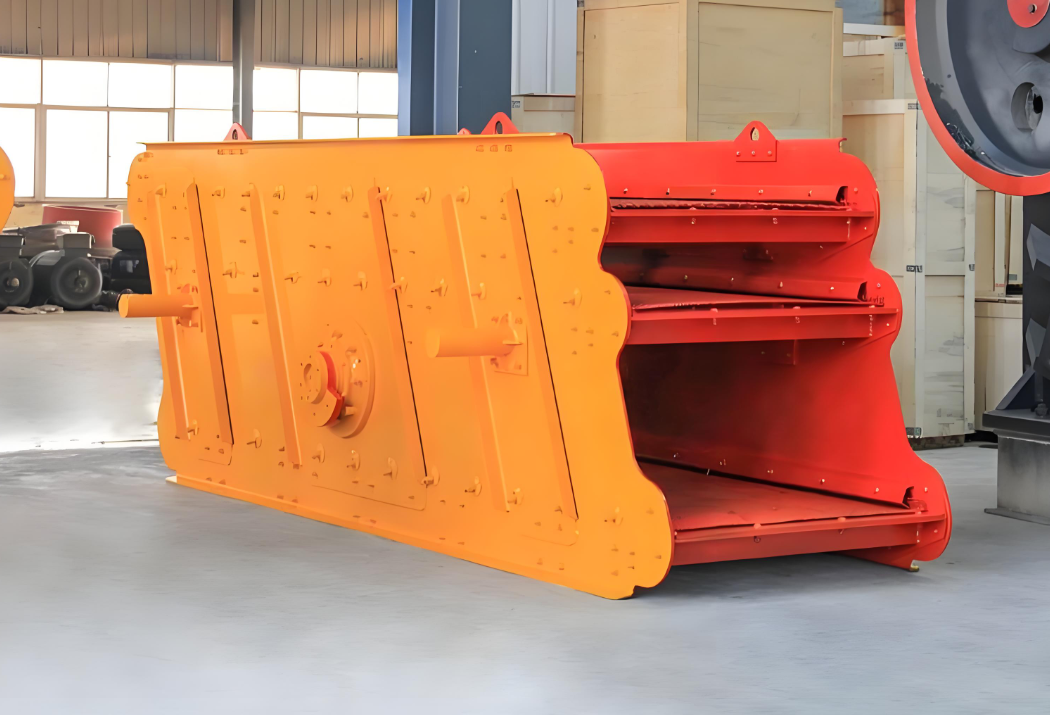
Vibrating screens for stone crushing plants utilize vibration and a multi-layered screen structure to perform stone grading tasks in continuous operation, maintaining a smooth production process. Appropriate selection of screen materials, screen surface structure, and equipment specifications helps maintain stable screening conditions. Simultaneously, regular checks of the vibrator, screen tension, and structural connections also contribute to maintaining optimal equipment performance. In stone processing and mining environments, vibrating screens, along with crushing equipment and conveying systems, constitute a complete production process.
-
Coal Sorting Vibrating Screen
In coal processing, the Coal Sorting Vibrating Screen plays a crucial role in particle size classification, impurity removal, and dewatering/de-mediuming...
-
Gypsum powder Vibrating Screen
The function of a Gypsum powder Vibrating Screen is to remove impurities, classify, and control the particle size of gypsum powder...
-
Phosphate rock powder Vibrating Screen
Phosphate rock powder Vibrating Screens are screening devices designed to utilize the characteristics of phosphate rock powder...
-
Vibrating Screen for Sand
Vibrating Screen for Sand can screen sand of different particle sizes from 4 to 200 mesh...

Email:
sale@xxdahan.com
WhatsApp:
+86 15236742901
Add:
1000m West of Forest Park,Yanjin County,Xinxiang City,Henan Province,China.