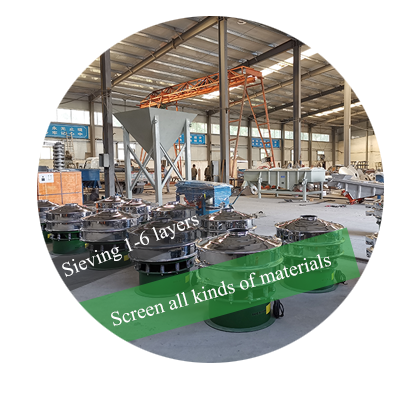
Lithium Battery Material Vibrating Screen
![[field:title/]](/uploads/261019/6-2610191J01G45.jpg)
Callback
| Model: | DH-400 to DH-1800 |
| Capacity: | 100–3,300 kg/h* |
| Fine Screening: | 200–500 Mesh* |
| Screen Layers: | 1–5 Layers |
Grades lithium battery cathode and anode powders.
Ultrasonic screening helps reduce mesh blinding from fine powders.
Optional contact-surface coatings help reduce direct metal contact.
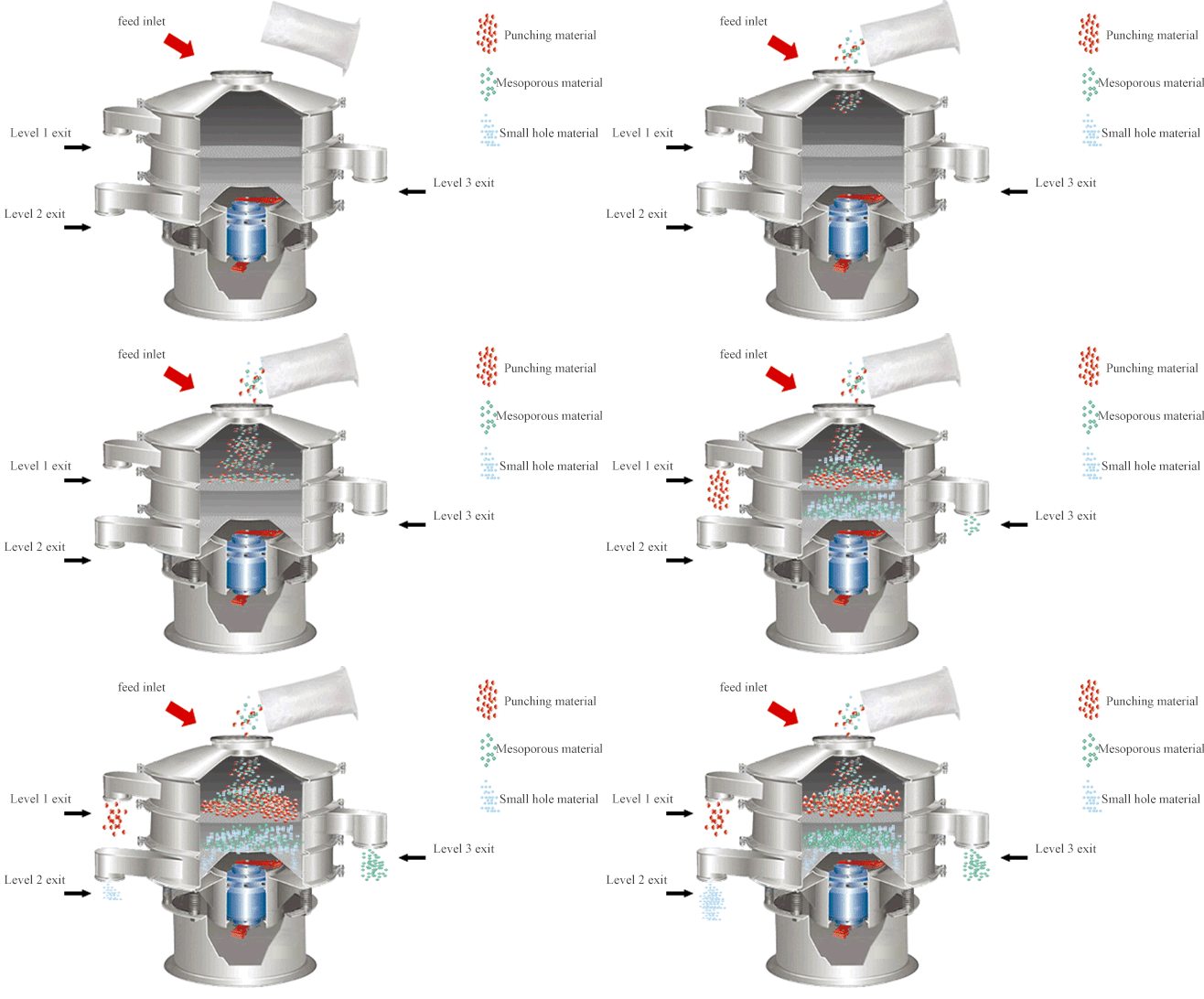
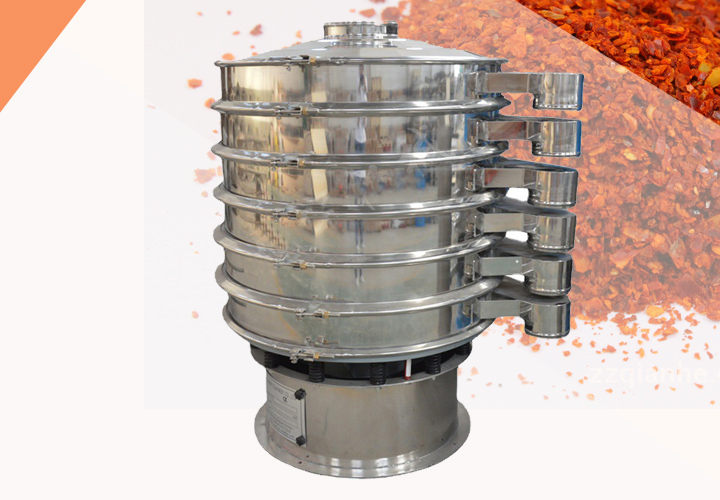
Multi-layer screening separates different particle sizes.
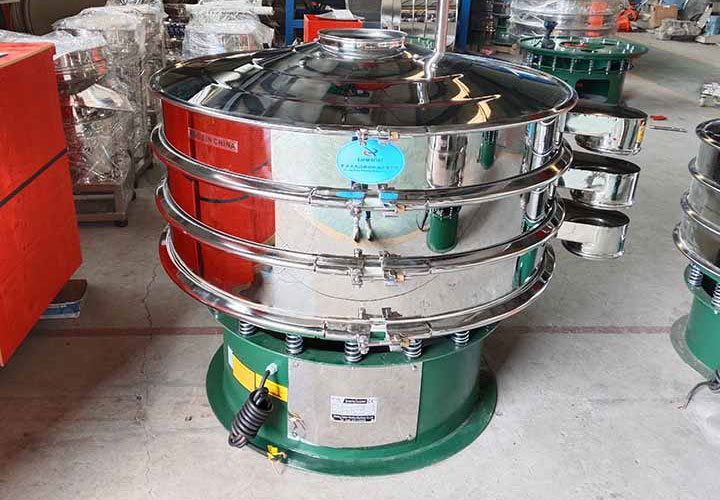
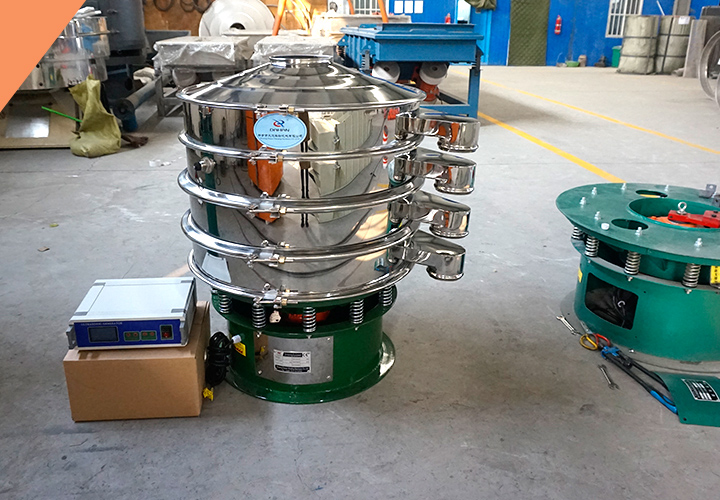
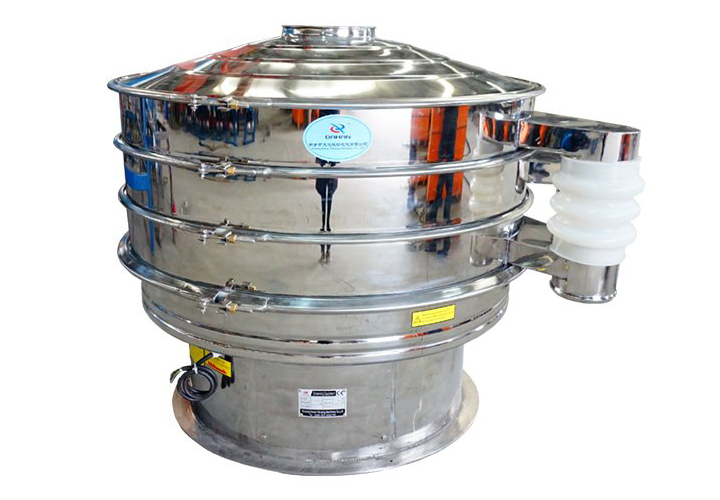
The Lithium Battery Material Vibrating Screen is a mechanical device that uses high-frequency three-dimensional vibration and ultrasonic transmission to classify lithium battery positive and negative electrode powders. It can process fine powders with particle sizes ranging from 200 to 500 mesh (approximately 25 to 75 micrometers), with a typical screening capacity of 100-3300 kg/h. When processing such materials, ordinary circular vibrating screens often experience a sharp drop in screening output within minutes because the lithium battery powder's inherent strong static electricity, high adsorption capacity, and low specific gravity cause the powder to quickly adhere to the mesh surface and clog the mesh openings.
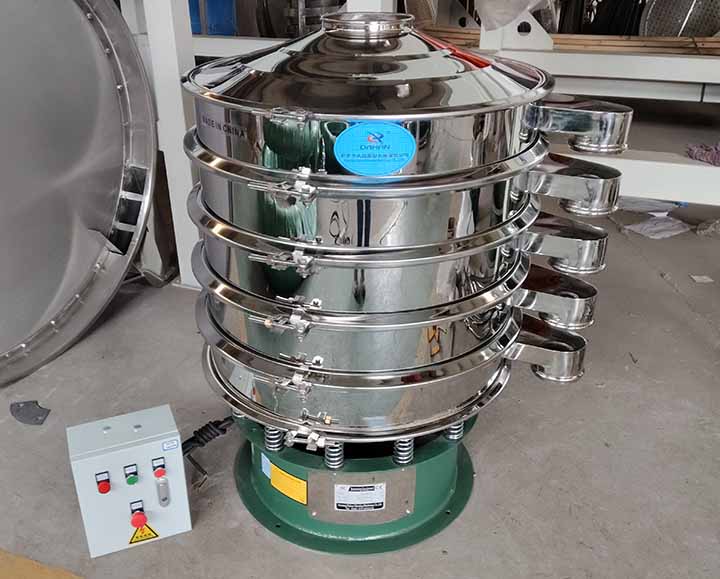
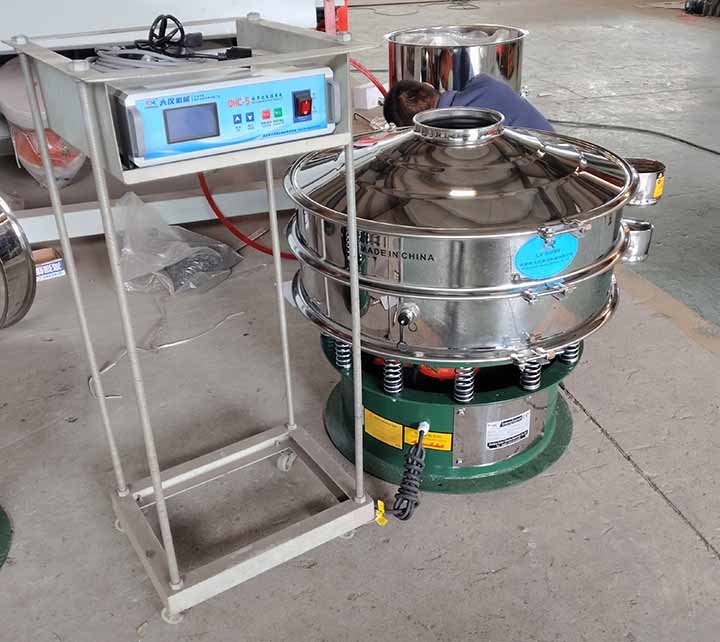
This machine, however, is equipped with an ultrasonic transducer that converts electrical energy into high-frequency sound waves and distributes them evenly on the mesh surface. This keeps the lithium battery material in a slightly suspended state, breaking up electrostatic agglomerations between powder particles and thus maintaining continuous production.
Table of Pain Points in Lithium Battery Material Vibrating Screen Production
| Production Pain Points | Solutions & Equipment Details | Actual Production Improvements |
| Mixed-in metal foreign matters such as iron and copper cause risk of battery self-discharge | All internal metal surfaces in contact with materials are thermally sprayed with a 2mm thick coating of PTFE (Polytetrafluoroethylene) or polyurethane. | Eliminate frictional contact between materials and stainless steel, and control magnetic substances at ppb level. |
| Strong static electricity of 500-mesh fine powder leads to rapid mesh blockage in a short time | External ultrasonic generators are installed on the edge of the screen frame to clean mesh holes via high-frequency resonance. | No shutdown required for manual mesh brushing, and the screen penetration rate remains above 85%. |
| Leakage of anode graphite dust brings fire and explosion hazards to the workshop | Adopt integrally machined flange groove design, physically compressed with silicone sealing rings. | Air-tight sealing is realized, and dust concentration in workshop air is controlled below safety standards. |
Application Scenarios
This screening machine is deployed in the mid-to-downstream powder refining stage of the lithium-ion battery industry chain. Specific application scenarios include:
Positive Electrode Material Preparation: Grading of finished products after air jet milling of lithium iron phosphate (LFP), ternary materials (NCM/NCA), and lithium cobalt oxide, intercepting agglomerates, drying fragments, and large particulate impurities.
Negative Electrode Material Fine Screening: Magnetic separation and degravimetric screening of artificial graphite, natural graphite, and silicon-carbon negative electrode materials before finished product packaging.
Lithium Salt Raw Material Impurity Removal: Pre-screening of industrial-grade lithium carbonate and lithium hydroxide powders before they enter the mixer to remove foreign matter such as packaging bag debris.
Lithium Battery Material Vibrating Screen Components
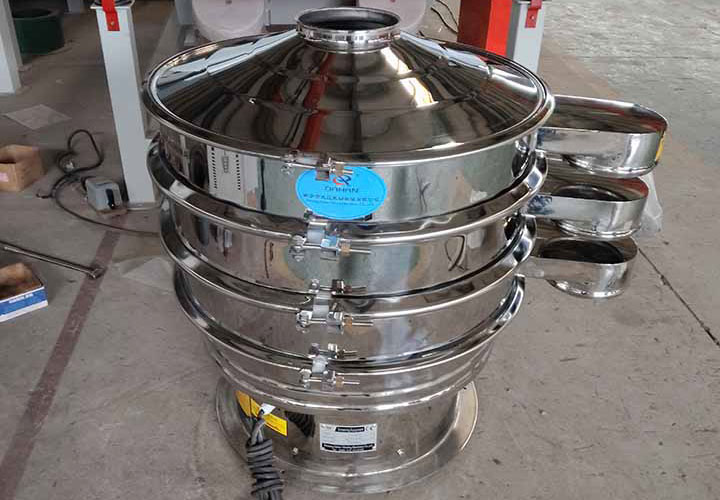
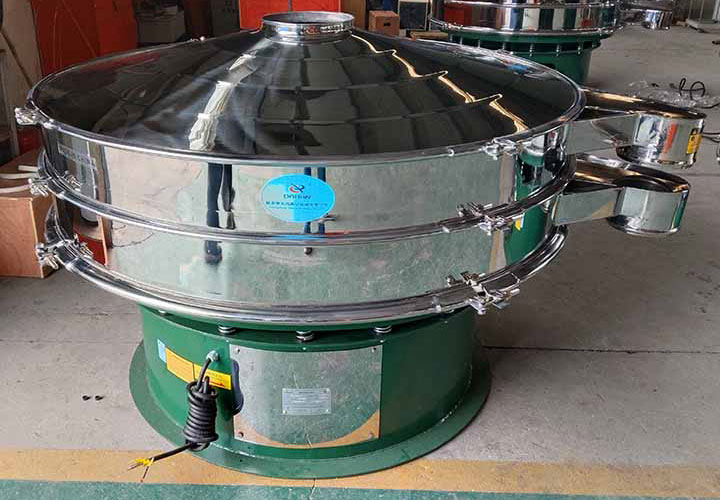
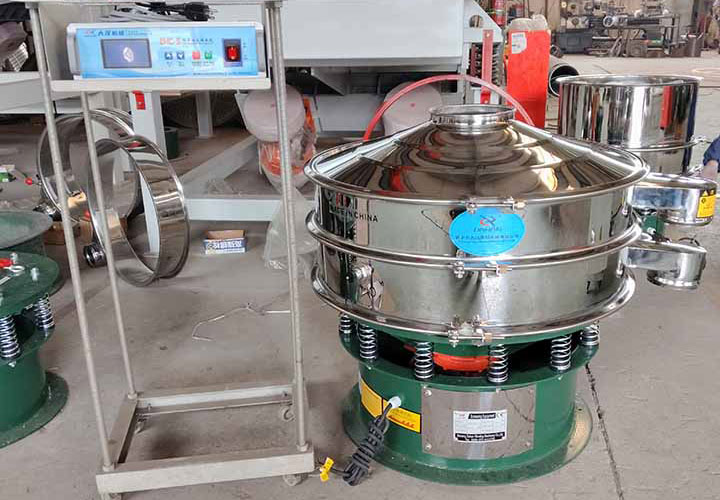
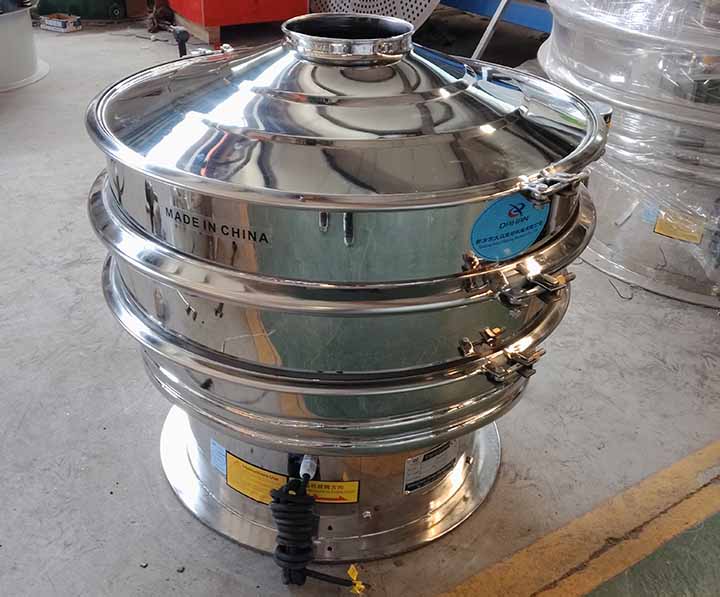
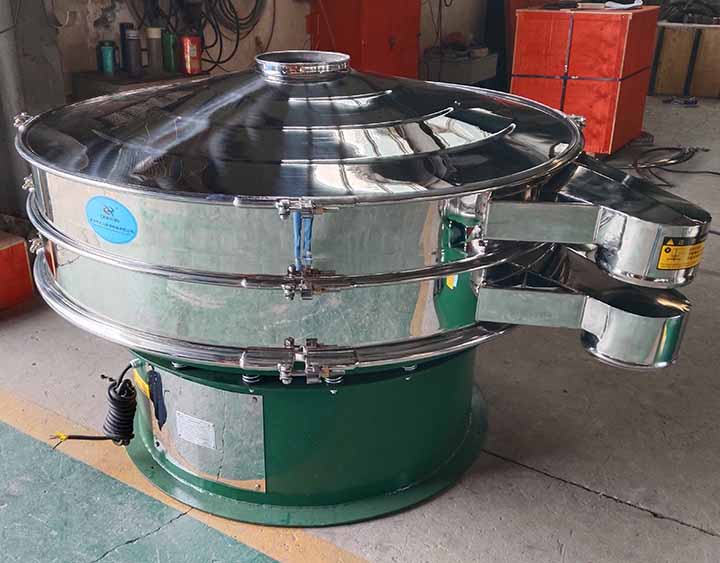
The lithium battery material vibrating screen consists of a sealing ring, vibrating motor, mesh frame, base, screening machine, and screen.
Integrated Molded Airtight Sealing Ring: Utilizes a groove sealing structure formed by integrated injection molding. This design blocks internal dust leakage channels and prevents external humid air from entering the screen frame, reducing the probability of deterioration and scrapping of easily absorbing positive electrode materials.
Ex d IIB T4 Explosion-proof Vibrating Motor: Utilizes a sealed power source with a thickened housing. When handling flammable graphite negative electrode dust, it confines internal sparks generated during high-load operation within the housing, preventing dust explosion accidents.
Double-hoop Quick-release Screen Structure: Employs a quick-opening V-shaped locking strap combination. A single person using a single tool can complete screen disassembly and assembly within 5 minutes, reducing downtime caused by cleaning and screen replacement by 75%.
Lithium Battery Material Vibrating Screen Model Parameter Table
| Model |
Diameter (mm) |
Feeding Size (mm) |
Frequency (RPM) |
Layers |
Power (kw) |
Capacity (kg/h) |
| DH-400 | 400 | <10 | <1500 | 1-5 | 0.18 | 100 |
| DH-600 | 600 | 0.25 | 200 | |||
| DH-800 | 800 | 0.55 | 500 | |||
| DH-1000 | 1000 | 0.75 | 800 | |||
| DH-1200 | 1200 | 1.1 | 1200 | |||
| DH-1500 | 1500 | 1.5 | 1800 | |||
| DH-1800 | 1800 | 2.2 | 2000 |
How much does a lithium battery material vibrating screen cost?
In terms of procurement costs, the price range for a Lithium Battery Material Vibrating Screen is $3,600 to $9,200 USD, with budget differences depending on specific technical configurations. The material of the anti-metal contamination coating is one influencing factor; spraying PTFE only on the material contact surface is about 20% cheaper than spraying polyurethane throughout the entire machine, inside and out. The choice of ultrasonic system also affects the price; a basic domestic single-channel system costs between $4,100 and $7,400 USD, while a dual-channel system with imported chips and automatic frequency tracking will increase the cost by more than $2,100 USD. Furthermore, the grade of steel used in the entire machine also has an impact; using SUS304 stainless steel, compared to the more corrosion-resistant SUS316L, can reduce price fluctuations by 15% to 25%.
Success Story
In one collaboration, we customized three 1200mm diameter screening systems for a lithium iron phosphate (LFP) cathode powder manufacturer in Saxony, Germany. The client faced the problem of excessive metal friction during the screening of 325 mesh fine powder.
We replaced the system with an ultrasonic vibrating screen with a full Halar coating on the contact surfaces. Monitoring data after 12 months of operation showed that the magnetic material content in the material was consistently controlled below 8 ppb, meeting the local automotive battery supply chain access standards. The hourly output of a single unit increased from 180 kg to 420 kg. The mechanical breakage rate of the screens decreased by 60%.
Frequently Asked Questions about Lithium Battery Material Vibration Screens
Q: Will the coating peel off under long-term high-frequency vibration, thus contaminating the lithium battery material?
A: The machine uses a 400°C high-temperature sintering process with high-molecular-weight polytetrafluoroethylene, achieving a Class 1 standard of adhesion between the coating and the stainless steel substrate. When processing positive and negative electrode powders larger than 20 microns, the normal wear cycle exceeds 18 months, and large-scale peeling into the material will not occur.
Q: Can this equipment screen 500-mesh ultrafine negative electrode silicon-carbon powder?
A: Yes. For 500-mesh micro powder, we use a dedicated high-frequency transducer. This transducers transmit micron-level longitudinal vibration waves to the screen wires, disrupting the surface tension and electrostatic adsorption of the silicon-carbon powder, allowing particles to pass through the screen quickly.
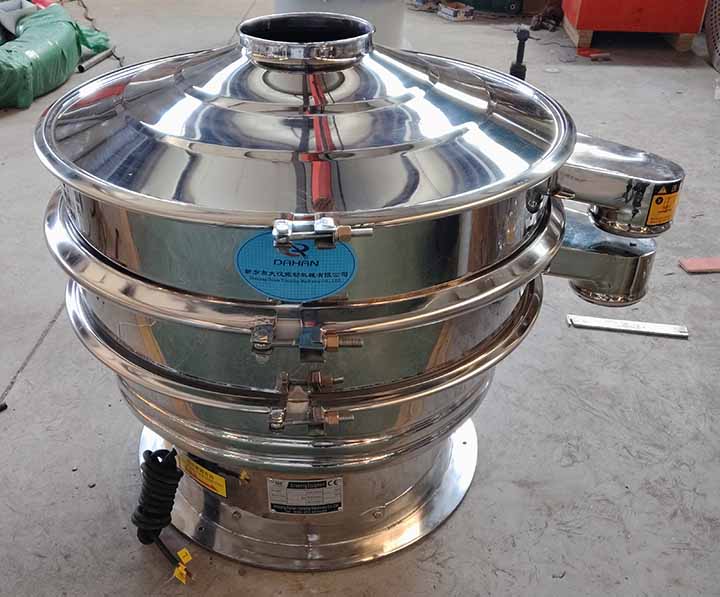
The Lithium Battery Material Vibrating Screen overcomes the technical obstacles of pore clogging and the introduction of magnetic impurities in the graded production of lithium battery positive and negative electrode micro powders through its zero-metal-contact internal coating protection technology and ultrasonic high-frequency cleaning system. The combination of an airtight structure and explosion-proof features helps battery material manufacturers meet product particle size purity requirements while mitigating the production risks associated with dust spillage.
-
Vibrating screen for gypsum processing
Vibrating screen for gypsum processing is a screening equipment used for particle size grading...
-
Coal Sorting Vibrating Screen
In coal processing, the Coal Sorting Vibrating Screen plays a crucial role in particle size classification, impurity removal, and dewatering/de-mediuming...
-
Gypsum powder Vibrating Screen
The function of a Gypsum powder Vibrating Screen is to remove impurities, classify, and control the particle size of gypsum powder...
-
Phosphate rock powder Vibrating Screen
Phosphate rock powder Vibrating Screens are screening devices designed to utilize the characteristics of phosphate rock powder...
-
Vibrating Screen for Sand
Vibrating Screen for Sand can screen sand of different particle sizes from 4 to 200 mesh...

Email:
sale@xxdahan.com
WhatsApp:
+86 15236742901
Add:
1000m West of Forest Park,Yanjin County,Xinxiang City,Henan Province,China.