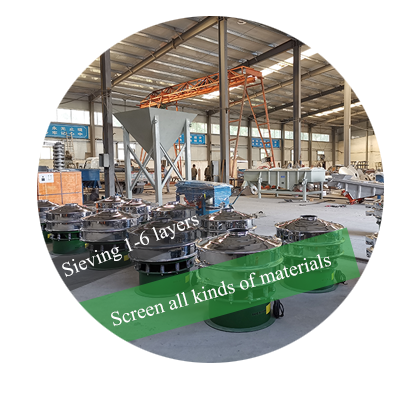
Difference Between Single Deck and Double Deck Vibrating Screen
![[field:title/]](/uploads/allimg/260713/1-260G316320A04-lp.jpg)
Callback
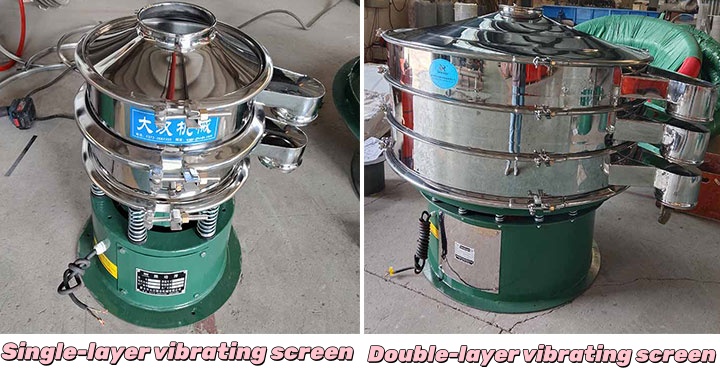
| Screen Decks | 1 Deck (Single) — 2 Decks (Double) |
| Discharge Ports | 2 Ports (Single) — 3 Ports (Double) |
| Material Fractions | 2 Sizes (Single) — 3 Sizes simultaneously (Double) |
Difference Between Single Deck and Double Deck Vibrating Screen configurations determines the final grades of your material separation.
Single deck screen utilizes one mesh layer for rapid sizing, while double deck model incorporates two stacked layers for multi-stage continuous classification.
Achieve an hourly processing capacity ranging from 5 to 800 tons depending on your specific aggregate or mineral selection requirements.
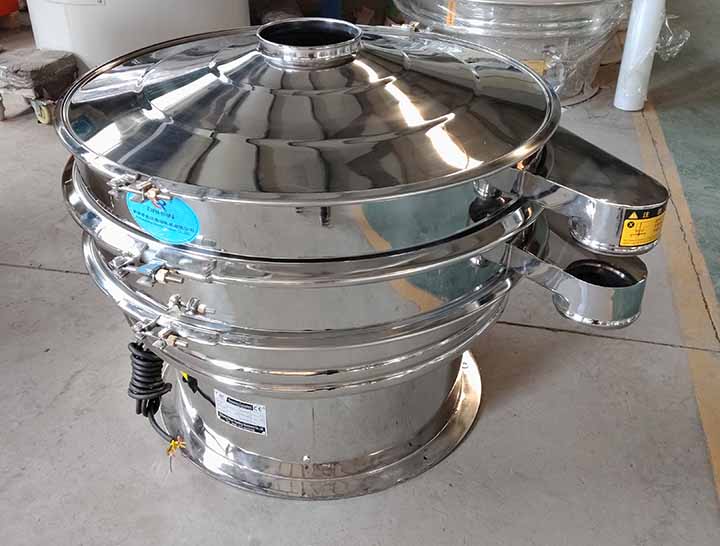
Vibrating screens utilize the exciting force generated by vibrating motors to cause materials on the screen surface to move in a leaping motion, thereby classifying mixed materials of different particle sizes according to the mesh size. The difference between a single-deck vibrating screen and a double-deck vibrating screen lies in the number of screen mesh layers installed inside the screen box, which determines the number of grades discharged after a single pass of material processing. A single-deck screen is configured with one layer of screen mesh and has two discharge ports, which can separate materials into two particle sizes: oversize and undersize; a double-deck screen is configured with upper and lower layers of screen mesh and has three discharge ports, allowing for the simultaneous separation of three different grades of materials. In terms of mesh size range, the single-layer woven mesh aperture for both types typically ranges from 2 mm to 200 mm, and can reach up to 400 mesh for fine powder screening. Regarding screening capacity, because materials pass through a single-deck screen quickly, it is suitable for large-volume single-stage classification, with a processing capacity of 5 to 800 tons per hour; for a double-deck screen, because the upper layer material partially shields the lower layer, the retention time of materials on the screen surface is extended, and under the same screen surface area, its comprehensive processing tonnage is usually 1.3 to 1.6 times that of a single-deck screen.
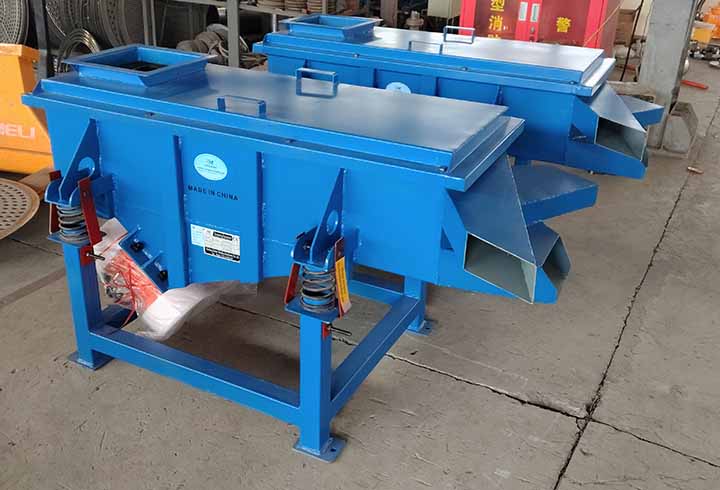
Parameters Comparison Between Single Deck and Double Deck Vibrating Screen
| Comparison Dimension | Single Deck Vibrating Screen | Double Deck Vibrating Screen |
| Number of Screen Decks | 1 deck | 2 decks |
| Number of Discharge Ports | 2 ports | 3 ports |
| Types of Classified Materials | 2 particle sizes | 3 particle sizes |
| Equipment Height | Lower (easy to install in low-ceiling workshops) | Higher (requires vertical space reservation) |
| Material Retention Time | Short (materials drop down directly) | Long (requires two continuous separation stages) |
| Wear Parts Maintenance Cost | Requires replacing only 1 screen mesh (approx. 20 mins) | Requires maintaining 2 screen meshes (lower replacement requires removing the upper layer) |
Where Are They Used?
Different material characteristics and production line finished product requirements determine the choice of equipment. Single-deck vibrating screens are commonly used for primary coarse screening after primary crushing or for removing impurities before finished products. In construction sand and aggregate production lines, single-deck screens are often installed after jaw crushers to screen out coarse rocks above 50 mm, returning them to the crusher for re-crushing. In manufactured sand production, single-deck screens are used to remove soil and micro-powder from sand and gravel. In coal preparation plants, single-deck screens are used for dewatering and desliming raw coal, processing single-grade coal blocks of 13 mm or 25 mm.
Double-deck vibrating screens are applied in independent production lines requiring multi-grade finished product separation. In quarries, the same batch of crushed stone needs to simultaneously produce three different specifications of commercial concrete aggregates: 0-5 mm, 5-10 mm, and 10-20 mm, where selecting a double-deck screen can complete the classification at a single workstation. In mineral processing plants, double-deck screens handle iron ore, copper ore, or gold ore, where the upper screen mesh intercepts large pieces of material to send to secondary crushing, and the lower screen mesh screens out qualified particle sizes to send to the ball mill. In grain processing enterprises, double-deck screens are used for cleaning wheat and soybeans, where the upper screen mesh isolates large impurities (such as stones and straw) and the lower screen mesh isolates small impurities (such as sand particles and weed seeds).
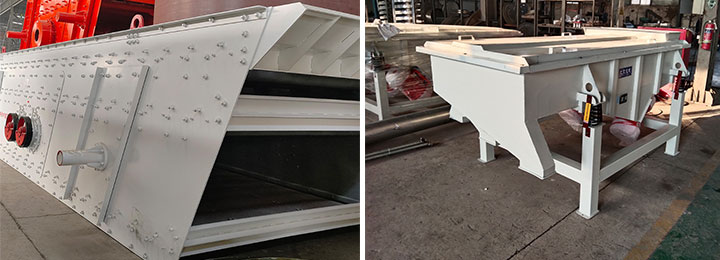
Working Principle of Vibrating Screen
How a Single Deck Vibrating Screen Works?
A single-deck vibrating screen relies on vibration sources (such as exciters or dual vibration motors) installed on both sides or at the bottom of the screen box to generate synchronous self-synchronizing rotation in opposite directions. This rotation causes the screen box to drive the screen surface to make a linear or circular track reciprocating vibration. The mixed material is evenly dropped into the feeding end by the feeder and receives an upward thrust on the inclined screen surface. Coarse particles larger than the screen mesh aperture cannot pass through the mesh holes and slide forward along the screen surface driven by the vibration force, finally dropping from the oversize material discharge port at the front. Fine particles smaller than the screen mesh aperture pass through the mesh holes during the leaping process, fall into the collecting hopper at the bottom of the screen box, and are discharged from the undersize material discharge port.
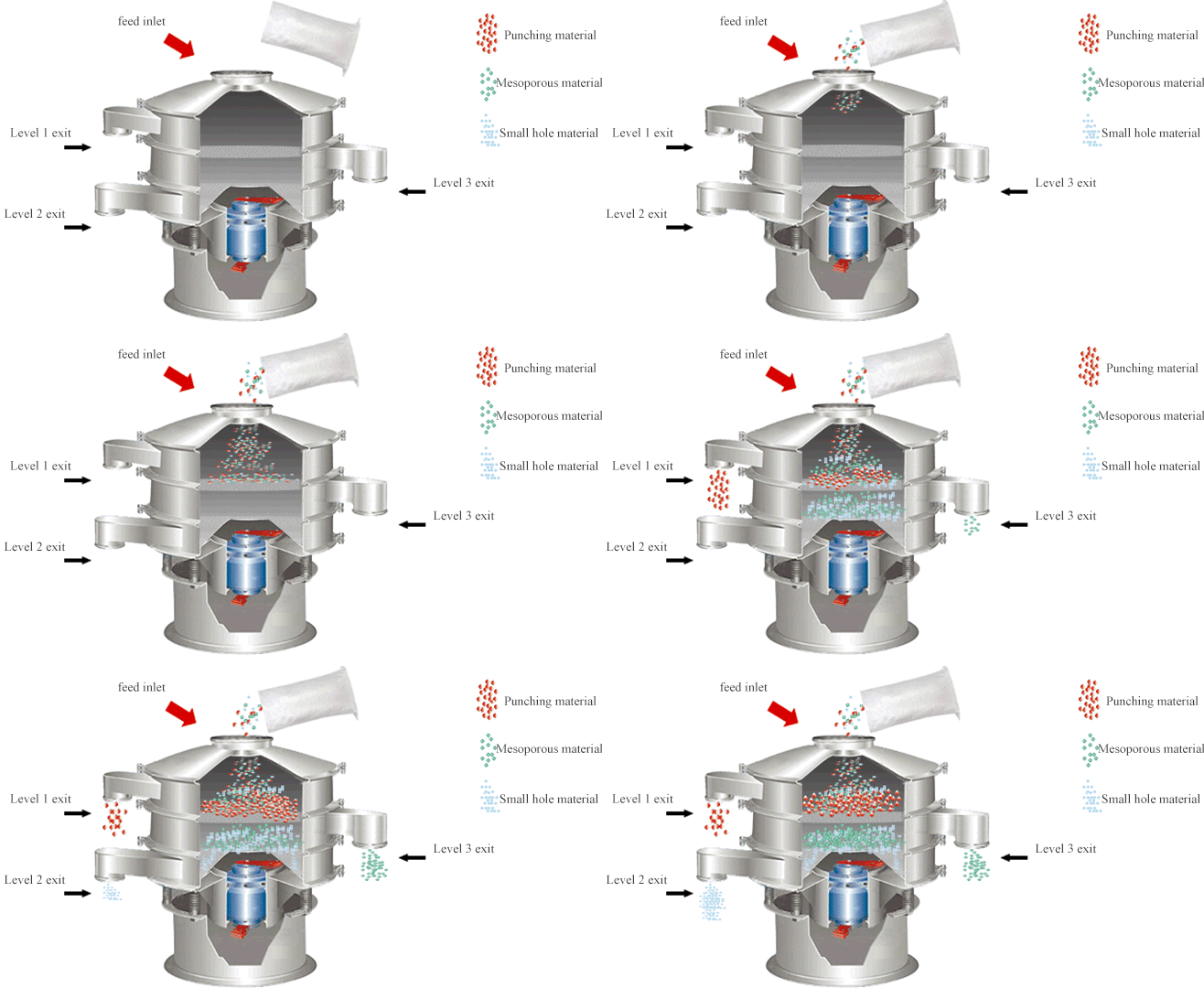
What is the Principle of a Double Deck Screen?
The power transmission method of a double-deck vibrating screen is similar to that of a single-deck screen, but its material flow is divided into two stages in the vertical space. The aperture of the upper screen mesh is larger than that of the lower screen mesh. When the mixed material enters the upper screen surface, the largest particles remain on the upper screen surface and move forward, discharging from the upper discharge port. Medium particles and fine particles pass through the upper screen mesh together and fall onto the lower screen surface. As the screen box continues to vibrate, this part of the material undergoes secondary separation again on the lower screen surface: medium particles stay on the surface of the lower screen mesh, slide forward, and discharge from the middle discharge port; while fine particles smaller than the lower aperture pass through the second layer of screen mesh, fall onto the bottom plate, and are discharged from the lower discharge port.
What are the different types of vibrating screens?
According to different motion trajectories, structural characteristics, and driving methods, commonly used vibrating screens in the industrial field include the following categories:
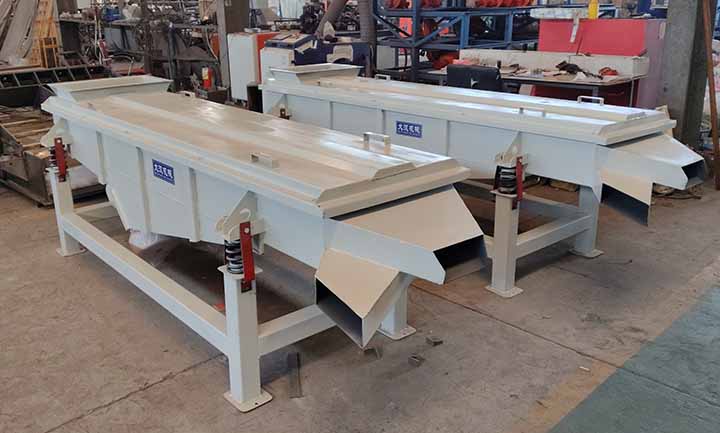
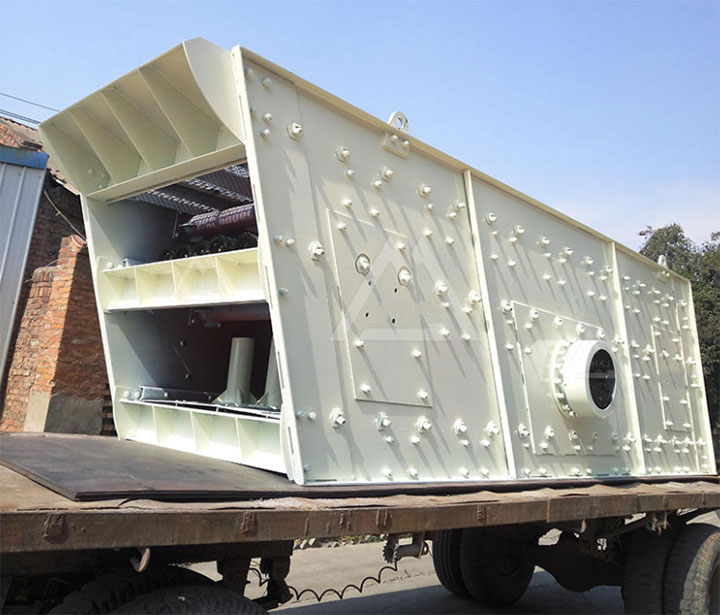
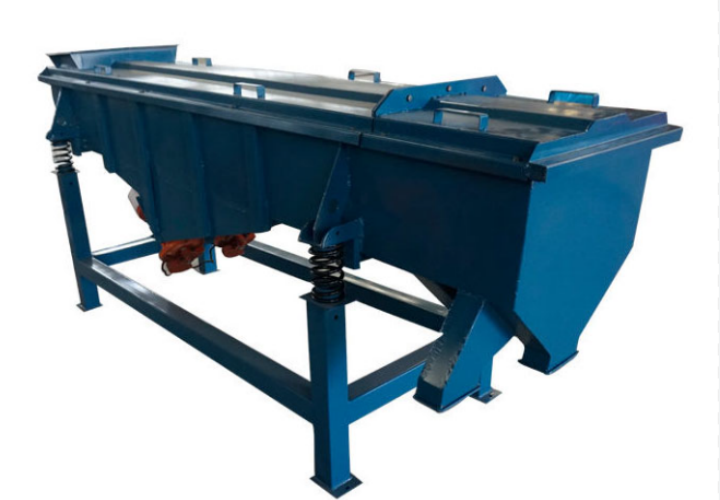
- Linear Vibrating Screen: Driven by dual motors, materials leap forward in a straight line on the screen surface. The screen surface inclination angle is generally between 0 and 5 degrees, suitable for classification and dewatering of fine-grained materials.
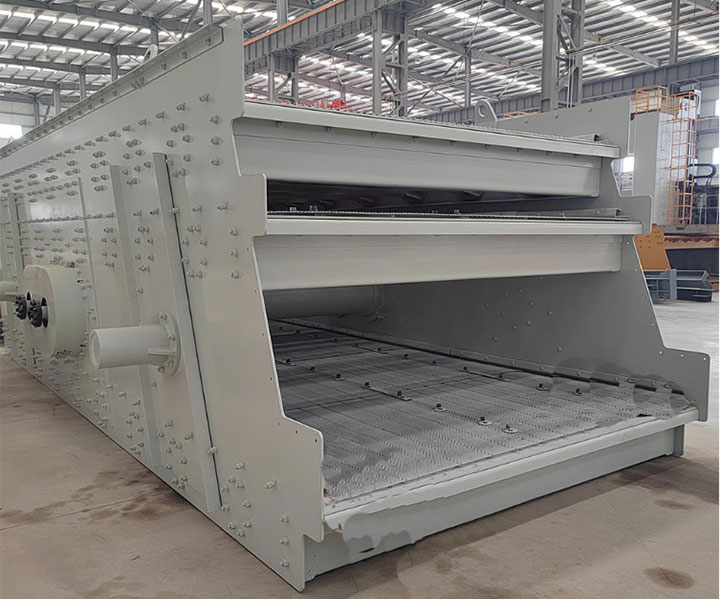
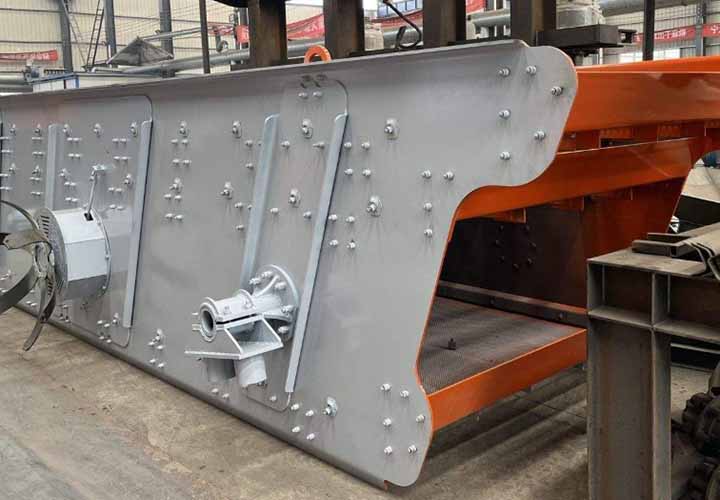
- Circular Vibrating Screen: Adopts a single-shaft exciter, and materials move in a circular motion on the screen surface. The screen surface inclination angle is usually 15 to 25 degrees, suitable for coarse screening of large, high-density ores after crushing.
- Elliptical Vibrating Screen: Combines the motion characteristics of linear and circular types, materials move in an elliptical trajectory on the screen surface, featuring non-blinding and fast screening speed.
- High-frequency Vibrating Screen: High vibration frequency (up to 3000 times/min) but small amplitude, breaking the tension on the slurry surface, suitable for dewatering and classification of fine ore slurry below 1 mm.
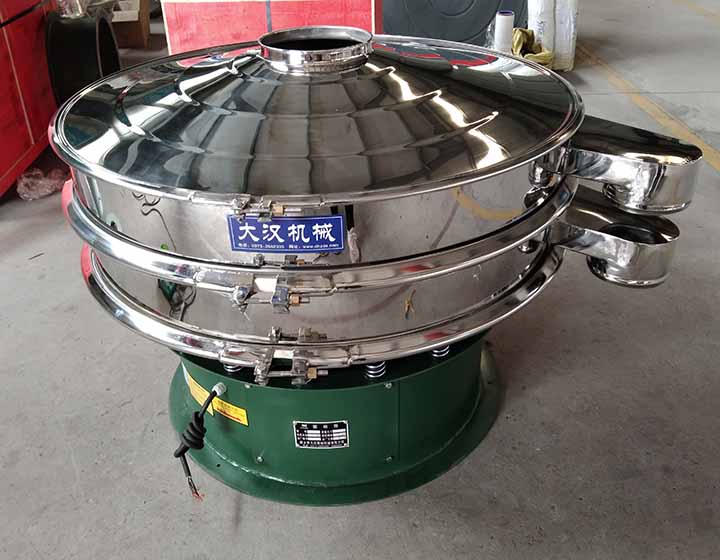
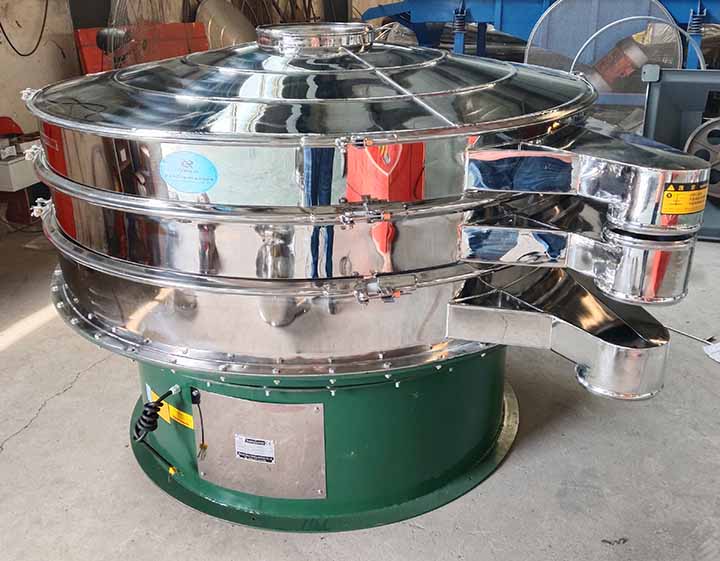
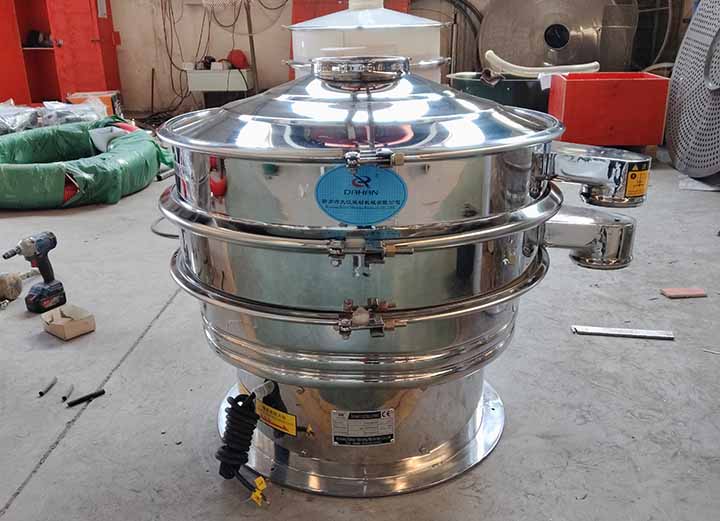
- Rotary Vibrating Screen: Driven by a vertical vibration motor, generating three-dimensional movements of horizontal, vertical, and inclined directions, small in size, suitable for screening powders and mucilage.
Frequently Asked Questions
Q: Can a single-deck vibrating screen be retrofitted into a double-deck vibrating screen later?
A: This depends on the structural design of the equipment and the power reserve of the motor. Retrofitting requires increasing the height of the screen box, adding secondary screen mesh side plates and a discharge port, which increases the total weight of the screen box. If the original vibrating motor and support springs do not have a reserved load margin, direct retrofitting will lead to insufficient amplitude or motor burnout. It usually requires replacing with a higher-power motor and higher-rigidity springs.
Q: Why does the lower screen mesh of a double-deck vibrating screen usually wear out slower than the upper screen mesh?
A: The upper screen mesh directly bears the impact force and friction from large pieces of material at the feeding end, resulting in greater kinetic energy impact. The material falling onto the lower screen mesh has already been screened by the upper layer, removing large coarse materials, which reduces the particle size and lessens the drop height, thereby decreasing the mechanical wear and physical impact on the lower screen mesh.
Q: When the material moisture content is high (such as wet sand), should I choose a single deck or a double deck?
A: Wet and sticky materials easily cause blinding on the screen mesh. If a double-deck screen is selected, the lower screen mesh easily plugs because of its small aperture and less exposure to light, making moisture difficult to dissipate. For materials with a moisture content exceeding 8%, it is recommended to use a single-deck screen equipped with polyurethane screen mesh or anti-blinding strips, or install a water spray system for wet screening.
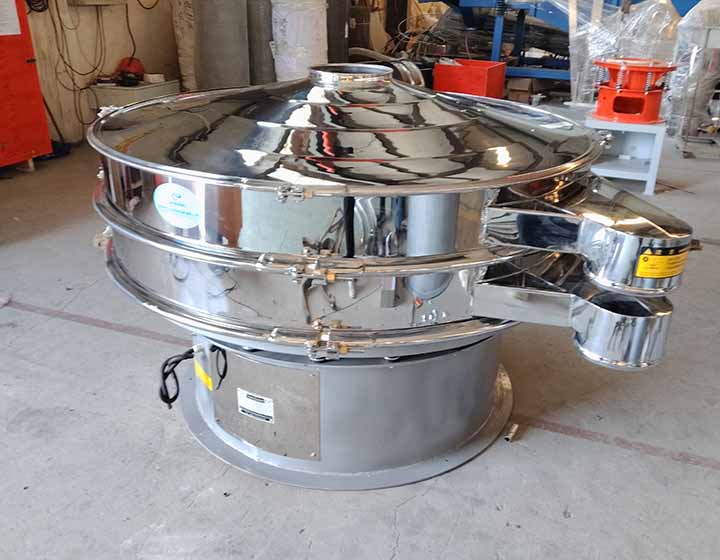
Whether to choose a single-deck vibrating screen or a double-deck vibrating screen depends on the specific requirements of the production line for the number of output material specifications. The single-deck screen has a simple structure and consumes less power, making it suitable for primary impurity removal of coarse materials or single-variety material classification; the double-deck screen realizes three-stage continuous separation of materials utilizing the footprint of a single machine, reducing the configuration quantity of transfer belt conveyors. When planning a purchase, it is necessary to comprehensively evaluate the feed particle size, material moisture content, discharge ratio of each grade of finished product, and the height limits of the onsite factory workshop. For multi-specification sand and gravel aggregate production, configuring double-deck or multi-deck screens is a common solution to reduce the investment cost per ton of material.
-
High Capacity Double Deck Vibrating Screen
High Capacity Double Deck Vibrating Screen for ore grading, coal screening, and aggregate separation. ...
-
Double Deck Vibrating Screen For Fertilizer
Double deck vibrating screen for fertilizer is used for grading NPK, organic, and compound fertilizer ...
-
Double Deck Vibrating Screen for Silica Sand
Double Deck Vibrating Screen for Silica Sand is an industrial screening machine designed with two lay ...
-
Double Deck Vibrating Screen For Quarry
Double Deck Vibrating Screen for Quarry: Used to classify crushed stone materials with high hardness ...

Email:
sale@xxdahan.com
WhatsApp:
+86 15236742901
Add:
1000m West of Forest Park,Yanjin County,Xinxiang City,Henan Province,China.