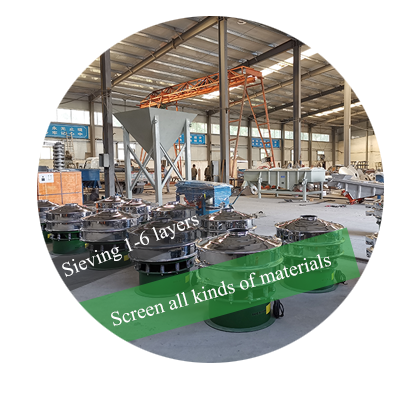
vibrating screen for slurry separation
The function of a vibrating screen for slurry separation is to separate solid particles from liquid in a slurry, and to classify the particles according to their size, facilitating subsequent processes. The machine uses a vibrating motor to drive the screen surface in a regular motion, causing the slurry to continuously bounce on the screen. Small particles and liquid pass through the screen, while larger particles are trapped. Screening capacity is typically related to the screen mesh size, material concentration, and feeding method, and can range from 300 kg to 20 tons per hour. Common materials for the equipment include carbon steel and stainless steel. Stainless steel is more suitable for applications requiring high cleanliness, such as food slurry screening or chemical liquid filtration.
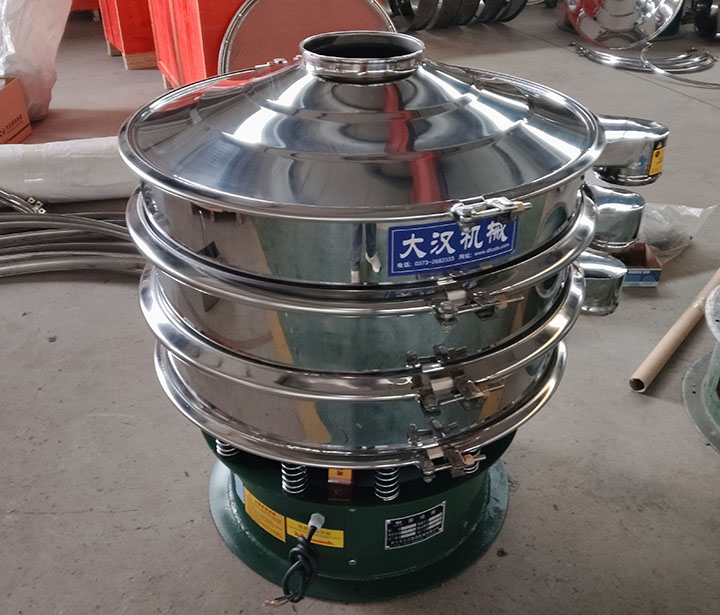
How does a vibrating screen for slurry separation work?
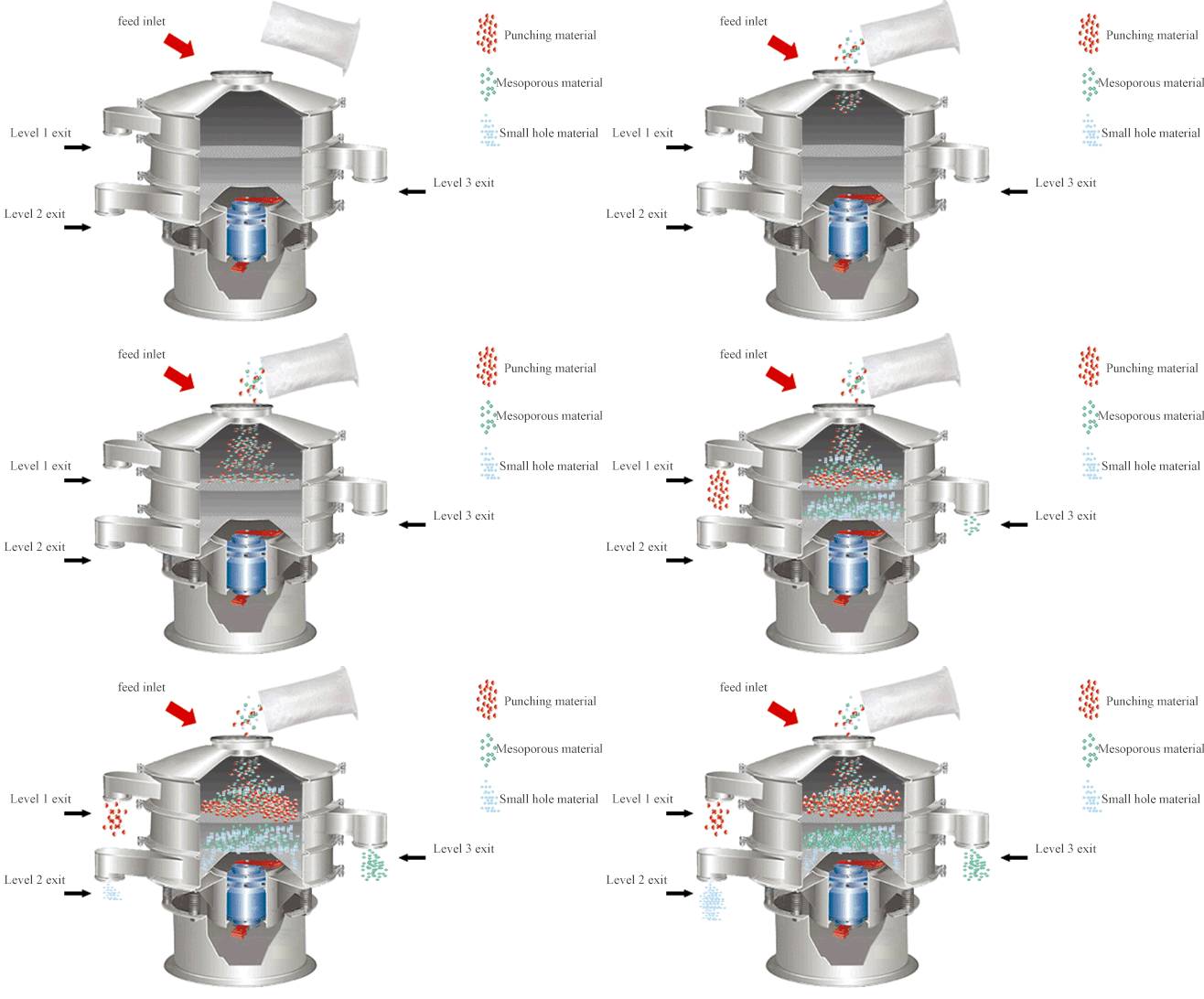
The working principle of a vibrating screen for slurry separation is that when the slurry enters the screen surface through the inlet, it spreads rapidly under vibration, forming a flowing thin layer. Fine particles and liquid pass through the screen under the combined action of vibration and gravity, entering the lower outlet, while larger particles move along the screen surface and are discharged from the other end. The entire process requires no manual intervention and is a continuous operation. For materials with high viscosity, the screening condition can be improved by adjusting the vibration frequency or adding a screen cleaning device, preventing the slurry from remaining on the screen surface for extended periods.
Features of Vibrating Screen for Slurry Separation
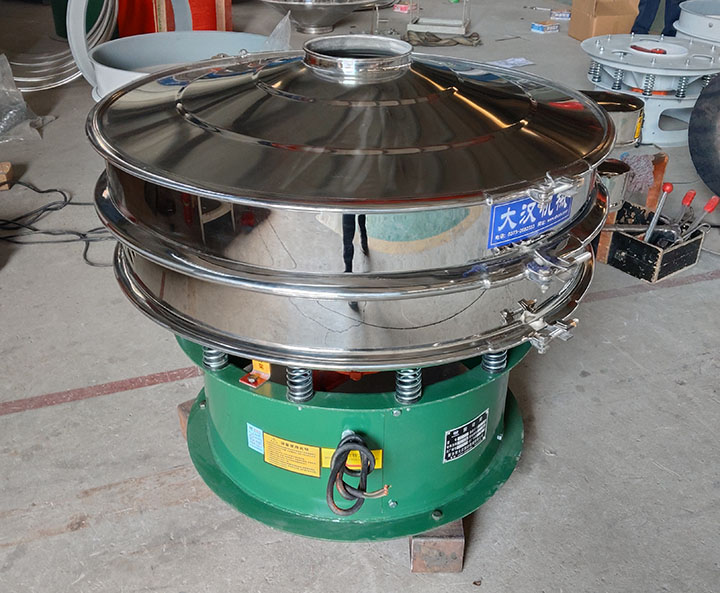
The vibrating screen for slurry separation possesses several easily noticeable features. The equipment structure is relatively simple, requiring no complex foundation for installation; it operates immediately upon connection to power. Screen replacement is also convenient, with different mesh sizes catering to various separation needs. Even when processing materials with high water content, the equipment maintains stable operation and will not stop working due to increased liquid content. Furthermore, it allows for continuous feeding, making it suitable for integration with production lines and reducing intermediate steps. For users new to slurry separation equipment, this equipment is easier to learn and maintain.
Vibrating Screen for Slurry Separation Parameter Table
| Model |
Diameter (mm) |
Feeding Size (mm) |
Frequency (RPM) |
Layers |
Power (kw) |
Capacity (kg/h) |
| DH-400 | 400 | <10 | <1500 | 1-5 | 0.18 | 100 |
| DH-600 | 600 | 0.25 | 200 | |||
| DH-800 | 800 | 0.55 | 500 | |||
| DH-1000 | 1000 | 0.75 | 800 | |||
| DH-1200 | 1200 | 1.1 | 1200 | |||
| DH-1500 | 1500 | 1.5 | 1800 | |||
| DH-1800 | 1800 | 2.2 | 2000 |
Applications of Vibrating Screen for Slurry Separation
In industrial production, vibrating screens for slurry separation are used in various industries. In the mining industry, it is used for slurry classification and tailings treatment, making subsequent mineral processing smoother; in the ceramics industry, slurry separators are useful for filtering impurities from glazes and slurries before they enter the molding stage; in chemical production, liquid raw materials often contain unreacted particles, and screening can improve product stability; in the food industry, similar equipment can be used to remove fibers and impurities from fruit juices or starch slurries; in wastewater treatment, vibrating screens can also perform preliminary solid-liquid separation, reducing the burden on subsequent treatment processes.
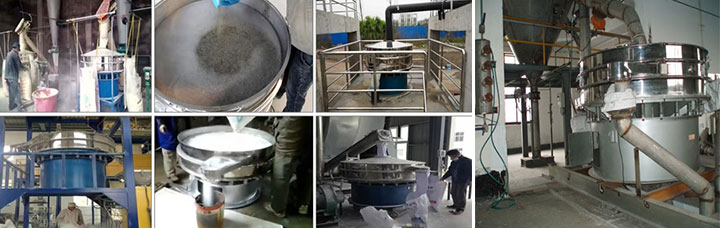
Vibrating screen for slurry separation solutions
During use, some common problems may arise. Screen clogging is a concern for many users, usually related to high material viscosity or uneven particle distribution, which can be alleviated by selecting an appropriate screen mesh or adding bouncing balls. Decreased efficiency often occurs after the equipment has been running for a period of time, possibly due to screen wear or unsuitable vibration parameters. In this case, the screen surface condition needs to be checked and the vibration intensity adjusted appropriately. Regarding overflow issues, they are mostly related to excessively fast feeding speeds. The slurry accumulates on the screen surface before it can disperse properly. This can be improved by controlling the feed flow rate or adding a buffer device.
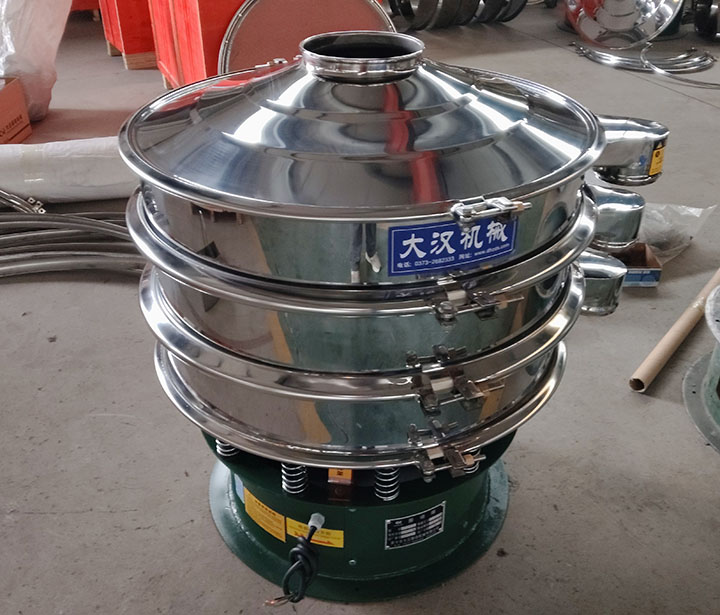
Vibrating screens for slurry separation can separate mud and water or slurry. When selecting one, understanding its working principle, applicable scenarios, and common problems is more meaningful than simply focusing on price. Choosing the appropriate screen and structure based on the characteristics of your slurry, and then configuring it according to actual production needs, will often result in smoother machine operation and reduce unnecessary adjustment time.

Email:
sale@xxdahan.com
WhatsApp:
+86 15236742901
Add:
1000m West of Forest Park,Yanjin County,Xinxiang City,Henan Province,China.