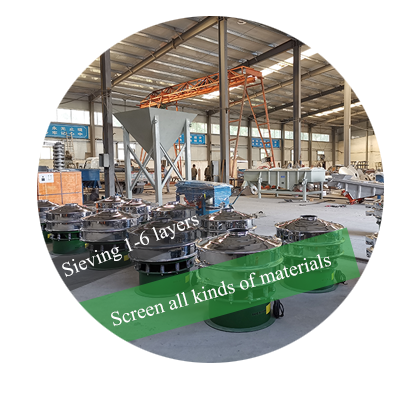
Pet Food Processing Line: Where and How to Integrate a Vibrating Sifter
Critical Integration Points in a Pet Food Plant (Where to Place It)
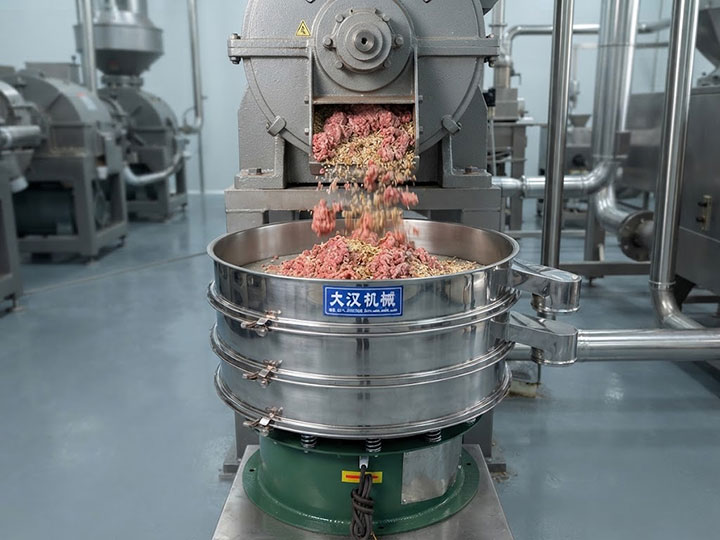
Bulk ingredients such as corn flour, meat meal, and vitamin premixes enter the facility via pneumatic or mechanical conveyors. To catch packaging strings, oversized clumps, and foreign debris before these materials reach storage silos, integrate a vibrating sifter on the pet food processing line right at the dumping station.
Raw Material Receiving Stage
Positioning a direct-discharge screen at intake points captures coarse contaminants from bulk bags and trucks, protecting downstream equipment from damage.
Post-Grinding & Pre-Mixing Stage
After hammer milling, feed ingredients must achieve a uniform particle size distribution to ensure optimal starch gelatinization during cooking. A vibrating sieve positioned downstream of the grinder removes unground coarse particles and returns them for re-crushing.
Post-Extrusion & Coating Stage
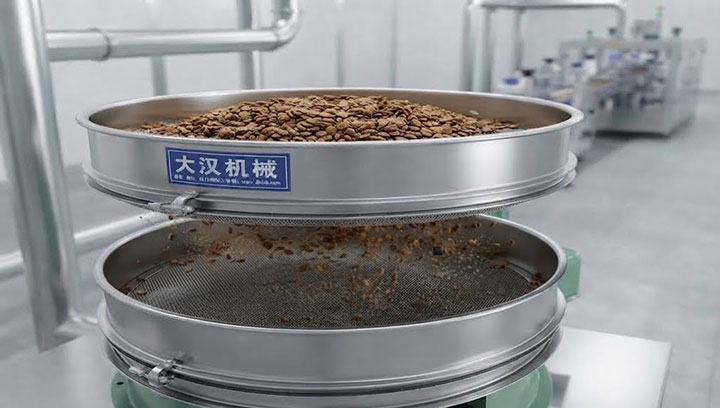
Extruded kibbles pass through dryers and fat-coating applicators where broken fragments (fines) and agglomerates naturally form. Installing a gentler sifting unit here separates clean, uniform kibbles from crumbs before the product moves to cooling and packaging silos.
Packaging Line Protection
The final checkpoint sits immediately above the bagging or canning machine. A final inline sifter acts as an ultimate safeguard, catching any residual scale flakes or environmental particles that may have dropped in during intermediate storage.
Matching Sifter Types to Specific Pet Food Processes
Different stages of pet food production demand distinct mechanical screening behaviors to handle variable moisture, density, and particle fragility without slowing down output.
| Sifter Type | Target Process & Application | Key Engineering Feature |
|---|---|---|
| Rotary Vibrating Screens | General powder and mash ingredients (e.g., soybean meal, wheat flour) during initial proportioning. | Multi-plane inertial vibration pattern delivering stable grading and high throughput. |
| Ultrasonic Vibrating Screens | High-fat and sticky powders (e.g., vitamin-mineral premixes, high-protein fine meals). | High-frequency, low-amplitude ultrasonic transducers that break surface tension to prevent mesh blinding. |
| Tumbler / Gyratory Screens | Fragile, finished expanded kibbles requiring gentle handling. | Low-angle circular trajectory simulating manual panning to remove fines while protecting kibble integrity. |
| Direct Discharge Sifters | High-capacity inline screening right before final packaging. | Vertically mounted discharge outlets providing straight-through flow for closed-loop pneumatic systems. |
Comparative Analysis: Choosing the Right Sifting Technology
Linear Vibrating Screen vs. Rotary Sieve: Which Is Better for Kibble Lines?
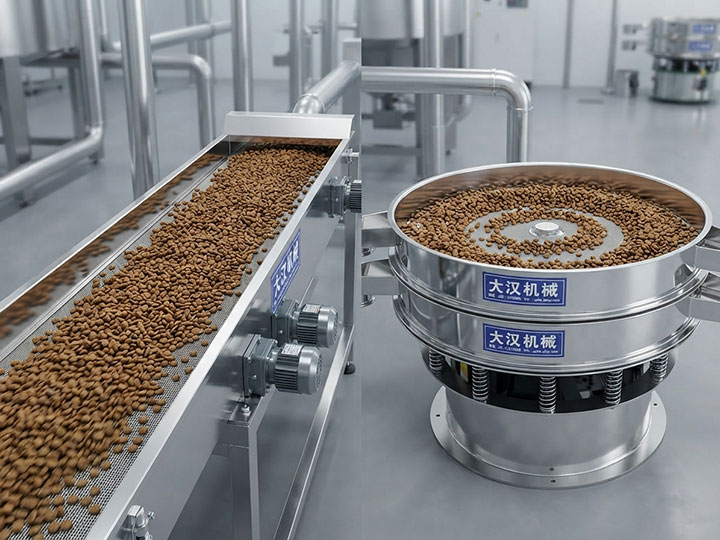
Linear vibrating screens employ dual vibration motors creating an upward-forward throw, moving high volumes of heavy bulk material rapidly across the deck. Rotary sieves rely on a single vertical motor with eccentric weights, generating a three-dimensional motion better suited for multi-deck particle sizing. For continuous kibble lines, linear designs handle high-capacity output with lower headroom requirements, whereas rotary units excel at precise multi-fraction separation.
Traditional Mechanical Screening vs. Ultrasonic-Assisted Screening
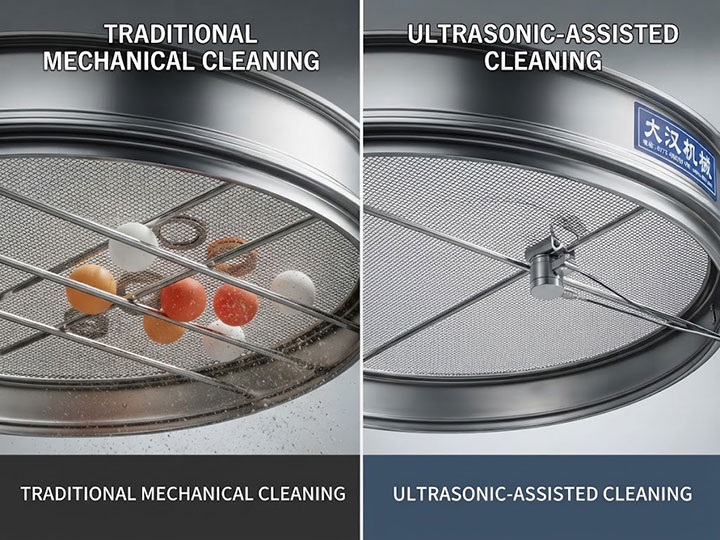
Conventional mechanical clearing systems use bouncing rubber balls or cleaning rings beneath the mesh to dislodge stuck particles, which can introduce physical wear over time. Ultrasonic-assisted screening transmits high-frequency electrical energy directly into the mesh wire, transforming frictional resistance into microscopic vibration. This eliminates blinding in oil-rich pet food powders without damaging delicate screen cloths or contaminating food products.
Key Engineering Considerations for Hygienic Integration
Pet food sanitation mandates strict design principles to minimize bacterial breeding grounds, prevent cross-contamination, and support rapid cleaning protocols.
Sanitary Design & Material Standards
All product-contact surfaces utilize food-grade stainless steel (AISI 304 or 316L) with mirror-polished finishes (Ra ≤ 0.4 μm) to reduce organic residue adhesion. Welds are ground smooth and continuous, restricting microscopic crevices where mold or pathogens can accumulate.
Quick-Clean and Tool-Free Maintenance for Rapid Changeover
Modern pet food facilities frequently switch between different recipes and formulas, making downtime costly. Quick-release toggle clamps, pneumatic deck lifts, and modular frame designs allow operators to disassemble, inspect, and clean internal screen decks in minutes without specialized tools.
Dust-Tight Operation & Negative Pressure Air Control
Fine powders and organic meals create combustible dust risks and plant hygiene hazards. Sifters feature food-grade silicone or rubber gaskets combined with dedicated vacuum extraction ports, maintaining a sealed, negative-pressure environment during continuous operation.
Essential Technical Specifications for Pet Food Sifters
Selecting the correct machine requires calculating precise operational parameters to match upstream processing equipment and prevent bottlenecks.
Throughput Capacity Calculation (How to Match Sifter Size to Extruder Output)
Sifter capacity depends on effective screening area, bulk density, and moisture content. Engineers calculate sizing by matching the maximum output of the extruder or hammer mill with a safety margin of 20% to 30%, ensuring the machine handles peak loads without material overflow or blinding.
Mesh Selection Guidelines for Different Pet Food Textures
Aperture selection varies by product stage: raw flours require finer wire mesh cloths (e.g., 20 to 40 mesh), while finished kibbles use slotted or perforated metal plates designed to remove broken crumbs while letting whole particles pass freely.
Power and Vibration Motor Configuration
Vertical vibratory motors with adjustable eccentric weights govern material dwell time and spiral travel speed across the screen deck, allowing operators to fine-tune separation efficiency for different recipe viscosities.
Troubleshooting Common Screening Issues in Pet Food Production
Resolving operational bottlenecks quickly ensures continuous plant productivity and consistent product quality across different shifts.
Why does mesh blinding occur with high-fat pet meal, and how to fix it?
High levels of animal fat and moisture cause fine powders to stick and clog wire openings. Installing ultrasonic conversion kits or anti-blinding bouncing ball decks transfers high-frequency micro-vibrations directly to the mesh, keeping apertures open continuously during processing.
How to minimize kibble breakage during high-speed screening?
Excessive impact against rigid frames causes dried kibbles to fracture. Adjusting the centrifugal force of the vibration motor, lowering the deck inclination angle, and utilizing rubber dampening buffers ensures a gentle sliding motion that preserves finished product integrity.
FAQ (Frequently Asked Questions)
Q1: Can a single vibrating sifter handle both raw meal and finished kibbles?
While multi-deck units can separate different fractions, cross-contamination risks and sanitation protocols in pet food plants typically require dedicated sifters for raw ingredients and finished, heat-treated products.
Q2: What mesh size is recommended for removing fines from dry dog food kibbles?
Mesh sizing depends on the target kibble diameter, but slotted wire mesh or perforated plates with clear openings slightly smaller than the minimum acceptable kibble size are standard for dropping out broken crumbs.
Q3: How do ultrasonic systems improve screening efficiency for pet nutrition powders?
Ultrasonic transducers superimpose high-frequency, low-amplitude waves onto the mesh cloth, neutralizing surface tension and preventing fine, sticky ingredients from blocking apertures.
Q4: What is the typical maintenance frequency for industrial pet food sifters?
Routine inspections of screen tension, gasket integrity, and motor bearings should occur weekly, with deep cleanings scheduled according to formula changeover frequencies and plant sanitation SOPs.
Optimize Your Pet Food Processing Line Today
Looking to upgrade your screening efficiency, prevent mesh blinding, or integrate custom sifting equipment into your plant layout? Contact our engineering team today for professional sizing support, technical drawings, and tailored equipment solutions.

Email:
sale@xxdahan.com
WhatsApp:
+86 15236742901
Add:
1000m West of Forest Park,Yanjin County,Xinxiang City,Henan Province,China.