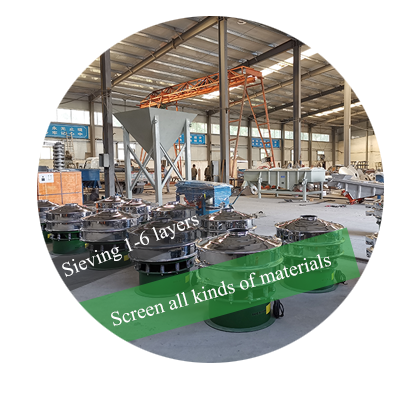
Nylon sieve
Nylon sieve sieve surface uses a highly elastic nylon mesh with uniform and fine openings. It filters flour or powdered sugar evenly and finely, effectively preventing clumping. The standard sieve diameter is typically 20 cm or 24 cm, making it lightweight and portable. A variety of mesh sizes are available, from 60 mesh for general flour to finer options like 80 and 100 mesh, catering to needs ranging from coarse sieving to extremely fine material filtration.
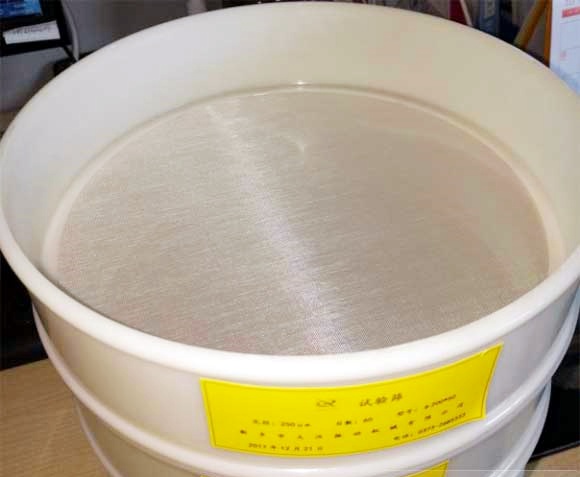
Nylon sieves are relatively soft and resilient, making them less prone to breakage during use. They are resistant to weak acids and alkalis, remaining stable in everyday filtration and screening applications without easily reacting with materials. These sieves are lightweight, easy to handle, and have a smooth surface that prevents particles from sticking, making them simple to clean. They do not produce metal shavings, making them suitable for applications involving food, powders, liquids, and other substances requiring clean filtration.
How does the nylon sieve work?
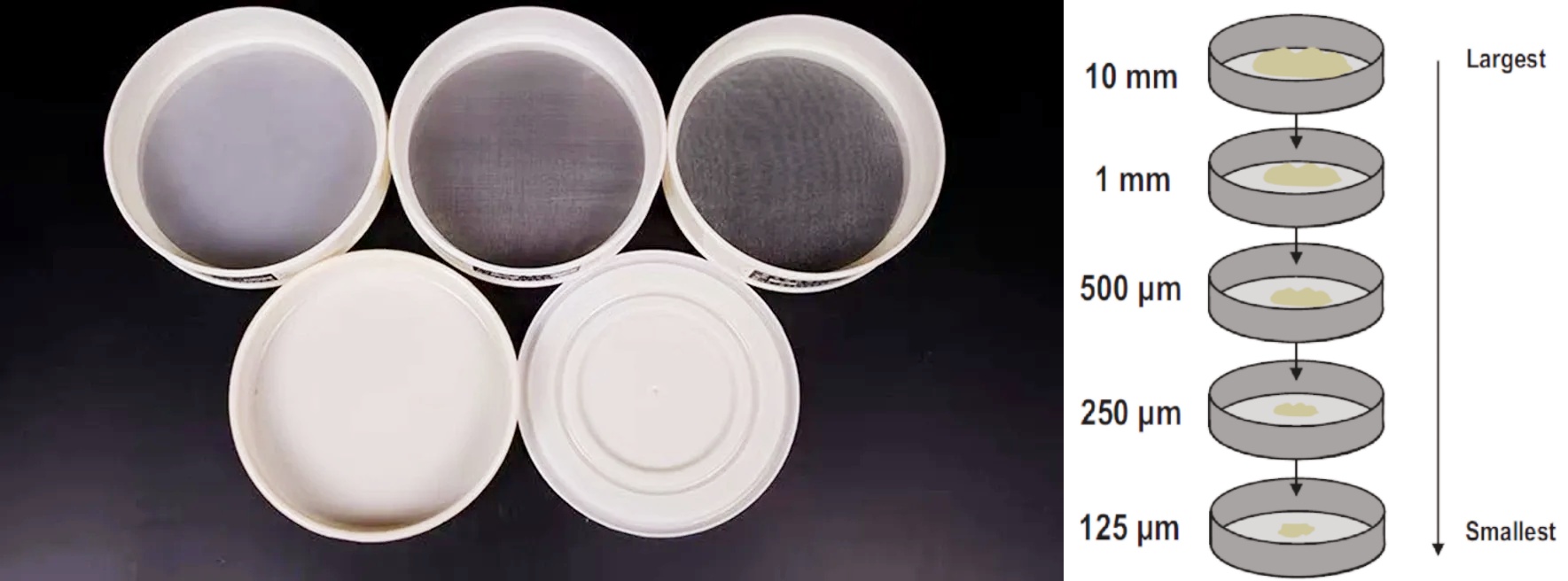
Nylon Sieve has sieve openings of a specific size and shape. When the mixture to be processed is placed on the sieve surface and an external force (such as vibration or horizontal movement) is applied, the material layer begins to loosen and redistribute. As material containing particles of different sizes passes through the sieve, particles smaller than the sieve openings can pass through, while particles larger than the sieve openings are trapped on the sieve, thus achieving separation of particles of different sizes.
How many types of sieves are there?
|
Material type |
Features |
Common uses |
Examples |
|
Metal |
High strength, durability, high temperature resistance |
Industrial screening, mineral screening, laboratory analysis |
Stainless steel screen, copper screen, iron screen |
|
Nylon |
Corrosion resistance, wear resistance, light weight, not easy to rust |
Laboratory particle analysis, food filtration, chemical screening |
Nylon test screen, nylon filter |
|
Plastic |
Low cost, light weight, acid and alkali resistance, non-conductive |
Home use, light industrial screening, small-scale experiments |
Polypropylene screen, PVC screen |
|
Ceramic |
High temperature resistance, corrosion resistance, strong chemical stability |
Special industries (such as ceramic powder screening), laboratories |
Ceramic screen |
|
Polyester |
High strength, chemical corrosion resistance, long life |
Textile industry, fine chemical screening |
Polyester screen |
|
Fiberglass |
High temperature resistance, corrosion resistance, good insulation |
Chemical and electronic industry screening |
Fiberglass screen |
Features of nylon sieve
Nylon sieves are lightweight yet sturdy, resistant to chemical corrosion, and possess good flexibility. Their uniform mesh size makes them suitable for corrosive environments or filtering highly viscous materials, minimizing the risk of clogging. Made of high-strength nylon filaments, which have a lower density than metal, they are lightweight, making them comfortable to move around or use for extended periods without causing fatigue. Nylon is chemically stable and resistant to common acids and alkalis, unlike metal sieves which rust or corrode, resulting in cleaner sieving and safer use. Their elasticity and resilience allow for slight deformation of the sieve surface during sieving, shaking off particles stuck in the holes and reducing clogging. Combined with their precise weaving and uniform mesh size, they clearly separate materials by size, meeting the needs of filtration and grading.
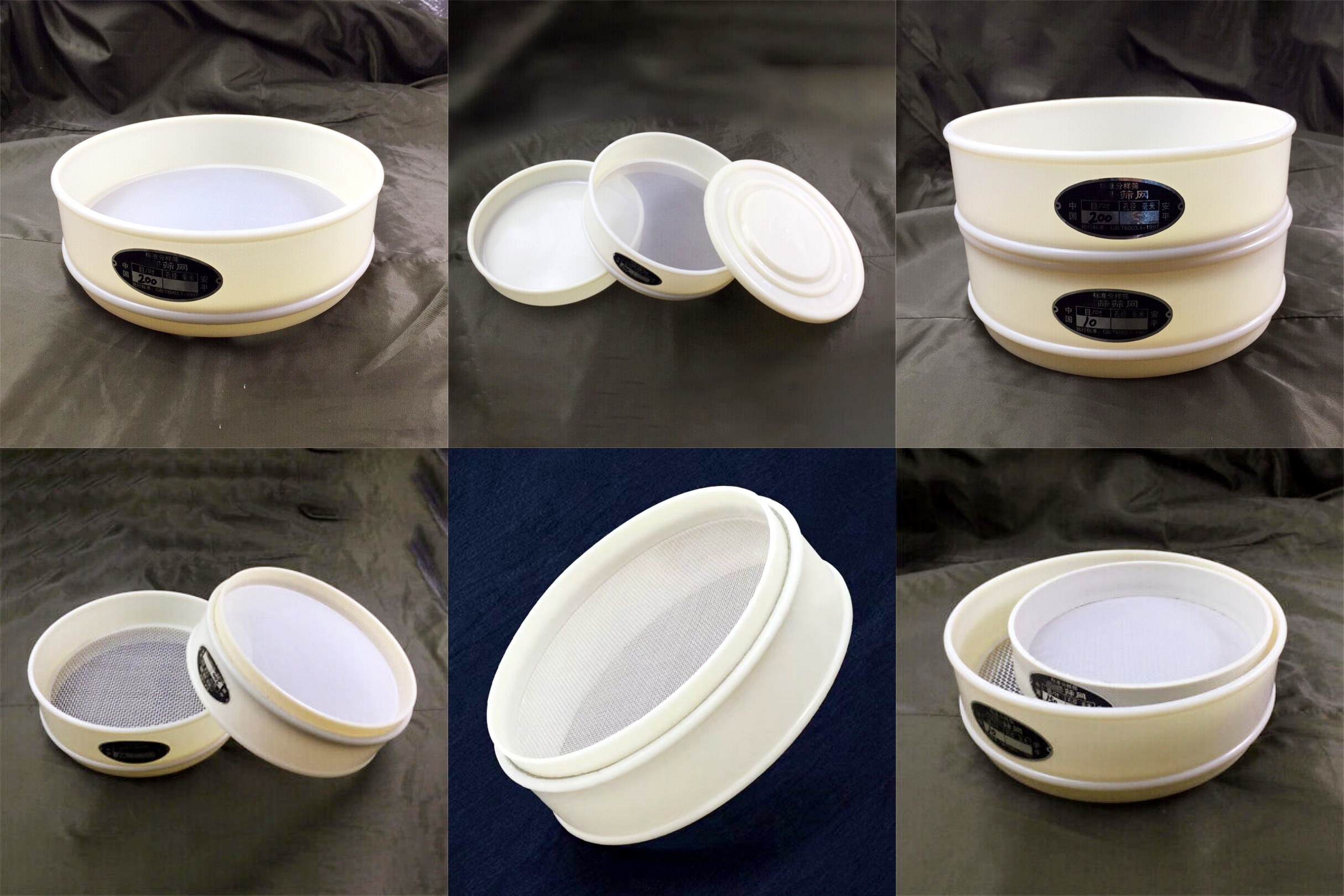
The structure of nylon sieve
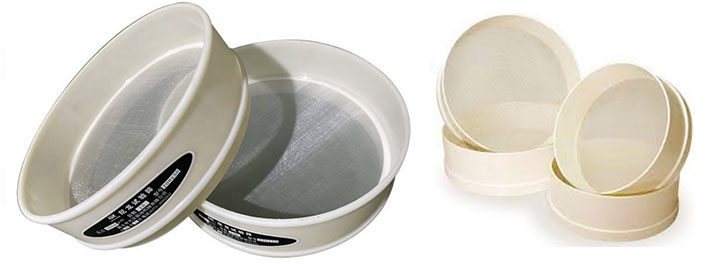
Nylon sieve consists of a sieve frame, sieve mesh, sealing ring, fixing device, etc. The sieve frame is usually made of metal (such as stainless steel, aluminum alloy) or plastic, and is used to fix the sieve mesh and provide support. Common sieve frame shapes are round or square. The sieve mesh is made of nylon material, which is light, corrosion-resistant, and flexible.
What is the difference between a nylon sieve for industry and a nylon sieve?
The difference between industrial nylon sieves and ordinary nylon sieves lies in their performance requirements. Industrial sieves typically use high-strength, highly abrasion-resistant nylon materials with thicker wire diameters and more precise mesh counts, capable of withstanding continuous mechanical impacts and harsh working conditions. Ordinary nylon sieves, on the other hand, are mostly used in light-load applications such as home and agriculture, where durability and precision requirements are relatively lower.
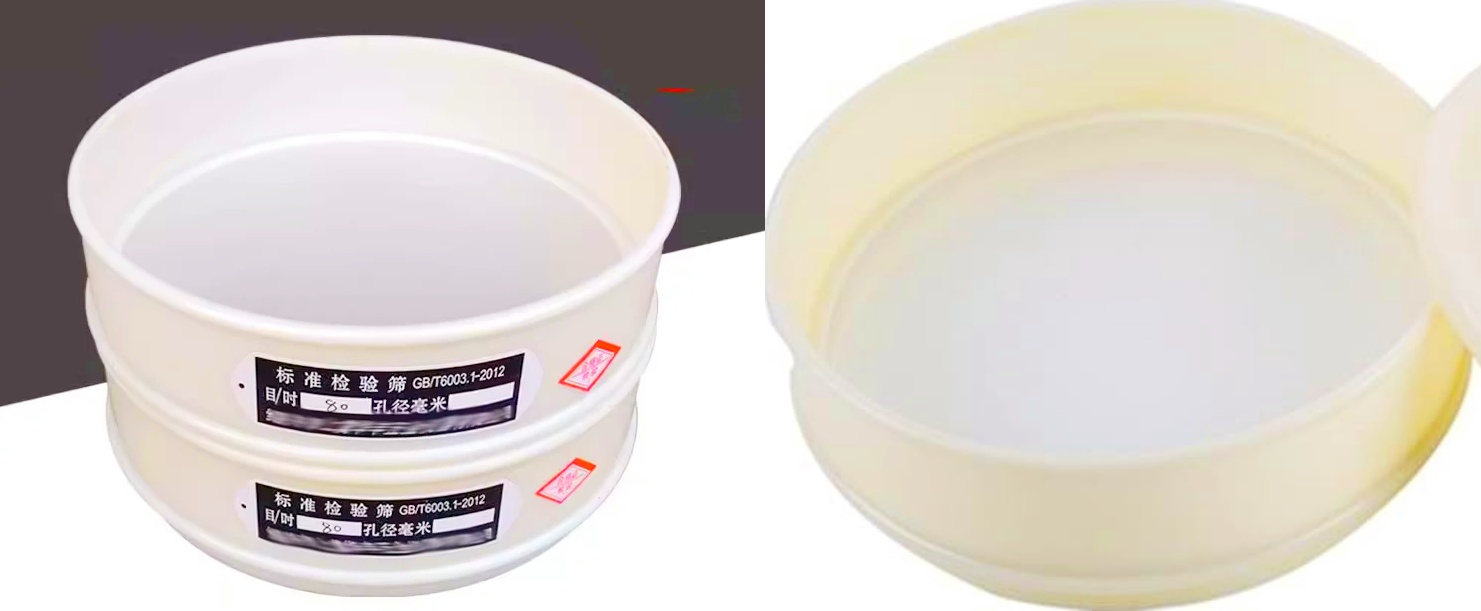
Nylon sieves are used for particle analysis and sieving tests in laboratory environments, typically in scientific research, quality inspection, or standard analysis in industries such as pharmaceuticals, food, chemicals, and metallurgy, for example, particle size distribution testing. Nylon sieves are also commonly used in industrial or everyday sieving, suitable for filtering or classifying large particles, such as flour sieving and soil filtration. Test sieves have accurate mesh sizes, conforming to national or international standards (such as ISO, ASTM, GB, etc.), and strictly control sieve aperture errors to ensure the accuracy and repeatability of experimental data. Nylon sieves are used for coarse sieving, with larger aperture errors and lower sieving precision requirements. Nylon test sieves use high-precision screens and stainless steel or aluminum alloy frames to ensure wear resistance, chemical corrosion resistance, and structural stability. Most nylon sieves are made of ordinary nylon material, and the frame can be plastic or ordinary metal.
What are the advantages of nylon sieves?
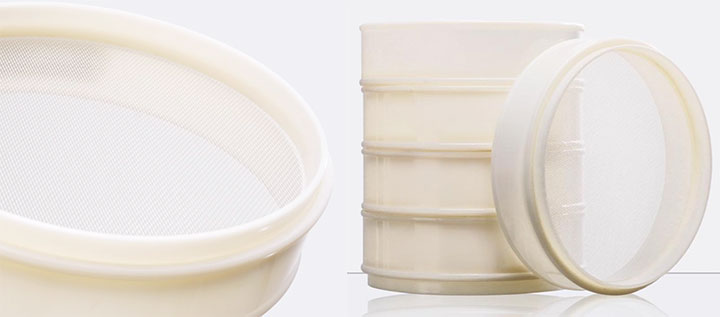
Nylon sieve mesh has a uniform sheen and produces consistent mesh size. Its material is flexible and wear-resistant, making it resistant to deformation and damage. It is also resistant to acids and alkalis, ensuring stable operation even in corrosive environments. Its high water permeability allows water and other liquids to pass through quickly, leaving solid particles on the screen. Through precision weaving, sieves with varying mesh sizes and apertures can be produced, ranging from tens to hundreds of meshes to meet different screening requirements. Its flexibility allows it to withstand deformation during screening without breaking, even with viscous or irregularly shaped materials, preventing clogging.
What is nylon sieve used for?
Nylon sieves are used to sift powders and small particles, and also to filter impurities from water. They separate materials of different sizes, removing useless impurities and resulting in more uniform particle size. In the food industry, nylon sieves are used to sift flour, starch, powdered sugar, and seasonings to remove impurities such as bran and small lumps, making the flour finer. In pharmaceuticals, drug powders and granules are also sieved to ensure uniform particle size, resulting in more consistent dosage in capsules. In water treatment, nylon sieves can also trap suspended solids and small particulate impurities in water, ensuring the water quality meets drinking water standards.
Recommended nylon mesh number
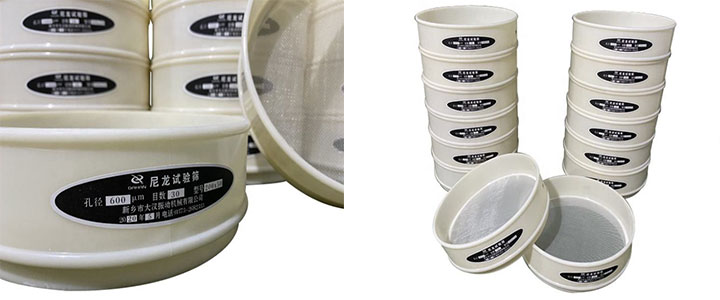
Everyday Nylon sieves can be selected by mesh size. 20 to 60 mesh is suitable for screening larger particles, used for preliminary screening and separating large pieces. 70 to 120 mesh is suitable for screening medium-sized particles, commonly used in home or small-scale processing for particle filtration and screening. 150 to 300 mesh is suitable for screening finer materials, suitable for screening and filtering scenarios requiring finer separation. Nylon mesh of 300 mesh and above is suitable for screening extremely fine materials, used in high-precision screening and filtration processes.
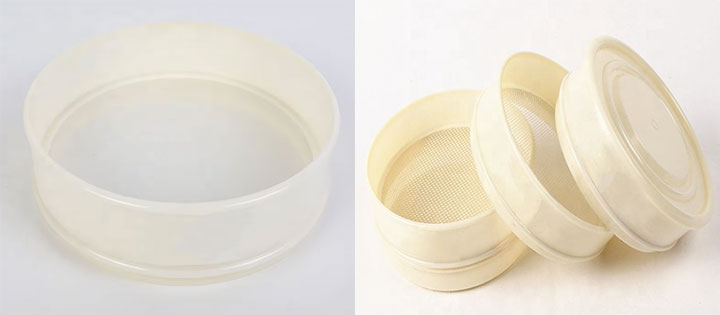
How to clean Nylon sieve?
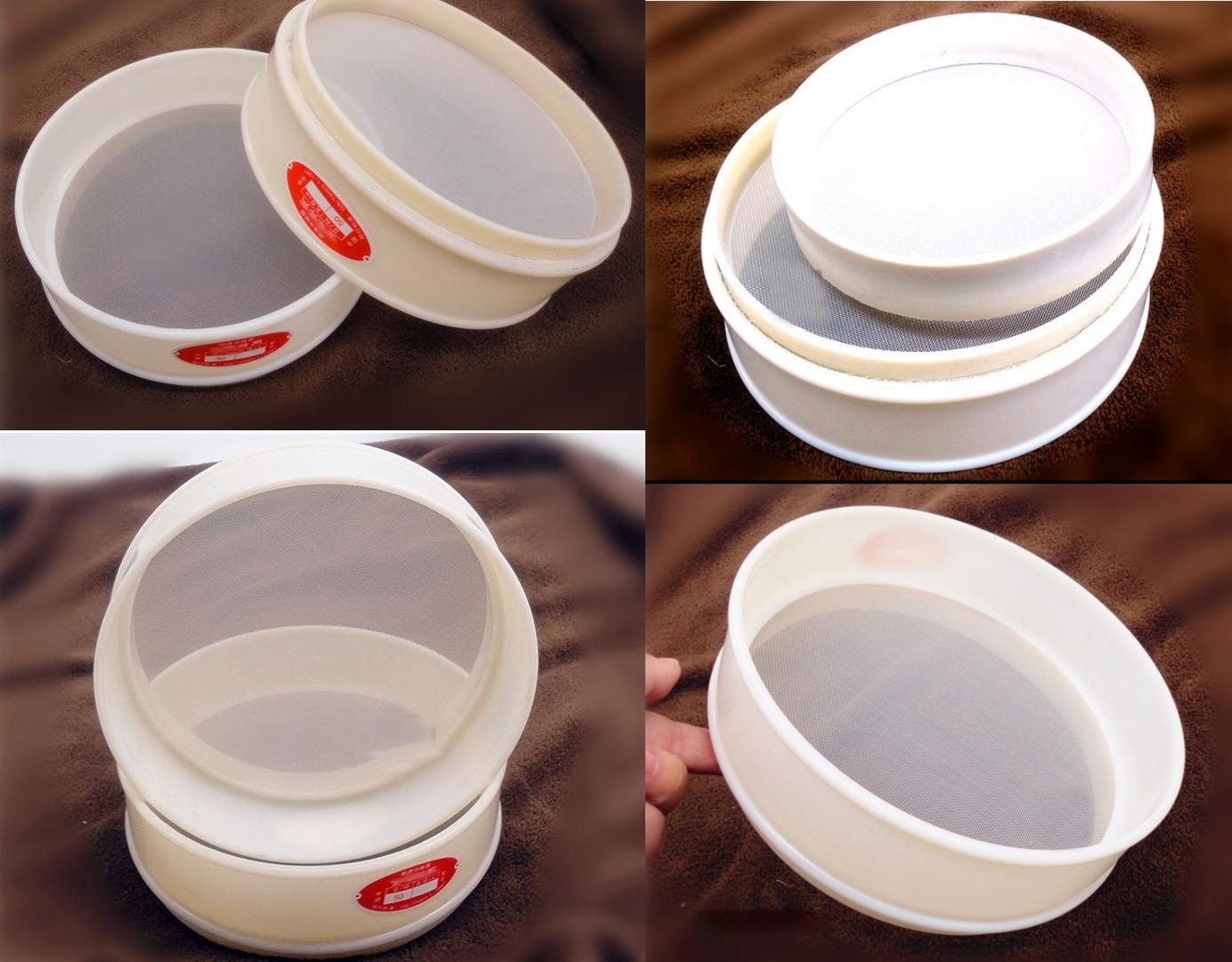
When cleaning a Nylon sieve, first carefully inspect the sieve for any damage, cracks, or deformation. Then check the type of debris on it – is it dry powder or a sticky substance? Choose the appropriate cleaning method and tools based on the type of residue. Don't wash the sieve too frequently. Wash it more often if it's heavily clogged or frequently used. For normal use, wash it according to the actual situation. Washing too often will make the sieve fibers brittle and affect its durability. When cleaning, use gentle movements, wiping slowly along the sieve surface to ensure the entire sieve is cleaned.
Nylon sieve is an economical and practical screening tool, widely used in laboratories and industrial production. Through reasonable selection and use, the performance advantages of nylon sieve can be fully utilized to meet the screening needs of different materials. At the same time, paying attention to daily maintenance and care can extend the service life of sieve.
-
Sea Salt Mini Rotary Sieve Machine
Sea salt mini rotary sieve machine is a small rotary vibrating screen equipment specially used for sea salt screening...
-
Carbon steel straight screen
Carbon steel straight screen is a common screening equipment, usually used in the industrial field to screen and grade granular materials...
-
Charcoal Sieving Carbon Steel Round Vibrating Screen
Charcoal Sieving Carbon Steel Round Vibrating Screen enables rapid grading and impurity removal from flake, strip...
-
Carbon material vibrating screen
Carbon material vibrating screen is a device specially used for screening carbon materials...

Email:
sale@xxdahan.com
WhatsApp:
+86 15236742901
Add:
1000m West of Forest Park,Yanjin County,Xinxiang City,Henan Province,China.