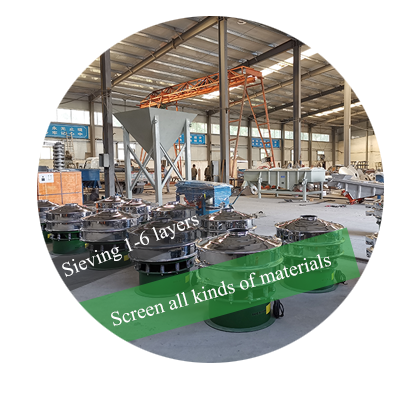
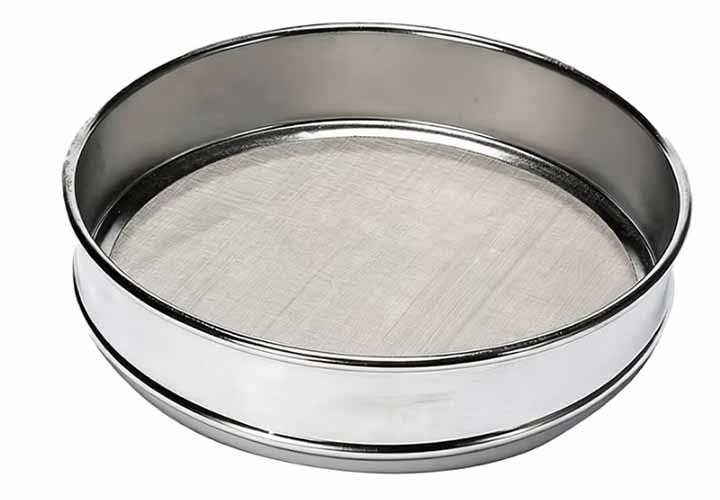
ASTM E11 standard test sieve
![[field:title/]](/uploads/261020/6-261020112943B3.jpg)
Callback
| Aperture Range: | 20 μm–4.75 mm |
| Frame Diameter: | 3", 8" and 12" |
ASTM E11 Compliance: Sieve options for standardized particle size analysis, with compliance documentation available.
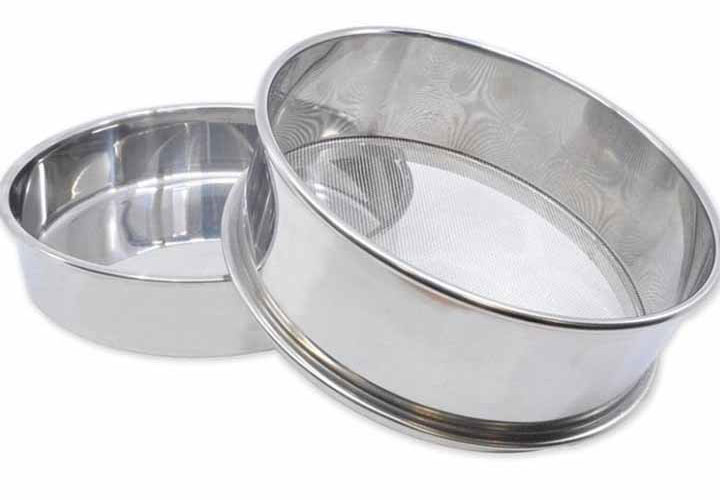
Stainless Steel Construction: Available with SS304 or SS316 frames and woven wire cloth.
Certification Options: Confirm the required certificate, inspection level or calibration report when placing your order.
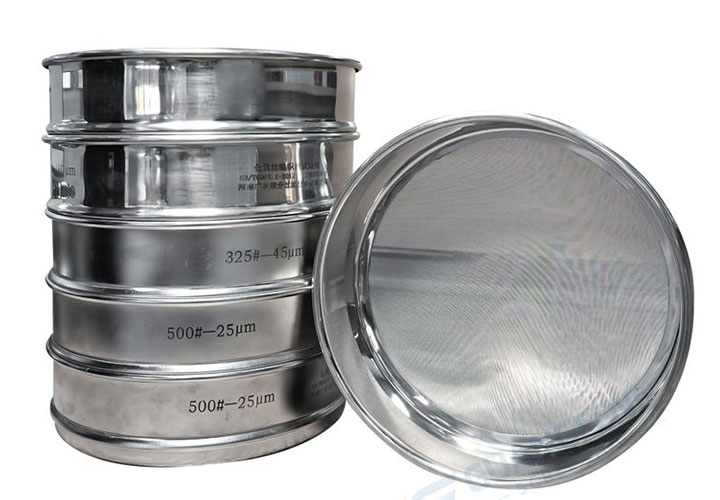
ASTM E11 standard test sieves are precision-engineered woven wire laboratory sieves designed for accurate particle size analysis and material grading. Manufactured to meet rigorous ASTM International specifications—and fully compatible with ISO 3310 requirements—our stainless steel test sieves deliver exceptional aperture accuracy, strict tolerance control, and long-lasting durability for construction, mining, pharmaceutical, chemical, and research laboratories.
Key Benefits and Manufacturing Quality of Our ASTM E11 Standard Test Sieves
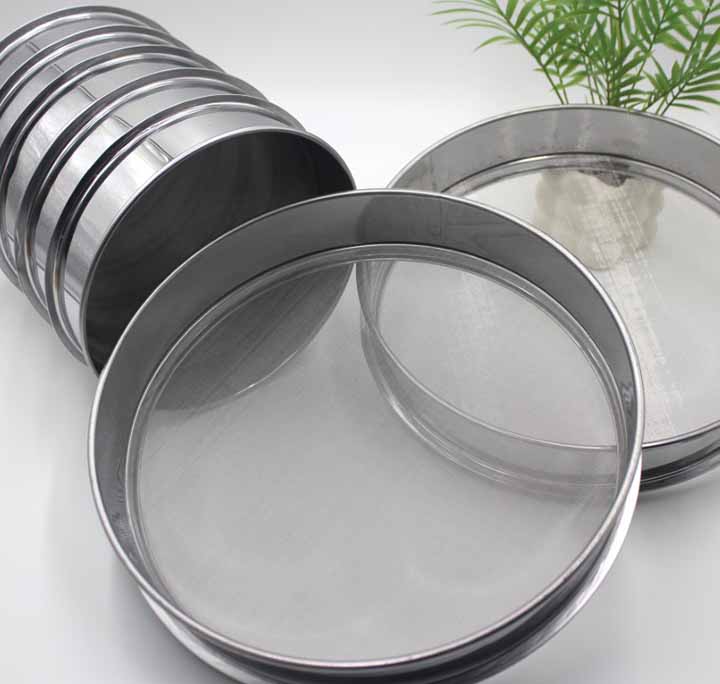
Choosing our premium ASTM E11 standard test sieves guarantees highly accurate and repeatable laboratory data for your particle size analysis.We maintain strict manufacturing thresholds: aperture tolerance is tightly controlled within ±3%, and wire diameter error is kept at ≤0.02mm. This ensures consistent, reliable results across independent testing labs and industrial production sites.
Our sieves feature a rigid, one-piece frame that prevents sample loss during mechanical vibration. The seamless inner wall design significantly minimizes dead zones where fine powders usually accumulate.
For effortless maintenance, fine residues can be quickly cleaned using ultrasonic laboratory equipment. Every mesh is built under rigorous quality protocols, making them the ideal choice for routine quality assurance audits and advanced research.
ASTM E11 Sieve Frame Dimensions and Specifications
Every ASTM E11 test sieve is available in three precision tiers depending on your quality control requirements: Compliance Sieves (supplied with a batch certificate), Inspection Sieves (featuring optically verified mesh openings), and Calibration Sieves (providing full traceable measurement reports for rigorous laboratory accreditation).
| Nominal Diameter | Frame Type | Total Height | Depth to Cloth | Typical Sample Volume |
| 3 in (76 mm) | Full Height | 1.25 in (32 mm) | 1.00 in (25 mm) | 25 – 50 g |
| 3 in (76 mm) | Half Height | 0.75 in (19 mm) | 0.50 in (13 mm) | 25 – 50 g |
| 8 in (203 mm) | Full Height | 2.62 in (67 mm) | 2.00 in (51 mm) | 150 – 200 g |
| 8 in (203 mm) | Half Height | 1.62 in (41 mm) | 1.00 in (25 mm) | 150 – 200 g |
| 12 in (305 mm) | Full Height | 4.25 in (108 mm) | 3.25 in (83 mm) | 1000 – 3000 g |
| 12 in (305 mm) | Half Height | 2.62 in (67 mm) | 2.00 in (51 mm) | 1000 – 3000 g |
ASTM E11 Standard Sieves Price & Quotation Guide
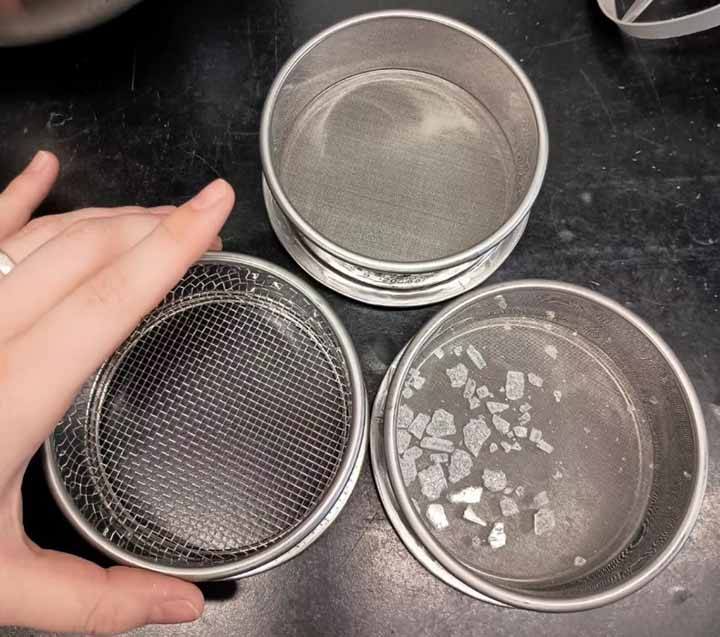
The pricing of our ASTM E11 standard test sieves depends on sieve body specifications, mesh fineness, and the required certification level:
• Standard 8-inch Stainless Steel Sieves (Coarse to Medium Mesh, No. 4 to No. 100): Generally priced between $45 and $85 per sieve.
• Ultrafine Sieves (No. 200 to No. 635): Due to the intricate weaving process and high manufacturing precision, prices range between $90 and $180 per sieve.
• Calibration & Certification Fees: If your laboratory system requires an optical calibration report traceable to national standards and independent testing documentation, an additional fee of $40 to $75 applies depending on the certification grade.
We offer factory-direct wholesale pricing and volume discounts for laboratories, universities, and industrial distributors.
Multi-Specification Display: Various Mesh Sizes and Frame Types of ASTM E11 Sieves
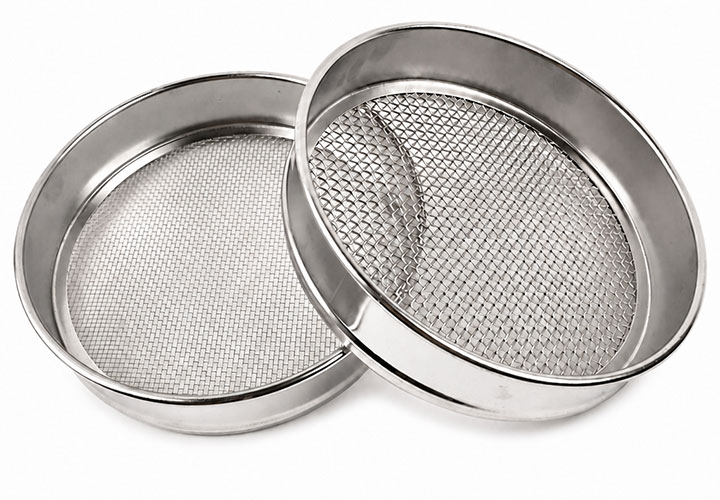
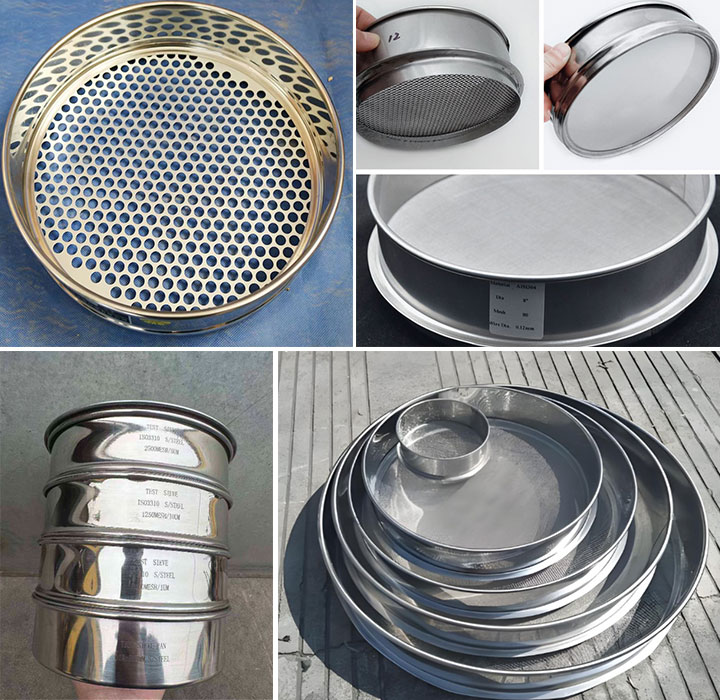
Our manufacturing facility provides a comprehensive selection of ASTM E11 standard test sieves covering various frame diameters (from 3 inches to 12 inches) and complete mesh configurations ranging from coarse aggregates (No. 4) down to ultrafine powders (No. 635). Whether you need half-height, full-height, brass, or full stainless steel frames, we customize and stock solutions tailored to your laboratory requirements.
Standard ASTM E11 Mesh Size Overview
The following table highlights the most frequently ordered ASTM E11 mesh sizes for laboratory particle size analysis and industrial powder classification.
| US Sieve No. / Mesh | Metric Aperture (mm / μm) | Imperial Size (inch) |
| No. 4 | 4.75 mm | 0.1870 in |
| No. 10 | 2.00 mm | 0.0787 in |
| No. 20 | 850 μm (0.85 mm) | 0.0331 in |
| No. 40 | 425 μm (0.425 mm) | 0.0165 in |
| No. 50 | 300 μm (0.30 mm) | 0.0117 in |
| No. 100 | 150 μm (0.15 mm) | 0.0059 in |
| No. 200 (Most Popular) | 75 μm (0.075 mm) | 0.0029 in |
| No. 325 | 45 μm (0.045 mm) | 0.0017 in |
| No. 635 (Ultrafine) | 20 μm (0.020 mm) | 0.0008 in |
| US Sieve No. / Mesh | Metric Aperture | Imperial Size |
| No. 4 | 4.75 mm | 0.1870 in |
| No. 5 | 4.00 mm | 0.1570 in |
| No. 6 | 3.35 mm | 0.1320 in |
| No. 7 | 2.80 mm | 0.1110 in |
| No. 8 | 2.36 mm | 0.0937 in |
| No. 10 | 2.00 mm | 0.0787 in |
| No. 12 | 1.70 mm | 0.0670 in |
| No. 14 | 1.40 mm | 0.0555 in |
| No. 16 | 1.18 mm | 0.0469 in |
| No. 18 | 1.00 mm | 0.0394 in |
| No. 20 | 850 μm | 0.0331 in |
| No. 25 | 710 μm | 0.0278 in |
| No. 30 | 600 μm | 0.0234 in |
| No. 35 | 500 μm | 0.0197 in |
| No. 40 | 425 μm | 0.0165 in |
| No. 45 | 355 μm | 0.0139 in |
| No. 50 | 300 μm | 0.0117 in |
| No. 60 | 250 μm | 0.0098 in |
| No. 70 | 212 μm | 0.0083 in |
| No. 80 | 180 μm | 0.0070 in |
| No. 100 | 150 μm | 0.0059 in |
| No. 120 | 125 μm | 0.0049 in |
| No. 140 | 106 μm | 0.0041 in |
| No. 170 | 90 μm | 0.0035 in |
| No. 200 | 75 μm | 0.0029 in |
| No. 230 | 63 μm | 0.0025 in |
| No. 270 | 53 μm | 0.0021 in |
| No. 325 | 45 μm | 0.0017 in |
| No. 400 | 38 μm | 0.0015 in |
| No. 500 | 25 μm | 0.0010 in |
| No. 635 | 20 μm | 0.0008 in |
Suitable Industries for ASTM E11 Standard Test Sieves
ASTM E11 standard test sieves are engineered for precision particle distribution measurements across a broad spectrum of global industries. In full compliance with ASTM C136, they are widely utilized for construction aggregate analysis, while ASTM D6913 governs their application in soil particle size testing.

Our precision sieves are trusted daily in mining, metallurgy, pharmaceuticals, food processing, ceramics, advanced battery materials, chemical engineering, and independent research laboratories to deliver uncompromised testing accuracy.
ASTM E11 vs. ISO 3310 Standards Comparison
For international laboratories operating under multi-standard quality frameworks, understanding the differences between American and international testing benchmarks is essential:
| Standard Specification | American Standard (ASTM) | International Standard (ISO) |
| Designation | ASTM E11 | ISO 3310 |
| Primary Region | USA & North America | International / Global |
| Key Applications | Aggregate, Mining & Industrial Lab | Global Laboratory & Research |
| Associated Test Method | ASTM C136 / D6913 | ISO 565 |
Laboratory Application and Sieve Analysis Procedure
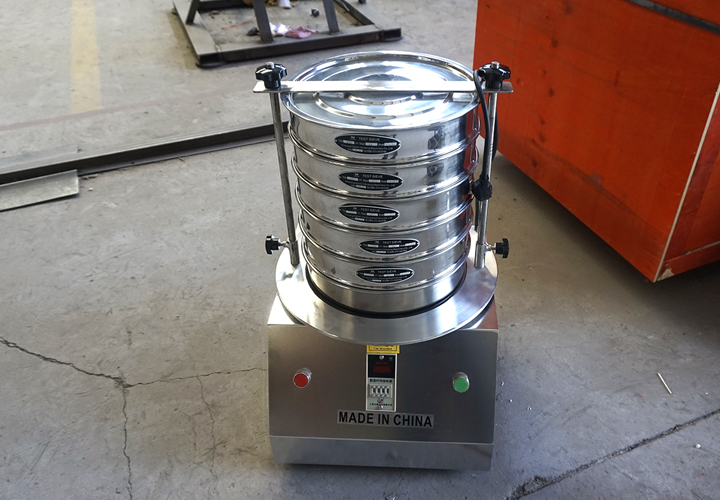
Proper laboratory technique is vital for achieving accurate particle size distribution data. The following video demonstrates our ASTM E11 standard test sieve performing efficient particle grading under controlled high-frequency vibration.
Frequently Asked Questions (FAQ)
How to distinguish between conforming, inspection, and calibration grade sieves?
Conforming grade sieves are mass-produced according to ASTM E11 specifications and supplied with a general batch compliance certificate. Inspection grade sieves undergo individual optical sampling and measurement of mesh openings with recorded data. Calibration grade sieves feature twice the number of measured openings, providing the highest level of measurement confidence and a complete traceable calibration report for accredited laboratories.
Can these standard test sieves be used for wet screening?
Yes. Fabricated from premium corrosion-resistant stainless steel, our sieves can be safely used for wet-washing with water or neutral laboratory reagents to separate fine powders without damaging the mesh or frame.
How often should laboratory test sieves be recertified or replaced?
For frequent, heavy-duty screening of abrasive hard materials (like sand and aggregates), we recommend recertifying or replacing sieves every 6 to 12 months. For routine testing of low-abrasion organic or pharmaceutical powders, the period can be extended up to 24 months.
Do your ASTM E11 test sieves comply with international ISO standards?
Yes. Many of our laboratory sieves are manufactured to precise ASTM E11 dimensional tolerances while remaining fully compatible with ISO 3310 requirements, allowing global laboratories to perform standardized testing seamlessly.
ASTM E11 Standard Test Sieve Packaging & Shipping
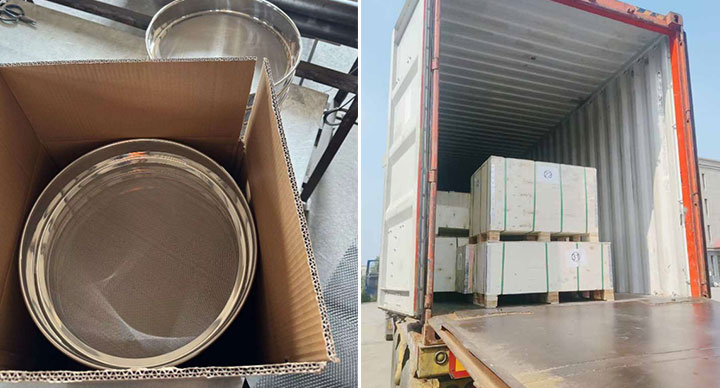
ASTM E11 standard test sieves are indispensable, high-precision tools for particle measurement in modern laboratories and industrial quality control. By matching the correct frame diameter, height, and mesh size to your specific material characteristics, you ensure long-term data accuracy and reliable compliance for international trade.
Ready to Upgrade Your Laboratory Sieving Accuracy?
Get direct factory wholesale pricing, custom frame configurations, or certified calibration reports from our engineering team today.

Email:
sale@xxdahan.com
WhatsApp:
+86 15236742901
Add:
1000m West of Forest Park,Yanjin County,Xinxiang City,Henan Province,China.