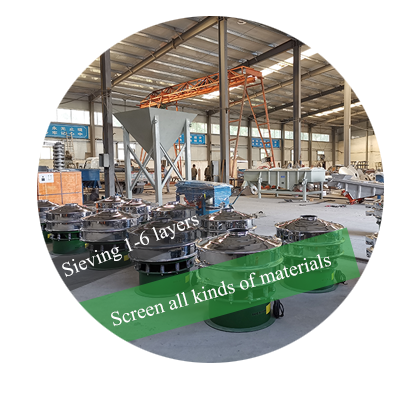
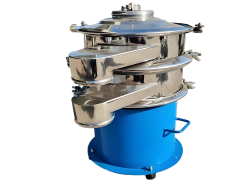
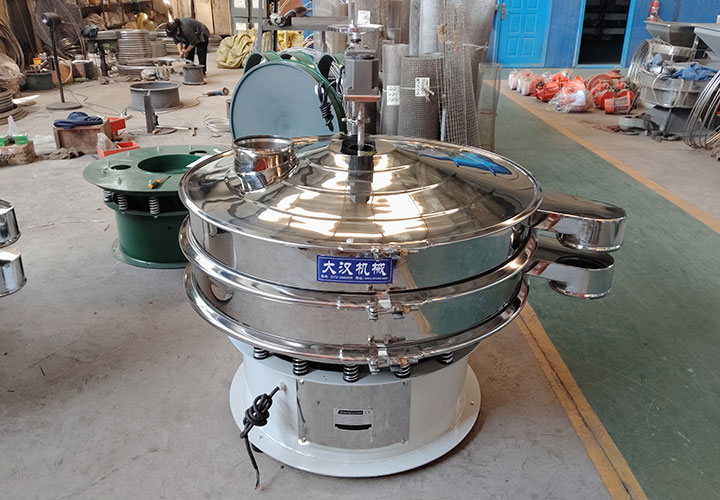
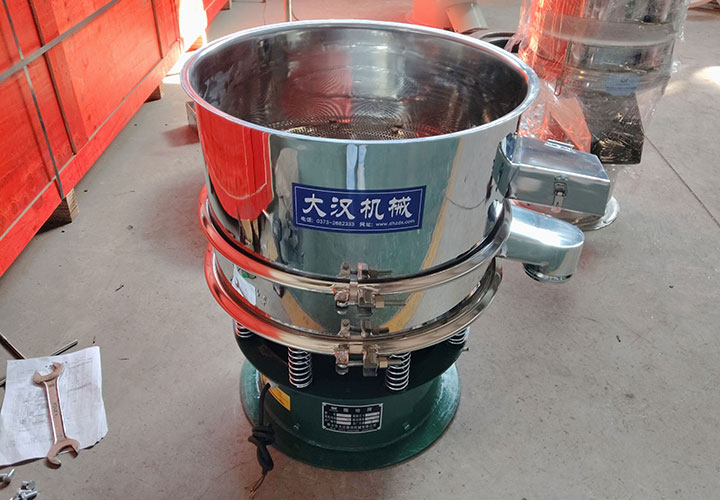
Stainless Steel Powder Sifting Machine
Callback
| Mesh size: | 2–500 mesh |
| Capacity: | 100–2000 kg/h |
Available in SUS304 or SUS316 stainless steel, with 400–1800 mm diameters.
1–5 screening layers enable multi-size classification.
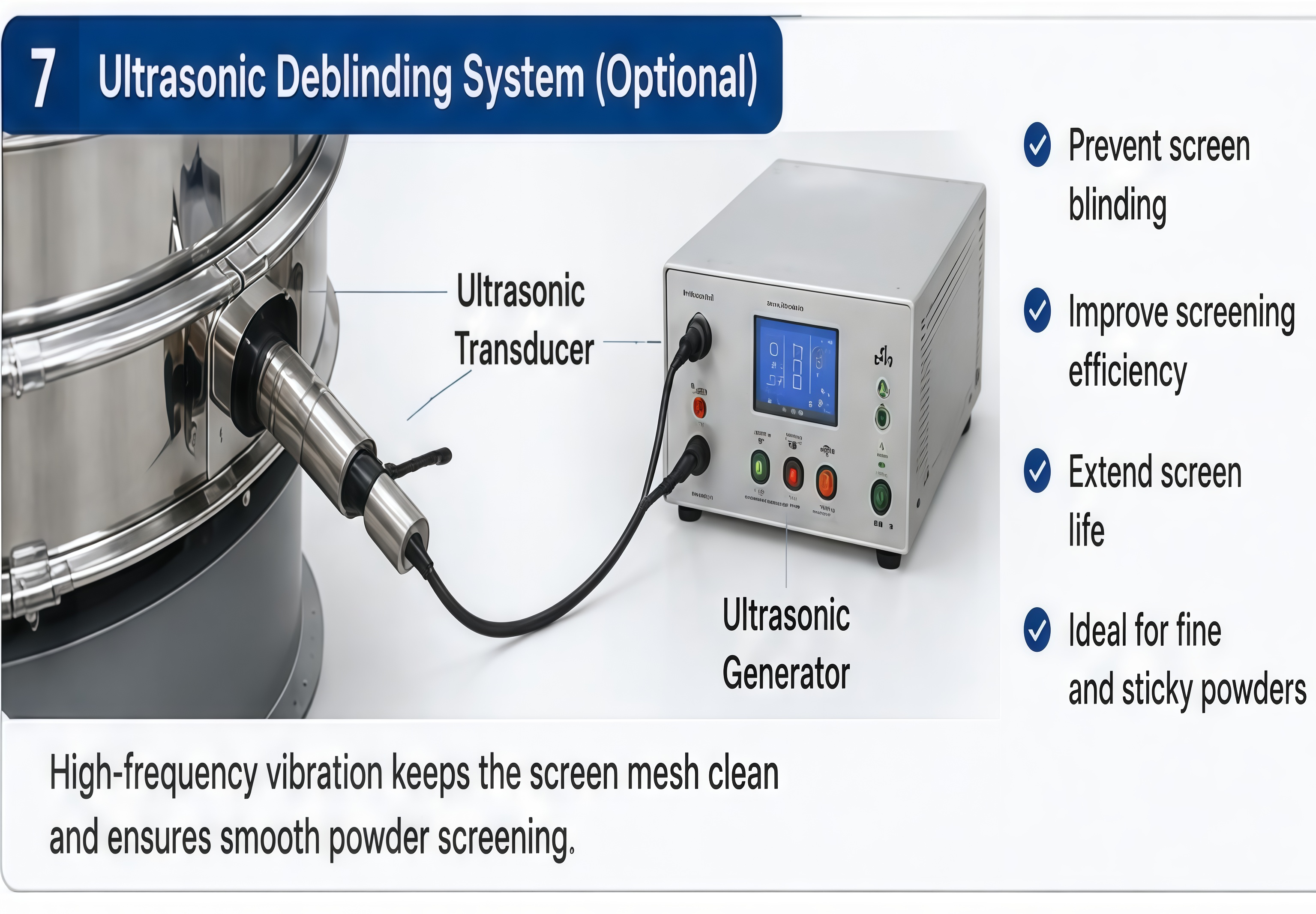
Optional ultrasonic deblinding helps prevent mesh clogging.
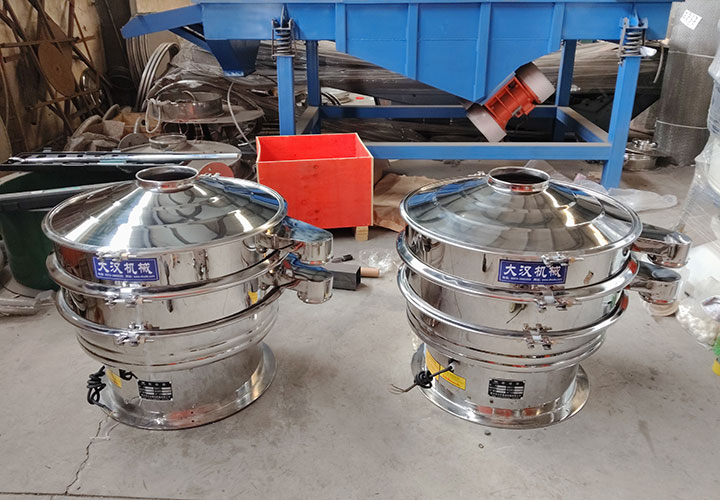
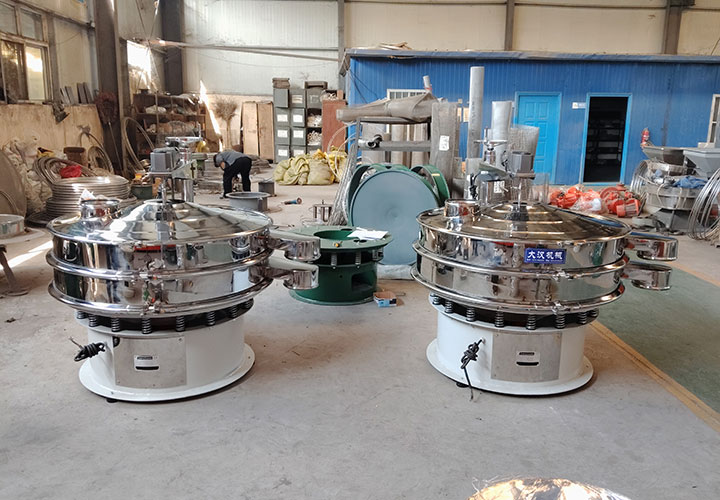
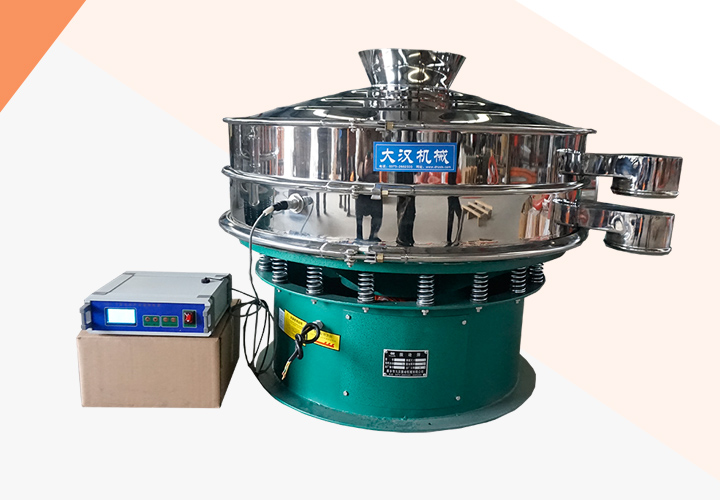
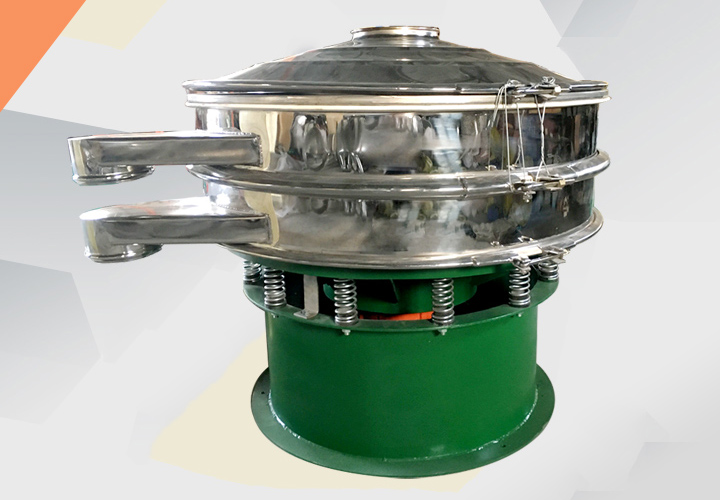
A Stainless Steel Powder Sifting Machine is designed for continuous screening, impurity removal, and particle-size classification of dry powders. It separates material through a vibrating screen while providing stainless steel material-contact surfaces for applications where corrosion resistance, regular cleaning, and controlled processing conditions are important.
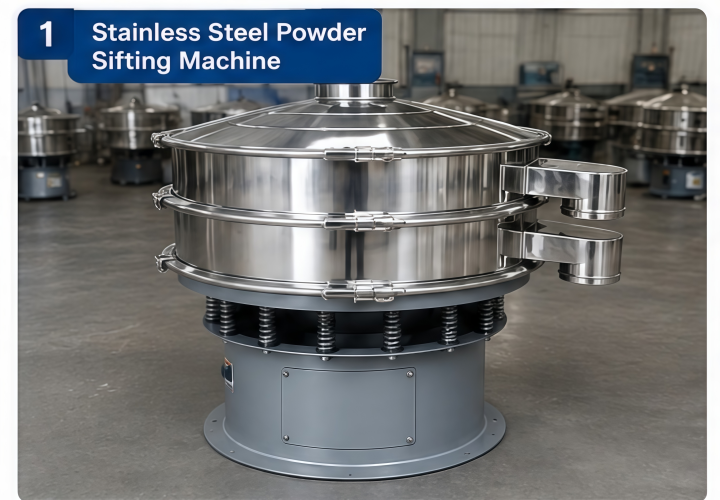
The machine is available in different diameters, screening layers, mesh specifications, and configurations. It can remove lumps and oversized particles, separate powder fractions, or provide final screening before filling, mixing, packaging, or further processing.
Key Specifications
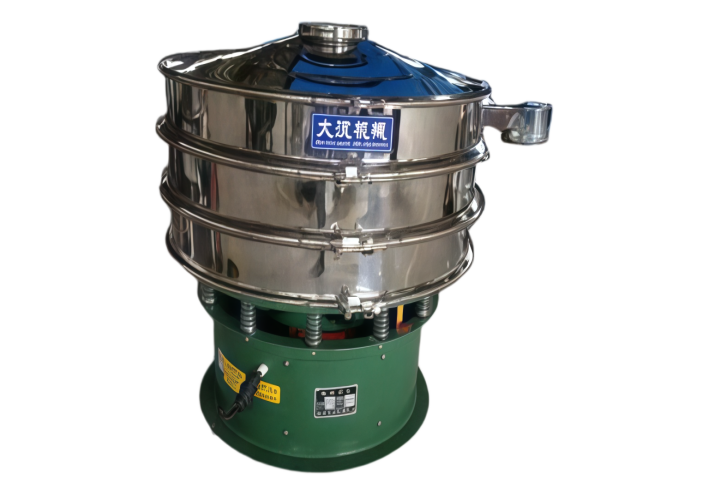
Actual capacity depends on powder characteristics, screen mesh, feed rate, and machine configuration.
| Parameter | Specification |
|---|---|
| Models | DH-400 to DH-1800 |
| Screen Diameter | 400–1800 mm |
| Screen Mesh | 2–500 mesh |
| Screening Layers | 1–5 |
| Motor Power | 0.18–2.2 kW |
| Nominal Capacity | 100–2000 kg/h |
| Screening Functions | Sifting, classification, impurity removal |
| Material Options | SUS304 / SUS316 |
| Operation | Continuous screening |
| Optional Configuration | Ultrasonic deblinding |
What Is a Stainless Steel Powder Sifting Machine?
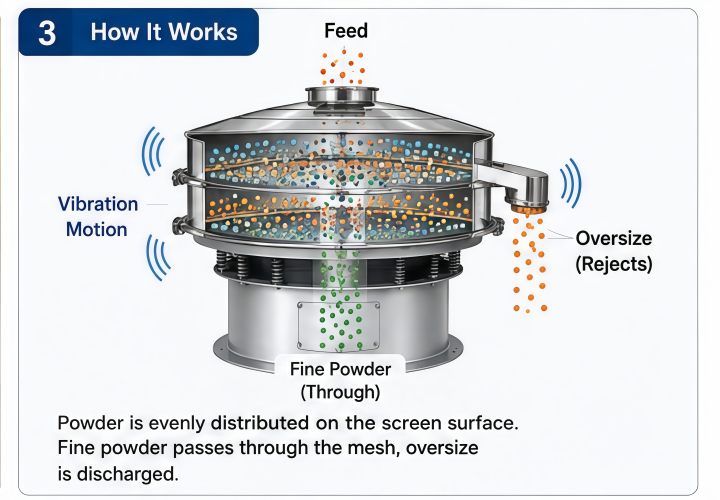
A Stainless Steel Powder Sifting Machine separates powder according to particle size as material moves across a vibrating screen.Particles smaller than the selected screen opening pass through the mesh, while larger particles remain above the screen and move toward a separate discharge outlet. Multiple screening layers can be used when several particle-size fractions are required.
Screening performance is influenced by particle-size distribution, moisture, bulk density, flowability, particle shape, and the amount of material close to the target aperture. The machine should therefore be selected according to the actual powder and required separation.
Why Use Stainless Steel for Powder Screening?
Stainless steel is commonly selected when equipment requires corrosion resistance, regular cleaning, and controlled material contact.SUS304 is suitable for many general dry-powder applications, while SUS316 can be considered when higher corrosion resistance is required by the powder or cleaning environment.
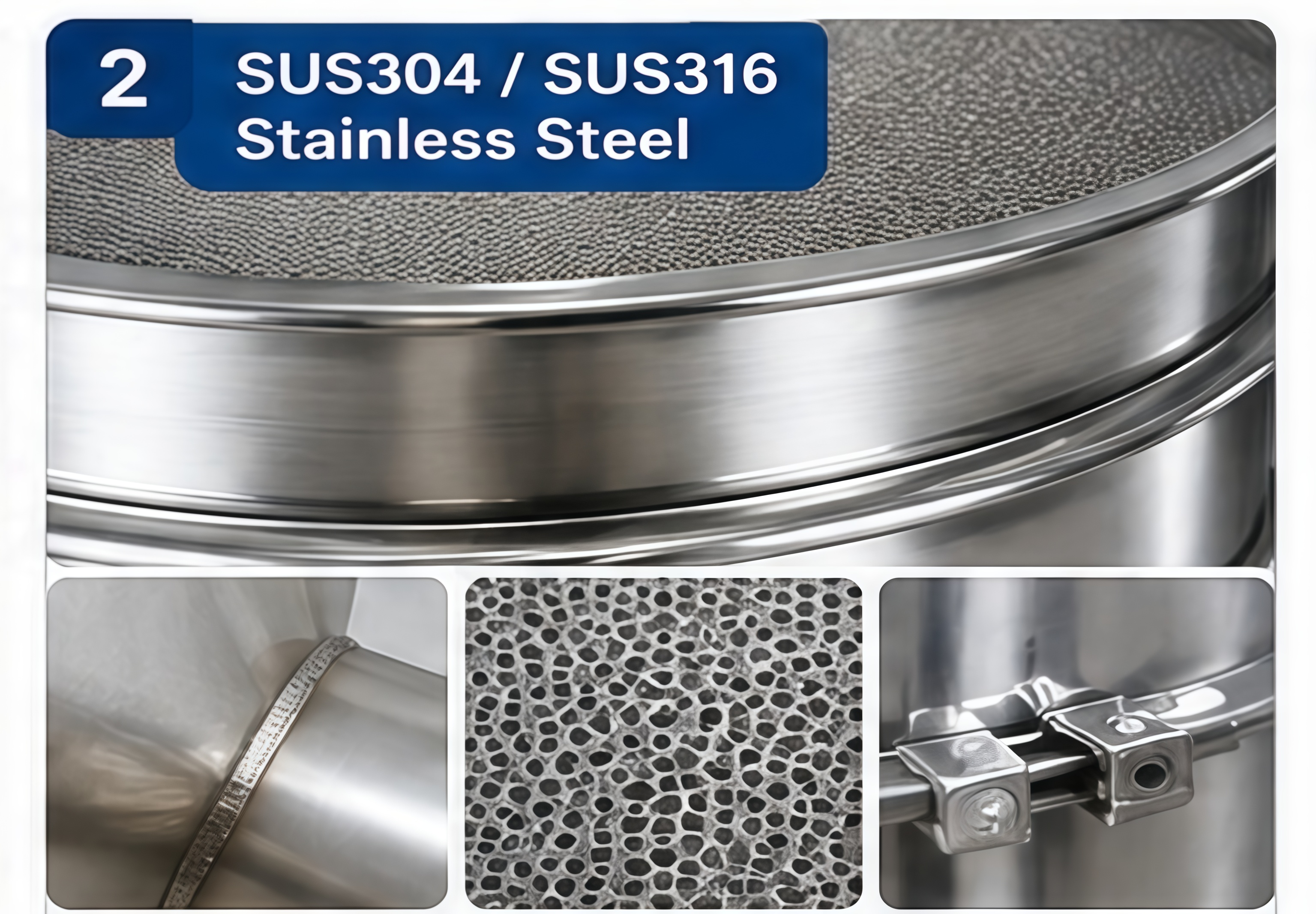
For food and pharmaceutical applications, stainless steel grade is only one selection factor. Screen material, gasket material, surface finish, sealing, and cleaning procedures should also be evaluated.
SUS304 vs SUS316
| Requirement | SUS304 | SUS316 |
|---|---|---|
| General powder screening | Suitable | Suitable |
| Food powder | Suitable | Suitable |
| Pharmaceutical applications | Suitable | Suitable |
| General corrosion resistance | Good | Higher |
| More demanding corrosive conditions | Application dependent | Better suited |
| Relative material cost | Lower | Higher |
For general powder processing, SUS304 is often a practical choice. SUS316 is more appropriate when higher corrosion resistance is required.
How Does the Machine Screen Powder?
The machine uses a vertical vibration motor to generate horizontal, vertical, and inclined movement. This vibration spreads the powder across the screen surface.As material moves across the mesh, particles smaller than the screen opening pass through, while coarse particles remain above the screen and move toward the oversize outlet.Screening performance depends on both machine settings and powder properties. Simply selecting a finer screen does not always improve throughput.
Stainless Steel Powder Sifting Machine Models and Capacity
These are reference values. Actual throughput varies with powder density, moisture, flowability, mesh size, feed rate, and required separation.
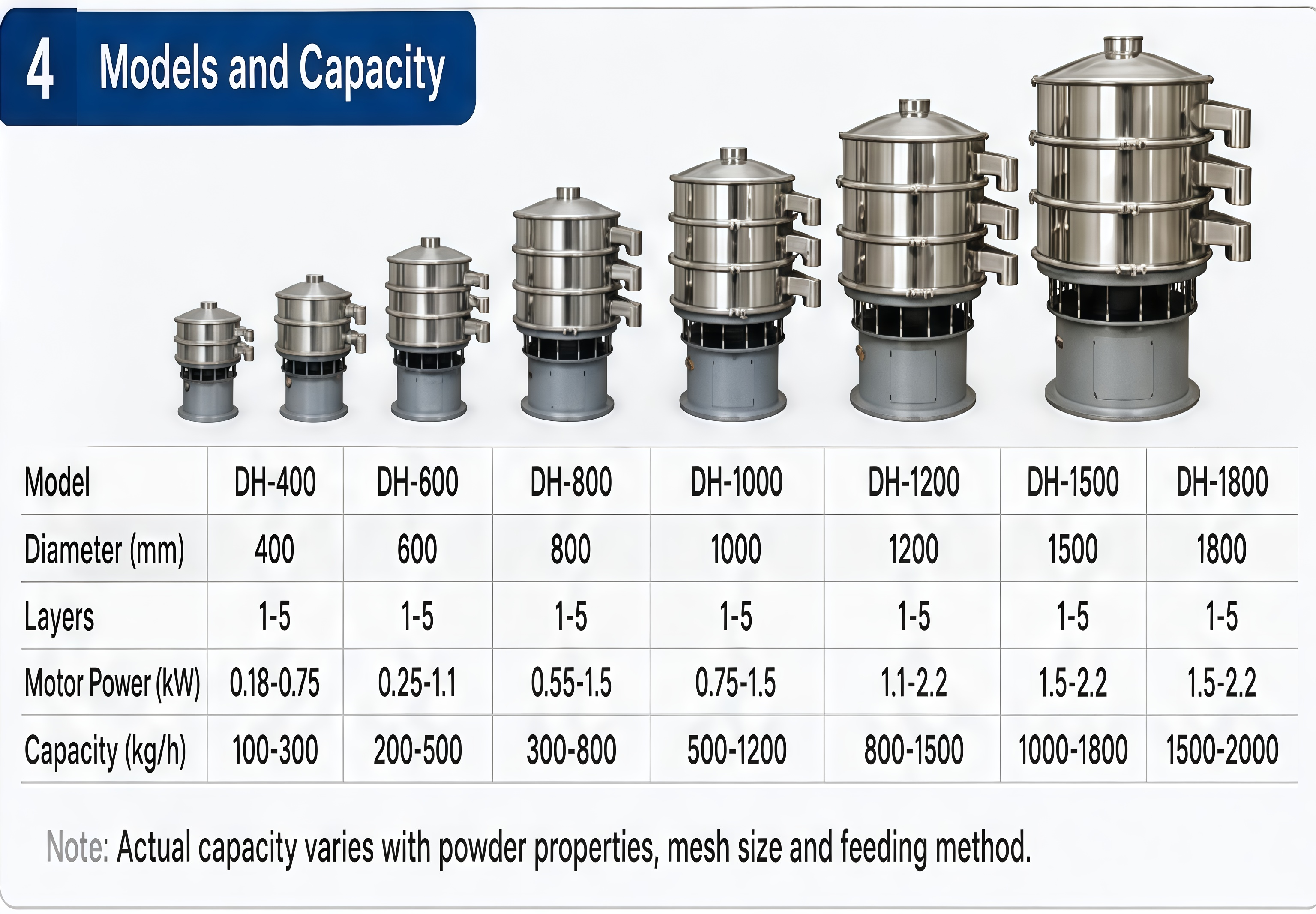
The DH series provides different machine diameters to match screening area and production requirements.
| Model | Diameter | Layers | Motor Power | Nominal Capacity |
|---|---|---|---|---|
| DH-400 | 400 mm | 1–5 | 0.18 kW | 100 kg/h |
| DH-600 | 600 mm | 1–5 | 0.25 kW | 200 kg/h |
| DH-800 | 800 mm | 1–5 | 0.55 kW | 500 kg/h |
| DH-1000 | 1000 mm | 1–5 | 0.75 kW | 800 kg/h |
| DH-1200 | 1200 mm | 1–5 | 1.1 kW | 1200 kg/h |
| DH-1500 | 1500 mm | 1–5 | 1.5 kW | 1800 kg/h |
| DH-1800 | 1800 mm | 1–5 | 2.2 kW | 2000 kg/h |
How to Choose the Screen Mesh?
The available screen range can reach 2–500 mesh, but the finest screen is not necessarily the best choice.Start with the required particle-size cut. For simple lump or impurity removal, a relatively coarse screen may provide better throughput. For classification, select the mesh according to the required separation point.
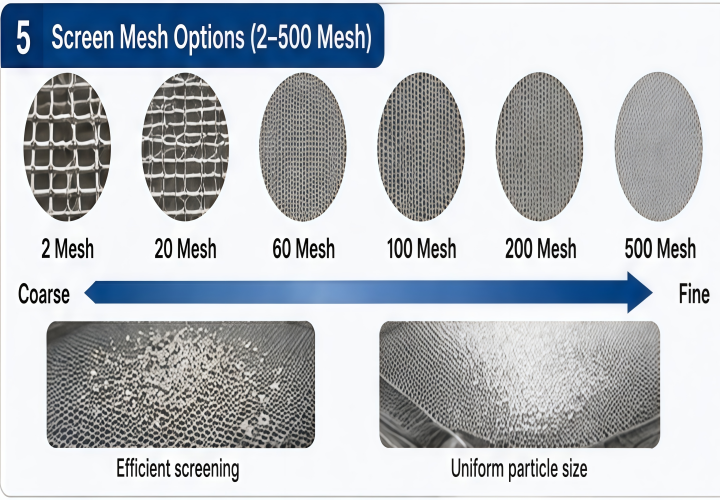
Particles close to the screen opening, as well as fine, cohesive, moist, or electrostatic powders, can reduce throughput and increase the risk of screen blinding.Target particle size → screen aperture → required capacity → screen area → deblinding evaluation
How to Choose Machine Size and Screening Layers?
Machine diameter should be selected according to required throughput and screening difficulty. Larger diameters provide more screening area for higher-throughput applications.
The number of screening layers depends on the number of particle-size fractions required. One layer can be sufficient for impurity removal or a single size cut, while multiple layers can separate several fractions in one machine.
Adding layers does not automatically improve screening. The number of layers should match the actual separation requirement.
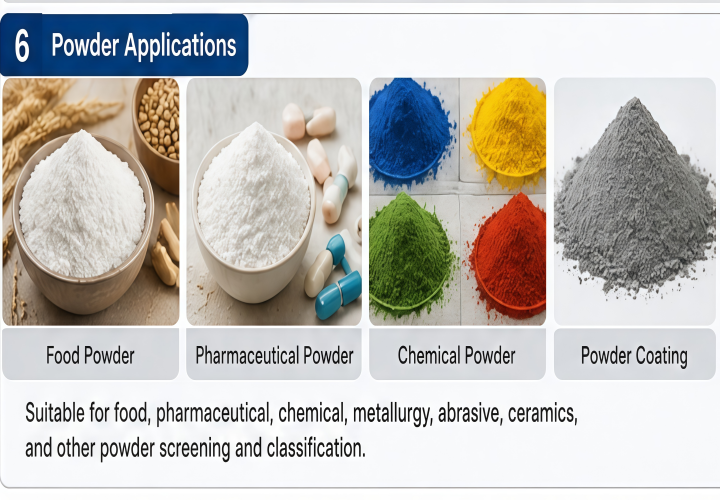
Powder Applications
Food Powders: Flour, starch, powdered sugar, spice powders, and similar dry materials can be screened to remove lumps, oversized particles, and unwanted foreign matter.
Pharmaceutical Powders: Pharmaceutical powders and excipients can require controlled material contact and frequent cleaning. Stainless steel grade, screen specification, sealing components, and cleaning requirements should therefore be considered together.
Chemical Powders: Chemical powders vary in density, moisture, particle shape, and flowability. Machine selection should be based on actual material behavior rather than the chemical category alone.
Powder Coatings: Screening can remove oversized particles and agglomerates and help maintain a more consistent particle-size distribution before subsequent processing.
When Is Ultrasonic Deblinding Needed
An ultrasonic deblinding system can be considered when fine powder repeatedly blocks the screen or adheres to the mesh.
Typical signs include:
Rapid screen blinding
Falling throughput
Fine powder remaining on the screen
Electrostatic adhesion
Poor passage through a fine mesh despite suitable feeding conditions
Increasing machine diameter alone may not solve these problems. Mesh selection, feed rate, screening area, and deblinding should be evaluated together.Ultrasonic deblinding is an optional solution for difficult fine-powder screening rather than a requirement for every application.
Cleaning and Maintenance
The screen, sealing areas, and discharge outlets should be checked and cleaned regularly according to the production process. Routine inspection helps identify blockage, screen wear, deformation, or mechanical problems before they affect screening performance.
Why Choose Dahan Stainless Steel Powder Sifting Machine?
Dahan provides DH series powder sifting machines with SUS304 or SUS316 material options, 1–5 screening layers, different screen meshes, and optional ultrasonic deblinding.
Request a Stainless Steel Powder Sifting Machine
For a suitable machine recommendation, provide:
Powder name
Required capacity in kg/h or t/h
Feed particle size
Target mesh or micron size
Screening purpose
Number of required fractions
SUS304 or SUS316 requirement
Whether the powder is sticky, cohesive, moist, abrasive, or electrostatic
If the exact model is unknown, start with three basic details: powder name, required capacity, and target particle size. These details are enough to begin evaluating the appropriate machine diameter, screen configuration, and optional deblinding system.
FAQ
What is a Stainless Steel Powder Sifting Machine used for?
A Stainless Steel Powder Sifting Machine is used for powder screening, impurity removal, and particle-size classification. The machine configuration depends on the material and required screening result.
What is the difference between SUS304 and SUS316?
SUS304 is suitable for many general powder applications. SUS316 provides higher corrosion resistance and can be considered for more demanding material-contact or cleaning conditions.
What mesh sizes are available?
The screening range can reach 2–500 mesh depending on the selected configuration. The correct mesh should be determined from the target particle size and powder behavior.
How much powder can the machine process?
The published DH series has nominal capacities from 100 kg/h for DH-400 to 2000 kg/h for DH-1800. Actual throughput depends on powder properties, screen mesh, feed rate, and required separation.
Can fine powder cause screen blockage?
Yes. Fine, cohesive, sticky, moist, or electrostatic powders can reduce the open area of the screen. Depending on the application, the solution may involve changing the mesh, controlling the feed rate, increasing effective screen area, or adding deblinding.
How do I choose the right model?
Start with the powder type, required capacity, target mesh, feed particle size, number of fractions, and stainless steel requirement. These factors determine the appropriate diameter, screening layers, mesh configuration, and optional system.

-
Installation and commissioning of the Vibratory sifter for plastic pellets
⑴ Vibratory sifter for plastic pellets production line installation There should be a stable founda ...
-
What is the difference between ultrasonic sieving machine and vibratory sifter
Many people have the same questions about Ultrasonic Sieving Machine and Vibratory Sifter . What is t ...
-
5 tips for selecting the most suitable vibro sifter
The vibro sifter can be suitable for screening and filtering of any particles, powders...

Email:
sale@xxdahan.com
WhatsApp:
+86 15236742901
Add:
1000m West of Forest Park,Yanjin County,Xinxiang City,Henan Province,China.