How to Choose Stainless Steel Vibrating Screen Mesh and Avoid 5 Common Mistakes
When you choose stainless steel vibrating screen mesh, two meshes can look almost identical yet deliver different screening results. A small change in stainless steel grade, aperture, wire diameter, weave, or screen dimensions can affect how the mesh performs in actual operation. This is why choosing a mesh by mesh number alone can lead to the wrong specification. The mesh also needs to match the required separation, screen construction, installation method, and working conditions.
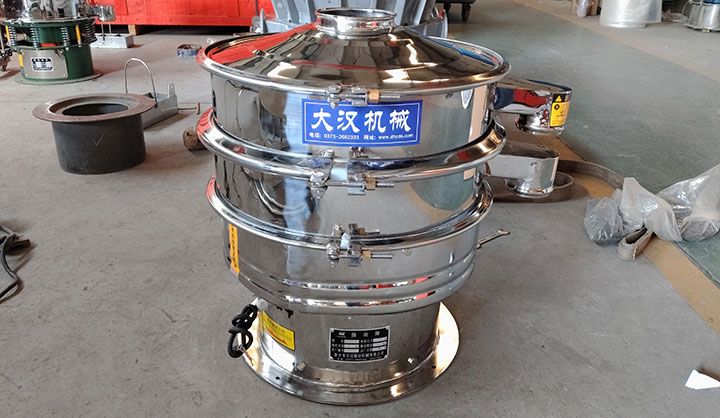
This guide focuses on the practical details that matter when selecting or replacing stainless steel vibrating screen mesh. It explains how to compare 304 and 316 stainless steel, understand aperture and wire diameter, check mesh construction and quality, and avoid common mistakes before placing an order.
What Makes One Stainless Steel Screen Mesh Different From Another?
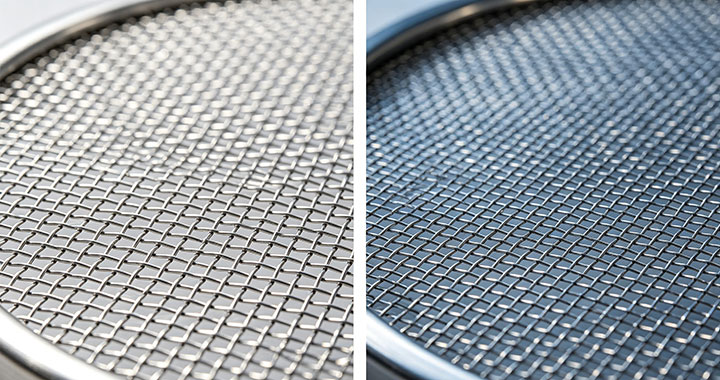
Stainless steel screen mesh is not defined by the material grade alone. Two meshes made from stainless steel can have different aperture, wire diameter, weave, open area, and dimensional accuracy, even when they are specified by the same mesh number.
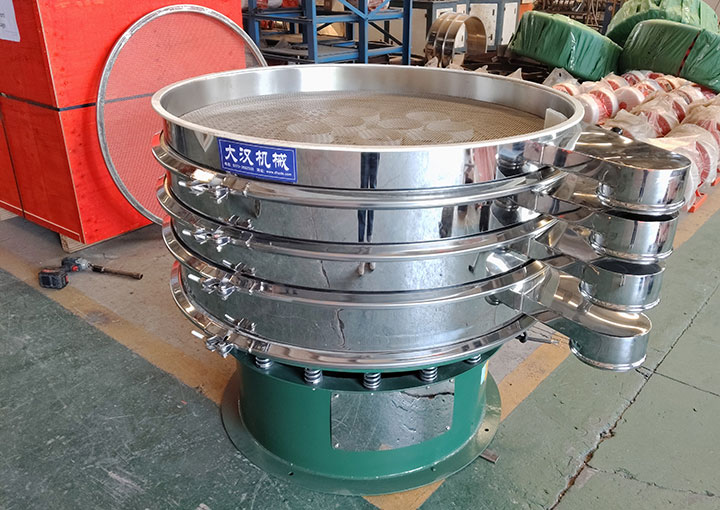
These details determine how much material can pass through the openings, how much screening area is available, and how the mesh fits and performs on the vibrating screen. For replacement orders, the mesh specification should therefore be checked as a complete set rather than by stainless steel grade or mesh number alone.
The main specifications to compare are stainless steel grade, aperture, wire diameter, weave type, open area, mesh dimensions, and edge construction. Understanding these differences makes it easier to identify whether a mesh is actually equivalent to the one currently installed.
304 or 316 Stainless Steel Which One Should You Specify?
The stainless steel grade should be selected according to the working environment rather than simply choosing the higher grade. For most general screening applications, 316 stainless steel becomes more relevant when the screen is exposed to more demanding corrosive conditions.
304 Stainless Steel for General Applications
304 stainless steel is commonly specified for dry powder, granular materials, food processing, chemical products, and general industrial screening. It is suitable when the operating environment does not involve particularly aggressive chemicals or high chloride exposure.
316 Stainless Steel for More Demanding Environments
316 stainless steel is worth considering when the mesh will face stronger corrosive conditions, especially environments involving chlorides or certain chemical solutions. The higher alloy content provides additional corrosion resistance, but it does not automatically make 316 the better choice for every screening application.
What Actually Changes Between 304 and 316?
The main difference is their chemical composition and resulting corrosion resistance. For screen mesh selection, this means the grade should be evaluated together with the material being screened, cleaning method, moisture, and surrounding environment. If these conditions do not require the additional corrosion resistance of 316, specifying 304 may be sufficient.
Look Beyond the Mesh Number
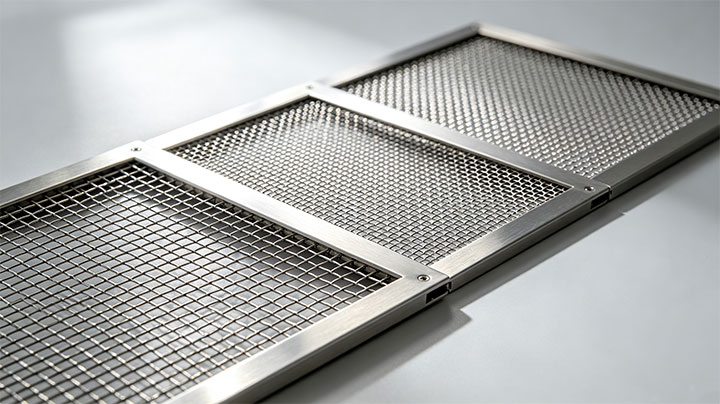
A mesh number is useful for identifying a general screen specification, but it does not tell you everything about the actual opening. When ordering or replacing stainless steel vibrating screen mesh, the aperture and wire diameter should be checked as well.
Aperture Is the Opening the Material Passes Through
The aperture is the actual opening between adjacent wires. It directly determines the size of particles that can pass through the screen. Two meshes with the same nominal mesh number can therefore require closer checking if their wire diameters or manufacturing tolerances are different.
Wire Diameter Changes More Than Strength
Wire diameter affects the size of the opening, the amount of metal in the screen, and the mechanical characteristics of the mesh. A thicker wire can provide greater resistance to mechanical loading, but it also reduces the available opening when the overall mesh specification is otherwise similar.
Open Area Affects How Much Screening Surface Is Available
Open area is the percentage of the screen surface occupied by openings rather than wires. A higher open area provides more open space for material to pass through, while a lower open area leaves more wire surface between the openings. When comparing two mesh options, open area helps explain why similar-looking meshes can differ in material passage and screening performance.
Which Weave Is Suitable for Your Stainless Steel Screen Mesh?
The weave determines how the wires cross each other and therefore changes the structure of the screen surface. For vibrating screen applications, plain weave, twill weave, and Dutch weave are the three constructions most worth distinguishing when comparing stainless steel mesh options.
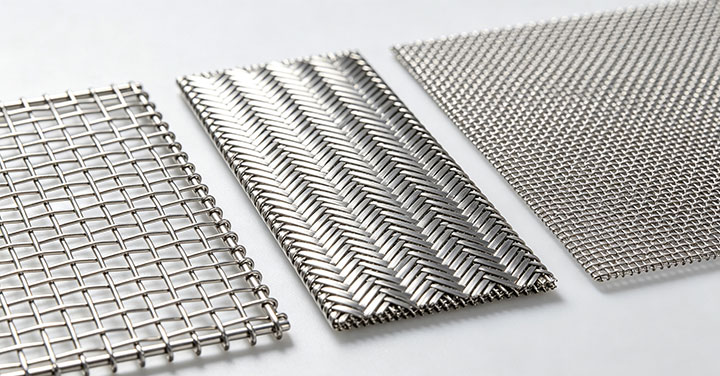
Plain Weave: In a plain weave, each warp wire passes alternately over and under the weft wire. This straightforward construction provides a regular opening pattern and is a practical choice for many general-purpose screening applications.
Twill Weave: Twill weave allows the wires to pass over and under multiple wires in a repeated pattern. Compared with plain weave, it can accommodate a relatively heavier wire arrangement while maintaining fine openings, making it useful when a stronger mesh structure is required.
Dutch Weave: Dutch weave uses a different wire arrangement to produce a dense filtering surface with very fine openings. It is more commonly considered when fine particle retention or filtration is more important than maximizing open screening area.
For a vibrating screen, the weave should be considered together with the required aperture, wire diameter, screen construction, and installation method. The most finely woven mesh is not necessarily the most suitable option for a vibrating screening application.
How Screen Mesh Quality Affects Real Screening Performance
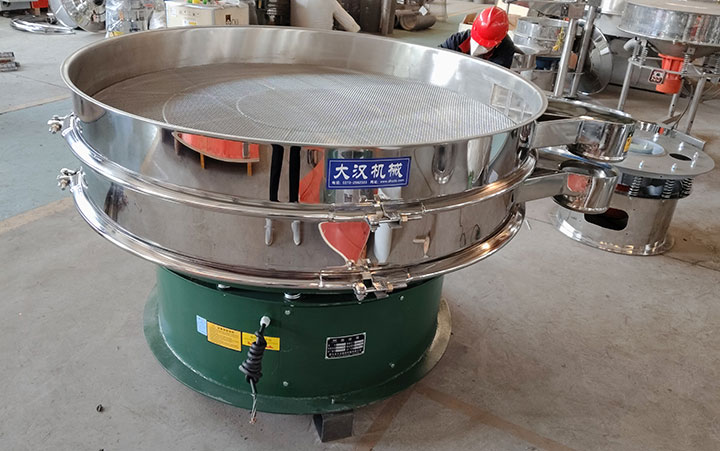
A screen mesh can meet the stated mesh number and material grade and still perform differently in operation. Manufacturing consistency matters because small variations across the screen surface can affect material flow, separation, service life, and installation.
Uniformity of Openings
The openings should remain consistent across the usable screening area. Uneven apertures can cause some particles to pass or retain differently from the intended specification, especially when a narrow separation range is required.
Consistent Wire Diameter
Wire diameter should remain reasonably consistent throughout the mesh. Significant variation changes the effective opening and can also create differences in the strength of individual areas of the screen.
Mesh Tension and Flatness
A screen surface needs to remain properly tensioned and reasonably flat after installation. Loose or distorted mesh can change the effective screening surface and may lead to premature wear or uneven material movement.
Edge Construction
The edges need to match the way the mesh will be installed on the vibrating screen. Properly finished edges make fitting easier and reduce the risk of loose wires or damaged sections interfering with installation.
Surface Finish and Cleanability
A clean, consistent wire surface is easier to inspect and clean. This can be particularly useful when the screen is used for powder, food, pharmaceutical, or other applications where residual material on the mesh needs to be minimized.
How to Check a Stainless Steel Screen Mesh Before Ordering
Before placing an order, do not check only the mesh number shown on a quotation. A few basic details can confirm whether the proposed stainless steel screen mesh matches the screen you actually need.
- Stainless steel grade: Confirm whether the mesh is 304, 316, or another specified grade.
- Aperture: Check the actual opening size rather than relying only on the mesh number.
- Wire diameter: Confirm the wire size because it affects both the opening and mesh construction.
- Mesh dimensions: Check the required length, width, diameter, or other installation dimensions.
- Weave and edge: Make sure the weave type and edge construction are compatible with the existing screen.
- Quantity and replacement condition: Confirm how many pieces are required and whether the mesh is supplied as a sheet, roll, framed section, or finished screen panel.
If the mesh is being replaced, an old screen can also provide useful reference information. Measuring the existing mesh and confirming how it is installed can prevent a correctly manufactured mesh from becoming an incorrectly fitted replacement.
Do You Need a Standard Mesh or a Custom Specification?
Not every vibrating screen requires a fully standard mesh. The decision depends mainly on whether the required opening, mesh dimensions, and installation details match an available specification.
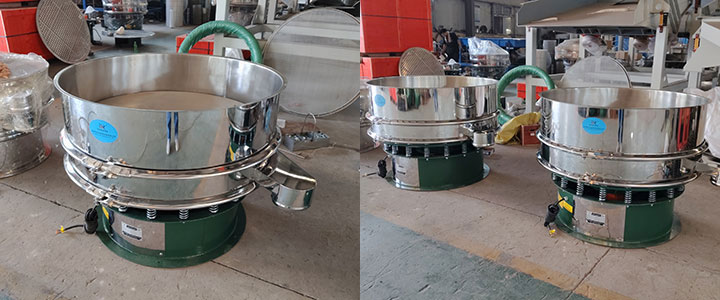
A standard stainless steel screen mesh is usually sufficient when the required mesh number, aperture, wire diameter, weave, and dimensions are already available. Using a standard specification can simplify replacement and reduce unnecessary customization.
A custom stainless steel screen mesh may be more suitable when the screen requires a specific size, unusual aperture, different wire diameter, special edge treatment, or a finished panel that must fit a particular screen frame.
For replacement orders, it is useful to provide the existing mesh dimensions and installation method rather than requesting customization based on mesh number alone. This gives the manufacturer enough information to determine whether a standard specification can be used or whether a custom mesh is actually necessary.
Five Mistakes That Can Lead to the Wrong Screen Mesh
Many mesh problems do not start with the screen itself. They start when the replacement mesh is specified too simply or important installation details are left out of the order. The following five mistakes are easy to avoid.
Specifying Mesh Number Without Aperture
Giving only a mesh number may not provide enough information to identify the required opening. The quotation should also confirm the aperture and wire diameter so the supplied mesh can be checked against the actual screening requirement.
Choosing 316 Simply Because It Is More Expensive
316 stainless steel is not automatically necessary for every application. If the operating environment does not require its additional corrosion resistance, 304 may already meet the application requirements. The grade should be selected according to actual conditions rather than price alone.
Ignoring Wire Diameter
Two meshes can have a similar mesh number but different wire diameters. This changes the actual opening and the amount of open screening area. Always confirm the wire diameter when comparing mesh specifications.
Checking the Mesh but Not the Installation Method
A mesh with the correct aperture can still be unsuitable if its dimensions or edge construction do not match the vibrating screen. Check how the existing mesh is fixed before ordering a replacement.
Ordering Replacement Mesh From an Old Specification
An old drawing or previous order is useful, but it should not be treated as proof that the current specification is still correct. If the screen, process, or installation has changed, confirm the required dimensions and mesh specification before placing a repeat order.
A Simple Way to Compare Two Stainless Steel Screen Mesh Options
When two stainless steel screen mesh options look similar, compare their specifications side by side instead of comparing the price first. A mesh with a lower unit price may not be an equivalent replacement if its opening, wire diameter, or construction is different.
| Specification | Option A | Option B |
|---|---|---|
| Stainless Steel Grade | 304 | 316 |
| Aperture | Same or different? | Same or different? |
| Wire Diameter | Same or different? | Same or different? |
| Weave | Same or different? | Same or different? |
| Open Area | Compare % | Compare % |
| Mesh Dimensions | Confirm | Confirm |
| Edge Construction | Confirm | Confirm |
The purpose of this comparison is not to find the option with the most specifications. It is to confirm whether both meshes are actually equivalent for the intended screen. If one specification changes, check what that change means for the finished screen before treating the two options as interchangeable.
A Stainless Steel Screen Mesh Selection Example
Consider a replacement order for a vibrating screen used for powder screening. The buyer knows the required separation size but initially provides only “stainless steel mesh” and a mesh number.
Before confirming the specification, the mesh is checked against the existing screen. The required stainless steel grade, aperture, wire diameter, weave, mesh dimensions, and installation method are then confirmed together.
Once these details are defined, the replacement requirement becomes much clearer than a single mesh number. The manufacturer can check whether the proposed mesh has the correct opening and dimensions and whether it can be installed on the existing screen.
This type of specification check is especially useful for replacement orders, where a mesh can have the correct nominal mesh count but still differ in aperture, wire diameter, or finished dimensions.
What Information Should You Send When Asking for a Mesh Quote?
A mesh quotation can be confirmed much faster when the basic specification is provided at the beginning. You do not need to prepare a complicated technical drawing if the existing screen can be measured clearly.
- Material grade: 304, 316, or another required stainless steel grade.
- Mesh specification: Mesh number, aperture, and wire diameter if known.
- Weave type: Plain, twill, Dutch, or the existing weave if known.
- Mesh size: Length and width, diameter, or finished panel dimensions.
- Installation method: How the mesh is fixed to the vibrating screen.
- Quantity: Number of mesh pieces or panels required.
- Existing sample or drawing: A photo, old mesh sample, or drawing can help confirm details that are difficult to describe by text.
If some specifications are unknown, send the screen model, existing mesh dimensions, photos, and the required separation size first. These details give the manufacturer a practical starting point for confirming the stainless steel screen mesh specification and preparing a quotation.
Frequently Asked Questions
Is 304 or 316 stainless steel better for vibrating screen mesh?
Neither grade is automatically better for every application. 304 is suitable for many general screening applications, while 316 can be considered when the mesh is exposed to more demanding corrosive conditions. The choice should be based on the actual operating environment rather than the grade alone.
How do I choose the correct stainless steel vibrating screen mesh?
Do not specify the mesh by mesh number alone. Confirm the stainless steel grade, aperture, wire diameter, weave, mesh dimensions, and installation method. If the existing mesh is being replaced, its dimensions, photos, or a sample can also help confirm the required specification.
Can stainless steel vibrating screen mesh be customized?
Yes. Stainless steel screen mesh can be customized according to the required aperture, wire diameter, weave, dimensions, and installation method. For a replacement mesh, providing the existing screen dimensions or a drawing can help determine whether a standard specification is suitable or a custom mesh is required.
Need Help Confirming Your Screen Mesh Specification?
If you are unsure whether your existing mesh specification is correct, you can send us the mesh number, aperture, wire diameter, stainless steel grade, screen dimensions, and installation method. A photo of the existing mesh or vibrating screen can also help us identify the required construction.
Based on the information provided, we can help confirm whether a standard stainless steel vibrating screen mesh is suitable or whether a custom specification is needed.
Send us your mesh requirements and screen details to confirm the specification before ordering.

Email:
sale@xxdahan.com
WhatsApp:
+86 15236742901
Add:
1000m West of Forest Park,Yanjin County,Xinxiang City,Henan Province,China.