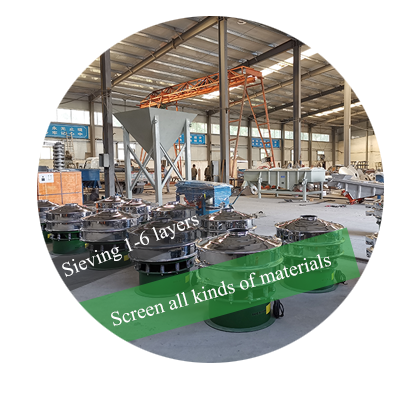
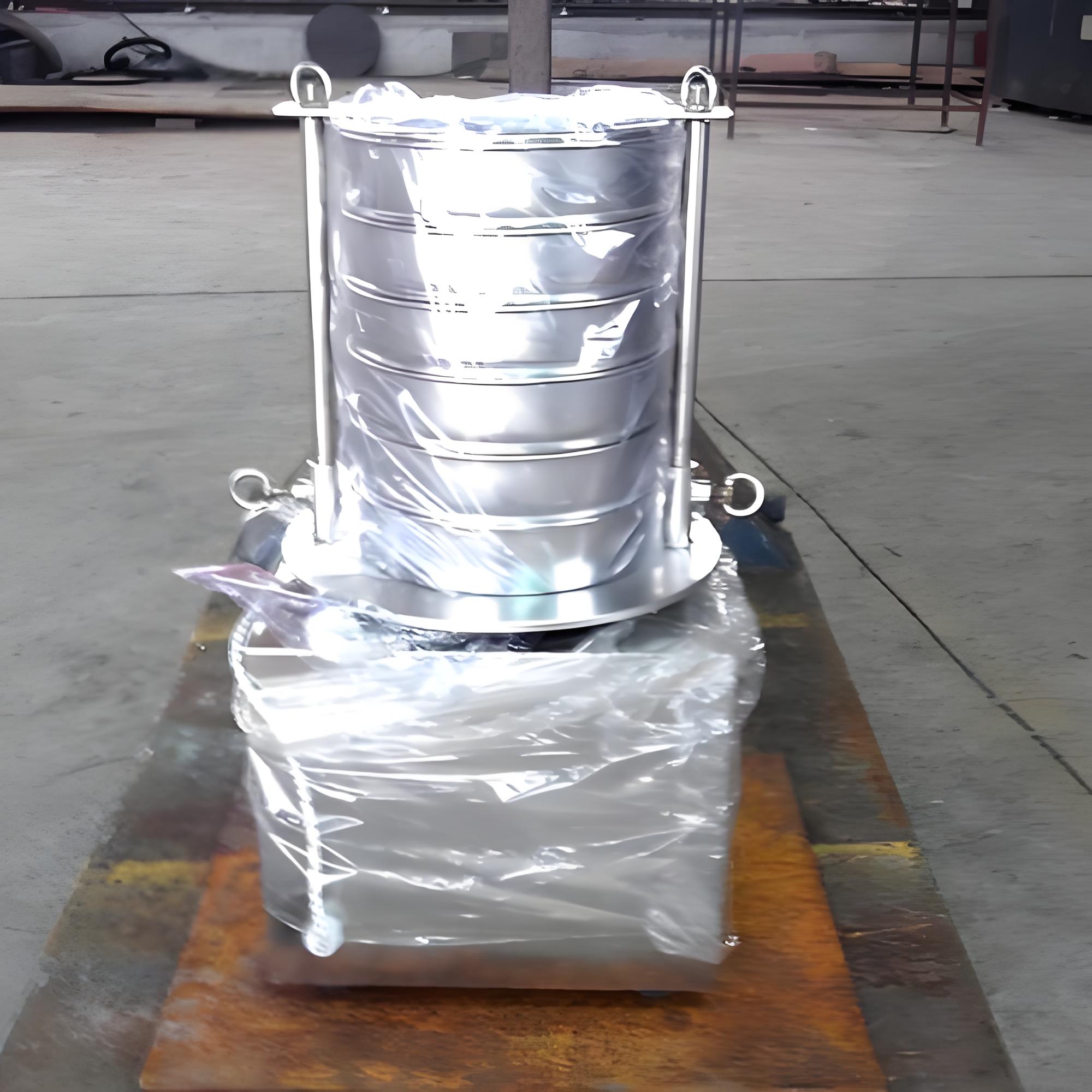
Analytical Test Sieve
![[field:title/]](/uploads/260815/1-260Q5150211131.jpg)
Callback
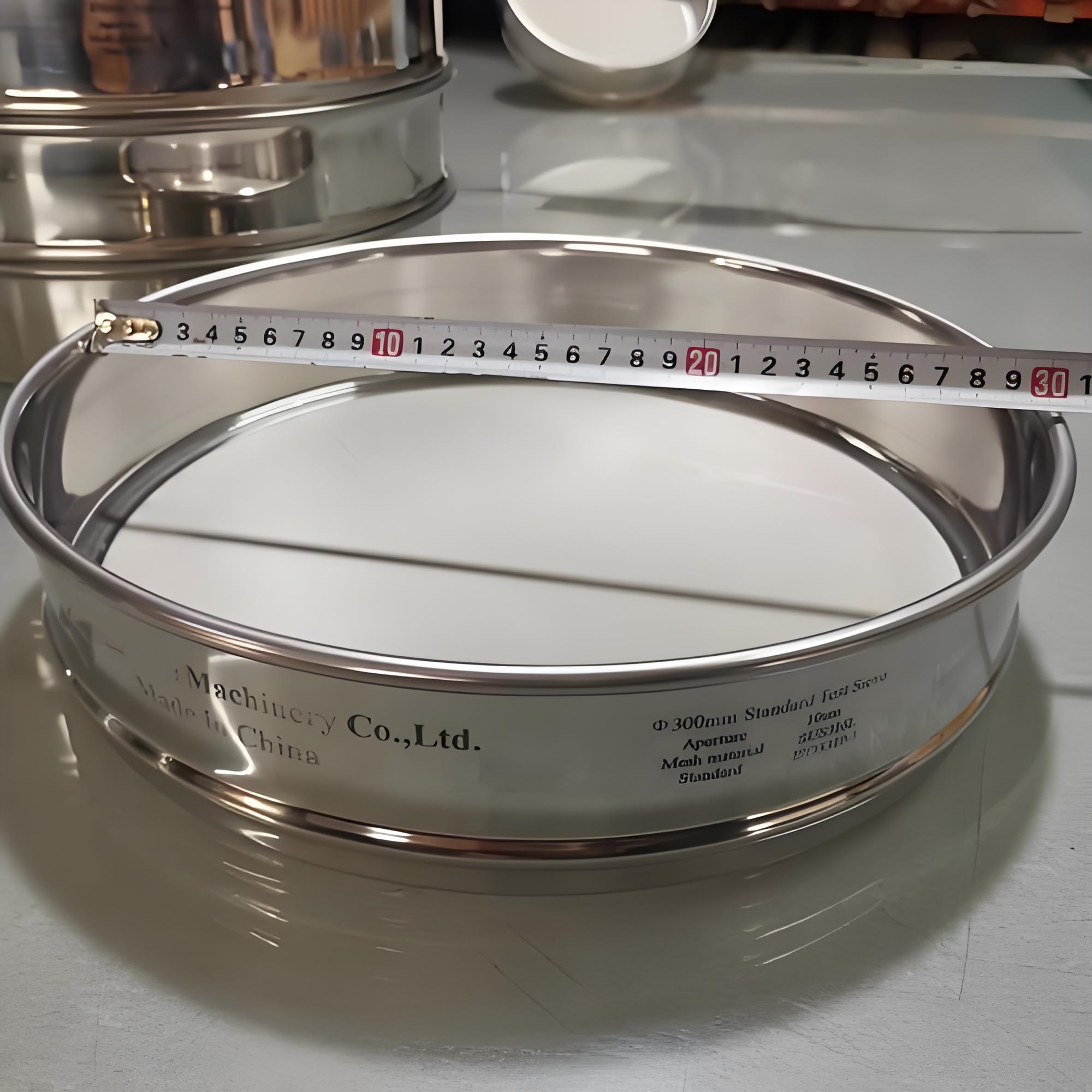
Diameter: 75 mm, 100 mm, 200 mm (8″), 300 mm (12″)
Mesh Range: 20 μm – 125 mm
Materials: SS 304, SS 316L, brass, nylon
Standards: ASTM E11-24, ISO 3310-1
Grades: Compliance (66% confidence), Inspection (99%), Calibration (99.73%)
Applications: Pharma, food, chemicals, mining, environmental testing
Last Updated: August 2026
1. What This Guide Covers?
This guide helps you select the right analytical test sieve for your application. It focuses on the decision-making process—matching sieve specifications to your sample characteristics and quality standards.
2. What Is an Analytical Test Sieve?
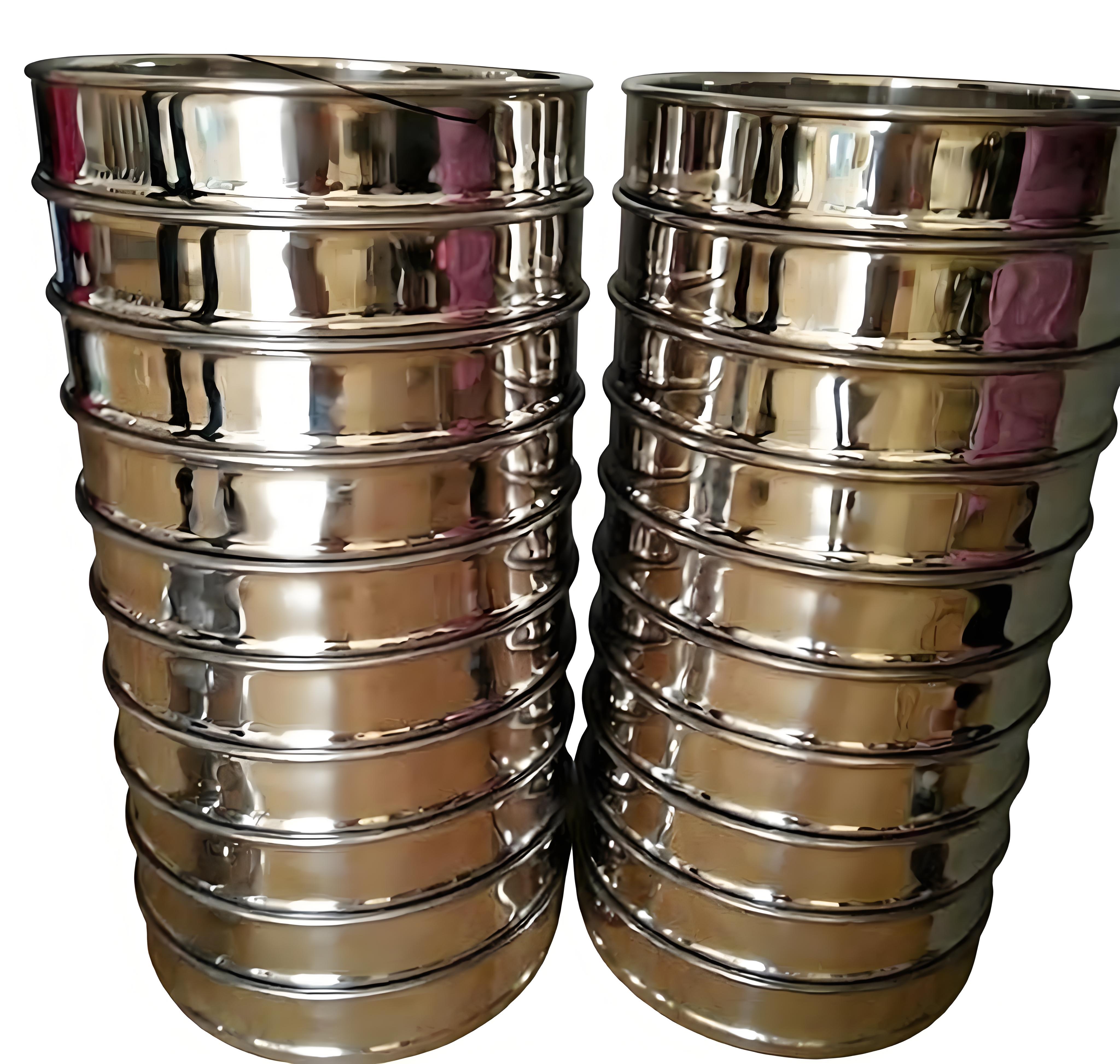
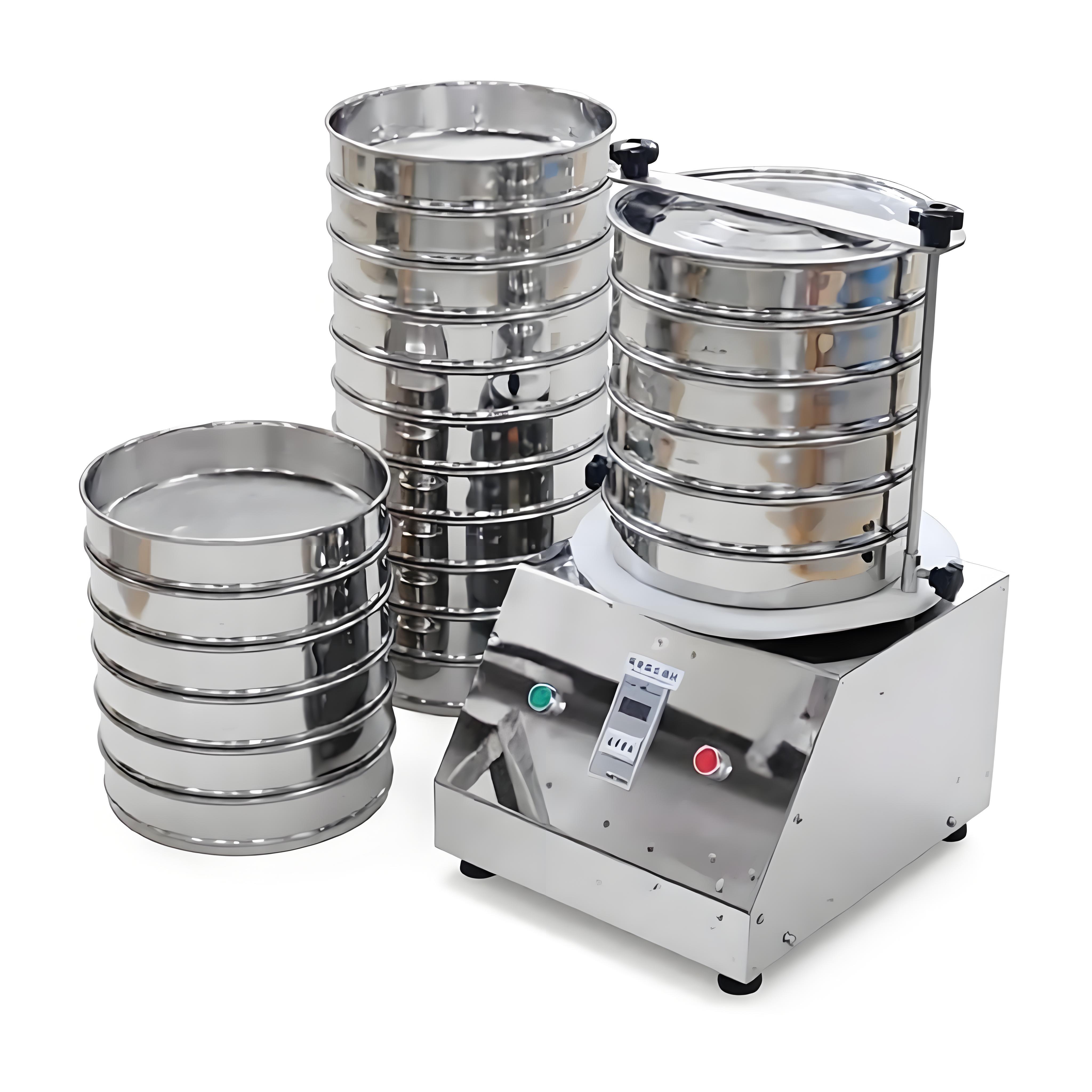
An analytical test sieve is a laboratory instrument with a woven-wire mesh that sorts particles by size. The standard method stacks sieves with progressively finer mesh; material retained on each is weighed to determine the particle size distribution.
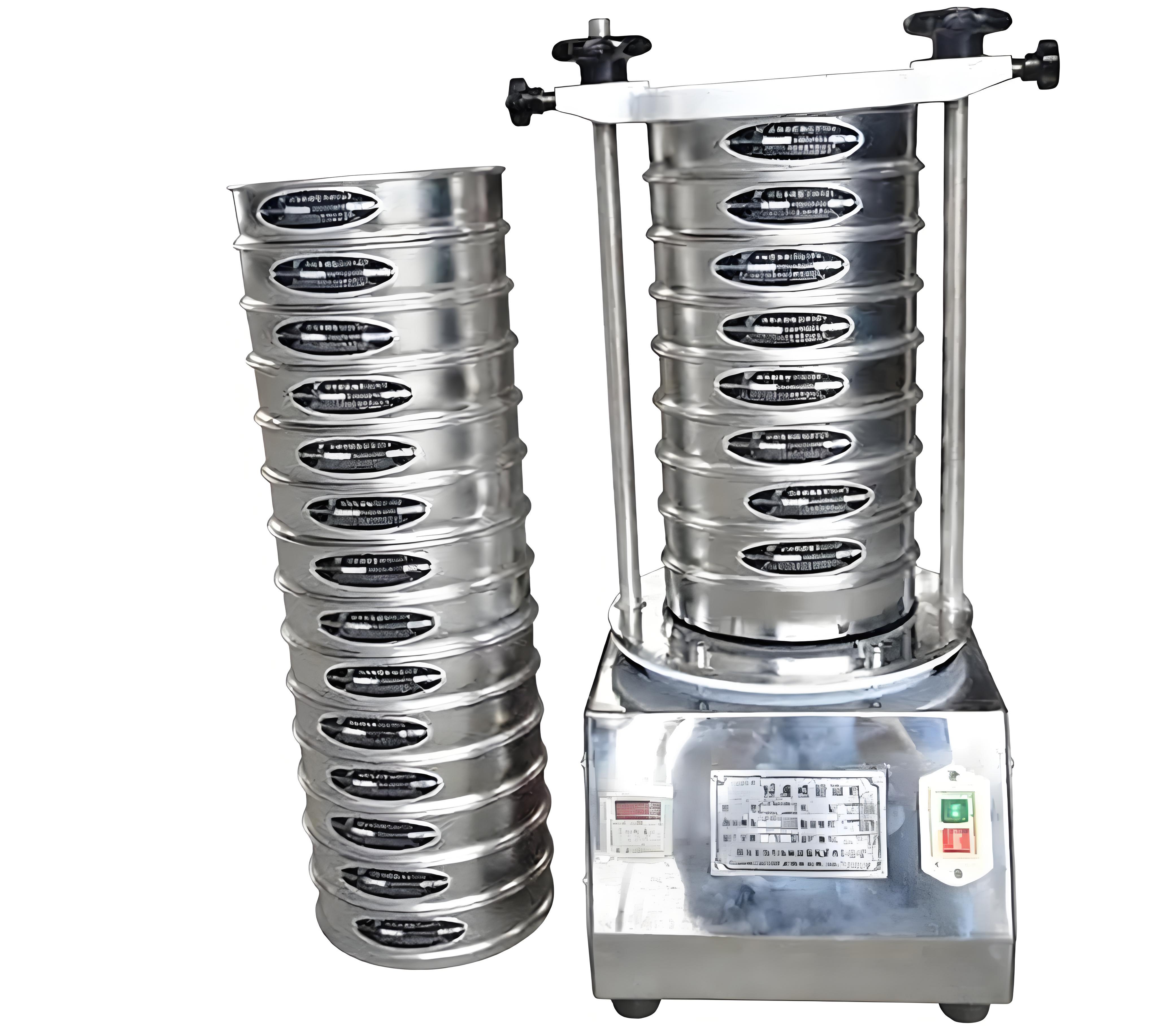
According to USP Chapter <786> (official May 1, 2023), this method is intended where at least 80% of particles are larger than 75 μm. For finer materials, air-jet or sonic sieving may be more appropriate.
3. Standards at a Glance
Two primary standards govern analytical test sieve manufacturing. The key difference is geographical: ASTM (8-inch/12-inch frames) is predominant in the Americas; ISO (200 mm/300 mm) in Europe and Asia.
ASTM E11-24 provides three grades with different statistical confidence levels:
| Grade | Confidence | Best For |
|---|---|---|
| Compliance | 66% | Routine QC, production testing |
| Inspection | 99% | Supplier verification, higher precision |
| Calibration | 99.73% | Pharmaceutical QA, regulatory compliance |
4. Selection Decision Matrix
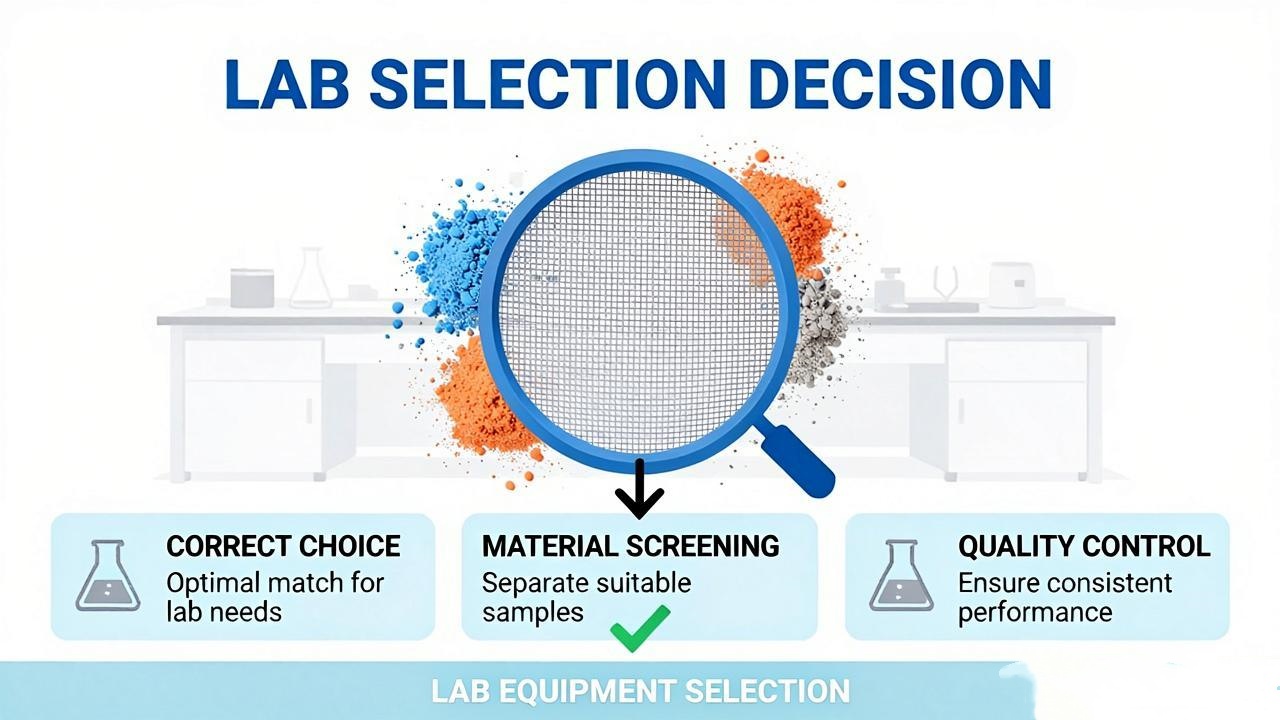
Use this table to match your sample to the right sieve configuration:
| Sample Characteristic | Mesh Material | Frame Material | Recommended Diameter | Why This Recommendation |
|---|---|---|---|---|
| General powders | SS 304 | SS 304 | 200 mm (8 in) | Best cost-performance for routine work. |
| Corrosive/Acidic | SS 316L | SS 316L | 200 mm (8 in) | 316L has molybdenum for superior corrosion resistance. |
| Electrostatic-prone | Nylon | Nylon | 200 mm (8 in) | Non-conductive; reduces particle adhesion. Control humidity >65% RH. |
| Flammable dust | SS or Brass | Brass | 200 mm (8 in) | Brass is non-sparking; limited to 2.36 mm to 45 μm. |
| Very small sample (<25g) | SS | SS | 100 mm or 75 mm (3 in) | Smaller surface area reduces sample loss. |
| Large sample (>100g) | SS | SS | 300 mm (12 in) | Larger surface area prevents overloading and blinding. |
| Fibrous/Elongated | SS | SS | 200 mm (8 in) | Extend sieving time; mechanical agitation preferred. |
| Food/Pharma | SS 316L | SS 316L | 200 mm (8 in) | Meets hygiene and corrosion resistance requirements. |
5. Three Common Selection Errors to Avoid
Error 1: Wrong diameter for sample volume. A 200 mm sieve fits 25–100 g. Using <25g or >100g leads to poor separation.
Fix: Match sample weight to sieve diameter.
Error 2: Ignoring material compatibility. Using SS 304 for acidic materials causes corrosion, enlarging openings and invalidating results.
Fix: For acidic materials, specify 316L stainless steel.
Error 3: Wrong grade for quality needs. Using Compliance grade (66% confidence) for pharma release testing risks regulatory citation.
Fix: For regulatory testing, specify Calibration grade (99.73% confidence).
6. Quick Self-Assessment Checklist
| Question | Your Answer | Recommended Action |
|---|---|---|
| What is your typical sample weight? | <25 g / 25-100 g / >100 g | Choose 100 mm / 200 mm / 300 mm diameter |
| Is your material corrosive or acidic? | Yes / No | Specify SS 316L / SS 304 is acceptable |
| Does your material generate static? | Yes / No | Consider nylon mesh / SS mesh is fine |
| Is your material flammable? | Yes / No | Specify brass frame / SS frame is acceptable |
| What is your quality requirement? | Regulatory / Routine QC | Specify Calibration / Compliance grade |
7. Operation & Maintenance Essentials
Optimal Sample Weight: For 200 mm sieves, use 25–100 g.
How to Determine: Test 25g, 50g, and 100g specimens. If the 100g specimen shows a lower percentage passing the finest sieve, 100g is too large.
Endpoint: Run 5–10 minutes, then verify with an additional 2-minute run. Endpoint is reached when weight change is <5% or <0.1g.
Cleaning: Use an air jet, liquid stream, or ultrasonic cleaner. Never use sharp objects—they permanently distort the mesh.
Inspection: Check for loose mesh or broken wires before each use. Replace immediately if damaged.
8. Wet Sieving vs. Dry Sieving
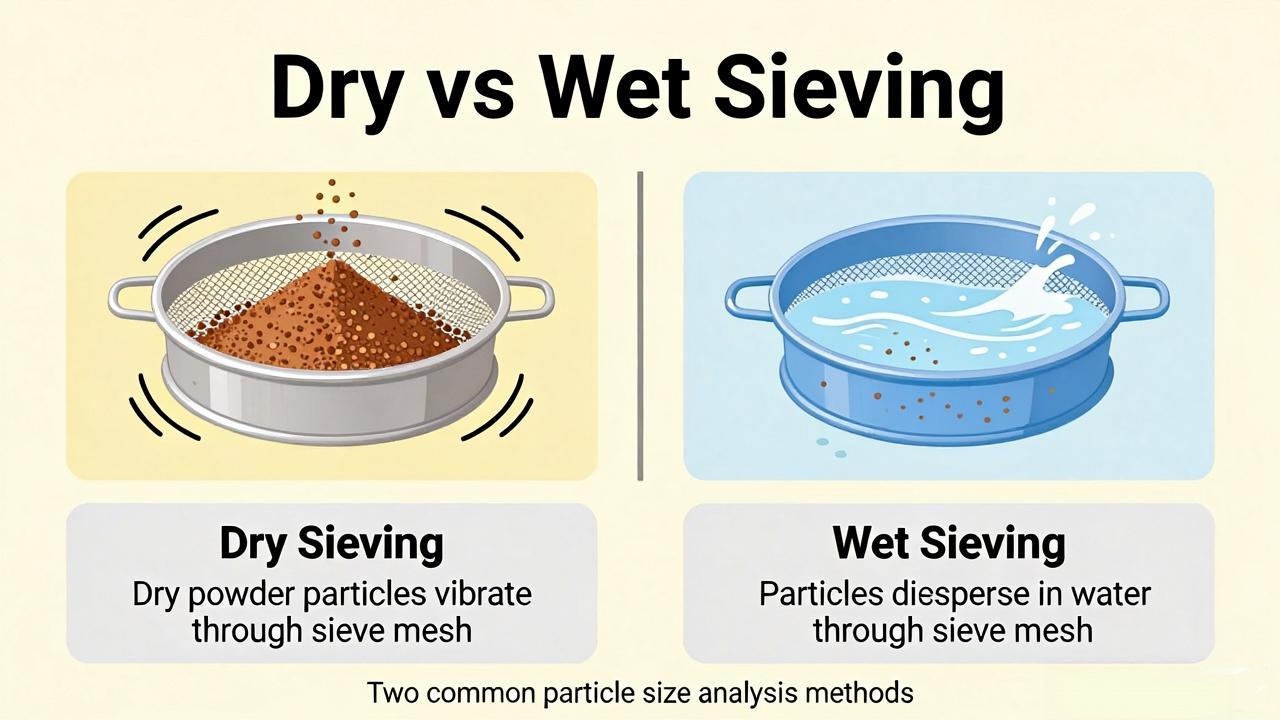
Dry Sieving: For free-flowing powders (40 μm – 125 mm).
Wet Sieving: For oily, cohesive, or electrostatic-prone materials (down to ~20 μm).
9. Frequently Asked Questions
Q: What is the most common sieve size?
A: The 200 mm (8 inch) diameter analytical test sieve.
Q: What mesh sizes are available?
A: From 20 μm to 125 mm.
Q: How do I know if my sieve needs replacing?
A: Replace immediately if you see loose mesh, broken wires, or distorted joints.
Q: Can I use the same sieve for different materials?
A: Yes, but clean thoroughly between uses. For pharma, use dedicated sieves.
Q: Why do my results seem inconsistent?
A: Common causes: incorrect sample weight, inadequate cleaning, damaged mesh, or improper endpoint determination.
10. References
USP Chapter <786> – Particle Size Distribution Estimation by Analytical Sieving (official May 1, 2023).
ASTM E11-24 – Standard Specification for Woven Wire Test Sieve Cloth and Test Sieves.
ISO 3310-1 – Test Sieves – Technical Requirements and Testing – Part 1.

Email:
sale@xxdahan.com
WhatsApp:
+86 15236742901
Add:
1000m West of Forest Park,Yanjin County,Xinxiang City,Henan Province,China.