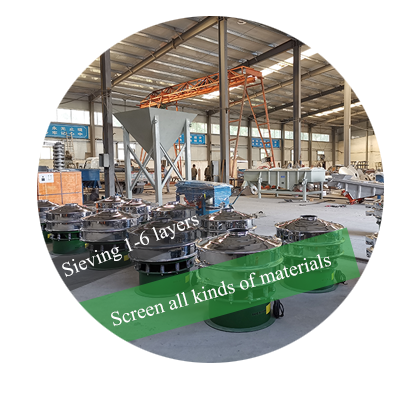
Calcium Carbonate Rotary Vibrating Sieve
![[field:title/]](/uploads/allimg/260615/1-2606151A151151-lp.jpg)
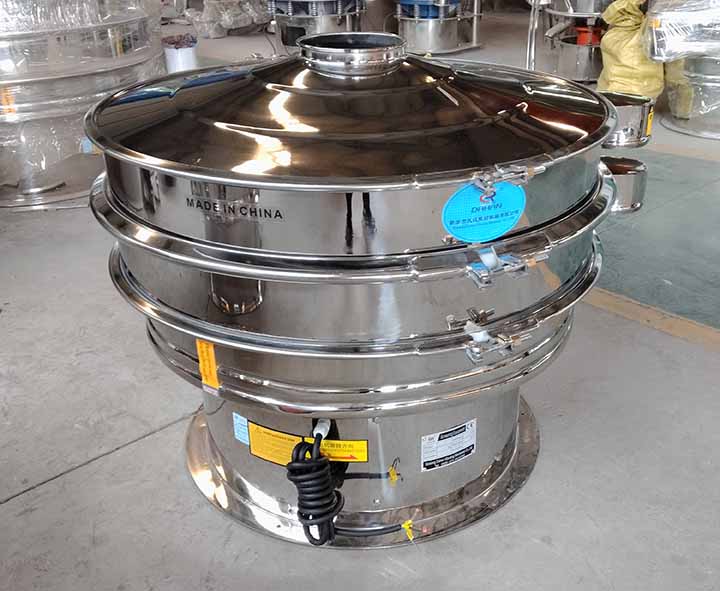
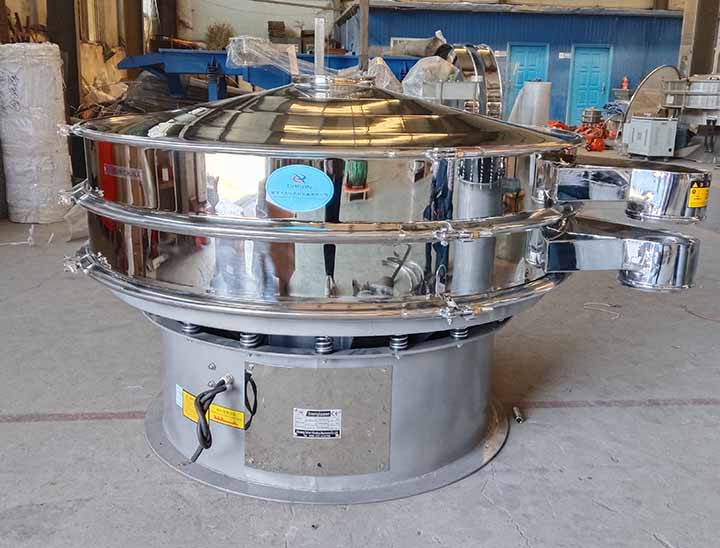
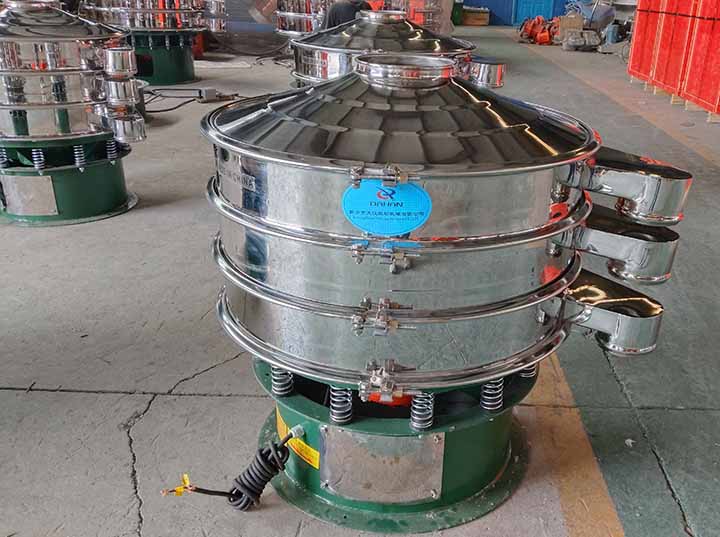
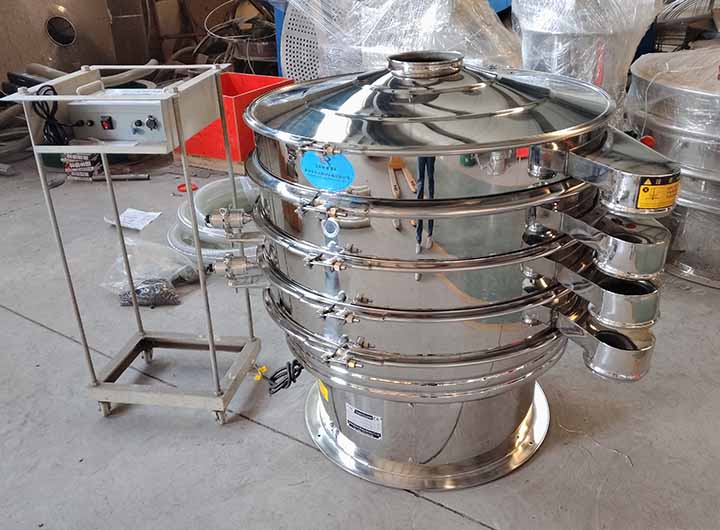
In the grinding and processing of calcium carbonate, micron-sized fine powders exceeding 325 mesh are highly susceptible to electrostatic adsorption due to friction, or material agglomeration and adhesion to the screen due to moisture absorption. This physical characteristic causes rapid clogging of the mechanical screen apertures, forcing frequent shutdowns of the entire production line for manual cleaning. The Calcium Carbonate Rotary Vibrating Sieve addresses the challenges of classifying and removing heavy impurities from this fine powder.
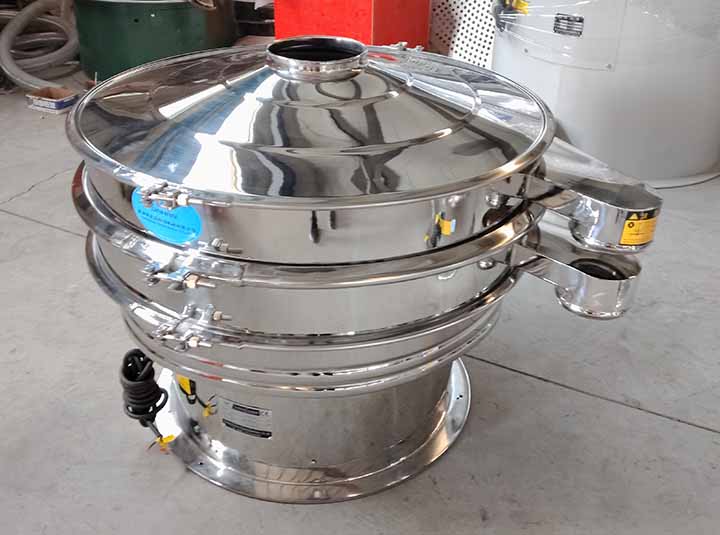
The machine's processing capacity typically ranges from 100 kg to 5 t per hour, and it can accommodate sieve mesh sizes from 20 mesh to 500 mesh. Its operation involves using eccentric weights to convert the motor's rotational motion into three-dimensional motion (horizontal, vertical, and inclined), forcing the calcium carbonate powder to undergo continuous outward-expanding vortex motion on the screen surface, thereby rapidly penetrating the mesh and achieving large particle interception or multi-stage particle size separation.
Calcium Carbonate Rotary Vibrating Screen Design
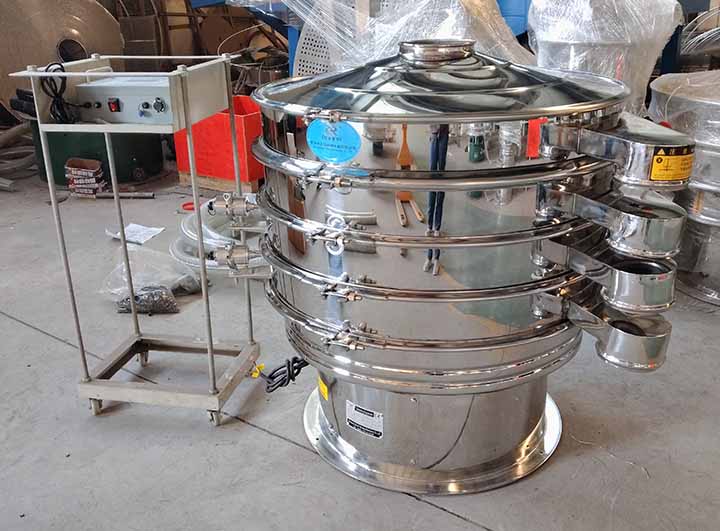
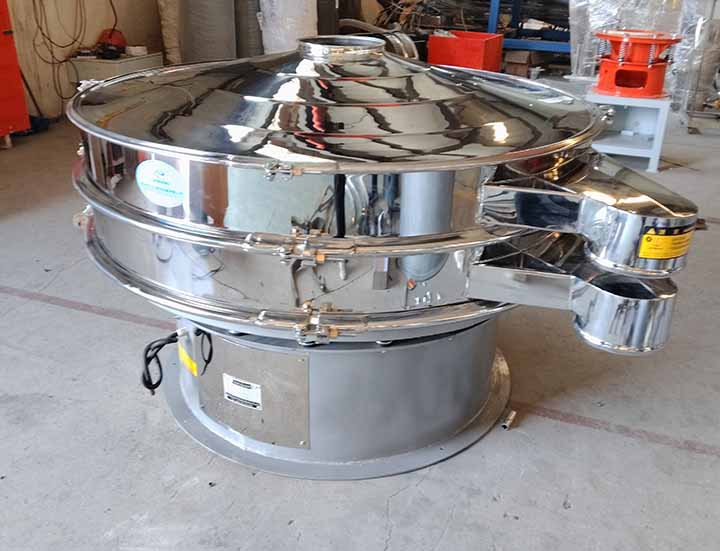
The calcium carbonate rotary vibrating screen consists of a top cover, screen frame, vibrating motor, base, and shock-absorbing springs. To address the wear and contamination issues caused by the physical properties of calcium carbonate, the machine incorporates several engineering optimizations. The inner wall of the screen frame and all welded seams are mirror-polished to remove any tiny pits that could trap powder, preventing localized accumulation, deterioration, and the formation of black spots. The sealing system abandons traditional inferior rubber, employing customized high-elasticity silicone seamless V-shaped sealing rings to tightly wrap the screen frame joints, preventing dust from escaping into the workshop air. The mesh frame structure is thickened and reinforced, integrating an ultrasonic energy converter or high-elasticity silicone bouncing balls. The ultrasonic system converts high-frequency electrical energy into mechanical vibration waves that are directly transmitted to the screen surface, breaking the electrostatic adsorption of fine calcium carbonate powder.
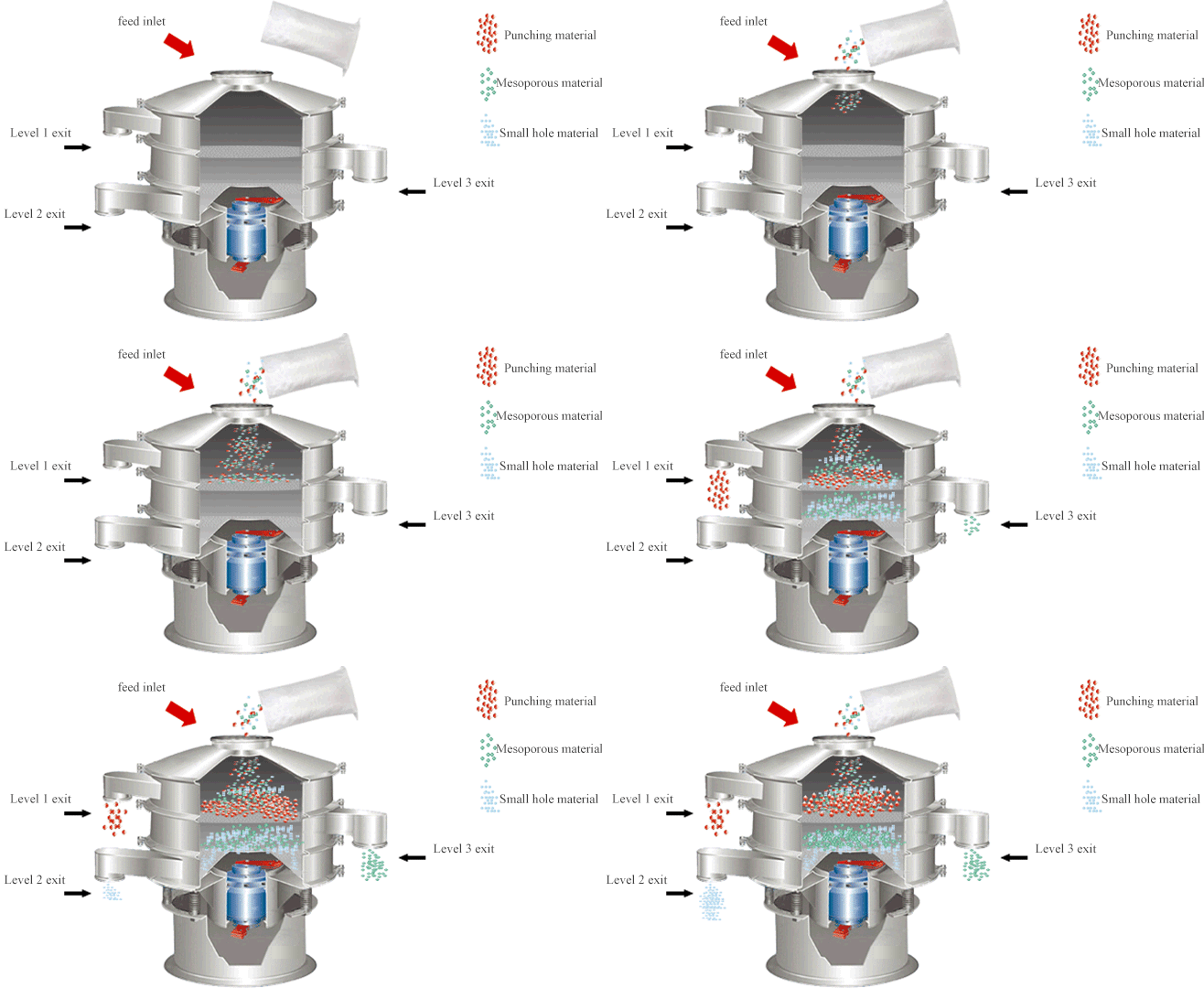
What are the benefits of using a rotary vibrating screen for calcium carbonate screening?
Using a rotary vibrating screen for calcium carbonate screening offers advantages such as no clogging, no dust emission, reduced pollution, uniform calcium carbonate particle size, and the ability to perform multi-level grading.
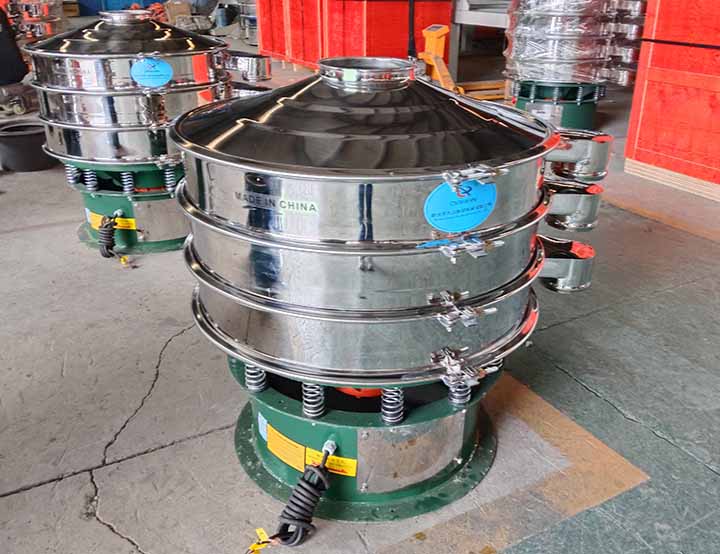
Maintaining High Whiteness of Finished Product: The mirror-polished 304 stainless steel material and the metal-friction-free screen cleaning design prevent trace amounts of iron filings from mechanical wear from mixing into the powder, maintaining the whiteness of calcium carbonate at the factory gate above 98%, which helps increase the selling price per ton.
Reducing Maintenance Downtime: The equipped ultrasonic screen cleaning device reduces screen clogging by more than 90%, eliminating the need for operators to disassemble and clean the screen every few hours, thus increasing the actual production time per shift.
Optimizing the Workplace: The sealed V-shaped silicone ring locks in powder leakage points, controlling the concentration of free dust in the workshop below compliance limits, eliminating the need for subsequent investment in expensive local dust collection equipment.
Improving Particle Size Uniformity: Continuous three-dimensional vibration trajectory extends the residence time of calcium carbonate particles on the screen, increasing the screen penetration rate and resulting in a more concentrated particle size distribution curve in the finished powder.
Applications of Calcium Carbonate Rotary Vibrating Screens
Calcium carbonate rotary vibrating screens can separate different types of calcium carbonate, including heavy calcium carbonate, light calcium carbonate, and nano-calcium carbonate. The machine can be customized to suit the characteristics of different types of calcium carbonate.
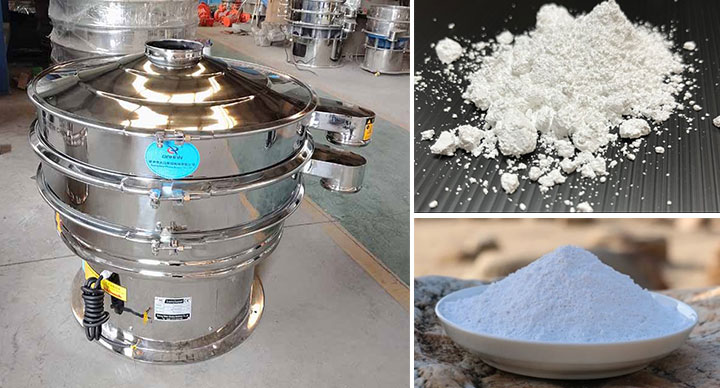
Heavy Calcium Carbonate: This material is mechanically ground from natural ore, resulting in irregular particle shapes and significant mechanical wear on the screen. In this case, the machine can be equipped with a high-power vertical motor, multiple layers of large-diameter coarse screens, and a thickened, wear-resistant base to handle large-tonnage coarse powder removal and continuous grading.
Light Calcium Carbonate: Produced through chemical precipitation, it has a low bulk density and is highly hygroscopic. Lightweight screen frames and high-frequency vibration modes can be used, utilizing airflow induction and a sealed, moisture-proof structure to prevent the light calcium carbonate powder from forming flaky clumps during vibration.
Nano-Calcium Carbonate: With particle sizes reaching the nanometer level, it is highly prone to secondary agglomeration. At this point, a high-intensity ultrasonic resonance system is needed to form a high-frequency, micro-amplitude vibration barrier on the screen, forcibly breaking down physical agglomerates and allowing 500-mesh fine powder to pass through.
Model Parameter Table
| Model |
Diameter (mm) |
Feeding Size (mm) |
Frequency (RPM) |
Layers |
Power (kw) |
Capacity (kg/h) |
| DH-400 | 400 | <10 | <1500 | 1-5 | 0.18 | 100 |
| DH-600 | 600 | 0.25 | 200 | |||
| DH-800 | 800 | 0.55 | 500 | |||
| DH-1000 | 1000 | 0.75 | 800 | |||
| DH-1200 | 1200 | 1.1 | 1200 | |||
| DH-1500 | 1500 | 1.5 | 1800 | |||
| DH-1800 | 1800 | 2.2 | 2000 |
How much does a calcium carbonate rotary vibrating screen cost?
Currently, the basic export price range for a Calcium Carbonate Rotary Vibrating Sieve is between $650 and $5,570 USD, a price difference determined by production costs. The standard silicone bouncing ball configuration is inexpensive, but if an external ultrasonic generator and internal phasor network are selected, the total cost of the machine will directly increase by $800 to $1,200 USD. Increasing the machine diameter from 600mm to 2000mm will lead to a significant increase in the consumption of stainless steel sheet, and the price of an all-stainless steel structure is significantly higher than that of a carbon steel composite base structure that uses stainless steel only in the material contact parts. Using a vertical vibrating motor with a high protection rating (such as IP65 dustproof) or explosion-proof certification will also increase the procurement cost of underlying accessories.
Frequently Asked Questions
Q: Which screen cleaning configuration should be selected for sieving 400-mesh light calcium carbonate?
A: We recommend using an ultrasonic screen cleaning configuration. 400-mesh light calcium carbonate powder is extremely light and electrostatically charged. Traditional bouncing balls cannot provide sufficient rebound force to break up agglomerates on the screen. Only the high-frequency, micro-amplitude vibration of ultrasound can keep the powder suspended and allow it to pass through the screen.
Q: How to adjust the trajectory of calcium carbonate on the screen surface during machine operation?
A: This can be achieved by adjusting the phase angle of the eccentric weights at both ends of the vibrating motor. The angle can be adjusted between 0 and 90 degrees. Adjusting the angle changes the rate at which calcium carbonate diffuses outward, thus balancing output and sieving accuracy.
Q: What specific impact does the polishing grade of the stainless steel surface have on the final quality of the calcium carbonate?
A: Unpolished welds or rough surfaces will continuously accumulate dust and fine powder, turning black under the frictional heat of continuous vibration. If this blackened powder detaches and enters the finished product, it will cause the grade of the entire batch of calcium carbonate to decline due to excessive black spots.
Choosing a Calcium Carbonate Rotary Vibrating Sieve requires comprehensive consideration of the initial moisture content of the material, the target mesh size, and the hourly throughput of the production line. A well-designed, customized configuration can not only solve the problems of mesh clogging and dust escape, but also directly bring a premium to the company's finished product output by maintaining the original whiteness and particle size uniformity of calcium carbonate.

Email:
sale@xxdahan.com
WhatsApp:
+86 15236742901
Add:
1000m West of Forest Park,Yanjin County,Xinxiang City,Henan Province,China.